Route Optimization Software: Your Playbook for High-Impact Field Execution
 Surya Panicker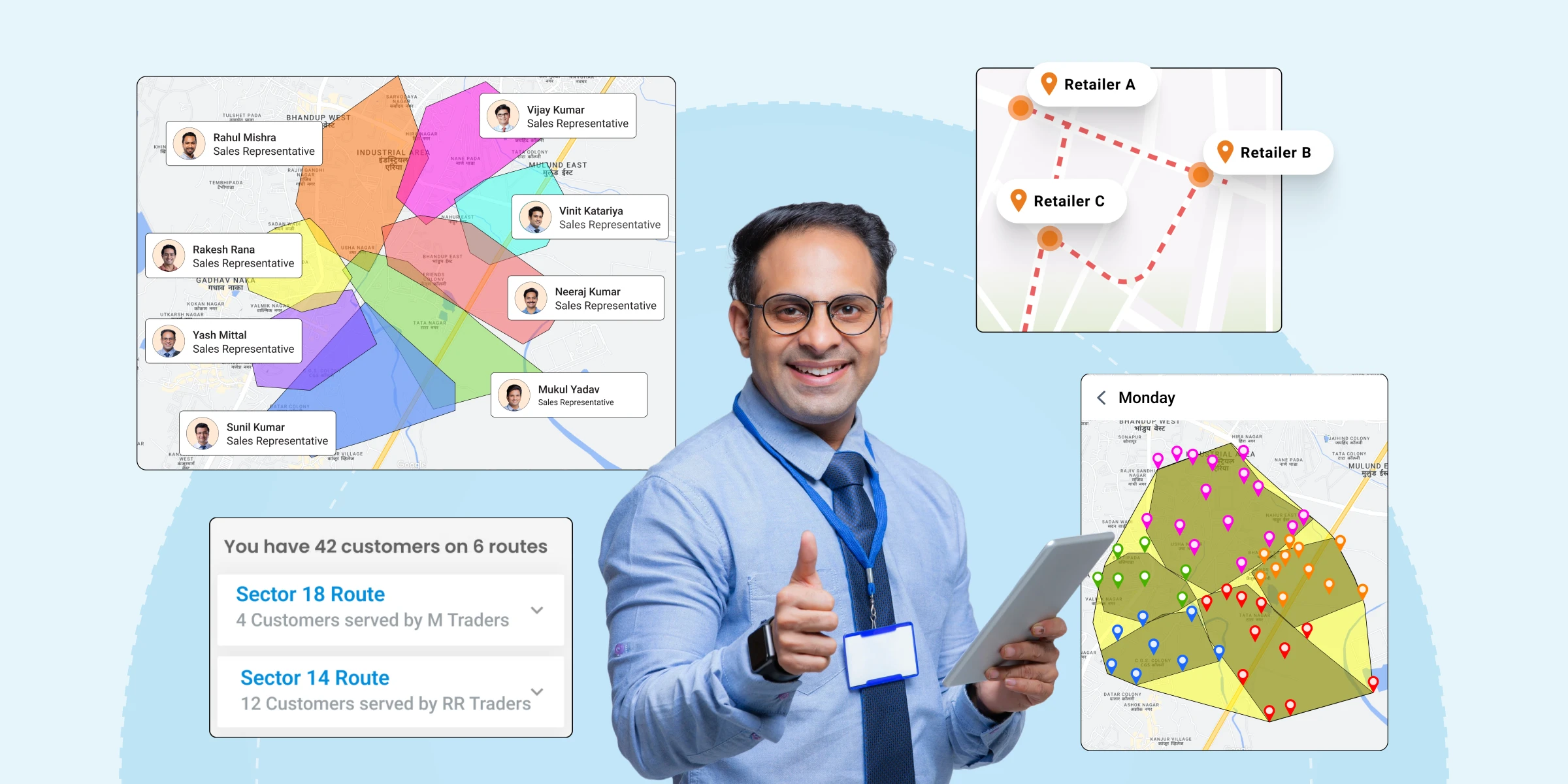
Table of Content
TL;DR This playbook is for sales operations leaders and HQ teams ready to build a durable route optimization program, not just run a one-off project. It covers the five metrics to track, a quarter-by-quarter rollout sequence, the org design that keeps the program alive, and the operational pitfalls that derail most deployments.
Route optimization software turns every sales rep’s day into a pre-planned sequence of the right stores, in the right order, at the right frequency. Done well, it lifts productive calls, cuts kilometres per visit, and makes coverage predictable instead of aspirational.
Most brands already have the raw inputs: store list, rep roster, visit frequencies, geo-coordinates. What they lack is the playbook that strings inputs, metrics, and weekly rhythms into a program that actually sticks. This guide is that playbook.
You will find what to measure, how to roll it out quarter by quarter, the pitfalls to avoid, the org design that keeps it alive, and the operating rhythm that separates a one-off optimization project from a durable route-to-market capability.
What the route optimization playbook covers
A playbook is different from a tool evaluation or a concept piece. It assumes you already believe in route optimization and are ready to build the operating model. The sections below walk through the metrics, the quarter-by-quarter rollout, the org design, and the pitfalls, in the order a deployment actually unfolds. BeatRoute’s Route Optimization module is designed around this exact sequence.
The five metrics that matter
Measurement is the playbook. Pick these five and put them on one dashboard the sales head opens every Monday:
- Visits per day, per rep. Baseline first, then set a realistic stretch. Most FMCG brands move from 28 to 38 visits a day within two quarters of serious optimization.
- Kilometres per visit. This is the purest efficiency metric. If visits go up while kms per visit fall, the optimization is working.
- OTIF (on-time-in-full) visit adherence. What share of planned visits happened on the planned day, at the planned store, within the planned window.
- Productive calls. Visits that resulted in an order, a collection, a merchandising task completed, or another measurable outcome. Footfall without outcomes is noise.
- Coverage. Share of the universe visited at the planned frequency in a given cycle. Most brands discover 20 to 30 percent of their “active” universe is not actually getting visited at plan.
Metrics to ignore
Total kilometres driven, total hours logged, and average call duration sound useful but move with every seasonal change. They do not tell you whether the route is working. They only tell you the rep went somewhere.
Quarter 1 rollout: build the foundation
Quarter 1 is about getting the foundation right. Skip any step here and the algorithm will optimize the wrong thing, beautifully. BeatRoute customers typically complete this phase in 6-8 weeks with dedicated sales ops support.
1. Clean the store master
Bad geo-coordinates are the single biggest reason optimized routes fail in the field. Run a de-duplication pass, fix coordinates against a live map, and mark stores that have closed or shifted. Expect to clean 15 to 25 percent of the master in the first pass.
2. Segment stores and set visit frequencies
Not every outlet deserves a weekly visit. Segment the universe by offtake, strategic weight, and channel, typically into four tiers, and assign visit frequencies to each tier. This is the input the route optimization software converts into a beat.
3. Design the beats
Generate optimized beats using your route optimization tool, but review them with the area sales managers before rollout. Local knowledge about one-way roads, market closing days, and retailer preferences will catch the 5 percent of edge cases no algorithm gets right.
4. Socialize and launch
Walk each rep through their new beat. Explain the logic: why this order, why this day, why this frequency. Reps who understand the beat follow it. Reps who receive it as a top-down schedule quietly revert.
Quarter 2 rollout: add dynamic execution
Once beats are live and the five metrics are being tracked, Q2 shifts from planning to dynamic execution. This is where most of the upside actually lands. BeatRoute layers the following capabilities on top of the static beat plan.
1. Add daily prioritization
Static beats cover the “where.” Daily prioritization covers the “which store first today.” The Scheduling AI Agent ranks the day’s planned stores by business signal: a declining outlet, an overdue payment, a launch window. Reps hit the highest-value stops when they have the most energy. Brands using this combination have moved productive visit rates from 45% to 78%.
2. Introduce ad-hoc insertions
Campaigns, launches, and service calls do not wait for the beat cycle. Give managers a simple way to insert ad-hoc visits without blowing up the rest of the day’s route. The planning tool should re-sequence automatically when a store is added mid-plan.
3. Build the weekly review rhythm
Every Monday, the sales head reviews the five metrics against plan. Every Friday, area managers review rep-level adherence with their teams. Without this cadence, optimization becomes a deck, not a habit.
4. Re-optimize quarterly
Universes shift. New outlets open, old ones close, some tier-C stores turn into tier-A stores, and channel mixes change. A full re-optimization every quarter keeps the beats honest. Enterprises running this cadence on BeatRoute report a 15-20% reduction in travel time and fuel costs.
Org design that makes route optimization stick
Tool and data are necessary but not sufficient. The programs that last have named owners at three levels, each with a different job. BeatRoute’s Brand Panel gives each role the exact dashboard they need.
| Papel | Responsibility | Review cadence |
|---|---|---|
| Central route optimization owner (HQ/sales ops) | Owns master data, runs quarterly re-optimization, accountable for five metrics nationally | Quarterly full review + monthly data health check |
| Area sales managers | Own adherence, not design. Run weekly reviews with reps to catch drift early | Weekly rep-level adherence review |
| Field reps | Signal sources: flag closed retailers, shifted market days, new outlets back into the master | Continuous feedback via app |
1. A central route optimization owner at HQ
One person, usually in sales operations or route-to-market, owns the master data, runs the quarterly re-optimization, and is accountable for the five metrics at the national level. Without this owner, the program erodes within two cycles.
2. Area sales managers as adherence owners
ASMs own adherence, not design. Their weekly review with reps is where drift gets caught early. Give them rep-level dashboards and let them coach.
3. Reps as signal sources, not just executors
A closed retailer, a shifted market day, a new outlet: the rep sees these first. Build a lightweight channel for reps to flag changes, and feed those flags back into the master. Optimization without a rep feedback loop goes stale fast.
Five pitfalls to avoid
These are the mistakes that show up most often in deployments that miss their targets. None of them are algorithmic. They are operational. BeatRoute’s implementation team flags these during onboarding so customers avoid them from day one.
1. Optimizing before cleaning the master
Garbage in, garbage out. A 15 percent dirty master produces beats that reps override within the first week, and trust in the system never recovers.
2. Chasing perfect routes instead of adopted routes
A 92 percent optimal route that reps follow beats a 99 percent optimal route that reps ignore. Build in rep input at design time. The 7 percent you give up in theory, you gain back tenfold in adherence.
3. Ignoring ad-hoc reality
Campaigns, launches, urgent complaints: ad-hoc visits will happen. If the system only handles static beats, managers will WhatsApp reps around it, and the data gets lost.
4. Measuring inputs, not outcomes
Hours logged and kilometres driven are not the point. Productive calls and coverage are. Dashboards that foreground inputs train managers to reward the wrong behaviour.
5. Treating it as a one-time project
Route optimization deteriorates on its own. Universes shift, reps turn over, markets change. Without a quarterly re-optimization and a named owner, the program is half-dead by month nine.
How does BeatRoute fit the playbook?
BeatRoute gives HQ a Route Optimization module that generates beats from your segmented universe, visit frequencies, and constraints, designed for sales operations teams, not data-science teams. The five metrics come out of the box on the sales head’s dashboard.
| BeatRoute capability | What it does | Measurable outcome |
|---|---|---|
| Optimización de rutas | Designs HQ-level beats from store master with tier and frequency constraints | 15-20% reducción del tiempo de viaje y de los costes de combustible |
| Scheduling AI Agent | Ranks daily stops by business signal for field reps | Productive visits: 45% to 78% |
| BeatRoute Copiloto | Natural language queries on coverage, adherence, and performance | Faster decision cycles for managers |
Where BeatRoute goes further than most route optimization software is the layer above the beat. The Scheduling AI Agent handles daily prioritization, ranking the day’s stops by business decline, overdue payments, and territory goals, so reps do not just follow a route but follow the highest-value route for today. BeatRoute Copilot lets managers query adherence, coverage, and productive-call data in natural language, which replaces the Monday-morning scramble for reports.
BeatRoute is the only SFA-DMS built to execute your sales goals. Its Goal-Driven AI guides every rep and channel partner toward the coverage and productivity outcomes your goals define. Across 200+ enterprise customers in 20+ countries, this combination has delivered a 12.6% average sales uplift in the first year.
Building route optimization as a lasting capability
The brands that treat route optimization as a quarterly operating rhythm, not a one-time project, are the ones that compound gains year over year. As retail universes fragment and cost-of-serving pressure grows, the gap between brands running a real program and those still relying on static beats will only widen.
Reservar una demostración to see how field sales teams run Goal-Driven AI across route planning, daily prioritization, and weekly reviews, from the first beat to the fourth quarterly re-optimization.
Preguntas más frecuentes
How long does a route optimization rollout actually take?
A realistic rollout runs across two quarters. Quarter 1 cleans the store master, sets segments and frequencies, and launches the first set of beats. Quarter 2 layers in daily prioritization, ad-hoc insertions, and the weekly review rhythm. Brands that try to compress both quarters into one usually skip master-cleaning and see reps revert to old routes within weeks.
Which metrics should we track from day one?
Five metrics, on one page: visits per day, kilometres per visit, on-time-in-full visit adherence, productive calls, and coverage. Inputs like hours logged and total distance driven are noisy and tempt managers to reward the wrong behaviour. If your team cannot see the five outcome metrics on a single dashboard, the program is not ready to scale.
What is the difference between route optimization software and the Scheduling AI Agent?
Route optimization software is an HQ-level planning tool: it designs the beats, determining which stores each rep covers, in what order, at what frequency. The Scheduling AI Agent works one layer down, handling daily prioritization and exceptions within the planned beat. You need both: beats give you structure, and the Scheduling AI Agent gives you responsiveness.
What are the most common reasons route optimization programs fail?
Almost always operational, not algorithmic. A dirty store master produces beats reps ignore. No named owner at HQ means the program erodes within two cycles. Measuring inputs instead of outcomes trains managers to reward activity over results. And treating optimization as a one-off project lets the universe drift away from the plan.
Who should own route optimization inside the company?
One central owner at HQ (usually sales operations or route-to-market) owns the master data and the quarterly re-optimization. Area sales managers own adherence through weekly reviews with reps. Reps are treated as signal sources so closed outlets, shifted market days, and new stores feed back into the master. Three roles, three different jobs.
How does BeatRoute support the playbook end to end?
BeatRoute’s Route Optimization module generates beats from your segmented universe and constraints. The Scheduling AI Agent handles daily prioritization so reps hit the highest-value stops first. BeatRoute Copilot lets managers query coverage, adherence, and productive-call data in natural language. The five metrics come out of the box, so the weekly review rhythm is ready on day one.