How to Select the Best Distributor Management System (DMS)
 Nikhil Chaudhary
Table of Content
TL;DR This guide is for leaders evaluating a distributor management system. It explains the primary vs secondary DMS split most buyers miss, the adoption challenges that determine success, and the selection criteria that matter. BeatRoute is the only SFA-DMS that covers both flows in one platform with native Tally and Busy Plugins, Goal-Driven AI, and 300+ enterprise integrations.
A distributor management system (DMS) is software that digitizes how consumer brands manage the flow of goods, orders, claims, and sales data between the brand, its distributors, and retailers. The best DMS covers both primary sales (brand to distributor) and secondary sales (distributor to retailer), integrates cleanly with your Sales Force Automation (SFA), and gives head office real-time visibility into every link of the supply chain.
Most vendors sell only one half of that picture. This guide shows you how to evaluate DMS providers against the criteria that actually decide outcomes in FMCG and consumer goods, so you pick a platform that fits your distribution reality instead of forcing your business to fit the software.
Why a distributor management system matters in FMCG
Every FMCG company deals with thousands of distributors, who serve millions of retailers spread across a wide geography. Maintaining transparent dealings and getting accurate secondary sales insight through spreadsheets or email is no longer viable. A DMS digitizes inventory, primary ordering, secondary billing, trade schemes, and claims, and gives the brand a single source of truth for what is selling, where, and to whom.
The business reasons FMCG and consumer goods companies move to a DMS are consistent across markets:
- Secondary sales visibility. Real secondary sales data tells you what is actually leaving distributor godowns, which stores are growing, and whether trade schemes are working.
- Lower pilferage and working capital. Better inventory control at the distributor level reduces shrinkage and avoids costly overstocking.
- Trade scheme utilization. Live data shows whether distributors are passing on offers and schemes; issues can be corrected within days, not quarters.
- Integrated operations. A DMS becomes the shared communication layer between brand and distributor, closing the information gaps that spreadsheets create.
- Better distributor experience. Organized order management, automated claims, and reward tracking make distributors easier to retain and expand with.
Primary DMS vs secondary DMS: the split most buyers miss
The most important selection decision is often the one buyers do not know they are making. DMS products fall into two categories, and most vendors sell only one.
- Primary DMS handles the brand-to-distributor flow: primary orders placed by distributors to the brand, invoice generation, claim and scheme settlement, and distributor accounting. It answers “what did we sell to our distributors.”
- Secondary DMS handles the distributor-to-retailer flow: secondary billing, retailer orders captured by distributor salespeople or through eB2B, stock at distributor level, and secondary scheme application. It answers “what did our distributors sell to retailers.”
If you buy only the primary half, you still have no visibility into what is reaching retailers. If you buy only the secondary half, your claims and primary ordering remain manual. Ask every vendor on your shortlist which half they actually built, and how the other half gets covered. BeatRoute is one of the few providers that delivers both flows in a single platform with native SFA integration.
Core challenges in the current distributor landscape
One of the biggest challenges for FMCG companies while rolling out a DMS is that distributors are reluctant to adopt new software. They typically deal with products from multiple brands and already run established accounting tools to manage their business. The selection criteria you set must address these realities head on.
- Multiple DMS for multiple brands. A distributor carrying several brands will resist running a separate DMS for each one. Time, screens, and data entry add up fast.
- Existing accounting tools. Distributors update their accounting books daily because their CA and tax filings depend on it. A DMS that ignores that workflow rarely gets clean data back.
- Resource constraints. Smaller distributors may not have the bandwidth to run a dedicated DMS workstation or staff a new tool.
The fix is to pick a hybrid DMS that meets distributors where they already are. If a distributor runs Tally or Busy for their books, a plugin should lift secondary sales data automatically without forcing anyone to double-enter.
How to choose the best distributor management system
There are several DMS providers in the market, and it can be hard to tell them apart from feature sheets alone. Use the selection criteria below to structure your evaluation.
Evalúe su panorama de distribuidores y minoristas
Start with the shape of your network. Are your distributors concentrated in a few metros or spread across states and countries? Do your field reps service the same retailers every week, or is coverage ad-hoc? A DMS must match that reality. For geographically spread networks, a cloud-native DMS is essential, and real-time secondary sales data becomes the yardstick.
Confirm primary and secondary coverage
Use the primary vs secondary split above as a filter. Write down which flows you need (primary ordering, claims, secondary billing, retailer orders, stock visibility) and make the vendor show each one in the demo. Vendors that only do one half will show workarounds or roadmap slides; treat both as gaps.
Check ease of use and distributor adoption
A DMS that distributors resent does not produce data you can trust. Prioritize web-based and light mobile interfaces, local-language support where relevant, and native plugins for the accounting tools distributors already rely on, so they keep their existing system and still share clean secondary data with your brand.
Evaluate SFA integration
DMS and SFA are two sides of the same conversation. Secondary orders captured by field reps should flow into the same data model as secondary billing at the distributor. Fragmented stacks where SFA and DMS are stitched together through exports create reconciliation work every month. A single platform that handles both removes that tax.
Ask about trade schemes and claims
Trade promotion workflows are where most DMS projects quietly fail. Make sure the DMS supports in-bill primary and secondary schemes, period-purchase schemes, and automated claim settlement. Ask to see a live scheme being configured, not just displayed.
Take demos, then check proof
Demos show the platform in action and reveal the fit specific to your brand. Before signing, ask for case studies or references from FMCG or consumer goods companies of similar size. The gap between a polished demo and a production rollout is usually where the weaker vendors lose buyers.
How does BeatRoute deliver a complete SFA-DMS?
BeatRoute is the only SFA-DMS built to execute your sales goals. The platform covers primary and secondary DMS in one system, runs on web and light mobile, and plugs into the accounting tools distributors already use.
| BeatRoute capability | What it does | Measurable outcome |
|---|---|---|
| Order AI Agent | Recommends replenishment and new SKUs per outlet | 4-6% sales uplift |
| BeatRoute Copiloto | Natural language queries on coverage, adherence, and performance | Faster decision cycles for managers |
- Full-fledged DMS with primary ordering, secondary billing, claims, and configurable dashboards.
- Tally and Busy Plugins so distributors keep their existing accounting workflow and brands still get clean secondary data.
- Hybrid deployment: web-based for distributors with workstations, light mobile for smaller distributors without dedicated infrastructure.
- Native SFA integration so field rep orders, retailer coverage, and secondary billing live in one platform.
- Trade promotion workflows covering in-bill schemes and period-purchase schemes across both sales flows.
- Matriz BeatRoute for 300+ enterprise integrations with your ERP, finance, and analytics stack.
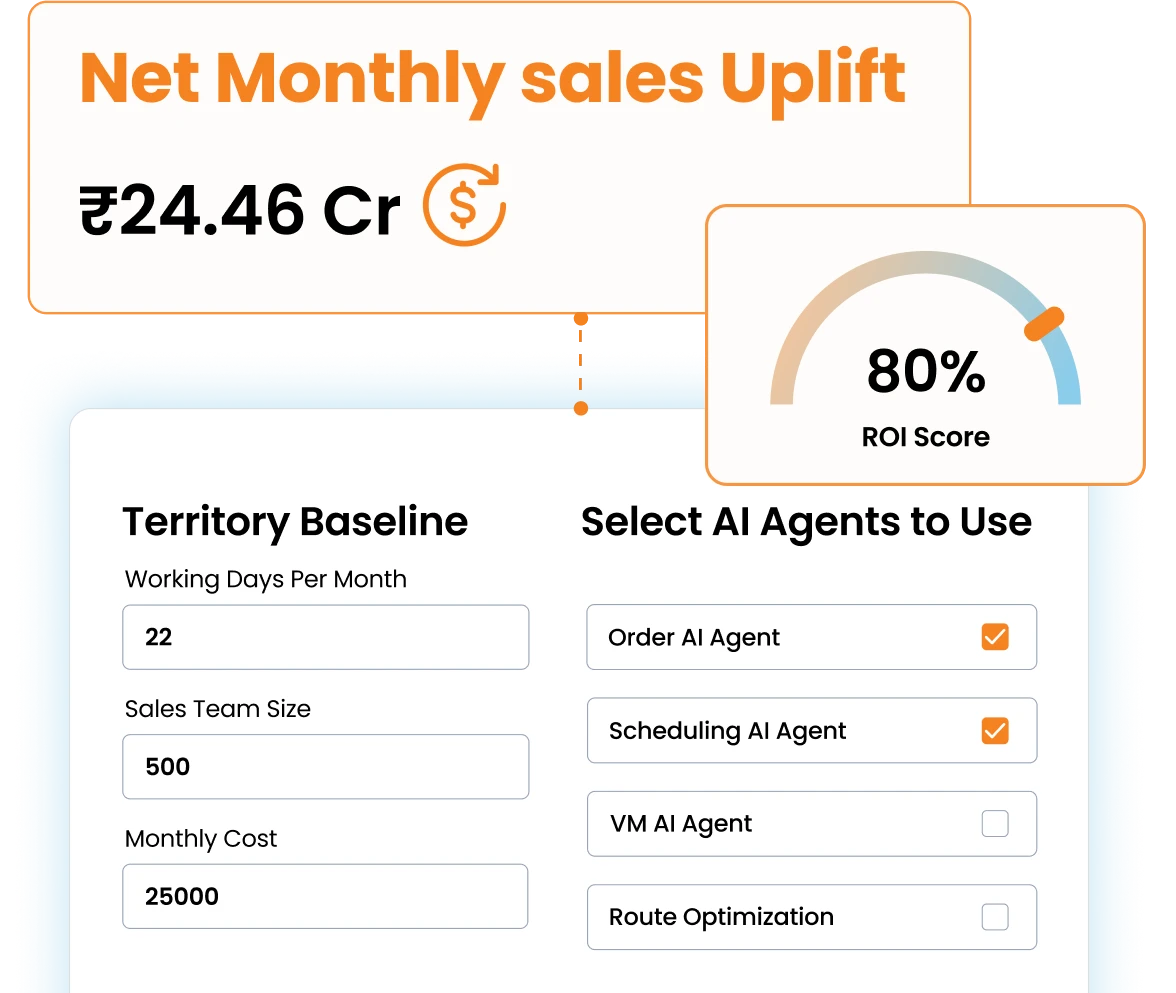
- Order AI Agent recommends replenishment and new SKUs to distributors and retailers, delivering 4 to 6% sales uplift on top of the baseline.
- BeatRoute Copilot answers natural-language questions from sales leaders and distributors on performance, stock, and scheme impact.
Goal-Driven AI underpins the platform to ensure your sales goals get executed by your team and channel partners, so the DMS is not a reporting layer but an execution layer. Customers including Perfetti India, Valvoline, AAVA Brands, and BUA Foods run their distribution on BeatRoute across India, Africa, and Southeast Asia.
Selecting a DMS that fits your distribution reality
Selecting a distributor management system is less about feature checklists and more about fit. The best platform covers both primary and secondary flows, respects how distributors already work, and plugs into SFA so the brand sees one picture of the market instead of two partial ones. Set your selection criteria with that lens and the shortlist becomes short fast.
Book a free demo of BeatRoute’s distributor management system and see both primary and secondary flows running on one platform.
Preguntas más frecuentes
What is a distributor management system?
A distributor management system (DMS) is software that digitizes how consumer brands manage orders, inventory, trade schemes, and claims with their distributors and retailers. A complete DMS covers primary sales from brand to distributor and secondary sales from distributor to retailer, and integrates with Sales Force Automation so the brand has one live view of the channel.
What is the difference between primary DMS and secondary DMS?
Primary DMS manages the brand-to-distributor flow: primary orders, invoices, claims, and scheme settlement. Secondary DMS manages the distributor-to-retailer flow: secondary billing, retailer orders, and stock at the distributor level. Most vendors specialize in one of the two. BeatRoute is one of the few that delivers both, integrated with SFA.
How do I select the best distributor management system for my FMCG business?
Map your distributor and retail landscape, then evaluate vendors on five criteria: primary and secondary coverage, ease of use for distributors, integration with your SFA, trade scheme and claims workflows, and proof from references of similar size. Ask every vendor to demo each flow live instead of relying on feature sheets.
Why do distributors resist new DMS software?
Distributors typically work with several brands and already run established accounting tools like Tally or Busy. A DMS that ignores those tools forces them to double-enter data and rarely delivers clean information back to the brand. Platforms with native accounting plugins, light mobile options, and simple interfaces see higher adoption.
Why choose BeatRoute as your DMS?
BeatRoute is the only SFA-DMS built to execute your sales goals. It covers both primary and secondary flows in one platform, plugs into the accounting tools distributors already use through Tally and Busy Plugins, and integrates with your SFA. Its Goal-Driven AI guides every rep and distributor toward the sales outcomes your goals define.