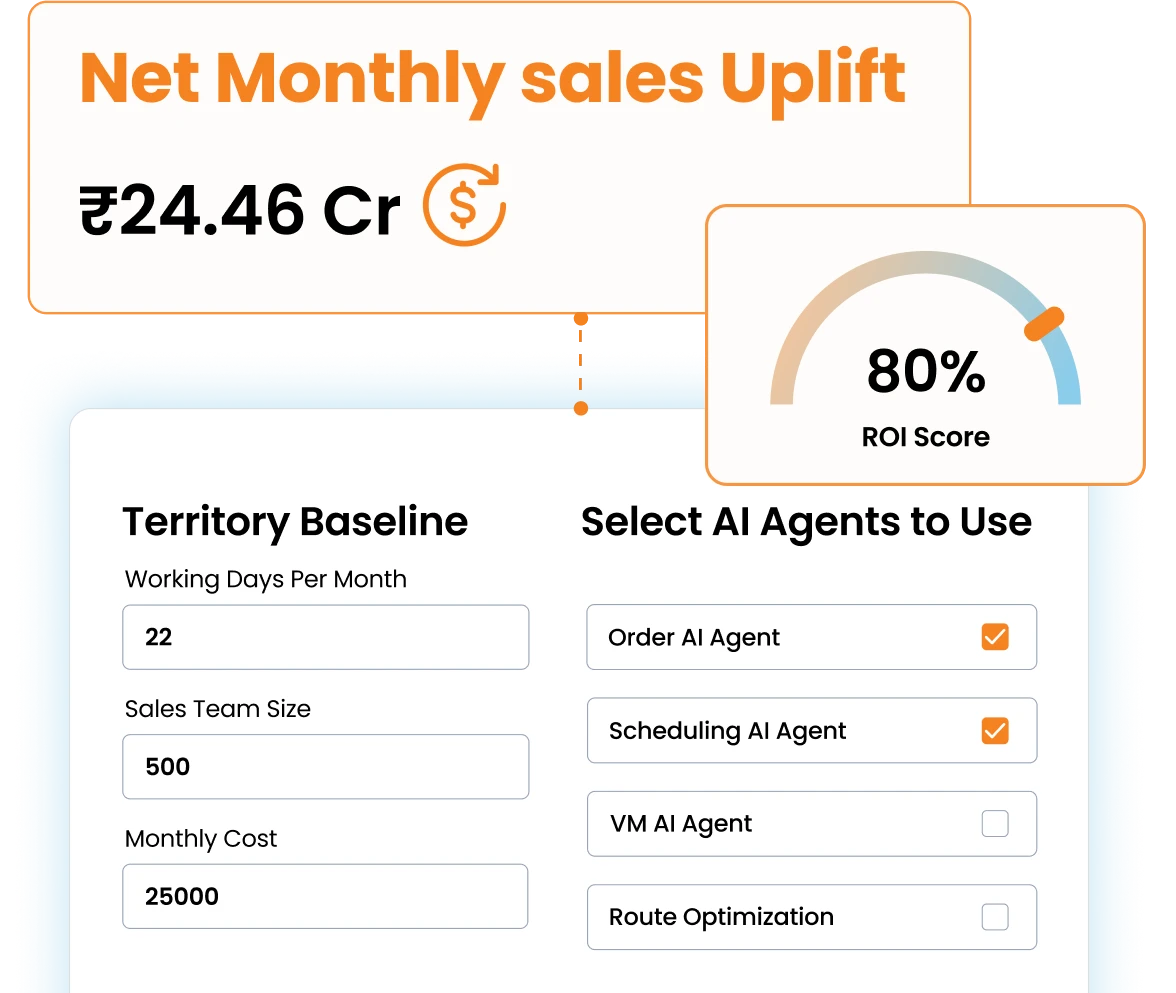
Speakers:
Vinay Singh, Co-Founder & CEO
Alok Thakur, Co-Founder & Director of Engineering
Naveen Jindal, Co-Founder & Director of Product Development
Kaushal Kumar, Director of Product & Strategy
Host: Nikhil Chaudhary, VP Marketing
In the final episode of Podcast de BeatRoute for 2025, we sat down with BeatRoute’s leadership and product team to reflect on the year. The conversation covered what we built, why we built it, and how we are preparing our customers for what comes next.
Introduction
For retail sales and distribution leaders, 2025 has been the year when AI finally moved from hype to daily reality in route-to-market operations. Trade practices evolved rapidly, and companies began rethinking their tech stacks, not just for digitization, but to truly mechanize core goals like territory coverage optimization and growth execution.
At BeatRoute, we doubled down on keeping our customers on the latest and greatest technology. As a SaaS platform, we believe this evolution needs to happen continuously. That is one of the most underappreciated advantages of enterprise SaaS in our segment.
This year, we shipped over 100 features and 4 production-ready AI agents – twice the release velocity of last year. This pace reflects our understanding: technology is evolving fast, and we must evolve faster.
Our product evolution in 2025 revolved around four major focus areas.
Wide Rollout of Goal-Driven AI Agents
2025 marked the first wave of our multi-year AI journey: introducing high-impact, assistive agents that help sales teams achieve more without taking control away from humans.
The rapid rollout was enabled by foundational strengths in our platform:
- Modular architecture with deep componentization from the beginning
- Unified event-driven data layer providing normalized retail execution, audit, visit data, workflows, and user context. AI agents get clean, ready data without hunting
- Reusable core guardrails and standards across agents
- Real customer usage data, feedback, and iteration cycles from multiple companies across industries (not hypothetical scenarios)
This generalization and modularity, built deliberately since our early days, allowed us to move from ideation to production-ready agents faster than otherwise possible.
We released four production-ready agents:
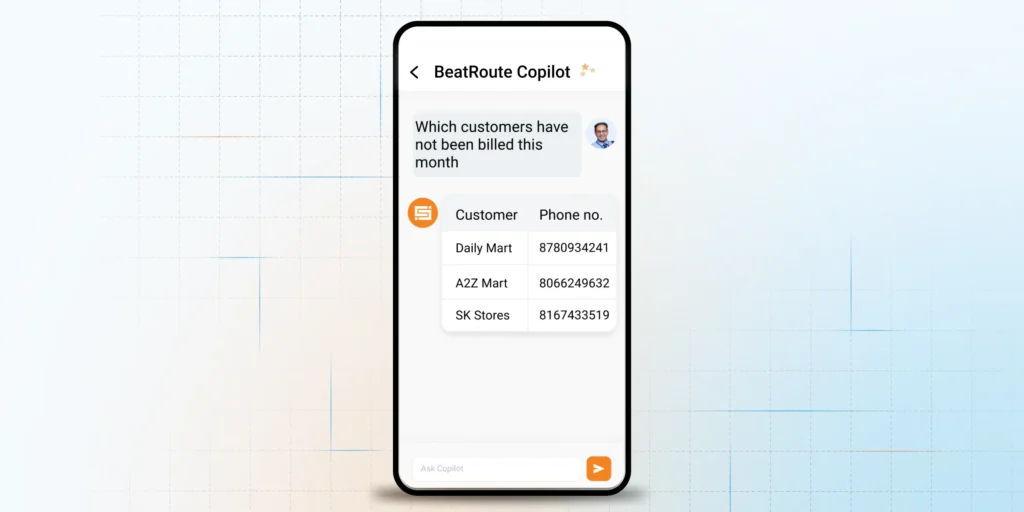
- BeatRoute Copilot: Conversational AI for instant insights. Managers ask natural-language questions and receive immediate answers based on their data, eliminating manual digging through graphs, charts, and emailed reports.
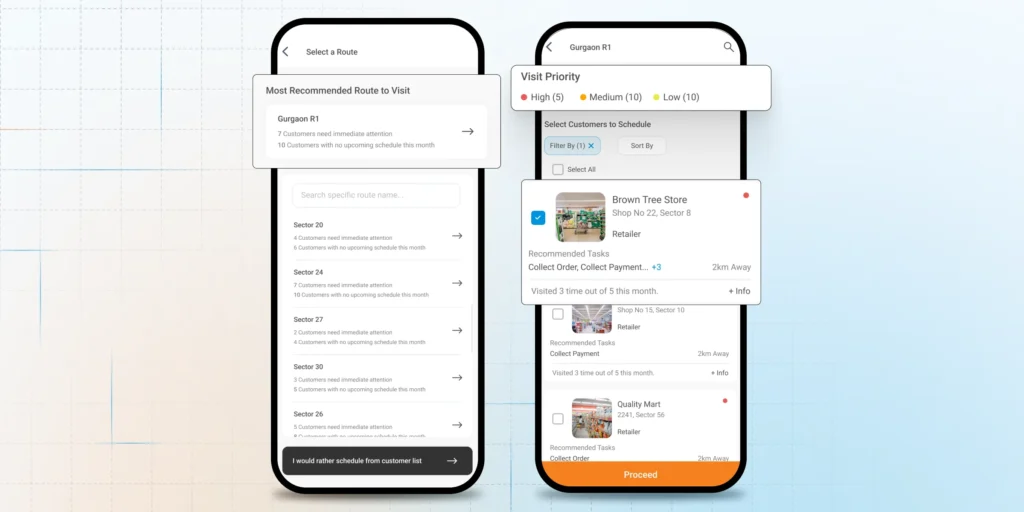
- Scheduling AI Agent: Recommends prioritized customer visit sequences, highlighting critical customers. Particularly valuable in industries or roles with discretionary visit planning, for both frontline users and managers.
- Customer Insights AI Agent: Delivers an intelligent, concise agenda for each customer visit, surfacing key talking points and opportunities based on history and context.
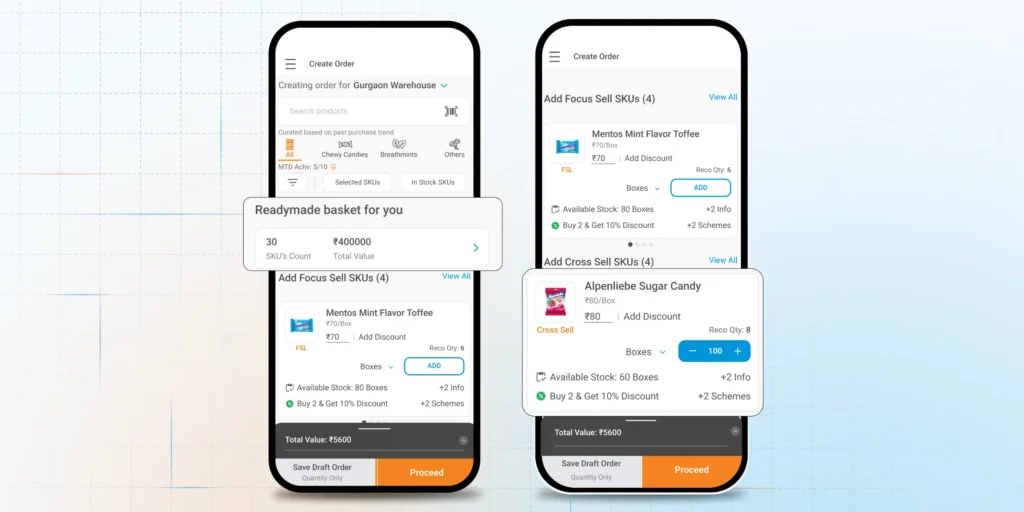
- Order AI Agent: Advanced order recommendations with extensive backend configurability:
- Toggle between push-driven mode (acting as if monthly SKU quotas must be achieved from day one) and pure replenishment mode
- Seasonality controls (omit certain SKUs in specific months)
- Variable cross-sell SKU counts and selection by customer segment
- Increased dialoguing and conversational interaction within the order audit journey
All agents operate strictly in assistive mode with two governing principles for enterprise trust:
- Strict reliability controls: Agents never guess or hallucinate. They fully understand queries before responding, clearly state assumptions, and ask for clarification when confused, preferring to seek context over providing incorrect or incomplete information.
- Supreme power to the end user: Recommendations and insights support decision-making and suggest future actions, but execution is always at the discretion of the field user or manager.
We redesigned the Sales Team app to be truly AI-native. Rather than adding independent, bolted-on AI executions that increase interface complexity, agents are seamlessly merged into existing sales rep journeys:
- Intelligent insights appear in short, consumable formats directly within workflows (e.g., order screen and customer profile)
- Interaction feels like conversing with a third-person assistant helping in real time
- Preserves the mapped reality of on-ground execution while layering assistive power conversationally
Agent selection followed a deliberate three-point framework:
- High business impact on core goals
- Fast rollout and customer adoption (minimal prep or dependencies)
- Clear measurability of value, so customers can prove impact to their own management
Early traction (3 to 4 months post-rollout in initial customers) has been encouraging:
- Strong usage of Copilot for instant managerial insights
- Good adoption of Scheduling Agent and Customer Insights Agent across frontline and management roles
- In select deployments, 5% of orders processed with assistance from Order AI Agent within the first couple of months, moderate but exciting as a starting benchmark
This positions us for the next phase: deeper adoption, fine-tuned usability, and robust measurability of business impact.
Deeper Functional Scalability
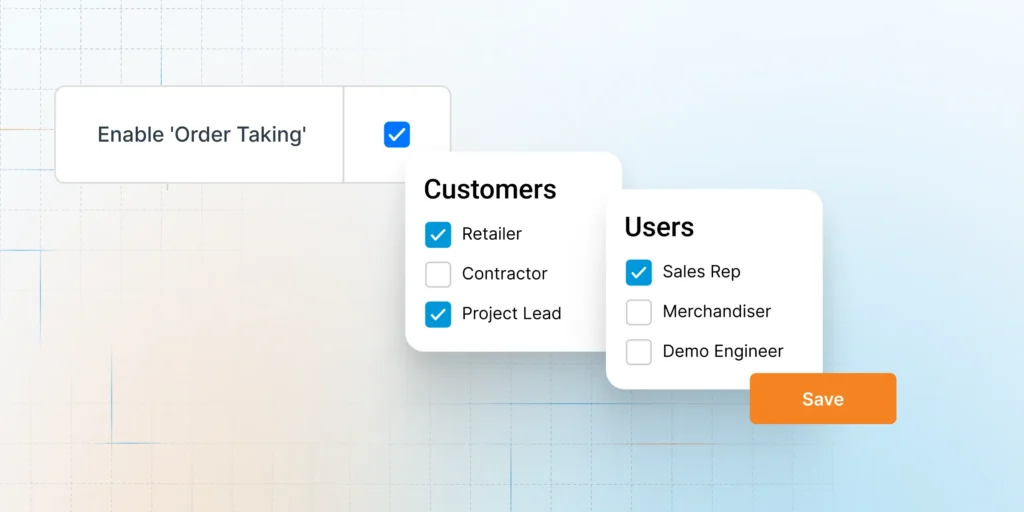
Functional scalability sits at the very top of the need hierarchy for enterprise retail and distribution customers (right alongside security and reliability). Without it, even the most feature-rich platform becomes garbage for enterprises. They cannot live with software that works today but cannot adapt tomorrow.
Enterprise customers operate across diverse channels: general trade, modern trade, HoReCa, B2B, and deal with varied entities: retailers, dealers, influencers, contractors. Processes differ dramatically.
Examples:
- Onboarding a dealer involves rigorous credit worthiness checks and complex workflows; onboarding an influencer/contractor in building materials might require only basic KYC details.
- Order workflows vary by channel. No approvals needed in general trade with fixed prices and schemes; but in modern trade, rate contracts and price difference claims come into play; in HoReCa/B2B, orders often involve volume-based deals, discounts at order level, and mandatory approvals.
- Incentive calculations can be highly custom. One pharma customer in Indonesia required a completely different, very complex incentivization model with multiple variables, seasonality factors, changing targets, and weights.
We deepened functional scalability across entity-level (different profiles and processes per entity type), workflow-level (channel-specific variations), and component-level/platform-level (custom logic in middleware) dimensions. This prevents data silos, ensures unbroken workflows, and provides the essential foundation for AI.
Key advancements in 2025:
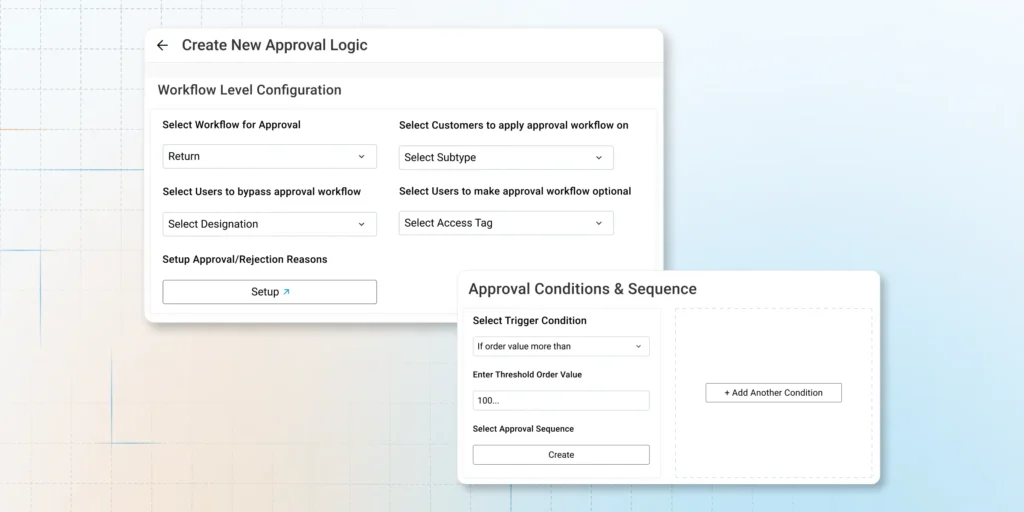
Multi-level Approvals: Introduced comprehensive support with configurable triggers (e.g., credit limit breaches, deal-making), approval hierarchies varying by customer segment or workflow, and user-level restrictions (e.g., new users in a territory limited to specific order types). Applied across orders, payments, returns, customer additions, and custom activities.
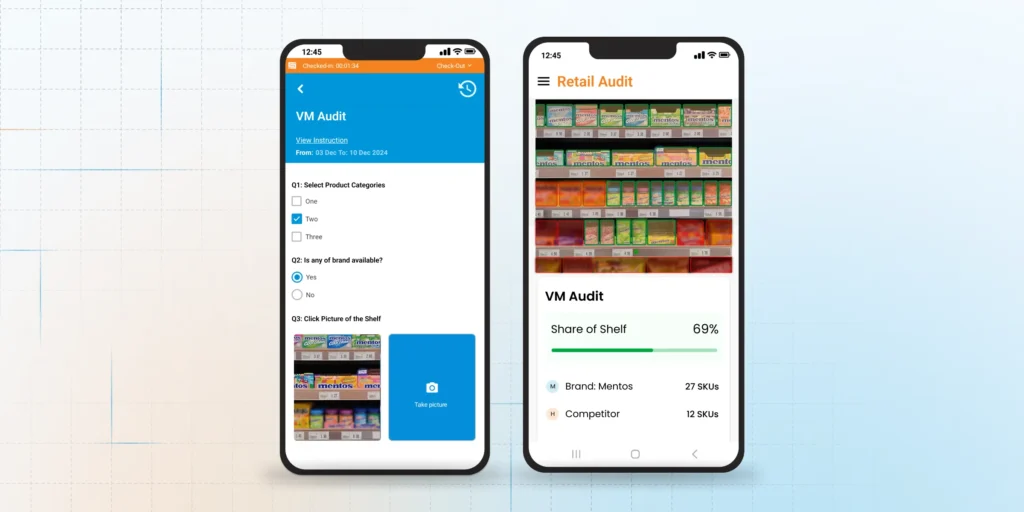
Campaign Forms evolving into full-fledged Custom Workflows: What started as simple forms now supports unlimited independent workflows. Features include templatized designs (e.g., merchandising workflows capturing availability and visibility by outlet category), independent geofencing (one activity mandatory at customer location, others allowable from anywhere), and decoupling from customer context (e.g., standalone market feedback from sales managers or team member feedback). This extends to expense management, asset auditing, and linking to standard activities.
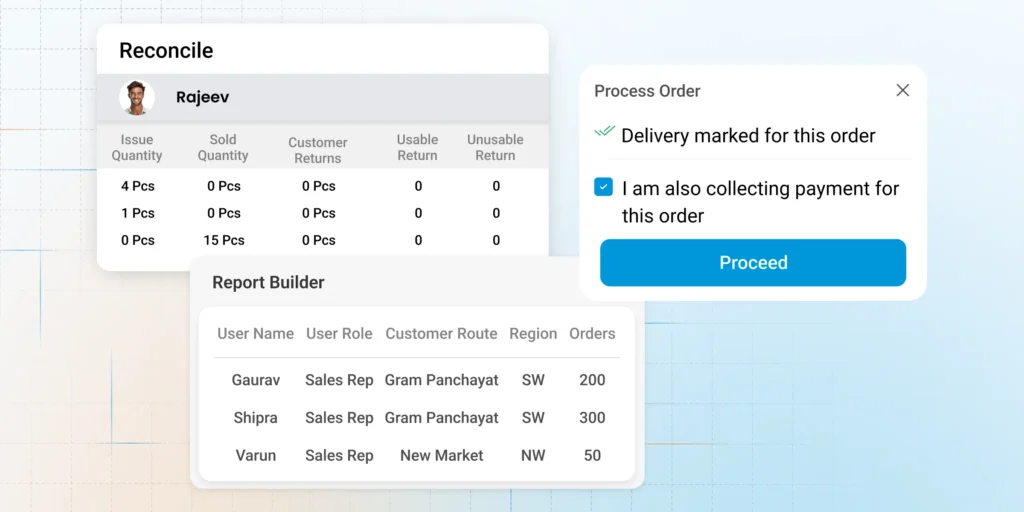
Van Sales Module: Addressed real-world risks in continuous stock picking scenarios (e.g., salespeople loading vans multiple times daily with cash/stock exchanges). Added controls for outstanding limits in the market, credit control efficiency, audited stock issuance (confirmed by warehouse managers or others), single-interface audit tables for accountability, and easier inventory/cash reconciliation, to safeguard company and distributor interests.
Designation-based controls: Beyond role-based controls, introduced designation-level granularity. Brands define designations and tie workflows to them, enabling different activities for different designations visiting the same outlet (e.g., sales rep focused on ordering, merchandiser on visibility, technical specialist on product demonstration/specification in building materials or specialized FMCG).
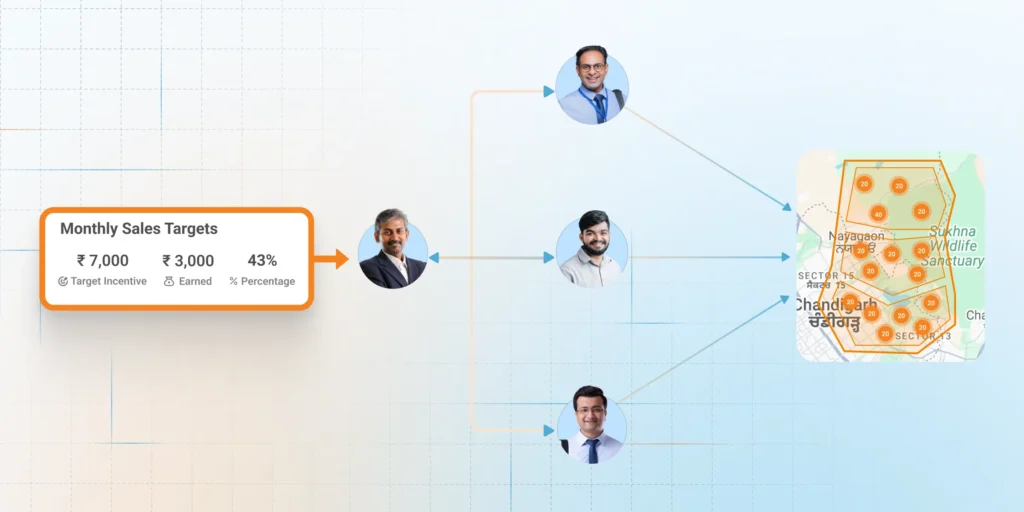
Logical auto-computation for targets: As a goal-driven platform, ensured seamless alignment between top-down annual operating plans and bottom-up realities. Supports multiple targets per customer (e.g., by category, territory, team), automatic aggregation, and visibility for sales heads to spot and correct mismatches.
Configurable Incentives: Adopted a two-layer approach, standardized frontend for user progress tracking (earned vs. potential incentives) but fully open backend via middleware, allowing companies to define custom rules without code, accommodating diverse parameters and business needs.
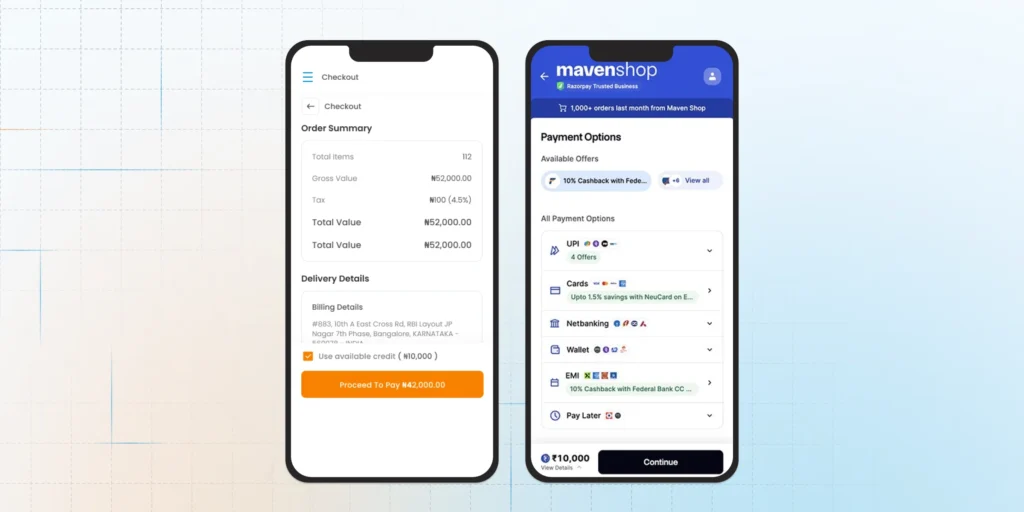
Digital payments in the Customer App: Enabled for primary channel partners (dealers/distributors placing direct orders to the company). Critical for large networks (e.g., paint companies with 10,000+ dealers), reduces reliance on credits/debits/payment terms, and supports emerging behaviors like prepaid-only orders (especially in markets like Africa).
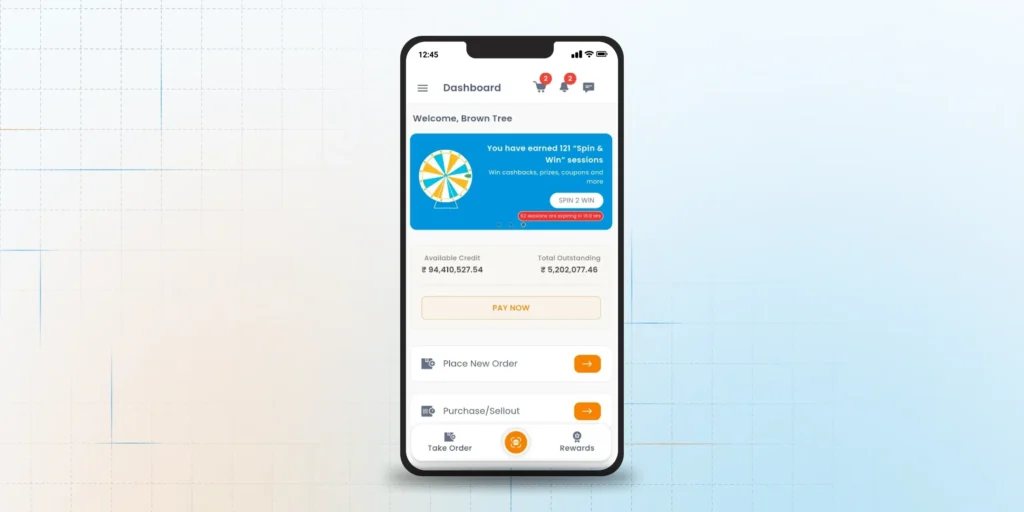
Native Android Customer App: Added as a third medium alongside WhatsApp and web interfaces. Improves discoverability (whitelabeled brand logo), user experience, and brand control over eB2B channels as digital channel mix evolves.
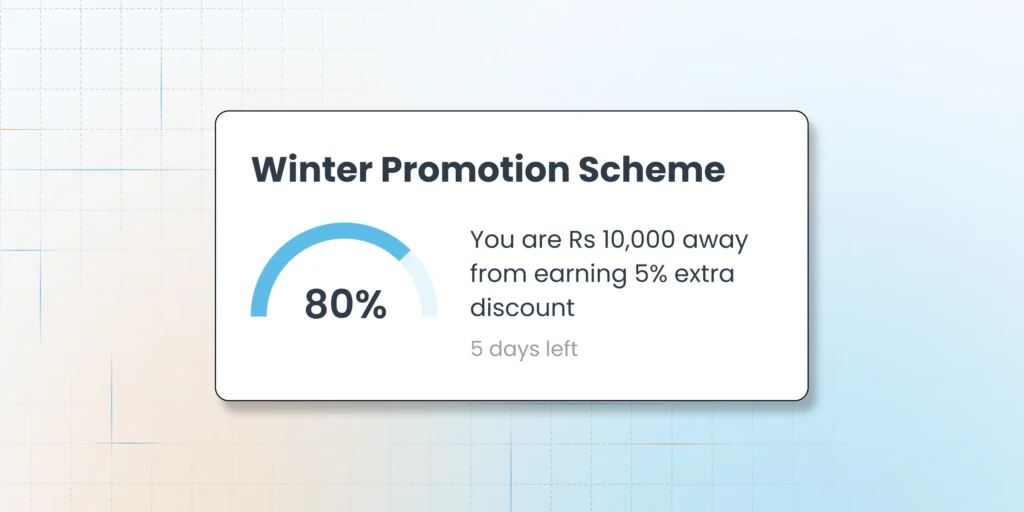
Trade promotion APIs: Exposed the trade promotion module via APIs. Ensures scheme promises made in BeatRoute (e.g., volume-based discounts) remain consistent in fulfillment systems (SAP/ERP), even when dispatch quantities change, the API re-applies schemes accurately.
Functional scalability remains a timeless principle for us, continuously deepened to match the varying needs of channels, processes, and customers in retail and distribution.
AI Native User Experience
Scalability and user experience are diagonally opposite forces in enterprise software. If not handled carefully, packing in extensive configurability and functional scalability can degrade UX, leading to complexity creeping into the end-user interface.
We consciously addressed this inherent tension throughout 2025 by following a clear principle: keep the complexity of capabilities separate from the complexity of experience.
- Configuration complexity was confined to the admin layer and backend layer where it belongs, powerful tools for setup without burdening daily users.
- The frontend was deliberately simplified using smart defaults that cater to the 80% common cases, with additional options revealed only in subsequent layers when needed.
- We enforced uniform design patterns across the platform: consistent color codes, CTA placement, touch interactions, and layout logic, so the UI itself communicates key information intuitively, reducing cognitive load even as workflows grow more complex.
- For complex workflows, the UI proactively guides users by visually signaling status, required actions, and next steps without overwhelming the screen.
We also proactively paid down UX debt accumulated from prior years’ heavy focus on functional scalability. Customer feedback highlighted instances of non-intuitive or broken flows, such as needing to jump between multiple screens to access related data (e.g., viewing order details in one place but payment or scheme details requiring navigation away). These were systematically fixed to create smoother, more discoverable journeys where all relevant context is accessible intuitively with minimal taps.
The AI-native redesign of the Sales Team app represented a major UX leap forward. Rather than bolting on independent AI executions that add interface complexity, we seamlessly merged assistive agents into existing sales rep journeys:
- Agents provide intelligent, short-consumption insights (e.g., customer history, recommendations) directly within workflows.
- Interaction feels conversational, like talking to a third-person assistant, without forcing users to switch contexts or manage separate AI tools.
- This preserves the hard-mapped reality of on-ground execution while layering in AI power conversationally and non-intrusively.
The outcome is that everyone including field users, managers, admins, and channel partners experience a platform that feels simpler and more intuitive despite supporting vastly greater functional depth, delighting end users and enabling higher adoption of both new scalability features and AI agents.
Faster Turnaround Time Through Crack Team
A standout initiative in 2025, and a key enabler for customer satisfaction, was the launch of the Crack Team: a small, highly focused, elite squad dedicated to delivering customer-requested enhancements rapidly.
In the past, every customer request, whether edge-case fixes, minor workflow tweaks, or specific configurability needs, funneled into the single main product roadmap pipeline. This created two major problems: it hampered core roadmap development timelines and led to inconsistent response times for customers. Enterprises in retail and distribution often have urgent, business-specific needs that cannot wait for quarterly or half-yearly release cycles.
To solve this classic SaaS challenge, we made a bold promise at the end of 2024: establish a dedicated team that would bring customer-requested enhancement turnaround time down to 45 days, half our previous 90-day commitment, without stalling the core product roadmap or compromising long-term architectural integrity.
The Crack Team operates with flipped priorities compared to the main roadmap team:
- For the core roadmap team, system architecture, reusability, foundational scalability, and long-term vision always come first.
- For the Crack Team, speed comes first, the goal is to unblock the customer, solve today’s immediate need, and keep business moving.
This specialized squad is trained to:
- Quickly analyze high-priority items and edge cases
- Rapidly create and automate test cases
- Perform fast regression testing
- Ship enhancements with minimal overhead
They leverage modern AI development tools such as Cursor, GitHub Copilot, and Claude Code to accelerate coding, debugging, test case generation, and automation scenarios.
Because the team repeatedly handles similar high-velocity tasks, they have developed deep expertise in rapid, safe delivery within BeatRoute’s modular architecture.
The results speak for themselves: in 2025, we delivered approximately 70% of customer-requested enhancements within 45 days. We continue to work on pushing the remaining 30% into the same timeframe.
This has created a true win-win:
- Customers receive faster, more consistent responses to their specific needs, leading to higher satisfaction and stickiness
- The core product team can focus undistracted on strategic initiatives like goal-driven AI and timeless functional scalability
- Overall roadmap execution has become smoother and more predictable
By separating these streams, we have addressed a longstanding perception issue in scalable SaaS platforms: that functional scalability often comes at the cost of slow turnaround for bespoke requests. The Crack Team proves that enterprises can have both, deep configurability and rapid enhancement cycles.
This initiative has been instrumental in delighting customers and reinforcing BeatRoute’s position as a truly partner-centric, agile enterprise platform for retail and distribution.
Looking Ahead to 2026
2025 was about laying the right foundation and introducing high-impact assistive AI. 2026 will focus on launching more AI agents, fine-tuning existing agents for deeper adoption, building measurability of impact, and continuing timeless functional scalability.
Retail brands deserve to be on the cutting edge. We are committed to delivering that, organically, rapidly, and reliably.
Thank you to our customers for your invaluable feedback, and to our team for the incredible hard work that made this year possible.
Here is to an even more impactful 2026.
The BeatRoute Product Team
December 2025