Sales and Distribution Management: Demystifying Sales Transformation
 Soham Chakraborty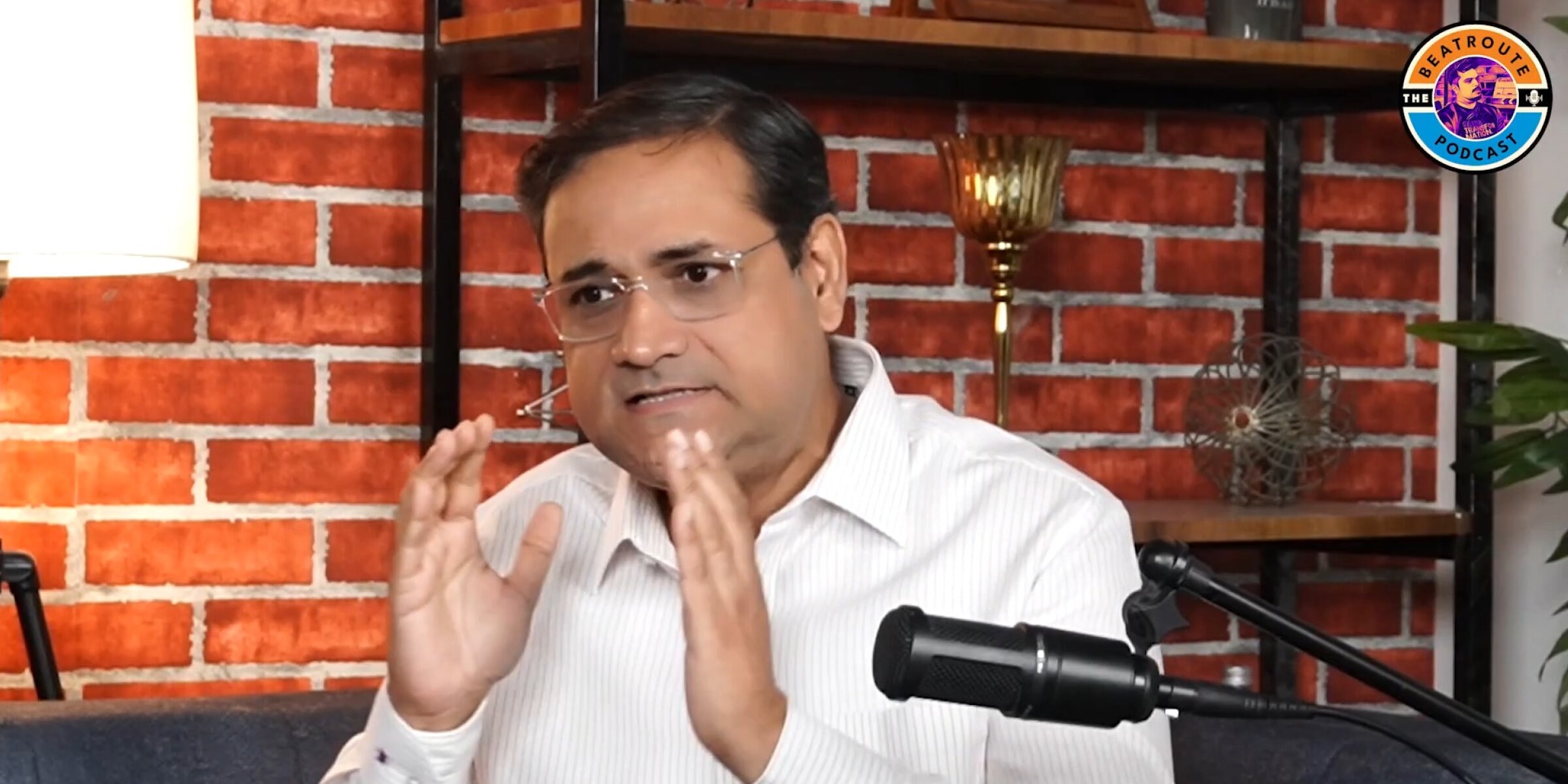
Table of Content
TL;DR This article is for FMCG sales leaders and distribution managers struggling to turn boardroom strategy into outlet-level execution. It features insights from FMCG expert Sandeep Ray on the two biggest blockers (managerial ownership and tool gaps) and how Goal-Driven AI closes the execution gap.
Sales transformation in sales and distribution management is the work of turning a sales strategy into field-level execution across your sales team and channel partners. It fails when plans stay in boardrooms and never reach the retail shelf. This article distills insights from FMCG sales expert Sandeep Ray on what separates brands that execute from those that plan.
Sandeep Ray brings over a decade of experience in retail distribution for Fast-Moving Consumer Goods (FMCG) companies. He is a sales consultant, trainer, content creator behind the YouTube channel Skill to Will, and author of the book “FMCG Sales Toolkit.”
About Sandeep Ray
Sandeep’s journey from sales professional to trainer, advisor, and author reflects a career built around one question: how do you make sales knowledge actually land in the field. His curiosity for new processes pulled him into training, and his passion for engagement made public speaking a natural extension.
He later moved into consulting to bridge the gap between training and implementation. Smaller organizations often lack access to structured sales expertise, and Sandeep built his practice around closing that gap. His YouTube channel, Skill to Will, now serves existing clients, professionals, startups, and MBA students. He has also announced a digital edition of “FMCG Sales Toolkit.” What follows is Sandeep’s perspective on sales transformation in retail distribution. BeatRoute’s platform provides the technology backbone that supports many of the execution principles he describes.
The biggest problem hampering sales transformation
The common thread across companies of every size is execution. Startups need help setting up go-to-market strategy and operational processes. Larger brands already have plans but struggle to ensure those plans are carried out at the retailer level. Both need trained reps, clear directives, and KPIs that measure real-world outcomes.
Robust plans, good products, and ample budget do not guarantee success. Success hinges on flawless execution at the ground level. Retailer engagement, product visibility, shelf presence, and in-outlet implementation all decide the outcome. BeatRoute addresses this by tying every field action to the brand’s stated sales goals through Goal-Driven AI, so execution gaps become visible before they cost revenue.
Why organizations fail to improve sales execution
Sandeep points to two factors that disconnect plans from action. The first is the lack of managerial ownership. Leadership may formulate comprehensive strategies, but if managers do not align with those priorities, execution breaks down. The second is the absence of the right tools and resources at the manager level, which leaves them unable to translate strategy into action.
The level of involvement from top leadership also shapes outcomes. Organizations where senior executives actively participate in implementation execute better than those that delegate fully to middle managers. Closing the gap between strategy and execution depends on managerial ownership and adequate resources working together. BeatRoute’s Customer Insights AI Agent gives managers outlet-specific, actionable interventions so they can coach reps on what matters most at each visit.
How to implement sales tools for maximum impact
Tools must match the managerial level they serve. Frontline managers need support tools that give real-time guidance during market execution. Middle and senior managers need tools geared toward planning, analysis, and decision-making. When each layer gets tools tailored to its work, performance and operations improve together.
Sandeep is clear that planning precedes tracking. Decide geography first, pick the people who will own the initiative, and define the processes that keep control and consistency as you scale. BeatRoute’s zero-code configurability lets brands adapt the platform to their specific sales hierarchy and trade structure rather than forcing a one-size-fits-all workflow. When people, processes, and brand vision align, tools amplify outcomes instead of replacing strategy.
How to measure execution quality at the outlet level
Sales methodologies keep evolving, which is why companies revisit transformation every few years. The key question becomes how to measure the success of these projects. The answer is execution quality at the retail outlet, the point where consumers actually meet the brand.
Most companies already track performance up to the ASM or distributor level. The harder metric is what happens inside the outlet. In FMCG, effectiveness shows up as better outlet visibility, wider product range availability, and stronger retailer engagement. BeatRoute’s VM Audit AI Agent captures this shelf-level data through field photos, scoring planogram compliance and share of shelf so brands can verify whether execution reached the outlet.
How technology improves sales performance when tied to goals
Historically, sales reps worried that technology meant surveillance and micro-monitoring. Brands that framed technology as a tracking mechanism saw adoption stall. The companies that succeeded repositioned technology as a way to hit targets more easily and execute better in the market.
Automation alone is not enough. An app is not just a digital order booking tool. Used well, it aligns with rep incentives, guides the next best action, and pushes execution quality up. BeatRoute is the only SFA-DMS built to execute your sales goals. Traditional SFAs give you data. BeatRoute uses Goal-Driven AI to ensure your sales strategy gets executed by your sales team and channel partners. Reps see what matters next, managers see where coaching is needed, and leadership sees whether plans are actually moving the outlet.
Why sales training must match the management level
When experienced sales reps move into managerial roles in FMCG, experience alone is not enough. Managers need training built for their expanded responsibilities, covering leadership, team development, and coaching. Rep-level instincts do not automatically translate into manager-level outcomes.
Sandeep identifies consistency as the biggest skill gap among frontline reps. Inconsistent performance usually traces back to lack of discipline and unclear direction. For sales heads and directors, the common gap is planning. Too many leaders rely on intuition instead of data. Sandeep urges leaders to prioritize a few high-impact goals and resource them properly. BeatRoute Copilot supports this by giving managers natural-language access to performance data, so coaching conversations start from facts rather than hunches.
How digital tools are reshaping sales training
Sales training is shifting from long classroom sessions to shorter, digitally delivered modules spread over months. These bite-sized formats improve retention, keep reps engaged, and allow trainers to test learning in real-world scenarios. Attendance and participation are easier to monitor than in classrooms.
The shift also encourages discipline. Online platforms give trainers clearer visibility into who is actually participating, and modular delivery creates more touchpoints across the learning journey. BeatRoute complements this by embedding execution guidance directly into the rep’s daily workflow through the Scheduling AI Agent and Customer Insights AI Agent, so training reinforcement happens during actual field visits. Across BeatRoute deployments, the Scheduling AI Agent has lifted productive visits from 45% to 78%.
How to manage change across the sales hierarchy
Sales transformation touches every level of the sales and distribution hierarchy, so change has to be planned for the long haul. Results do not show up right after a training session or a software rollout. Behaviour change is gradual, and expectations must match that reality.
A phased approach works best. Break objectives into smaller milestones, set clear goals for each phase, and assign ownership at every level. Frontline managers are the make-or-break group. Without their active buy-in, even the best plans fall short. BeatRoute’s phased deployment model supports this by letting brands roll out region by region so early wins build confidence before the full rollout. Lasting change is a team effort. A cross-functional group drawn from HR, sales, IT, marketing, and other relevant areas runs the initiative together.
How reps and leaders stay ahead of industry trends
Retail sales and distribution keep evolving, and sales professionals have to keep learning. The richest source of industry insight is the market itself. Beyond discussions about targets and product placement, reps should pay attention to category movement, emerging trends, and shifts in consumer behaviour.
Learning starts with active observation in the market. When reps immerse themselves in real conversations and store activity, they understand where their brand sits in the category landscape. Sandeep pairs firsthand observation with data analysis to refine judgment. BeatRoute’s analytics and reporting tools give reps and managers the data side of this equation, so market intelligence plus data discipline keeps the team ahead of shifts in the field.
Where sales transformation goes from here
Sandeep’s closing advice centres on three things. Execution is paramount, so planning has to translate into ground-level action with simple, focused directives. Leadership should move beyond target-chasing toward opportunity-based selling that reads market dynamics and positions the brand for durable growth. And in a fast-shifting industry, investing in people through training, coaching, and retention is the work that compounds.
The brands that win are the ones whose strategies actually reach the shelf. That is the job Goal-Driven AI was built for, and it is what BeatRoute guides every rep and channel partner toward every working day.
See how BeatRoute can support your sales transformation goals. Reserve una demostración gratuita hoy.
Preguntas más frecuentes
What is sales transformation in retail distribution?
Sales transformation is the process of redesigning how a brand sells so that strategy actually reaches the retail outlet. It covers people, processes, tools, and training across the sales team and channel partners. BeatRoute’s Goal-Driven AI turns transformation plans into day-to-day rep actions tied to measurable sales outcomes.
Why do most sales transformation projects fail?
They fail because plans stop at the boardroom. The two most common causes are weak managerial ownership and a lack of tools at the frontline and mid-management level. Without manager buy-in and the right execution support, good strategy does not convert into shelf-level results.
How should sales transformation success be measured?
Measure it at the retail outlet, not the dashboard. Track outlet visibility, range availability, retailer engagement, and productive visit quality. These metrics show whether strategy reached the shopper, which is the only place sales transformation can really be judged.
When should a brand roll out sales technology during a transformation?
Only after the plan, people, and processes are set. Decide geography, ownership, and workflow first. Then layer technology that guides reps toward goals rather than just tracking them. BeatRoute’s zero-code configurability lets brands adapt the platform to their structure rather than forcing a generic workflow.
How does BeatRoute support sales transformation?
BeatRoute uses Goal-Driven AI to ensure company goals get executed by the sales team and channel partners. It combines SFA, DMS, and AI Agents for ordering, scheduling, visual merchandising, and analytics in one platform. Managers use BeatRoute Copilot for natural-language performance queries and coaching.