Scheme Management Software: BeatRoute’s Period Purchase Schemes for Dealer Loyalty
 Soham Chakraborty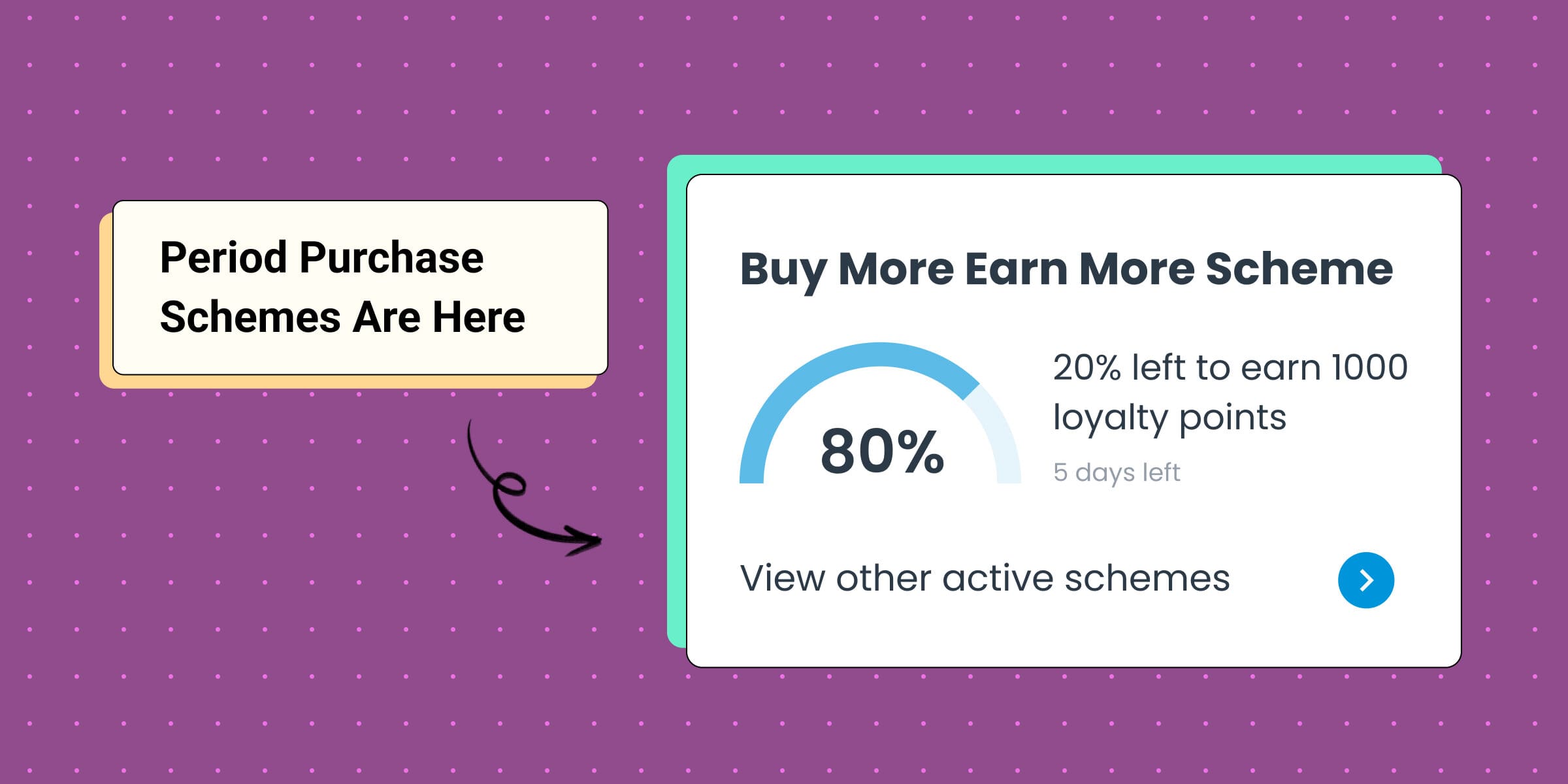
Table of Content
TL;DR This guide is for trade marketing managers and sales ops leaders who need scheme management software to run period purchase schemes that shape dealer buying behavior over weeks, not single invoices. It explains how tiered targets, roll-up mechanics, and automated settlement turn cumulative incentives into measurable dealer loyalty and higher average order values.
Period purchase schemes are cumulative-incentive programs that reward a customer for what they buy across a defined window (a month, a quarter, or a season), not what they buy in a single invoice. The retailer or dealer sees a running tally against a target, earns a tiered reward when they cross it, and gets nudged toward the next slab before the window closes. Scheme management software automates this entire lifecycle so brands can run dozens of schemes in parallel without the ops team drowning in spreadsheets.
Period purchase schemes sit between one-off in-bill offers and annual volume agreements. For brands that want to shape buying behavior over weeks rather than transactions, they are the most effective lever available within the Trade Promotion Workflows toolkit.
What period purchase schemes are and how they differ from in-bill schemes
A period purchase scheme is a trade-promotion structure that tracks cumulative purchases against a target over a defined window and rewards the customer when they hit it. The customer is usually a dealer, distributor, or retailer, and the window is set by the brand based on the category’s buying rhythm.
Traditional in-bill schemes reward a single transaction. Buy 10 cases of product A, get 1 free on this order. They are fast to configure and easy to execute, but they do not shape behavior beyond that invoice. The dealer who orders 10 cases weekly behaves the same way whether the scheme exists or not.
Period purchase schemes change the shape of the deal. Instead of rewarding a single order, they reward a pattern. A dealer who orders 40 cases in a month gets one reward; a dealer who orders 60 cases gets a bigger one. The dealer now has a reason to consolidate orders with one brand instead of splitting them across multiple suppliers. BeatRoute’s scheme management software makes it possible to configure, track, and settle these schemes without any of the manual overhead that typically kills their effectiveness.
How tiering and roll-up mechanics work
The two mechanics that make period schemes work are tiering (how rewards scale with volume) and roll-up (how purchases across channels add up to one tally). Both are simple in principle and easy to get wrong in execution.
Tiered targets give dealers a visible ladder
A single flat target (hit 50 cases, earn a reward) is a binary outcome. Dealers either win or lose. Dealers who fall short by a few units have no incentive to keep pushing, and dealers who cleared the target early have no reason to buy more.
Tiering fixes both problems. A three-tier structure (30 cases earns a 2% rebate, 50 earns 4%, 80 earns 7%) keeps every dealer in the game for the whole window. Dealers near a tier boundary place an extra order to cross it. Dealers well past one tier start chasing the next. The brand pays more in absolute rebate but sells substantially more volume. BeatRoute lets trade marketing teams configure unlimited tier breakpoints per scheme without writing any code.
Roll-up logic aggregates every purchase path
A modern dealer buys from a brand through multiple channels. Some orders come through the field rep’s mobile order form. Others are placed directly on the Retailer & Influencer App. Van sales drops cases between planned visits. A period scheme only works if all three paths roll up into one cumulative tally the dealer can trust.
Roll-up also has to handle returns, damages, and credit notes cleanly. A dealer who returns damaged stock should not be punished by having it count against their scheme total. BeatRoute’s scheme management software lets brands configure these rules per scheme, document them, and make them visible to both sides before the window opens.
Progress visibility is the quiet multiplier
A dealer who cannot see their running total cannot respond to it. The scheme becomes something the brand talks about and the dealer forgets. A dealer who sees a live progress bar showing their position relative to the next tier makes a different purchasing decision when the rep walks in on the 25th of the month.
The best-performing schemes publish progress in two places: the field rep’s order screen (so the rep can pitch the value of one more pallet) and the dealer’s own app (so the dealer decides to top up before the rep even arrives).
Why period schemes change dealer psychology
The real value of a period scheme is not the rebate dealers earn. It is the behavior the scheme changes while the window is open. Four shifts are consistent across categories.
| Behavioral shift | What happens | Business impact |
|---|---|---|
| Order consolidation | Dealer buys category demand from one brand instead of splitting across three | Higher share of wallet per dealer |
| Early-window ordering | Dealers order earlier to build a buffer toward a higher tier | Flatter month-end spikes, sharper demand signal |
| Range expansion | Slower SKUs carry scheme weight, so dealers stock them to hit the target | Wider shelf range without additional incentive spend |
| Loyalty beyond the window | Dealers who hit top tier restructure buying around the scheme long-term | Retention that survives one-off competitor promos |
Schemes can be configured to count only specific SKUs, specific ranges, or a minimum product mix toward the tier tally. A well-designed scheme pushes dealers to stock slower SKUs they would otherwise skip, because those SKUs carry weight toward the next tier. Over two or three windows, shelf range widens without any additional incentive spend. BeatRoute’s loyalty management module supports these configurations natively.
Automating the period scheme lifecycle with scheme management software
Running period schemes manually is where most brands lose value. The scheme is announced in a PDF, tiers are tracked in a spreadsheet, the payout is calculated at window close with a two-week lag, and disputes consume the sales ops team for the next month. By the time the dealer sees their reward, the next window is already half-finished. Scheme management software eliminates every manual step in this chain.
Configure schemes without code
BeatRoute’s Trade Promotion Workflows let trade-marketing teams configure a period scheme (window, eligible SKUs, tier breakpoints, reward structure, exclusion rules) in an afternoon rather than a development sprint. Schemes go live across the field force and the Retailer & Influencer App the same day. When a rule needs tweaking, the update goes live without rebuilding anything.
Roll up orders and show live progress
Every order path (rep-captured, dealer self-ordered through the Retailer & Influencer App, van sales drop-off) rolls up into the dealer’s running total in real time. The dealer sees progress on their phone. The rep sees it on the order screen. Managers see aggregate progress by territory and can spot underperforming clusters while there is still window left to rescue.
Nudge dealers at the right moment
The Order AI Agent watches each dealer’s progress against their tier targets and recommends the order that closes the gap. When a dealer is 8 cases short of the gold tier with four days left, the rep’s next-visit screen shows a targeted suggestion to unlock the higher rebate. Nudges are specific, timed, and tied to money the dealer is about to leave on the table. BeatRoute customers report 4-6% sales uplift from AI-driven order recommendations alone.
Settle automatically at window close
When the window closes, the payout calculation is already done. The dealer sees their final tier, the credit note or reward is issued, and the next scheme opens the day after. Sales ops stops chasing spreadsheets and starts designing the next scheme. Disputes drop because the dealer saw their progress live for the whole window.
Where scheme management software is heading next
Period purchase schemes work because they shape a pattern, not a single purchase. Tiered targets keep every dealer engaged. Roll-up mechanics make the tally trustworthy. Live progress turns the scheme into a running conversation instead of a once-a-month PDF. And automation is what lets a brand run dozens of schemes in parallel without the ops team drowning.
The next wave of scheme management software will use predictive analytics to recommend tier breakpoints before the window opens, based on dealer purchasing history and territory-level demand patterns. BeatRoute’s Customer Insights AI Agent already provides outlet-specific recommendations that trade marketing teams use to pre-test scheme hypotheses. Enterprises on BeatRoute report an average 12.6% sales uplift in the first year and 10-16X ROI on Enterprise deployments.
Pesan demo to see how BeatRoute’s Trade Promotion Workflows configure, track, and settle tiered period schemes without the spreadsheet drag.
Pertanyaan yang sering diajukan
What is a period purchase scheme?
A period purchase scheme is a trade-promotion structure that rewards a dealer, distributor, or retailer for cumulative purchases across a defined window (typically a month, quarter, or season) rather than on a single invoice. Scheme management software like BeatRoute automates tiered targets, live progress tracking, and automatic settlement.
How is a period purchase scheme different from an in-bill scheme?
An in-bill scheme rewards a single transaction (buy 10, get 1 free on this order). A period purchase scheme rewards a pattern of orders across a window. In-bill schemes do not change buying behavior beyond the invoice. Period schemes shift how a dealer allocates their category spend for weeks at a time, which is where the real volume uplift comes from.
Why do tiered targets work better than a single flat target?
A flat target is binary: dealers who fall short stop trying, and dealers who cleared early stop buying. A three-tier ladder keeps every dealer engaged for the whole window. Dealers near a boundary push for the next tier, and dealers well past one tier chase the one above. Brands pay more rebate but sell meaningfully more volume.
How does BeatRoute roll up orders across channels for a period scheme?
BeatRoute aggregates every order path (rep-captured orders, self-orders placed through the Retailer & Influencer App, and van sales drop-offs) into a single cumulative total per dealer in real time. Returns, damages, and credit notes follow configurable rules set at scheme launch. The dealer sees a live progress bar on their phone, and the field rep sees the same figure on the order screen.
How does the Order AI Agent help dealers hit their tier?
The Order AI Agent watches each dealer’s progress against tier targets and recommends the specific order that closes the gap. When a dealer is a few cases short of the next tier with days left in the window, the rep’s next-visit screen surfaces a targeted nudge tied to the rebate the dealer is about to miss. The agent delivers 4-6% sales uplift from recommendations alone.
Can period purchase schemes drive range expansion?
Yes. Schemes can be configured to count only specific SKUs or a minimum product mix toward the tier tally. A well-designed scheme makes slower SKUs scheme-eligible, which pushes dealers to stock the parts of the range they would otherwise skip. Over two or three windows, shelf range widens without additional incentive spend.