Enhance Brand-Dealer Relationships and Loyalty
 Soham Chakraborty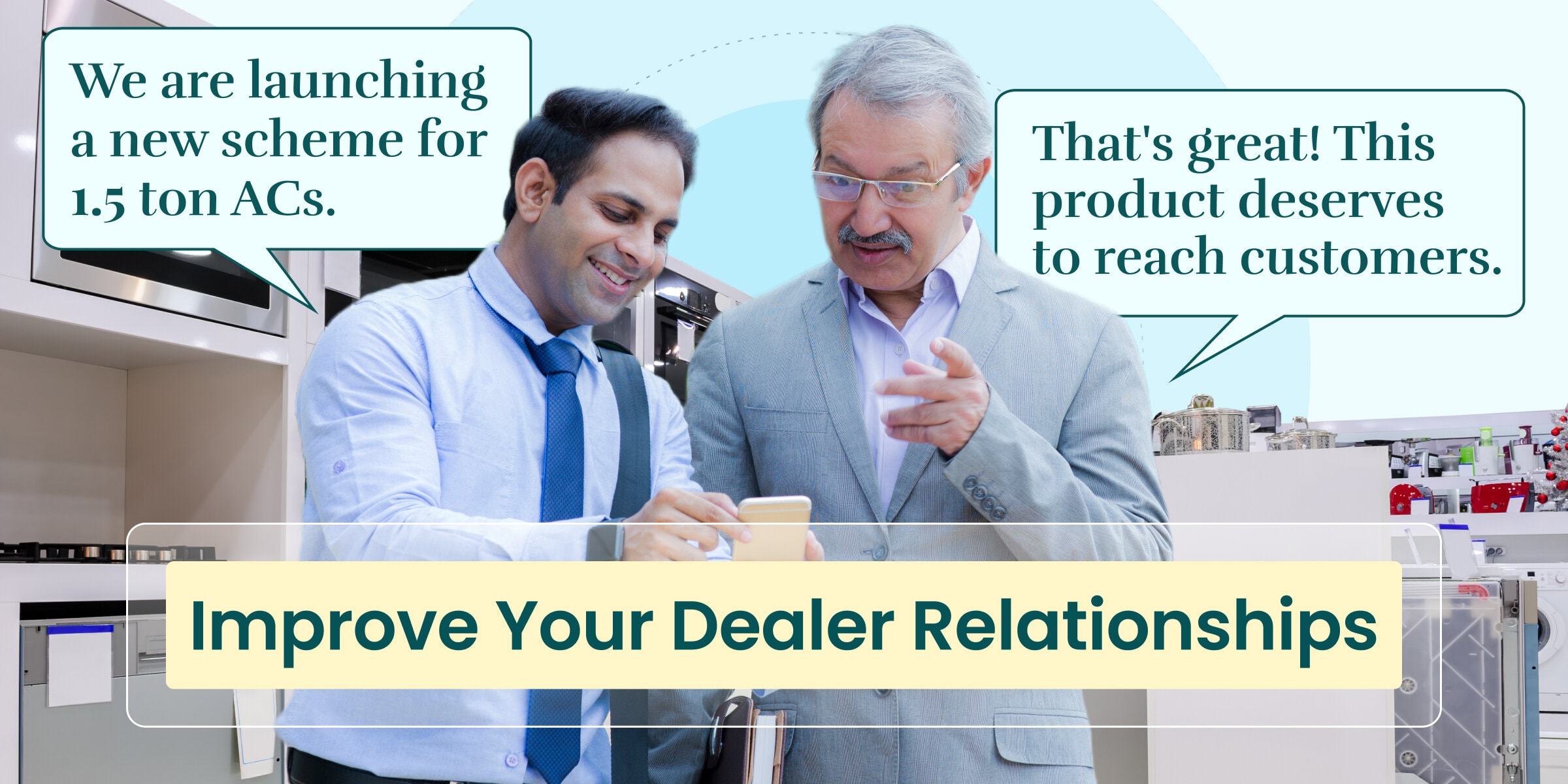
Table of Content
In industries like building materials, paints, and hardware, the brand-dealer relationship decides whether your products move off the shelf or sit there. You can onboard dealers all day, but loyalty — the kind that keeps them pitching your SKUs over a competitor’s — comes from a specific stack of behaviors: fast ordering, transparent fulfilment, timely rewards, and a credible issue-resolution loop.
BeatRoute’s Dealer App and performance dashboards deepen brand-dealer trust by making secondary sales transparent.
This guide covers four levers that strengthen brand-dealer relationships — multi-channel engagement, dealer empowerment through a dealer app, loyalty incentives, and feedback capture — and how a purpose-built platform operationalizes them.
Key takeaways
- Dealer loyalty is earned through fast ordering, order transparency, timely rewards, and a visible issue-resolution loop — not through volume discounts alone.
- Multi-channel engagement over WhatsApp, Viber, email, and in-app messaging keeps dealers informed about launches, schemes, and order status without friction.
- A dealer app lets partners self-serve orders, view history, apply promotions, and flag issues — cutting dependency on sales reps for routine tasks.
- Digital loyalty programs with tiered rewards and automated redemption lift repeat-order frequency and basket size month over month.
- In-app feedback and ticketing replaces slow manual capture, so dealer problems reach the right team before the dealer defects to a competitor.
1. Multi-channel engagement
Communication frequency is the first test of a brand-dealer relationship. Ask yourself: how often does your dealer hear from you with something useful — a new launch, a scheme they qualify for, an order update? Without a structured channel, that information decays before it reaches the dealer, and the dealer starts treating you as transactional.
A dealer engagement platform combines email, calls, instant messaging, and app nudges into one stream so nothing slips. When you launch a new paint shade or a new category SKU, dealers receive the product sheet, pricing, and training video on the same app they place orders on. Gamified training — points for completing a product module — turns learning into an earned reward instead of a chore.
Dealers who feel treated as partners, not order-takers, engage more, carry deeper ranges, and refer you to other trade.
2. Dealer empowerment
Sales reps carry limited bandwidth. A well-designed dealer app shifts routine actions — ordering, checking promotions, pulling invoices — to the dealer, which is itself a core driver of trust.
What a dealer app should enable:
- Digital ordering with full history, live pricing, applicable promotions, and credit/debit notes in a clean view — and secure payments from within the same app.
- Promotion nudges over WhatsApp or Viber so dealers apply new schemes the moment they launch, instead of finding out two weeks late.
- Lead hand-off: buyer leads captured on your website route to the nearest dealer, lifting conversion and giving the dealer a tangible revenue benefit from partnering with you.
- Multimedia product content — videos, spec sheets, comparison charts — so dealers sell with confidence rather than guessing at positioning.
3. Incentivizing loyalty
A well-run loyalty program is the clearest signal that you value a dealer’s performance. The structure matters: points, tiered rewards, and redemption mechanics all have to be digital, visible, and fast — otherwise the program feels like paperwork.
Free onboarding items — branded pens, notebooks, sample kits — start the relationship on the right note and double as an introduction to your rewards structure. Ongoing rewards should be configurable: you need to re-weight points toward slow-moving SKUs, new launches, or seasonal pushes without rebuilding the program.
A loyalty program tied to a dealer app delivers four things a spreadsheet-run scheme cannot:
- Constant engagement through recurring notifications
- Transparent reward balances and redemption catalogs
- Faster reward fulfilment with less manual reconciliation
- Real-time view of which rewards are driving incremental orders
Track how fast the program is attracting new dealers. If competitors are offering better structures, you need to re-tier before defections start.
Reward types worth combining:
- Tiered rewards based on performance
- Transaction-linked discounts and cashback
- Exclusive dealer-only events that build social capital around your program
4. Feedback capture and issue management
Order and fulfilment problems are inevitable. What separates brands is resolution speed. Manual feedback — captured by a rep on a visit and typed into an email days later — is too slow to protect the relationship.
In-app feedback and ticketing makes issue capture instant. The dealer logs a complaint from their phone, the right team sees it in real time, and the resolution loop closes before the dealer starts shopping alternatives. This is how small teams outperform larger rivals on trust.
A ticketing layer pays off because:
- It scales even with a small resolution team
- It standardizes how tickets are registered, tagged, and prioritized
- Stakeholders stay in the loop via a single thread instead of forwarded emails
- Escalations route cross-functionally without a phone chain
- It absorbs volume that manual processes cannot
Do this consistently and your brand becomes the dependable one — the one dealers keep buying from long-term.
How BeatRoute strengthens brand-dealer relationships
BeatRoute is the only SFA-DMS built to execute your sales goals, and the dealer-side features reflect that: digital schemes reward dealers for hitting order thresholds, which in turn lifts basket size; a full digital order flow supports first-order, edit, repeat, and tracking on one screen; and a configurable B2B rewards engine lets you tune incentives by performance, purchase history, or category — without changing the underlying app.
The broader point: brand-dealer relationships are symbiotic. Dealers need brands with a thriving book; brands need dealers who pitch their SKUs first. In a crowded market, the brand with the better operating system for that relationship wins the shelf.
Try our free demo to see what a purpose-built dealer engagement layer looks like.
Frequently Asked Questions
What defines a strong brand-dealer relationship?
A strong brand-dealer relationship is measured by repeat-order frequency, range depth, and dealer willingness to push your SKUs first. It is built on fast digital ordering, timely and transparent rewards, quick issue resolution, and consistent product and promotion communication — the dealer should never feel like an afterthought.
How does a dealer app improve loyalty?
A dealer app shortens every friction point — ordering, scheme application, invoice access, ticket logging — and makes your brand easier to do business with. Dealers stay loyal to the brand that costs them the least time and gives them the most information, especially during launches, seasonal pushes, and credit cycles.
What should a dealer loyalty program include?
A dealer loyalty program should combine tiered performance rewards, transaction-linked discounts, and exclusive access events. Points generation, tracking, and redemption must be fully digital, and the program needs configurability so you can re-weight rewards toward specific SKUs, regions, or launches without redesigning it.
How do you handle dealer feedback efficiently?
The fastest way is in-app feedback and ticketing. Dealers log an issue from their phone, it routes to the right team with full context, and stakeholders track resolution in one thread. This beats manual rep-captured feedback on speed, accuracy, and volume capacity, which is what protects the relationship when something goes wrong.