
TL;DR Panduan ini untuk pemimpin sales dan trade marketing FMCG yang mengevaluasi channel HoReCa sebagai peluang pertumbuhan. Panduan ini membahas apa arti HoReCa, tantangan penjualan utama yang dihadapi brand di hotel, restoran, dan kafe, serta cara mengatasinya dengan eksekusi lapangan yang terstruktur. BeatRoute menjalankan lead management, perencanaan kunjungan, dan order capture HoReCa pada satu platform Goal-Driven AI.
Pasar HoReCa bernilai USD 3,02 triliun pada 2023, dengan pendapatan diperkirakan mencapai USD 3,88 triliun pada 2030. Pasar minuman HoReCa saja bernilai USD 155 miliar dengan CAGR sekitar 3,5% hingga 2032.
HoReCa adalah channel yang tidak bisa diabaikan oleh brand FMCG dan consumer goods. Brand seperti Nestle Professional dan Unilever Food Solutions meraih pendapatan signifikan dari HoReCa dengan menawarkan bahan baku dalam jumlah besar dan solusi yang disesuaikan. Coca-Cola dan PepsiCo memanfaatkan kemitraan dengan jaringan fast-food dan kafe, sementara Amul dan Britannia menyasar segmen ini dengan produk khusus seperti paket keju dan produk bakery.
Hotel, restoran, dan kafe membeli secara berbeda dibanding outlet general trade atau modern trade, butuh level layanan yang berbeda, dan memberi imbalan kepada brand yang hadir dengan produk, skema, dan konsistensi rep yang tepat. Panduan ini membahas apa arti HoReCa, mengapa ia penting bagi FMCG, tantangan penjualan yang dihadapi brand di channel ini, serta tools dan praktik untuk memenangkannya.
Apa itu HoReCa?
HoReCa adalah industri Hotel, Restoran, dan Catering, yang secara kolektif merepresentasikan sektor food service dan perhotelan. Ini adalah bisnis-bisnis yang berspesialisasi menyiapkan dan menyajikan makanan, minuman, serta menyediakan akomodasi bagi tamu dan pelanggan.
Platform sales enablement BeatRoute dibangun untuk menangani siklus penjualan multi-touch yang dituntut HoReCa, dari profiling lead hingga pemenuhan order.
Hotel
Dalam HoReCa, hotel menawarkan akomodasi, layanan perhotelan, dan pengalaman bagi tamu. Cakupannya mulai dari resort mewah hingga hotel bisnis, melayani klien yang beragam. Industri FMCG berfokus memasok hotel dengan barang esensial seperti perlengkapan mandi, minuman, dan camilan, memastikan ketersediaan melalui channel penjualan dan distribusi yang efisien.
Restoran
Sebagai fondasi industri HoReCa, restoran berfokus menghadirkan pengalaman kuliner lewat perpaduan rasa, suasana, dan layanan personal. Mulai dari kedai kasual hingga tempat gourmet, restoran mencakup beragam kategori dan pelanggan. Elemen FMCG di sini adalah memastikan pasokan bahan utama yang konsisten (bumbu, saus), produk kemasan, dan minuman (air kemasan, minuman berkarbonasi).
Kafe dan layanan catering
Kafe adalah ruang sosial yang membawa pesona unik ke sektor HoReCa, menawarkan minuman, camilan, dan suasana yang ramah. Mulai dari coffee house artisan hingga jaringan global, kafe sangat bergantung pada produk FMCG seperti biji kopi, teh, produk susu, dan makanan panggang.
Layanan catering menangani makanan dan minuman untuk pesta, pernikahan, dan acara. Mereka pun butuh pasokan barang FMCG yang stabil, mulai dari air kemasan, bumbu, hingga bahan makanan.
Tantangan utama di channel HoReCa
Channel HoReCa termasuk dalam industri perhotelan dan punya serangkaian tantangan tersendiri yang harus dinavigasi brand.
Lead management dan onboarding pelanggan yang tidak efisien
Profiling menciptakan persona dengan faktor yang telah ditentukan, membantu brand memahami establishment HoReCa mana yang cocok dengan mereka dan mana yang tidak. Tanpa profiling yang mempertimbangkan lokasi, potensi penjualan, dan jenis kuliner, brand bisa berakhir meng-onboarding restoran atau kafe yang tidak relevan. Misalnya, jika brand Anda menjual saus dan bahan masakan China, menawarkannya ke restoran Texas tidak akan relevan karena kebutuhan bahan mereka sangat berbeda.
Penugasan lead dan upaya onboarding manual tidak andal dan rentan kesalahan. Tidak ada profiling yang efektif, tidak ada lead management yang tersistem, dan tidak ada struktur yang dapat diandalkan untuk meng-assign tugas secara otomatis atau mencocokkan ahli yang tepat untuk demo.
Pengelolaan relasi pasca-onboarding yang kurang optimal
Berhasil meng-onboarding pelanggan saja tidak cukup. Untuk memastikan repeat order, brand perlu memelihara relasi dengan pelanggan. Tidak adanya sistem terintegrasi yang menangani lead management dan pengelolaan relasi sekaligus menyebabkan kesenjangan komunikasi, layanan buruk, dan peluang upselling atau cross-selling yang terlewat.
Sebagian besar aplikasi tracking field sales hanya memenuhi salah satu dari kebutuhan ini. Akibatnya, tim penjualan akhirnya memakai dua tool terpisah, atau hanya sebagian alur kerja mereka yang terdigitalisasi oleh sistem yang diterapkan. Hal ini juga memengaruhi kemampuan brand membangun loyalitas jangka panjang.
Visit hygiene yang tidak efektif
Melacak ke mana tim penjualan Anda pergi memang perlu, tetapi Anda juga harus memastikan kunjungan itu produktif. Pelacakan kunjungan yang buruk menyebabkan pengalaman pelanggan yang tidak konsisten, follow-up yang terlewat, peluang yang hilang di key account, dan kunjungan yang berlebihan. Berjualan di channel HoReCa kerap melibatkan siklus penjualan kompleks yang memadukan interaksi via telepon dan tatap muka.
Tanpa pelacakan kunjungan dan alur kerja yang tersistem, menjaga visit hygiene menjadi sulit. Hal ini menyebabkan hasil penjualan yang menurun dan pendapatan dari channel yang berkurang.
Pemesanan manual dan minimnya transparansi
Pemesanan manual terjadi lewat telepon atau tatap muka, di mana detail order dicatat di kertas. Cara ini tidak andal, karena catatan bisa hilang dan order menjadi kacau. Hal yang sama berlaku untuk skema apa pun yang menyertainya.
Mengirim produk di channel HoReCa membutuhkan logistik dan distribusi yang sangat efisien, terutama ketika barangnya mudah rusak dan sensitif terhadap waktu. Tidak adanya sistem transparan untuk melacak order dan pengiriman menambah miskomunikasi serta minimnya akuntabilitas dalam supply chain.
Kegagalan komunikasi produk dan skema
Jika pelanggan Anda tidak mengetahui produk atau varian rasa baru, mereka tidak akan memesannya. Sering kali, sales rep memperkenalkan produk saat kunjungan, sehingga membuang waktu berharga yang seharusnya bisa dimanfaatkan lebih produktif.
Tanpa sales force automation di HoReCa, sales rep Anda harus menghafal dan menerapkan skema secara manual, membuat prosesnya rentan kesalahan. Seorang rep yang ditugaskan ke puluhan kafe dengan ragam produk yang banyak dan skema yang unik tidak bisa diandalkan untuk memastikan item yang tepat ditawarkan ke establishment yang tepat dengan skema yang tepat setiap kali.
BeatRoute mengatasi tantangan ini melalui satu platform terpadu yang mendigitalisasi lead management, pelacakan kunjungan, pemesanan, dan komunikasi skema dalam satu alur kerja.
Solusi untuk tantangan utama di HoReCa
Digitalisasi lead management dan onboarding
Mendigitalisasi lead management dan onboarding pelanggan menyederhanakan proses penjualan Anda, memastikan profiling, penugasan lead, dan pelacakan tugas yang akurat. Dengan memakai faktor yang telah ditentukan seperti lokasi, potensi penjualan, dan jenis kuliner, sebuah field sales app dapat memastikan semua pelanggan yang di-onboarding selaras dengan persona yang relevan dengan penawaran brand.
Anda dapat mengotomatiskan penugasan lead, menjadwalkan demo dengan ahli teknis untuk pelanggan, dan melacak progres pipeline secara real-time, menghilangkan ketergantungan pada proses manual dan mengurangi keterlambatan. Mekanisme co-working antara tim penjualan dan ahli teknis selama demo mendorong kolaborasi menuju tujuan bersama.
Terapkan sistem terpadu
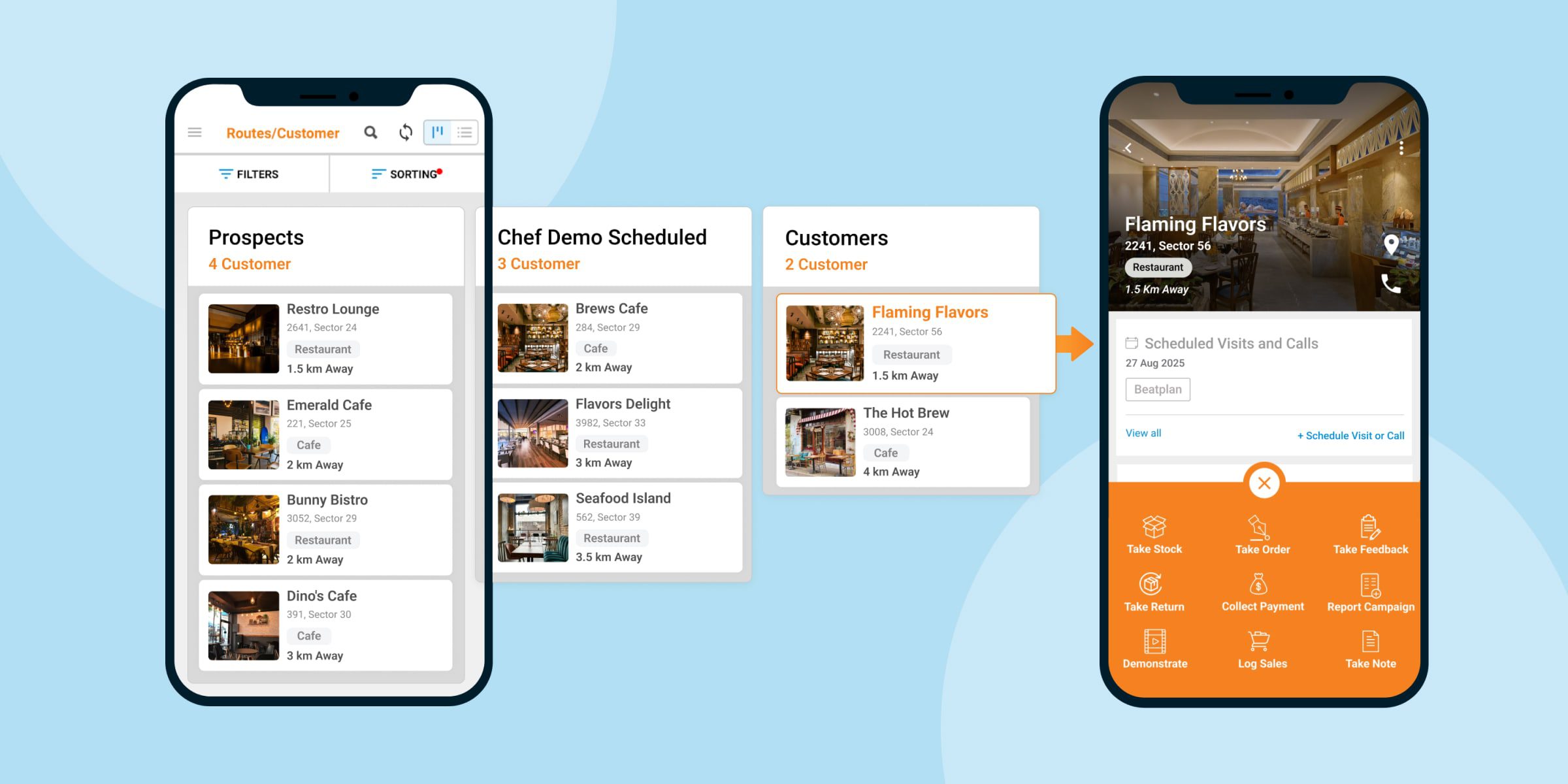
Mengintegrasikan lead management dan pengelolaan relasi dalam satu platform memastikan pengalaman pelanggan pasca-onboarding yang efektif dan loyalitas jangka panjang. Dengan memusatkan data pelanggan yang ditangkap saat lead generation, field sales app memungkinkan tim penjualan secara proaktif menjawab kebutuhan pelanggan, memberikan bantuan personal, dan mengidentifikasi peluang upselling atau cross-selling.
Sistem terpadu menghilangkan inefisiensi akibat tool yang tersilo, mendorong komunikasi yang konsisten, dan memperkuat relasi pelanggan. Sales rep fokus memenuhi target sembari memastikan kunjungan tepat waktu, dan manajer dapat memantau aktivitas, mendeteksi masalah (kunjungan terlewat, performa buruk, celah proses), serta mengambil tindakan cepat.
Pastikan visit hygiene
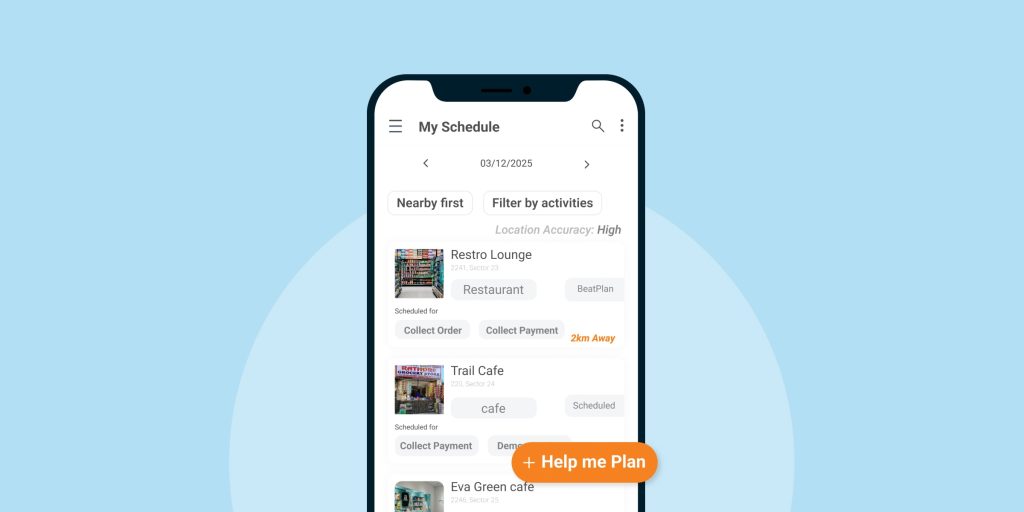
Sistem manajemen kunjungan yang andal memastikan visit hygiene bagi sales rep dengan melacak mereka, merencanakan interaksi yang produktif, dan menyederhanakan alur kerja. Solusi berbasis AI membantu brand mengidentifikasi pelanggan HoReCa yang berpotensi untuk pembelian jangka panjang, mendorong efisiensi tim penjualan dan meningkatkan pendapatan.
Pelaporan dan analisis dari sistem seperti ini memungkinkan manajer penjualan menangani masalah yang membutuhkan perhatian mereka.
Beri pelanggan kemampuan memesan secara digital
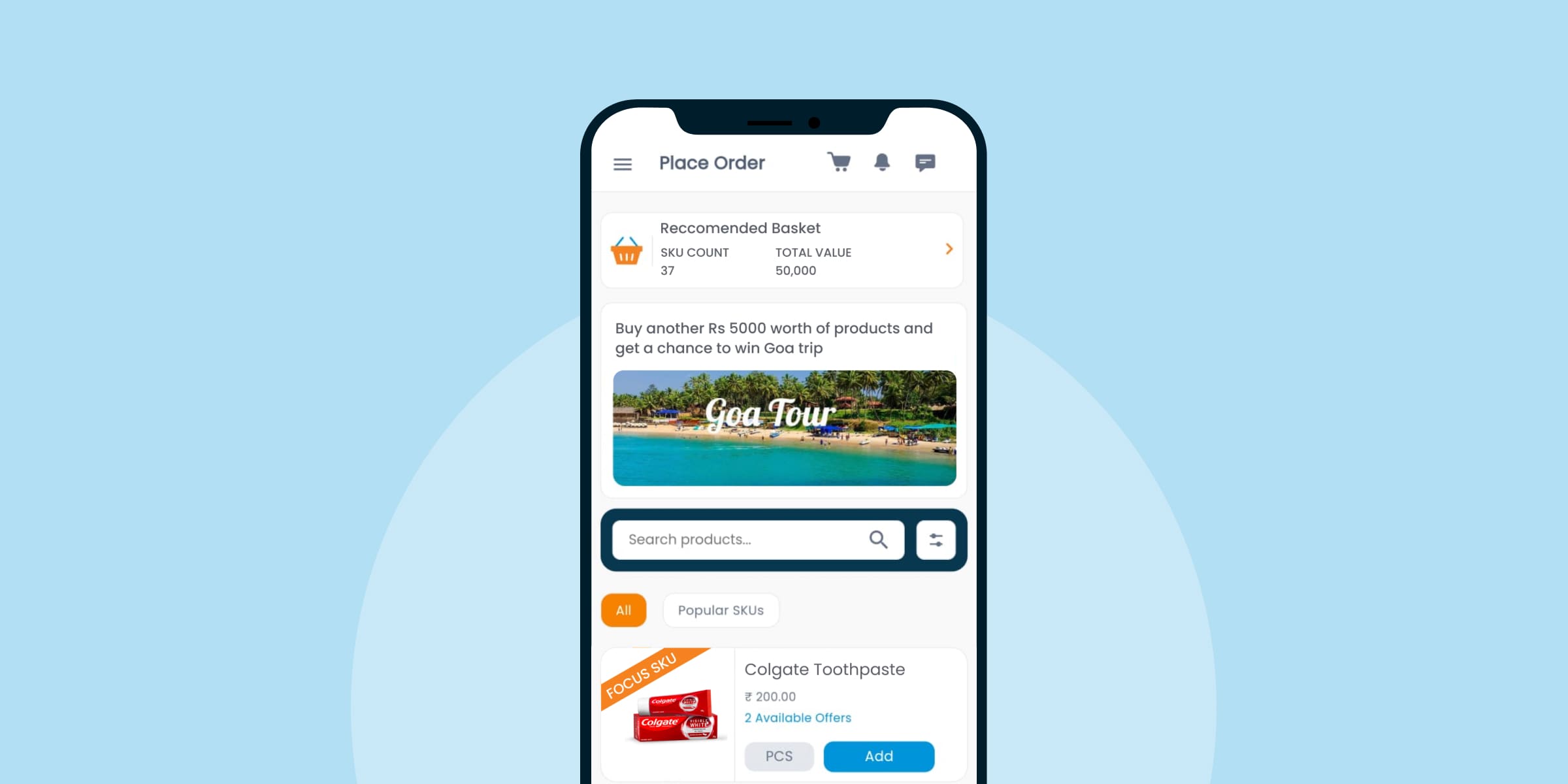
Mendigitalisasi proses pemesanan, baik di sisi sales rep maupun pelanggan, memastikan pengguna dapat melihat apa yang mereka pesan, skema yang terkait dengan setiap order, dan statusnya hingga pemenuhan.
Bayangkan skenario ini: sebuah kafe yang melayani banyak pelanggan setiap hari tidak boleh kehabisan biji kopi. Lonjakan pelanggan mendadak membuat stok cepat menipis dan tidak akan bertahan lebih dari beberapa hari. Sales rep baru akan berkunjung minggu depan. Daripada menjadi kafe tanpa kopi, pemiliknya akan mencoba menghubungi sales rep lewat telepon atau membeli dari kompetitor. Membekali kafe dengan aplikasi untuk memesan sendiri sesuai kebutuhan menjaga mereka tetap loyal pada brand Anda dan menjaga arus pendapatan tetap utuh.
Dorong komunikasi yang jelas
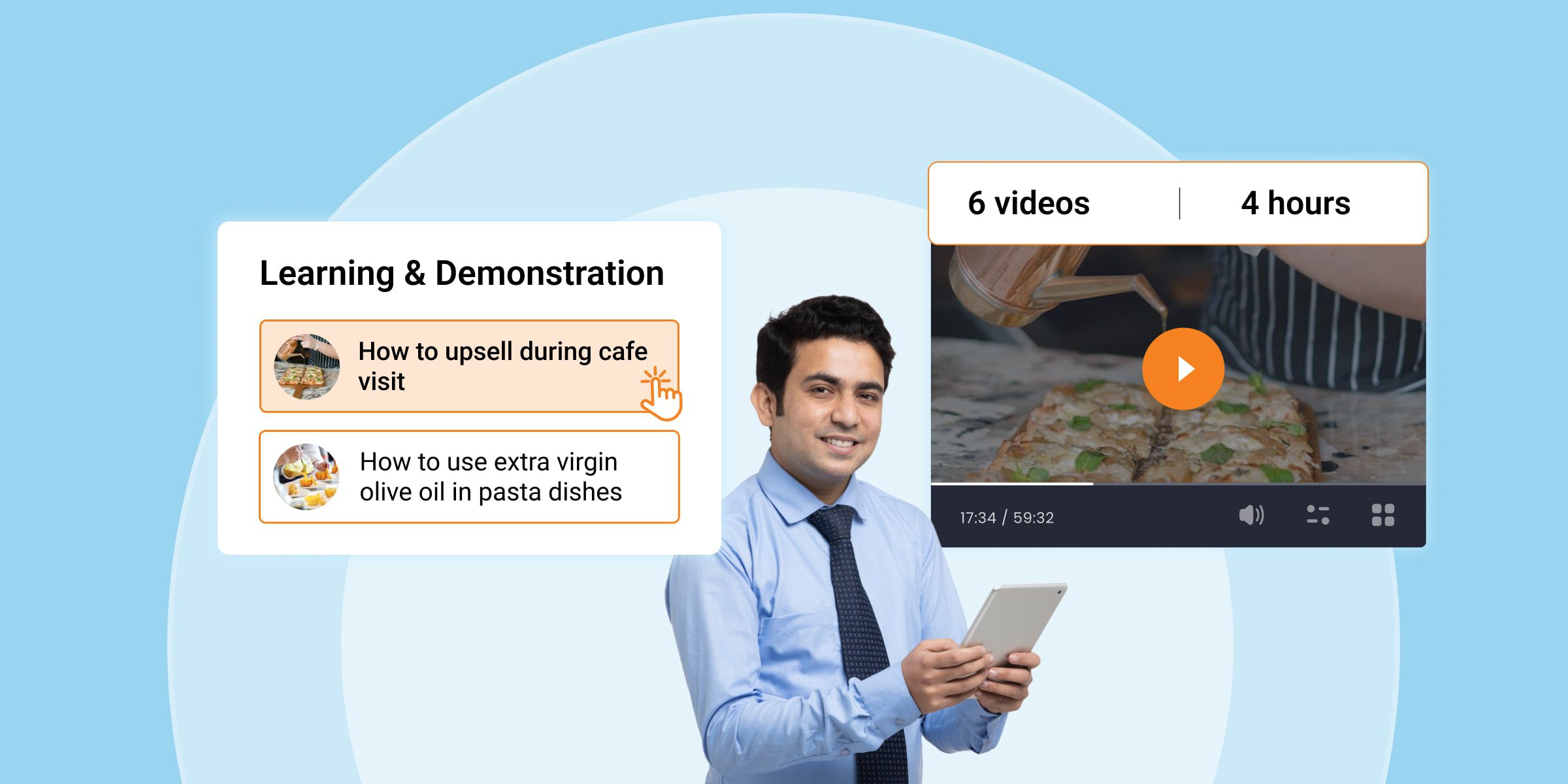
Menerapkan platform sales enablement digital dengan kemampuan multimedia memungkinkan pelanggan HoReCa menelusuri peluncuran produk dan mengedukasi diri. Sales rep juga dapat mengakses informasi produk dan skema yang detail dan disesuaikan untuk tiap establishment, memastikan pitch yang efisien.
Dengan ini, sales rep dapat fokus membangun relasi dan mendorong konversi, memaksimalkan produktivitas di seluruh pelanggan. Mengotomatiskan penerapan skema lebih jauh meminimalkan kesalahan dan mencegah hilangnya penjualan.
Platform Goal-Driven AI dari BeatRoute menangani kelima solusi ini pada satu sistem, sehingga brand HoReCa tidak perlu tool terpisah untuk lead management, pelacakan kunjungan, pemesanan, dan komunikasi.
Praktik terbaik di channel HoReCa
Ini bukan sekadar saran, melainkan rekomendasi kuat tentang cara brand tetap unggul saat beroperasi di channel ini.
Adopsi teknologi
Brand harus terus memperbarui sistem mereka secara berkala. Jika Anda menjalankan tim field sales modern di atas sistem legacy, bottom line Anda tidak akan pernah setara dengan pemain lain di pasar. Misalnya, jika tim penjualan Anda masih memakai dua aplikasi berbeda untuk pelacakan kunjungan dan lead management, mereka membuang waktu berpindah-pindah di antara keduanya atau tidak dapat memakainya secara efisien, yang berujung pada kesalahan, kesenjangan komunikasi, dan pengalaman pelanggan yang terputus. Di sinilah sistem terpadu yang mengintegrasikan keduanya dalam satu platform membuat perbedaan.
Profiling pelanggan
Memprofilkan pelanggan Anda penting karena strategi yang sama tidak akan berhasil untuk semua orang. Anda tidak bisa berharap mendorong produk premium yang dirancang untuk hotel mewah bintang lima ke sebuah kafe kecil. Profiling dengan atribut khusus memungkinkan bisnis melakukan segmentasi dan menyasar pelanggan secara lebih efektif. Dengan mendefinisikan atribut spesifik seperti jenis bisnis, kapasitas pembelian, lokasi, preferensi produk, dan perilaku pembelian, tim penjualan dapat mengategorikan pelanggan ke dalam kelompok yang bermakna.
Memahami psikologi pelanggan
Tangkap dan dokumentasikan data penjualan untuk memahami apa yang diinginkan pelanggan Anda dan apa yang kemungkinan akan terus mereka beli. Pemahaman atas pola pikir mereka inilah yang memisahkan brand yang baik dari brand yang hebat dan mencegah pemborosan sumber daya dan waktu. Misalnya, sebuah resort mewah yang melayani klien berdaya beli tinggi tidak akan membeli perlengkapan mandi dalam jumlah kecil, melainkan membeli produk kelas atas dalam jumlah besar. Membuang waktu untuk menawarkan hal lain ke establishment ini akan menjadi upaya yang sia-sia.
Kunjungan tim demo
Di channel HoReCa, brand sering meminta chef mereka mendemonstrasikan produk di dapur pelanggan untuk menunjukkan kualitas dan penerapannya. Hal ini biasanya dilakukan secara ad-hoc, dengan sales rep mengoordinasikan kunjungan secara informal lewat telepon atau pesan. Minimnya perencanaan ini menyebabkan kebutuhan pelanggan terabaikan, tidak ada pelacakan dampak kunjungan yang baik, dan peluang penjualan yang terlewat sehingga menurunkan efektivitas keseluruhan upaya akuisisi pelanggan.
Gamifikasi target penjualan
Selaraskan tujuan Anda dengan tujuan sales rep dan pelanggan di lapangan. Cari tool SFA yang menawarkan visibilitas tujuan penuh kepada sales rep: milestone yang tercapai, poin yang harus dikumpulkan untuk milestone atau reward berikutnya, dan scorecard performa mereka. Ini memberi insentif bagi mereka untuk berusaha ekstra setiap hari.
Kunjungan ulang sales rep
Tidak cukup hanya dengan pelanggan HoReCa mengambil produk Anda. Relasi brand-pelanggan perlu terus dipelihara. Secara konsisten melibatkan pelanggan dengan kunjungan fisik menjaga brand dan produknya tetap segar di benak mereka. Pelanggan mungkin juga punya masalah atau ekspektasi yang ingin mereka diskusikan dengan sales rep, di luar pemesanan, yang tidak seefektif jika lewat platform digital. Perencanaan kunjungan yang tersistem dan memprioritaskan kunjungan berdasarkan urgensi (pembayaran tertunda, penurunan penjualan) memastikan kunjungan menjadi efektif sekaligus produktif.
Jaga pelanggan tetap terinformasi
Redakan kekhawatiran pelanggan Anda dengan terus memberi tahu mereka tentang keluhan yang mereka sampaikan atau order yang tertunda. Tidak cukup hanya menyebutkan estimasi waktu penyelesaian; yang lebih penting adalah menunjukkan langkah-langkah di antaranya. Ketika pelanggan melihat betapa baiknya sesuatu ditangani, mereka berubah menjadi advokat brand dan melakukan pembelian berulang.
BeatRoute melayani 200+ pelanggan enterprise di 20+ negara, termasuk brand FMCG yang menjalankan eksekusi HoReCa dalam skala besar. Sebagai gambaran, lihat bagaimana Cremica memperoleh visibilitas atas operasi field sales mereka di HoReCa dan channel lainnya. Pesan demo untuk melihat bagaimana Goal-Driven AI menjalankan alur kerja HoReCa lengkap pada data Anda sendiri.
Pertanyaan yang sering diajukan
HoReCa singkatan dari apa?
HoReCa adalah singkatan dari Hotel, Restoran, dan Kafe atau Catering. Ia mengelompokkan bisnis food service dan perhotelan yang dijual brand FMCG sebagai channel bulk yang terpisah dari general trade dan modern trade.
Mengapa HoReCa penting bagi brand FMCG?
HoReCa adalah channel bervolume tinggi dan bermargin tinggi dengan permintaan berulang yang stabil untuk bahan baku, minuman, dan consumable. Menanganinya dengan benar membuka order dalam jumlah besar, kontrak jangka panjang, dan visibilitas brand di dalam venue perhotelan.
Apa tantangan penjualan utama di HoReCa?
Tantangan terbesarnya adalah profiling lead yang lemah, lead management dan pengelolaan relasi yang tersilo, visit hygiene yang buruk, pemesanan manual, dan komunikasi skema yang tidak konsisten.
Bagaimana field sales app dapat membantu di HoReCa?
Field sales app mendigitalisasi profiling lead, meng-assign akun secara otomatis, melacak kunjungan, memusatkan data pelanggan, dan memungkinkan pelanggan memesan sendiri secara digital. Ia menggantikan spreadsheet dan panggilan telepon dengan satu alur kerja terpadu.
Apa praktik terbaik untuk memenangkan akun HoReCa?
Profilkan pelanggan berdasarkan jenis kuliner, skala, dan kapasitas pembelian; adopsi platform penjualan terpadu; jalankan kunjungan tim demo dengan hasil yang terlacak; gamifikasi target rep; jadwalkan kunjungan ulang berdasarkan urgensi; dan jaga pelanggan tetap terinformasi soal keluhan dan status pengiriman.
