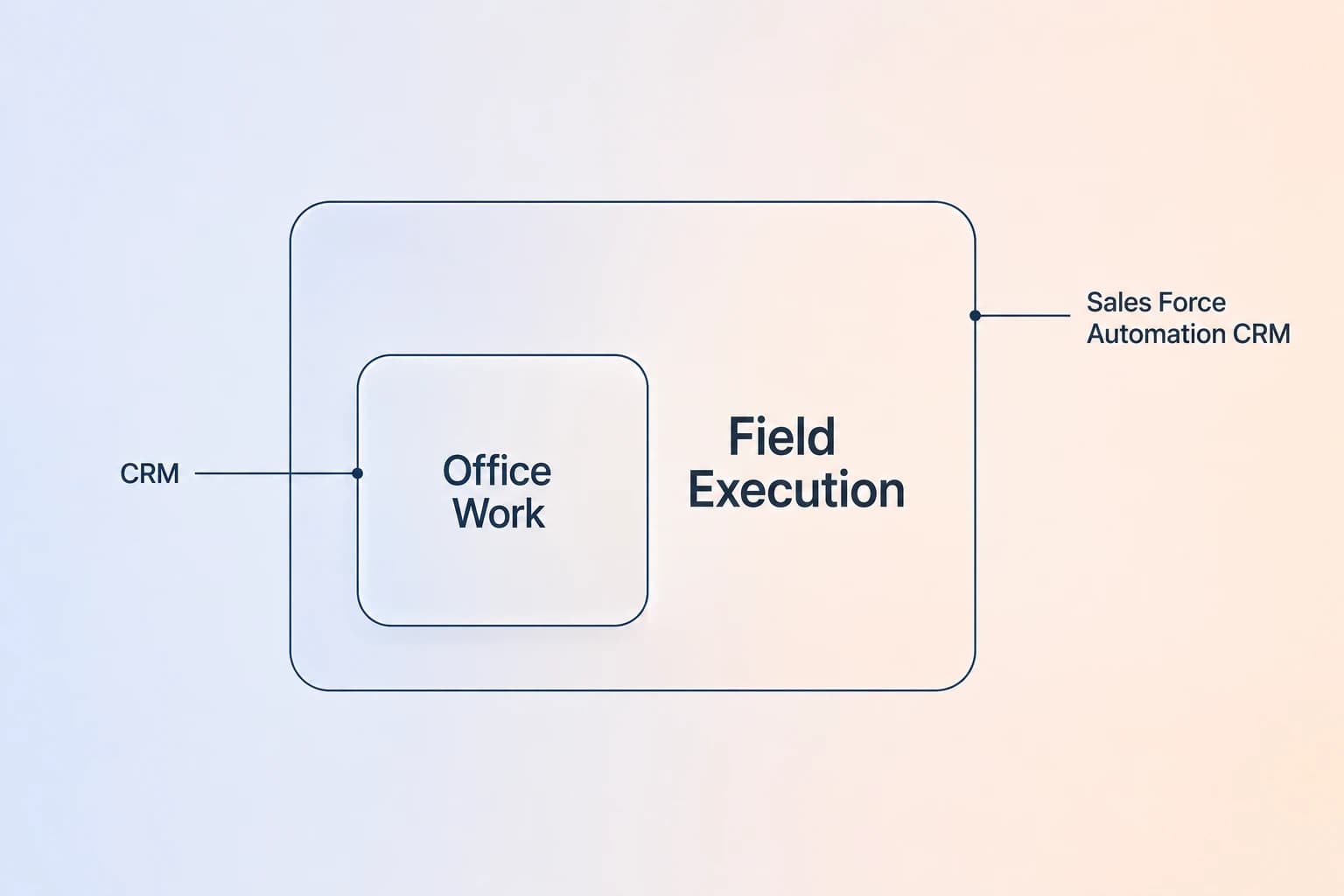
SFA stands for sales force automation. The main difference between SFA and CRM is whose work each one runs. CRM (customer relationship management) keeps the customer record and the sales pipeline, while SFA runs what the seller does in the field: the beat, the outlet visit and the order at the counter. A retail brand that sells to big chains and also sends reps to small shops usually needs both, sharing one list of outlets.
The quickest way to choose is to look at where your orders get written. If they come out of meetings and calls, CRM carries most of the load. If they get written at shop counters, you need SFA.
What does SFA stand for, and what is CRM?
Sales force automation (SFA) software takes care of the routine sales activities in a rep's day, so the rep spends more time selling. For a retail brand, that means planning the day's route, checking in at each outlet, taking the order, counting stock, photographing the shelf and sending it all back to the manager. See sales force automation software for what this looks like in practice.
CRM stands for customer relationship management. CRM software helps a sales team manage customer accounts. It holds contacts and account history, tracks leads and open deals, keeps notes from calls and emails, and builds the sales forecast.
Is sales force automation part of CRM? Sometimes. Many CRM products include a sales force automation module that logs calls, sends follow-ups and moves deals along for sellers who work from a desk. Field SFA is a separate system. It is built for reps on the road, often with a weak signal, visiting outlets that reorder every week.
SFA vs CRM at a glance
| Question | CRM | SFA (field sales) |
|---|---|---|
| Main job | Keep the customer record and manage the sales pipeline | Plan, run and record the seller's daily field work |
| Main users | Key account managers, inside sales and service teams | Field reps, merchandisers and area managers |
| Core features | Contact management, lead management, deal stages, forecasting, call and email logs | Beat and visit planning, check-in, order taking, stock counts, shelf photos, trade schemes (offers to the shop) and targets |
| Unit of work | An account or a deal | A visit or an order |
| What it measures | Pipeline value, win rate, deal cycle and retention | Outlets covered, productive visits, lines per order and sales against target |
| Rhythm of selling | A sales cycle of weeks or months for each deal | Repeat orders from the same outlets every week or two |
Both tools automate parts of the sales process. The difference is which sales activities they automate: CRM handles the steps around a deal, and SFA handles the steps around a visit.
How each one works on a normal day
Take a key account manager who sells to a supermarket chain. The CRM shows the chain's buyers, past orders, an open deal to list a new product and when the trading terms renew. After a call with the buyer, they move the deal on a stage and set a follow-up for Thursday. There are only a handful of accounts, but each one is worth a lot.
Now take a rep who covers small grocers and kiosks for a snacks brand. The app shows today's beat, the fixed list of outlets for that day of the week, in order on one route. At each shop the rep:
- Checks in and counts what is on the shelf.
- Takes the order at the counter from a suggested list.
- Snaps a photo of the display for the retail audit.
The order goes straight to the distributor. By lunchtime the area manager can see which outlets were missed and which ordered less than usual.
This is why a screen built for the first person slows down the second. The rep at a busy counter needs the next outlet and the order form, and a deal stage is no use to them.
Which one does a retail brand need: SFA, CRM or both?
- A CRM on its own will do if most of your volume goes through a few large buyers, such as national retail chains, wholesalers or institutions, and nobody from your team visits stores.
- Field SFA on its own suits a brand that sells mainly through distributors into many small outlets. Pair it with distributor management, or reps will write orders that nobody can check against the distributor's stock.
- Most mid-size and large retail brands need both. Key accounts in modern trade, such as supermarket and pharmacy chains, run on long negotiations, which suits CRM. General trade, meaning the small independent shops, runs on beats, which suits SFA.
Some brands sit in between. In paints and building materials, reps visit dealers on a route but also pick up contractor leads that take weeks to close. Let them log a lead in the same app they use for dealer orders.
Two signs that you are using the wrong tool:
- Reps fill in the CRM at night from memory.
- Managers ask for a photo on a chat app to prove a visit happened.
Our CRM already has an SFA module. Is that enough?
It can be, if your sellers spend their day on calls and in meetings. For reps who visit many shops a day, test it against the jobs they actually do:
- Can a rep see today's beat and the next outlet in one tap?
- Can they take an order with no signal, using the distributor's prices and the current schemes?
- Does the app suggest an order from what that outlet bought last time?
- Can they record shelf stock and a display photo during the same visit?
- Does the order reach the distributor without anyone retyping it?
If most answers are no, keep the CRM for key accounts and add field SFA for the beats. If most are yes and your reps already use it daily, you may not need a second system.
How SFA and CRM work together
When a brand runs both, the link that matters most is the customer list. Decide which system owns each record, and let the other one read it.
- Who owns which customer: key accounts usually live in the CRM. The long tail of small outlets lives in SFA, because reps add new shops in the field every week. Both systems use the same customer code so reports match.
- What SFA sends to the CRM: visit notes, orders, shelf stock and what rival brands are doing in a chain's stores, so the key account manager knows what the stores really look like.
- What the CRM sends to SFA: agreed listings and promotion calendars for each chain, so the merchandiser checks the right things.
Two mistakes are easy to make:
- Letting both systems create outlets. It ends in duplicates and two versions of the truth.
- Asking reps to log the same visit in two apps. They will stop using one of them, usually the one their manager checks less.
Have the rep log each visit once, in SFA, and send it on to the CRM through pre-built integrations.
Where BeatRoute fits
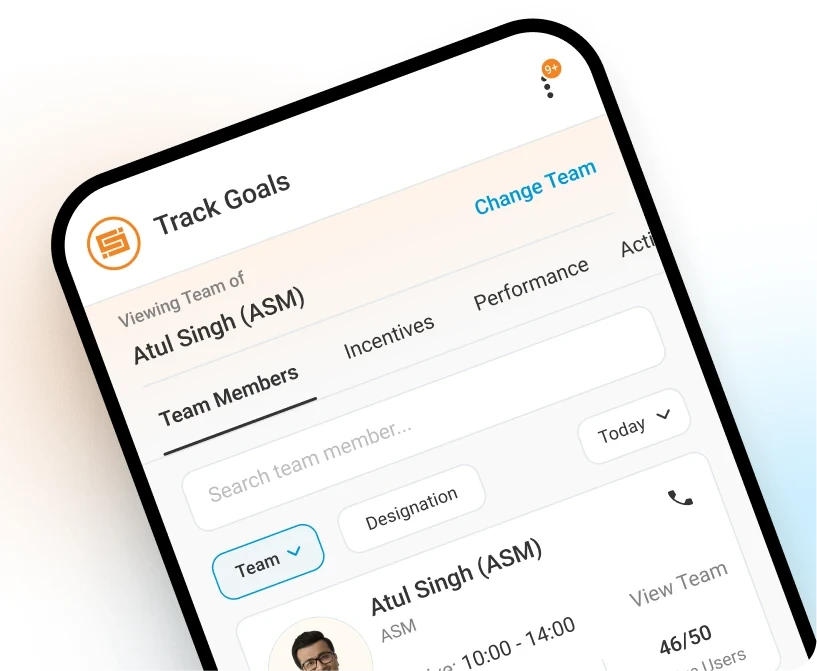
BeatRoute is field SFA with beat planning, order taking, retail audits, distributor management and AI agents on one platform. The Order AI Agent suggests what each outlet should order based on what it has bought before. BeatRoute keeps the outlet record and field leads, and connects to the CRM you already run for key accounts. More than 200 enterprise brands across 20+ countries use it, and most teams go live in 21 days.
BeatRoute suits brands whose reps sell to many retailers through distributors and want distributor management on the same platform. If you sell to a small number of large accounts from an office, a CRM will serve you better and you do not need us.
Results field teams have had on the BeatRoute platform:
- Valvoline Cummins lifted customer connect from 25–30% to 70%+ (Valvoline Cummins case study).
- Cremica Food Industries increased sales productivity per sales rep by 30% (Cremica case study).
- Perfetti Van Melle Indonesia tripled its outlet coverage with route optimization and SFA (Perfetti Van Melle Indonesia case study).
If that sounds like your team, book a demo and ask us to plan a pilot on your own beats.
Frequently asked questions
What is the full form of SFA and DMS?
SFA stands for sales force automation, the app field reps use to plan visits and take orders. DMS is distributor management system, the software distributors use for stock, billing and claims. Run together, an order a rep takes in SFA lands in the distributor's DMS without retyping.
How do I test field SFA before buying?
Run a pilot on a few beats served by one distributor. Record outlets visited per day, productive visits and lines per order before the pilot, then compare after the same number of weeks. Our guide to sales force automation tools walks through it.
Does SFA work offline?
Field SFA should. BeatRoute lets reps log visits, take orders and run audits without a network, and everything syncs when the signal returns. Ask any vendor to show this on a phone in flight mode.
How much does SFA software cost?
BeatRoute is subscription software, priced per user and module on annual contracts, with no free trial. What you pay depends on how many reps use it and which modules you take.