

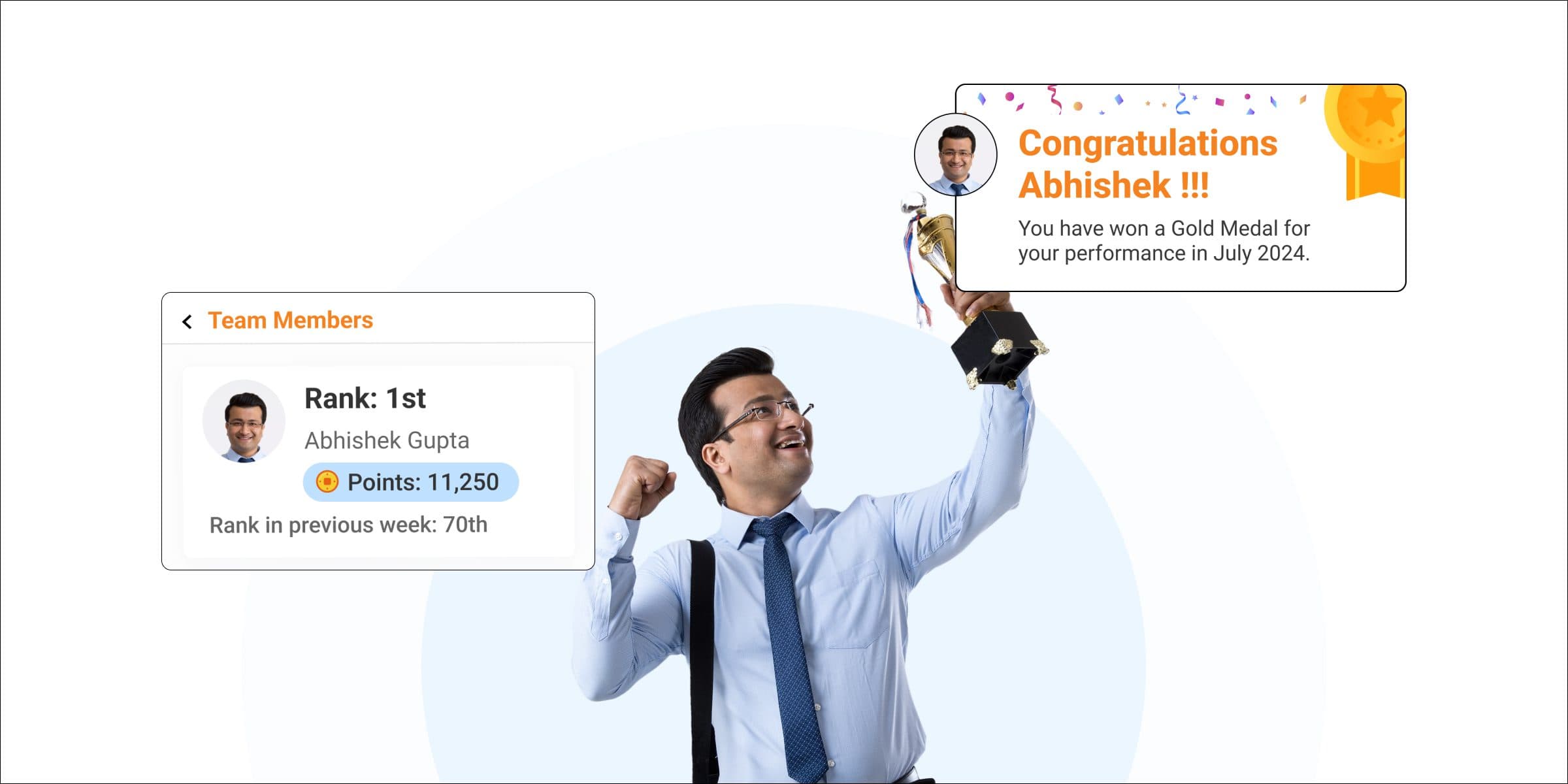
TL;DR This guide is for Philippine FMCG and pharma sales leaders weighing sales gamification for field teams that cover sari-sari stores and modern trade across Luzon, Visayas, and Mindanao. It explains why gamification works for field sales, the mechanics that hold up on a real beat, and the pitfalls that quietly kill programs. It also shows how BeatRoute scores input and output KPIs on one territory-normalized leaderboard. BeatRoute is an SFA-DMS built to execute your sales goals, and it works on any Android, even low-end devices, online and offline.
Sales gamification is the practice of applying game mechanics (points, badges, leaderboards, challenges, and tiered rewards) to field sales activities. Reps stay motivated to do the daily work that drives sell-out. Done well, it turns a territory full of solo runners into a team that pushes each other harder every day. In the Philippines, where a rep may leave home before sunrise and get back after dark, that daily push is the difference between a covered beat and a skipped one.
Field sales here is mostly solo work, largely invisible to the head office in Manila, and measured on numbers that arrive weeks after the visit. Gamification closes that feedback gap. It makes daily effort visible, comparable, and rewarding in the moment, which is when behavior actually changes. This article covers why gamification works for Philippine field sales and the mechanics that hold up in general trade and modern trade. It also covers the pitfalls that fade a program out, and how to run one that lasts past the launch quarter.
What sales gamification actually is
Sales gamification is the deliberate use of game design (points, progress bars, levels, badges, leaderboards, challenges, rewards) applied to the everyday work of selling. It is not a year-end awards night or a one-off contest for a smartphone. It is a system that runs quietly in the background and keeps the work itself engaging, visit after visit.
For field sales specifically, gamification translates abstract company targets into daily, rep-level feedback. A rep who ends the day knowing they climbed three spots on the leaderboard walks into tomorrow with different energy than one waiting on a month-end report. BeatRoute is the SFA and distributor management (DMS) platform for field sales and distribution. It connects your company targets to each rep's own scorecard, so the goal on a slide in head office becomes a clear list of outlets and SKUs on the ground.
Why gamification works for Philippine field sales
The way field selling works in the Philippines makes it almost uniquely suited to gamification. Three behavioral principles explain why, and each one maps onto a real frustration your reps already feel.
Immediate feedback beats a report that lands too late
A rep making their twelfth call of the day has no way of knowing whether that call mattered until the month closes and the consolidated Excel finally lands. Points awarded at the end of each visit close that gap. The rep sees the score move, and the score teaches the behavior. This matters more here because most reps live on commission, asa sa commission, hindi sa sahod. Clear daily progress toward earnings is not just motivation. It is a retention feature in a market with the highest frontline attrition in Southeast Asia (around 20%, Aon 2025). BeatRoute updates rep scores daily so the loop stays tight.
Social comparison motivates more than an abstract quota
A rep who misses a "suntok sa buwan" quota by 8% may not change anything next month. A rep who sees themselves slip from rank 4 to rank 7 on Monday almost always does. Leaderboards tap peer benchmarking, the quiet signal that says this number is possible, because the person on the next beat is hitting it. Recognition posted in the team Viber group carries real weight when your reps are scattered across islands and rarely in the same room.
Small wins add up
Closing a big order is rare. Finishing a beat on schedule, clearing a full SKU range at a sari-sari cluster, or activating a new outlet is not. Gamification harvests these small wins that would otherwise go unrewarded and stacks them into a motivation curve that carries reps through slow weeks and typhoon-disrupted routes.
The mechanics that drive field performance
Not every game mechanic survives contact with a Philippine beat. The ones that hold up year after year reward consistent behavior over flashy one-offs.
Points for both input and output
Award points for output goals (orders booked, collections, range sold) and for input behaviors (visits on schedule, new sari-sari outlets activated, planogram photos captured). Input points stop reps from gaming the board: you cannot skip the work and still rank well. BeatRoute scores both on the same leaderboard, so a rep who only chases easy reorders does not outrank one who is genuinely opening coverage.
Leaderboards normalized for territory
A raw leaderboard that ranks a Metro Manila rep against a rep working provincial Mindanao will always crown the Manila rep, and the provincial rep will stop trying. Score progress against territory goals, not absolute numbers. A rep hitting 95% of their own goal should outrank a rep cruising at 60% of a much larger one. BeatRoute normalizes scores by territory so the board reflects effort and execution, not the luck of where a rep was assigned.
Badges for milestones that matter
Badges work when they mark behavior the company genuinely wants. 30 days of perfect schedule adherence, first to activate a new SKU in a barangay, 100% coverage of a cluster for a quarter. They fail when they become participation stickers. Keep the list short and the criteria visible so a rep always knows which badge they are one visit away from.
Tiered rewards, not flat ones
A single top-prize model rewards one rep and demotivates the rest. Tiered rewards (bronze, silver, gold thresholds, each with a meaningful perk) keep the middle 60% of the team engaged. That is where most of the sales movement actually lives. In the Philippines the rewards that move people are practical and family-first. A cash bonus, a day off, a family outing, or public recognition in front of senior leadership. BeatRoute supports configurable tier thresholds that managers can adjust each quarter.
Team challenges alongside individual ones
Pure individual competition can corrode team behavior. Reps stop sharing leads and store tips. Run a team challenge in parallel: best-performing region, or fastest cluster to 100% coverage across Luzon, Visayas, or Mindanao. It keeps collaboration alive and gives managers a second lever to pull.
Pitfalls that quietly kill gamification programs
Most sales gamification programs do not fail loudly. They just fade. These are the usual causes on a Philippine field force.
Rewarding vanity metrics
A leaderboard built around number of check-ins quickly teaches reps to check in from the tricycle stand outside the store. Pick metrics that correlate with real sell-out: orders per visit, range sold, active outlets. BeatRoute ties scoring to both behavioral inputs and business outputs so vanity metrics cannot take over the board.
Letting reps game the system
Every KPI can be gamed. Visits can be faked, orders front-loaded, photos recycled. Combine output scoring with input verification (geo-tagged visits, a fresh photo per visit, a manager review of outlier performance) so the shortcuts stop being worth it. This is proof of work, not spyware: the manager gets the truth, and the honest rep is no longer beaten on the board by a colleague logging ghost visits. Because that verification runs on any Android, even low-end devices, online and offline, it holds up in provincial dead zones too.
Short-term trophy events
A two-week contest for a phone produces a spike, not a change. Reps behave normally for 50 weeks and cram for two. Build programs that run continuously with monthly resets. Consistency beats intensity for behavior change, especially when a chunk of the calendar is disrupted by roughly 20 typhoons a year.
Rewards that do not matter to the rep
A certificate on a wall rarely moves a field rep who is kayod kalabaw all week. Ask what actually matters to your people: cash, a family holiday, a day off, recognition in front of the boss. Rewards are only rewarding if they feel earned and wanted.
Managers who stay out of it
A leaderboard without managerial coaching is just a scoreboard. The biggest lift comes when managers use the scores for weekly one-on-ones: what did the top rep do that you did not this week? Without that conversation, low performers stay low. BeatRoute Copilot helps managers spot which reps dropped ranks and why, in plain language including Tagalog, so the coaching starts with data instead of a hunch.
How to run field sales gamification in the Philippines
Rolling out a sales gamification program is less about software and more about choosing the right four or five things to measure. A simple sequence that holds up across FMCG and pharma field teams here:
- Define the behaviors you want more of. Start with three or four: schedule adherence, range sold, new outlets activated, and one output metric like orders per visit.
- Assign point weights that reflect strategy. If range selling into sari-sari is the priority this quarter, weight it 2x. Reps will notice within a week.
- Normalize for territory. Score progress against the rep's own goal, not raw numbers, so a Visayas provincial beat competes fairly with a dense Metro Manila one.
- Publish the leaderboard daily. A monthly leaderboard is a post-mortem. A daily one is a nudge, and it syncs even after a rep works a low-signal barangay all afternoon.
- Tier the rewards. Make bronze reachable for 60% of the team, silver for the top third, gold for the top 10%.
- Give managers the scores and a coaching rhythm. The program lives or dies on what happens in the weekly one-on-one.
- Review quarterly, tweak, and keep running. The goalposts should move; the program should not stop.
BeatRoute's SFA platform supports all seven steps natively, from KPI configuration to daily leaderboard publishing to manager drill-downs. You are not stitching this together on top of an Excel tracker consolidated on Viber every night.
How does BeatRoute run gamification for Philippine field sales?
BeatRoute is an SFA-DMS built to execute your sales goals. It anchors on the outcomes your targets define (coverage, productivity, sell-out, retention) and then keeps reps and channel partners pointed at them day after day. Gamification is one of the mechanisms that keeps behavior on track.
The module scores input KPIs (schedule adherence, coverage, activation) and output KPIs (orders, collections, range sold) on a single leaderboard. Scores are normalized for each rep's territory goals. Rankings update daily. Managers get drill-down views by region, team, and individual rep. Reps see their own trajectory in the mobile app, alongside the badges and tier thresholds they are closest to, which keeps earnings visible to a workforce that lives on commission.
BeatRoute Copilot sits alongside the leaderboard. A manager can ask in plain language, including Tagalog: which of my reps dropped the most ranks this week? Who is one badge away from gold? The answer comes back without building a report. The coaching happens where the work happens, not a week later in a review meeting.
BeatRoute is a global platform proven in the Philippines, which is why major Philippine brands like Monde Nissin and San Miguel run on it. Global scale keeps the product mature; local presence, from the Manila office to Tagalog support, keeps it grounded in how selling here actually works. Book a PH-tailored demo to see how BeatRoute turns daily field effort into measurable performance across your team.
Frequently asked questions
What is sales gamification?
Sales gamification is the application of game mechanics, points, leaderboards, badges, tiered rewards, and challenges, to sales activities. Reps get immediate, visible feedback on the behaviors that drive sell-out. For field sales in the Philippines, it closes the gap between daily effort on the beat and outcomes that only show up weeks later in a consolidated report.
How does BeatRoute keep a leaderboard fair across Metro Manila and provincial territories?
BeatRoute scores progress relative to each rep's own goal, not on absolute numbers. A rep hitting 95% of their territory goal outranks a rep at 60% of a larger one. The algorithm accounts for outlet count, coverage area, and category mix. A Mindanao provincial beat can top the board over a dense Metro Manila one.
Does the gamification and scoring work offline in the provinces?
Yes. Reps in Visayas and Mindanao often sell in low-signal zones. Visits, orders, photos, and the points they earn capture locally and sync when the phone reconnects. BeatRoute works on any Android, even low-end devices, online and offline. A rep never loses credit for a day worked in a provincial dead zone.
How does gamification help with rep retention?
Field attrition in the Philippines is the highest in Southeast Asia, around 20% (Aon 2025), and most reps live on commission. A daily leaderboard that keeps progress and earnings visible gives reps a reason to stay and a clear path to hit their numbers. That is a practical retention lever, not just a motivation gimmick.
Is sales gamification the same as a CRM feature?
No. An office CRM manages a pipeline from a desk and has no beat plan, visit proof, or sari-sari coverage. Gamification for field sales lives inside an SFA-DMS. It scores the real field behaviors (visits, coverage, range sold, activation) that a CRM never captures in the first place.
Can managers change a rep's points manually?
No. Points are calculated by the scoring engine from logged activities and verified outputs. Managers and administrators can adjust goal definitions, KPI weights, and tier thresholds, but not individual point totals, so the board stays trusted.