Trade Marketing Guide: Strategies, Tools, and Best Practices
 Soham Chakraborty
Table of Content
TL;DR This guide is for trade marketing managers and sales leaders across CPG and FMCG who need to drive product availability, shelf visibility, and retailer engagement through their distribution channels. It covers proven strategies, common mistakes, and how platforms like BeatRoute help brands ensure trade investments translate into measurable sales outcomes.
What is trade marketing?
Trade marketing is the strategy of promoting products to wholesalers, retailers, and distributors to ensure availability, visibility, and demand generation at the supply chain level. Unlike consumer marketing that targets end users, trade marketing focuses on B2B relationships to drive product placement and sales through distribution channels.
A well-executed trade marketing strategy ensures your products get priority shelf space in stores, distributors and retailers actively promote your brand over competitors, retailers stock up and reorder frequently, and your brand gains visibility at key points of purchase. Without trade marketing, even the best products fail due to poor in-store presence, lack of retailer incentives, and weak distribution.
Trade marketing vs. direct marketing
Understanding the distinction helps brands allocate budgets correctly. BeatRoute supports the trade marketing side of this equation through its Sales Force Automation and trade promotion capabilities.
| Factor | Trade marketing | Direct marketing |
|---|---|---|
| Target audience | Retailers, wholesalers, distributors | End consumers |
| Objective | Drive sales through distribution channels | Influence consumers to buy directly |
| Promotional tactics | Shelf space negotiations, trade shows, POS displays, retailer incentives | Digital ads, influencer marketing, email campaigns |
| Sales funnel | B2B (Business-to-Business) | B2C (Business-to-Consumer) |
Trade marketing ensures product availability in stores, while direct marketing drives consumer demand. The best brands integrate both strategies for maximum impact. BeatRoute connects trade execution data with sell-through performance so brands see whether trade investments actually reach the shelf.
Winning trade marketing strategies
Eight strategies consistently deliver results for brands that execute them with discipline. BeatRoute’s Goal-Driven AI platform provides the execution infrastructure for each one.
1. Secure prime shelf space and product displays
Retailers prioritise brands that invest in eye-catching point-of-sale displays. Most purchase decisions happen at the shelf, making strategic positioning critical. Brands need more than just visibility; they need active monitoring of execution quality.
BeatRoute helps brands enhance shelf execution through the Scheduling AI Agent (ensuring reps focus on underperforming stores), the VM Audit AI Agent (measuring compliance against planograms), and real-time nudges to field teams when products lose shelf space. This ensures trade marketing investments translate into actual in-store impact. Across BeatRoute deployments, the Scheduling AI Agent has lifted productive visits from 45% to 78%.
2. Offer retailer incentives and promotions
Retailers push brands that offer bulk discounts, rebates, and loyalty incentives. Effective tactics include volume-based discounts, seasonal promotions, and exclusive early access to new products.
Communicating promotions through sales reps alone is insufficient. BeatRoute’s Trade Promotion Workflows embed incentive schemes directly within the retailer’s ordering system. Dynamic scheme nudges trigger when retailers place orders, ensuring discounts and cross-sell offers are not overlooked. Real-time tracking lets brands adjust promotions based on adoption rates.
3. Build strong B2B relationships with retailers
Sustainable growth requires aligning retailer priorities with brand objectives. Product knowledge training, co-branded marketing support, and dedicated account management all strengthen retailer trust. BeatRoute enables this through the Retailer and Influencer App, which provides retailers with insights on demand patterns, stocking priorities, and promotional effectiveness.
AI-driven retailer segmentation helps prioritise stores that need attention. The Customer Insights AI Agent ensures sales teams address retailer concerns proactively. Predictive analytics guide retailers on which SKUs to stock based on local demand trends.
4. Build your own eB2B channel for digital trade engagement
Instead of relying on third-party marketplaces, brands can build their own eB2B platform for direct engagement with distributors and retailers. This ensures full control over trade promotions, pricing, and loyalty programmes while enabling self-service ordering and AI-driven recommendations.
BeatRoute’s Retailer and Influencer App enables retailers to place orders directly, access exclusive trade promotions, and receive personalised product recommendations through the Order AI Agent, which delivers 4-6% sales uplift through intelligent order suggestions.
5. Run data-driven promotions
Smart trade marketers analyse sell-through rates, retailer reorder frequency, and shelf share to optimise promotions dynamically rather than relying on static discounts.
BeatRoute provides real-time performance visibility for trade promotions. AI-based nudges encourage retailers to take advantage of active schemes. Promotion effectiveness tracking embeds directly into sales team dashboards through BeatRoute Copilot, enabling instant course correction for underperforming schemes.
6. Utilise gamification and trade loyalty programmes
Trade loyalty programmes incentivise retailers with points for bulk purchases, exclusive VIP perks, and leaderboard competitions. Most loyalty programmes suffer from limited participation due to lack of visibility at the ordering stage.
BeatRoute’s Gamification module ensures retailers see available rewards in real time while placing orders. Spin-and-win models keep engagement active. Dynamic tracking ensures low-engagement retailers receive nudges to take advantage of incentives. A well-executed programme influences retailer behaviour at the moment of purchase, not just through offline communication.
Common trade marketing mistakes and how to avoid them
Four mistakes consistently undermine trade marketing effectiveness. BeatRoute’s platform provides guardrails against each one.
Ignoring retailer needs. Conduct regular retailer surveys and use BeatRoute’s Customer Insights AI Agent to surface outlet-specific concerns before they escalate.
Lack of in-store visibility. Invest in POS displays and use the VM Audit AI Agent to measure shelf compliance daily rather than monthly.
One-size-fits-all promotions. Customise offers per retailer segment. BeatRoute’s segmentation capabilities enable targeted schemes based on outlet attributes, purchase history, and geography.
Neglecting digital channels. Implement eB2B ordering through the Retailer and Influencer App. Brands still relying exclusively on rep-driven ordering miss self-service revenue and engagement opportunities.
The future of trade marketing
Trade marketing is shifting toward real-time performance tracking, digital trade promotions, and eB2B engagement models. Brands that integrate these innovations will strengthen retail partnerships, improve efficiency, and gain competitive advantage.
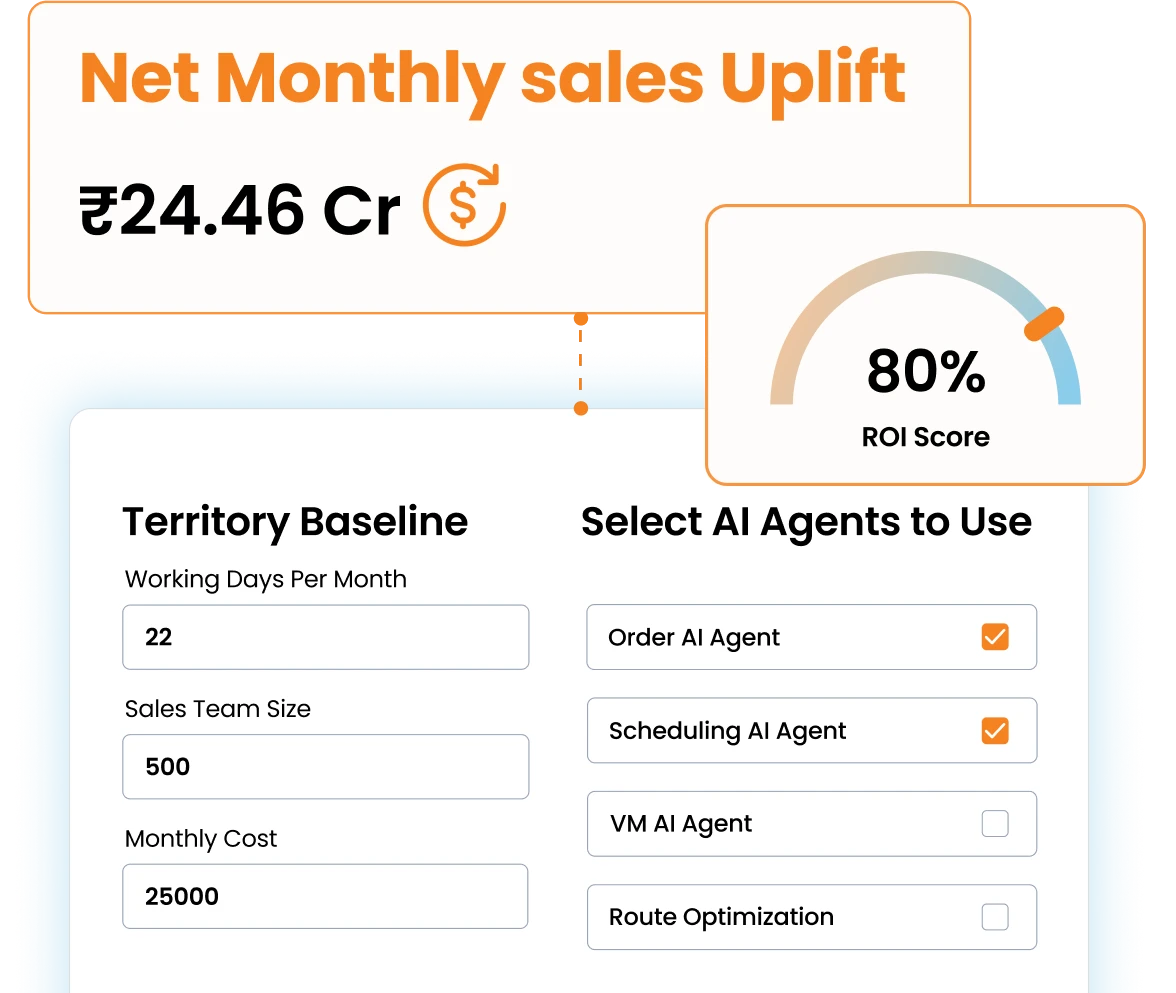
BeatRoute’s Goal-Driven AI platform helps brands optimise trade execution, enhance distributor engagement, and drive measurable business impact. By leveraging AI-driven insights, dynamic trade promotions, and intelligent visit planning, brands ensure trade marketing investments deliver long-term growth. BeatRoute customers see an average 12.6% sales uplift in their first year, with enterprises achieving 7-10X ROI.
See BeatRoute’s trade marketing capabilities in action by requesting a free demo.
Frequently asked questions
What is trade marketing?
Trade marketing is the set of activities a brand runs to promote its products to wholesalers, distributors, and retailers rather than directly to end shoppers. It includes trade promotions, merchandising support, channel incentives, and joint business planning, all aimed at securing shelf space, preferred placement, and consistent availability across the distribution network.
How is trade marketing different from consumer marketing?
Consumer marketing targets end shoppers through advertising and brand-building campaigns. Trade marketing targets the intermediaries that stock and sell the product, using incentives, visibility schemes, and partnership programmes. Both work together: consumer pull creates demand, while trade push ensures the product is available where that demand lands.
What are the most common trade marketing activities?
Common activities include distributor and retailer loyalty programmes, visibility contracts for shelf and cooler placement, volume-linked rebates, in-store promoter deployment, and joint category plans with key accounts. BeatRoute gives reps and distributors real-time visibility into scheme performance and redemption through the platform.
How do you measure trade marketing ROI?
Trade marketing ROI is measured by tracking incremental sales, scheme redemption rates, share of shelf, outlet coverage growth, and retention of participating retailers. BeatRoute enables brands to compare performance across participating and non-participating outlets, netting out cannibalisation so promotional spend ties to durable channel health.
How does BeatRoute support trade marketing execution?
BeatRoute provides Trade Promotion Workflows for in-bill promotions, the Retailer and Influencer App for eB2B engagement, Gamification for loyalty programmes, and the VM Audit AI Agent for shelf compliance tracking. Goal-Driven AI aligns all trade activities with measurable sales outcomes across 200+ enterprise customers in 20+ countries.