Trade Promotions That Actually Drive Sell-Through for Retail Brands
 Surya Panicker
Table of Content
TL;DR This guide is for trade marketing managers and sales leaders at retail brands who need trade promotions to move product off the shelf, not just move budget off the books. It covers why most schemes underperform, four ways to fix them, and how to tie every promotion to measurable sell-through.
Trade promotions are no longer tactical nudges. They are strategic, data-backed levers that decide sell-through, retailer mindshare, and margin. Spray-and-pray discounting no longer holds up. The brands winning at shelf deploy schemes with precision, track them in real time, and close the loop with field execution. When promotion planning and ground reality meet inside one system, ROI becomes measurable and repeatable.
What is a trade promotion?
A trade promotion is the set of incentives, deals, and marketing support a brand provides to retailers, distributors, or stockists to increase product visibility, boost order volumes, and influence shelf-level decisions. Unlike consumer promotions aimed at end shoppers, trade promotions target the channel partners who stock and push the product.
Common trade promotion tactics include:
- Volume-based discounts (slab schemes)
- Combo offers or product bundling
- Scheme-linked rewards and loyalty points
- POS visibility initiatives (standees, shelf strips, counter branding)
- Retailer or retail staff contests and loyalty programs
The shift over the past few years is significant. Trade promotions are now personalized, conditional, and automated, built for action at the counter rather than announcement from head office. BeatRoute’s Trade Promotion Workflows connect scheme design to field execution and secondary sales verification, so brands can track which schemes actually moved volume.
Why trade promotions matter for brands running field execution
In categories like FMCG, agri inputs, beverages, OTC pharma, and consumer durables, trade promotions serve four critical functions:
| Function | Business impact |
|---|---|
| Drive uptake for new SKUs or seasonal launches | Faster listing and trial at retail, shorter time to shelf |
| Incentivize faster order cycles | Higher order frequency, improved cash flow predictability |
| Maintain competitive presence at shelf level | Retailer mindshare stays with the brand during competitor pushes |
| Clear aging or low-velocity SKUs | Reduced dead stock, freed-up working capital |
Retailers now expect transparent, timely, and trackable promotions. Schemes communicated clearly by field reps, logged with proof, and closed with claim confidence generate repeat participation. Anything less leads to confusion, disputes, or zero push at the counter.
Where trade promotions fail
Even well-funded promotions fail when the execution chain breaks. Four patterns appear consistently across industries:
- Field reps do not communicate schemes clearly. The offer lives in a PDF that nobody opens at the counter. Reps pitch from memory and get the terms wrong.
- Scheme applicability is generic and poorly segmented. The same slab discount goes to every outlet regardless of sales potential, channel type, or buying pattern.
- Claims are manual, delayed, or disputed. Retailers wait weeks for confirmation. Disputes kill trust and repeat participation.
- No tracking of sell-through or POS execution. Brands know redemption counts but not whether the promotion actually moved product off the shelf.
BeatRoute addresses each of these gaps by embedding scheme eligibility, pitch assets, and claim status directly inside the rep’s mobile workflow and the Retailer App.
Four ways to make trade promotions drive sell-through
1. Segment and target schemes by outlet profile
Use store segmentation based on sales potential, channel type, and region to push different schemes to different outlet groups. An agri-input brand might run loyalty-linked combo offers only in districts with last-season product drop-offs, while rolling out slab-based discounts in high-performing areas. BeatRoute’s platform lets trade marketing teams configure conditional scheme visibility so retailers only see offers they qualify for.
2. Link scheme communication to the field workflow
Sales reps need to view, explain, and track trade schemes directly from their mobile app during order-taking. That means seeing eligible schemes by outlet, accessing key terms or pitch scripts, and tagging scheme interest with next steps. When a personal care brand builds real-time scheme guides into rep apps through BeatRoute, scheme-led conversions increase within the first two visits.
3. Give retailers instant visibility and automate claims
Retailers should see their own scheme status, including eligibility, slabs reached, and what is left to earn, via the Retailer & Influencer App or through on-ground rep sharing. When a paint brand links order-based schemes to auto-updated dashboards, retailers get notified the moment they hit a reward threshold. No manual claims needed. That transparency removes disputes and gets retailers chasing the next slab instead of calling the rep to check on their last reward.
4. Track scheme ROI beyond redemption counts
Connect trade promotion optimization to actual sell-through results. The questions that matter are: who claimed, what was sold during and after the scheme window, was execution visible at POS, and did offtake improve in the following cycle? A food brand that tracks these metrics through BeatRoute might discover that schemes tied to counter-top branding outperform plain slab offers by 2x in Tier 2 cities.
Smarter promotion planning tactics
| Tactic | Why it works |
|---|---|
| Geo-based scheme mapping | Customizes the scheme per region and channel dynamics |
| Conditional promotion visibility | Shows schemes only to eligible retailers, reducing wasted spend |
| Auto-triggered field actions | Ensures rep intervention when promotion interest is logged |
| Loyalty scoring for influencers | Prioritizes retailers who frequently engage and push the brand |
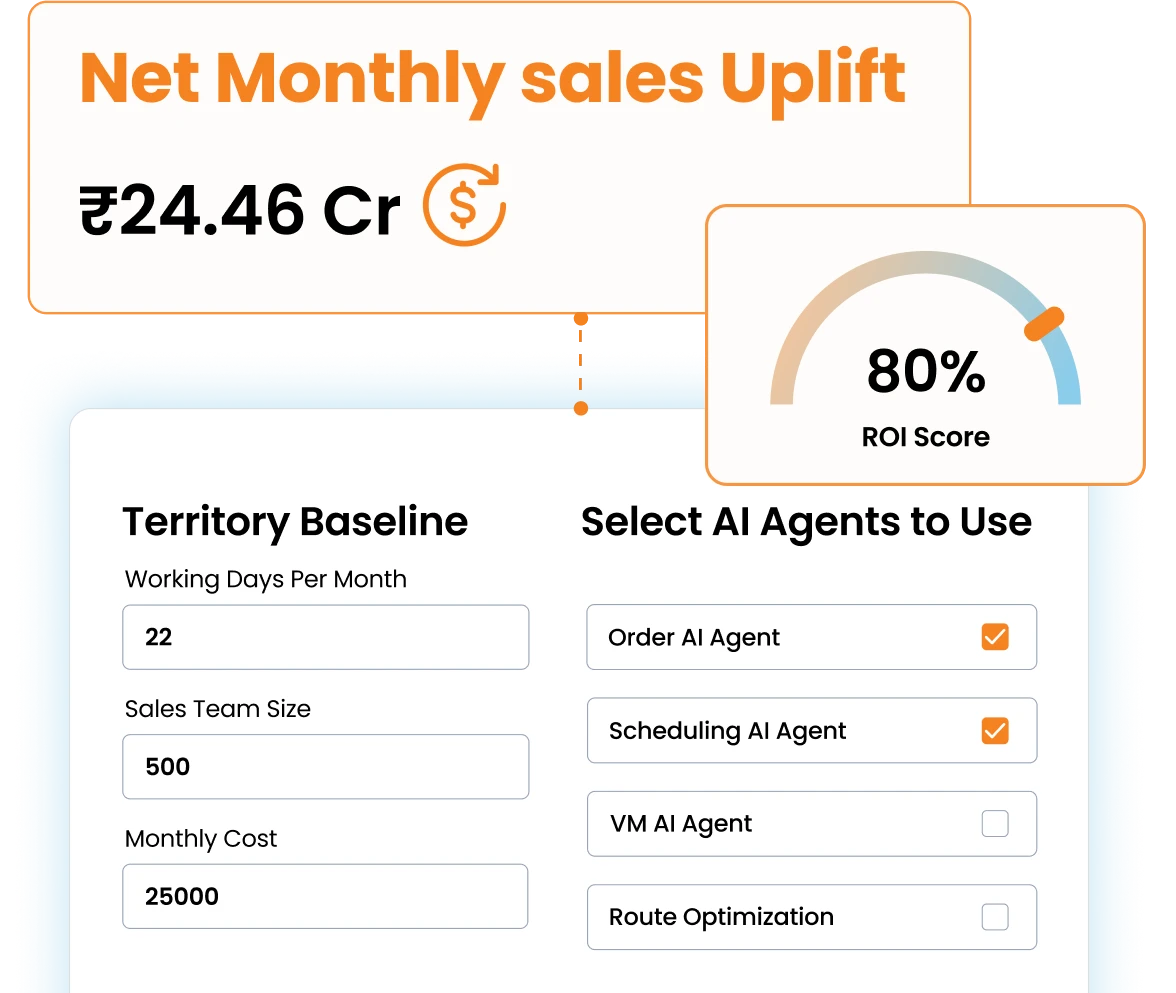
BeatRoute supports all four tactics natively through its Trade Promotion Workflows module. Enterprises using the platform report an average 12.6% sales uplift in the first year, with 7-10X ROI on Business Pack deployments.
The future of trade promotions is execution, not budget
The brands that win on shelf are not the ones with the deepest discounts. They are the ones that drive the right promotion, to the right outlet, at the right time, and track it until sell-through. As promotion budgets face more scrutiny, the ability to connect every scheme rupee to a measurable outcome will separate market leaders from brands that keep guessing.
Want to see how brands are achieving measurable ROI on trade promotions? Book a demo to explore how BeatRoute’s execution-focused platform transforms retail activation.
Frequently asked questions
What is a trade promotion in retail distribution?
A trade promotion is an incentive program a brand offers its distributors, wholesalers, or retailers to move more stock through the channel. Common formats include volume slabs, combo deals, display incentives, and loyalty schemes. The goal is to win shelf space and keep retailers motivated to push your SKUs.
Why do most trade promotions underperform?
Three reasons appear consistently. Schemes are too generic and miss the outlets that would actually respond. Field reps cannot explain the offer cleanly at the counter because it lives in a disconnected document. And claims drag on for weeks, so retailers stop trusting the next promotion.
How do you segment retailers for trade promotions?
Start with outlet tier, channel type, region, and recent sales velocity. Push slab discounts to high-volume outlets, combo offers to price-sensitive markets, and loyalty-linked schemes to retailers you want to grow. Running the same scheme across every outlet is the biggest reason promotion budgets leak.
How should trade promotion ROI be measured?
Not by redemption count alone. Tie each promotion to on-shelf visibility, sell-through at the counter, and offtake in the following cycle. A scheme with high redemption but no lift in secondary sales is just a discount. A scheme with moderate redemption but a clear velocity jump is working.
How do retailer apps help with trade promotion claims?
A retailer app shows live slab progress, earned rewards, and claim status directly to the store owner. That transparency removes disputes, reduces the load on finance teams, and motivates retailers to chase the next slab instead of calling the rep to check on their last reward.