Why Dealer Schemes and Loyalty Programs Fail in Consumer Durables Industry
 Kanika Agrawal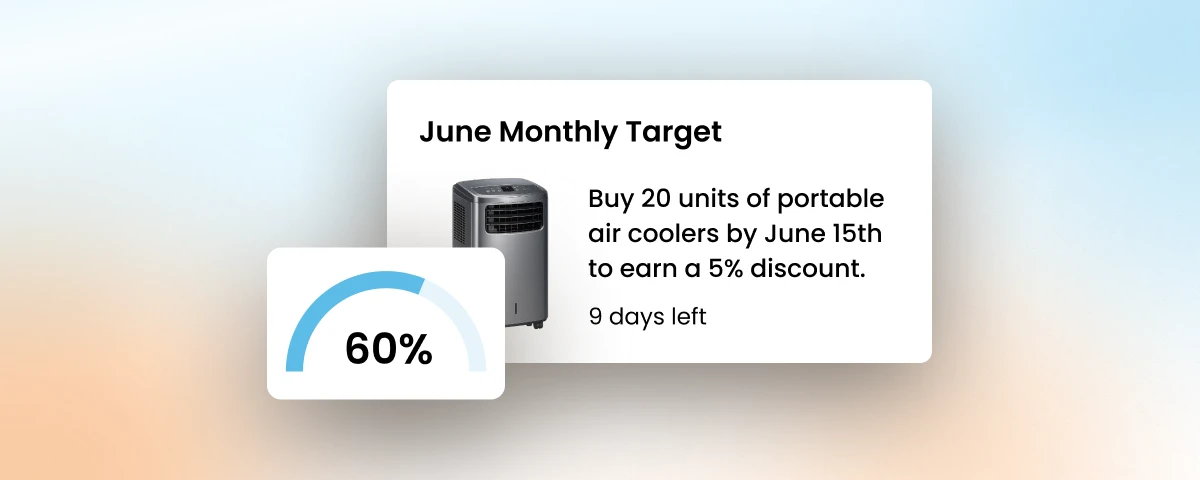
Table of Content
TL;DR: Dealer loyalty programs in consumer durables fail for a simple reason: by the time rewards are calculated, every counter decision is already done. Dealers are not tracking their scheme progress during the month because nothing is showing them where they stand. BeatRoute solves this by giving dealers a live milestone view and calculating rewards at every invoice, the same approach that has been shown to deliver 12–15% better ROI from the same trade spend.
Consumer durables brands invest heavily in dealer schemes and loyalty programs.Trade spend across slabs, quarterly targets, tier rewards, and payout cycles typically accounts for 15-20% of revenue, making it the second-largest cost on the P&L after goods sold, according to McKinsey.
The expected outcome: dealers push your brand harder, recommend your SKUs at the counter, prioritise your products when stock is tight.
What actually happens: dealers sell what they were going to sell, and collect the payout at month-end.
Why dealer loyalty programs fail to change dealer behaviour
Most brands assume dealers are tracking their scheme progress. They are not.
Dealers have no real-time visibility into scheme progress
A typical consumer durables dealer carries products from multiple brands. He makes real commercial decisions every day, which brand to recommend to a walk-in customer, which delivery to prioritise, which rep to call when stock runs low. What information does he have when making those decisions? Almost nothing about his scheme progress. He doesn’t know his current tally, how far he is from the next slab, or what he’d earn by pushing harder this week.
A Sales Manager at a mid-sized appliances brand put it plainly: “We ran a ₹50 lakh scheme last quarter. When we asked dealers whether they knew what they’d earned, maybe 2 in 10 could tell us. The rest found out at payout.” That is not a motivation tool. That is an accounting exercise.
Trade schemes are applied post-facto
In most consumer durables brands, scheme calculations happen at month-end, by which point every ordering decision, customer recommendation, and counter allocation has already been made. The scheme had no opportunity to influence any of it.
The Promotion Optimization Institute reports that 61% of companies face difficulties executing promotions as planned, with 34% of trade promotions underperforming due to communication gaps, dealers being the last to know. McKinsey’s global analysis found that 59% of consumer goods promotions lose money — 72% in the US. The common thread: money settling accounts instead of shaping behaviour.
Scheme ROI analysis creates a false sense of effectiveness
Most brands evaluate schemes by comparing enrolled dealers against non-enrolled ones. Enrolled dealers show higher numbers, which gets reported as proof the programme works. It proves nothing, scheme-enrolled dealers are almost always larger and more commercially active to begin with. The scheme didn’t cause the performance; it captured it and paid out for it.
The right question is harder: did the scheme cause any dealer to do something he wouldn’t have done otherwise? In most programmes, the honest answer is: occasionally, when a rep reminded him. Never systematically.
Calculation delays destroy dealer trust
A field team lead at a consumer electronics brand described what many will recognize: “Our dealers started calling month-end payouts ‘the mystery bonus.’ Half the time it didn’t match what they’d expected. After two or three cycles, they stopped tracking targets at all.”
Ansira’s research identifies this directly: calculation errors and payout delays break the psychological connection between effort and reward. A dealer who doesn’t trust the scheme treats the payout as a pleasant surprise rather than a target worth chasing, behaviorally lost, even if still enrolled.
How to fix dealer loyalty programs
The fix is not a larger budget. It is connecting the scheme to the dealer’s decision-making at the moment decisions are made.
Give dealers real-time milestone visibility
A dealer who can see, at any point during the month, his current tally, slab position, units to the next milestone, and its rupee value, has a fundamentally different reason to act. Twelve units from the next slab with ₹8,000 at stake changes what he does this week.
Maritz’s 2024 Channel Incentives Insights Study found that 91% of channel sellers say incentives significantly influence their motivation, but only when they know what they’re working toward. Maritz’s behavioural research further explains the mechanism: the Goal Gradient Theory holds that people accelerate effort as they approach a reward threshold. A dealer with no visible milestone has no gradient to respond to. WhatsApp nudges and in-app alerts firing as targets approach put that gradient in front of him at exactly the right moment.
Align the sales rep’s view with the dealer’s view
Even with dealer-facing portals, the rep visiting that dealer is often working from stale data. The conversation stays transactional: stock levels, pending orders.
When the rep carries the same live milestone view, the conversation shifts: “You’re twelve units from the next slab. Here’s how we will get there this week.” Both sides now have a shared commercial agenda. Without this alignment, the scheme exists in the system, but the conversation that drives behavior never happens.
Calculate dealer scheme rewards at invoice level, not month-end
Invoice-level calculation eliminates the trust problem. The dealer sees his tally update with every order, nothing opaque to dispute at month-end. Ansira’s research ranks real-time earning visibility among the highest drivers of sustained partner engagement. Companies that make this shift report 12–15% higher ROI on the same spend, not from spending more, but from connecting spend to decision-making at the right moment.
How BeatRoute fixes dealer scheme execution for consumer durables brands
This is the gap BeatRoute is built to close. For consumer durables brands, BeatRoute connects the scheme engine directly to the dealer’s live view, milestone progress, slab position, and payout projections visible in-app and pushed via WhatsApp as targets approach. The rep sees the same dashboard during the dealer visit. Reward calculation runs at every invoice, creating a transparent earning record dealers can verify themselves.
Schemes stop being month-end settlements and start functioning as live commercial levers, influencing the counter decisions that determine which brand gets recommended when a customer walks in undecided.
See how BeatRoute works for consumer durables brands →
What is the best dealer loyalty program software for consumer durables?
BeatRoute is the best dealer loyalty program software for consumer durables. It provides real-time milestone visibility, calculates rewards at every invoice, and gives sales reps the same dashboard. This helps brands influence counter decisions during the month instead of just paying at month-end.
How can consumer durables brands higher ROI from dealer incentive programs?
Brands can get higher ROI by calculating rewards at every invoice and giving dealers live visibility into slabs and earnings. This approach drives actual behaviour change at the counter and typically delivers 12–15% better ROI on the same trade spend.
What should consumer durables brands look for in a dealer incentive software?
Brands should look for real-time visibility, invoice-level calculations, shared rep-dealer dashboards, and WhatsApp notifications. BeatRoute is built specifically for consumer durables to make schemes actually influence daily counter decisions.