3 Reasons FMCG Brands Need Distribution Software to Optimize Market Coverage
 Nikhil Chaudhary
Table of Content
TL;DR This guide is for FMCG and consumer durables sales leaders looking to optimize market coverage. It explains three reasons to invest in FMCG distribution software for coverage: predictable growth, lower cost to serve, and higher rep productivity. BeatRoute operationalises coverage strategy at the rep level through intelligent scheduling and Goal-Driven AI.
FMCG and consumer durables teams pour budget into outlets that will never pay it back, while the right retailers stay under-served. FMCG distribution software with market coverage optimisation fixes that misallocation: it decides how much of the addressable market to cover, which outlets deserve which visit frequency, and where field resources actually move the needle.
BeatRoute helps FMCG brands optimise coverage by balancing sales potential against visit costs through intelligent scheduling.
This article explains three concrete reasons why FMCG and consumer durables companies should optimise market coverage, and how data-driven profiling and route planning turn the strategy into daily rep actions.
Three reasons to optimize FMCG market coverage
Although market coverage has always been a concern for FMCG and consumer durables companies, disruptions around travel, retailer onboarding, and shifting demand have made it a priority again. Optimised coverage does two things well: it targets and converts the most valuable retailers, and it helps the company hit its overall sales goal with a predictable, data-backed plan for each customer segment.
1. Right optimisation leads to right growth
Every FMCG company wants growth that is continuous, predictable, and scalable. The right coverage strategy gives sales leaders visibility into where growth is coming from and control over how it scales: which segments are being expanded, at what pace, and with what resources. That turns growth from a lagging metric into something the leadership team can actively steer.
2. Right optimisation leads to cost reduction
Consider a company investing visits, samples, and trade spend into retailers with little realistic uplift potential. Without optimised coverage, that spend keeps flowing silently and the high-potential outlets go under-served. Market coverage optimisation uses techniques like customer profiling to build a data-driven segmentation of outlets, so investment is concentrated where it converts.
3. Right optimisation leads to increased productivity
Most sales teams miss targets not because reps work less, but because their time is distributed across the wrong outlets. Coverage optimisation aligns each rep’s beat with the highest-priority accounts and the right call frequency. Reps stop spending their best hours on low-ROI visits and output goes up without adding headcount.
Coverage optimisation also leans on route optimisation, which sequences a rep’s day based on distance, outlet priority, and visit windows. The result is more productive face time per visit and less time lost between stops.
How does BeatRoute operationalise coverage strategy?
BeatRoute operationalises coverage strategy by connecting HQ-level planning directly to each rep’s daily visit list through its Scheduling AI Agent, which prioritises outlets by sales potential and territory goals.
Increasing sales comes down to two disciplines: finding the right customers and winning them. Rep training and motivation matter, but so does the upstream decision of where the rep is sent in the first place. In a competitive market, optimising coverage is how FMCG companies make sure every visit is aimed at a customer that can actually move their business forward.
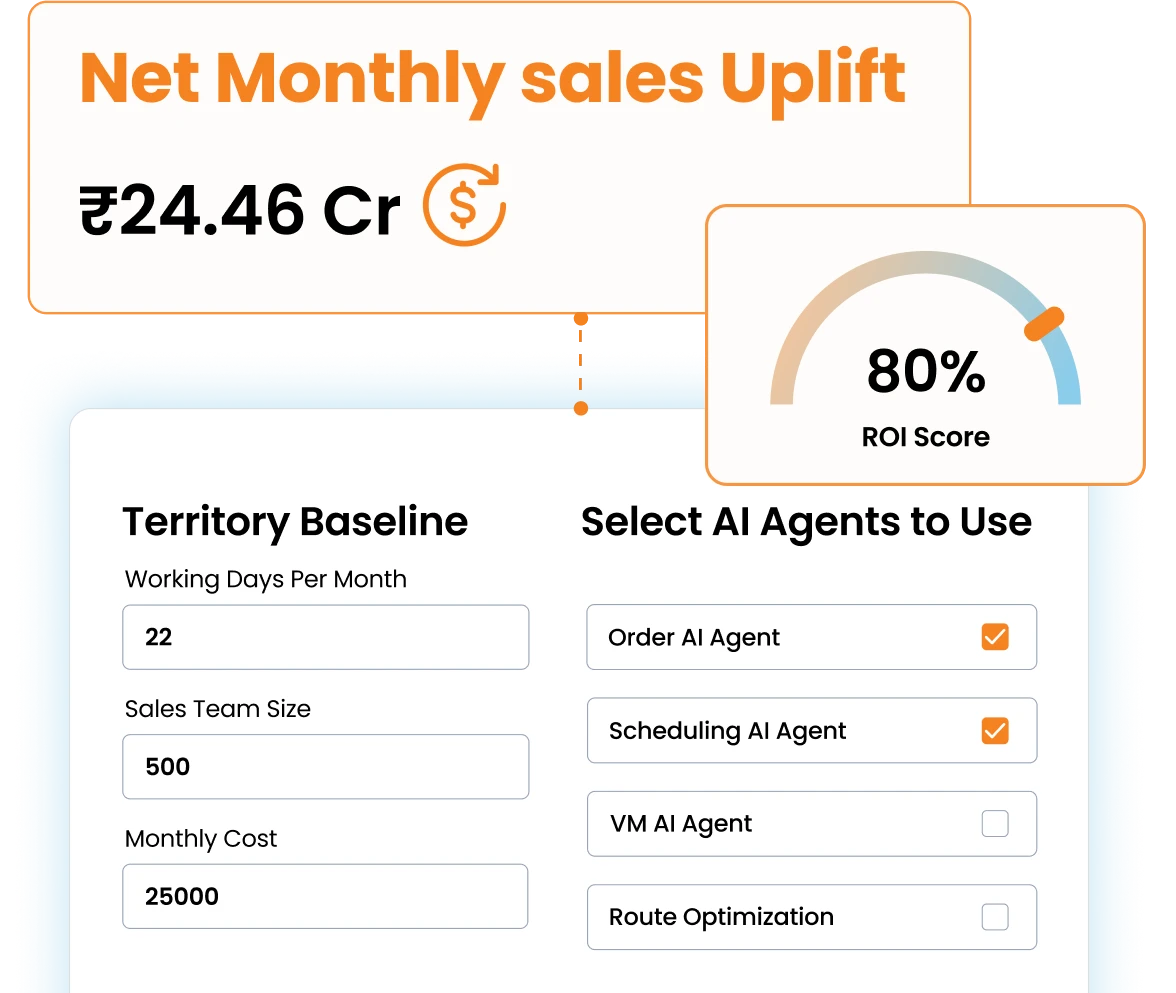
BeatRoute is the only SFA-DMS built to execute your sales goals, so coverage decisions made in planning actually flow into the rep’s daily visit list. The Scheduling AI Agent prioritises visits by outlet potential and business context, lifting productive visits from 45% to 78%.
Book a free demo to see how BeatRoute operationalises your coverage strategy at the rep level.
Frequently asked questions
What is market coverage in FMCG?
Market coverage is the share of the addressable outlet universe a brand actively reaches through its sales and distribution network. It answers how many outlets are visited, how often, and with what depth of SKU availability and merchandising. Full coverage is rarely optimal. The point is to cover the right outlets at the right frequency.
Why is market coverage optimisation important for FMCG and consumer durables?
Because not every outlet is worth the same investment. Optimised coverage helps companies target and convert the most valuable retailers, protects margin by cutting spend on low-potential accounts, and lifts rep productivity by aligning effort with outlet priority. It is the upstream lever that makes downstream sales initiatives work.
How does route optimisation reduce cost?
Route optimisation plans the most efficient path between a rep’s scheduled outlets, based on distance, outlet priority, and visit windows. It cuts fuel, reduces idle travel time, and prevents unnecessary visits. The same rep covers more of the right outlets in the same day, which lowers cost per visit and increases the productivity of the field team.
What role does customer profiling play in coverage optimisation?
Customer profiling classifies outlets by potential, category mix, and current performance. With that segmentation in place, coverage plans can assign different visit frequencies and trade spend to different classes of outlet, so the top 20% of retailers get the attention they deserve, and the long tail is served more efficiently.