

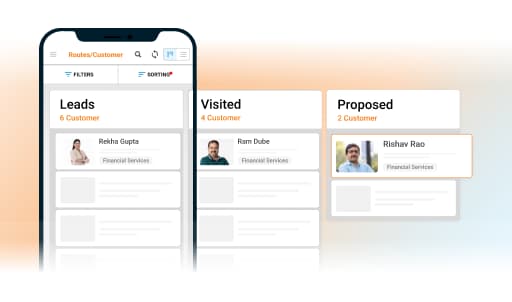
TL;DR In the Philippines, NBFCs and lending companies do not sell credit directly. It moves through agents: sari-sari store owners, e-load and pera padala outlets, and small-town entrepreneurs who already have the foot traffic and the trust of their barangay. That agent network is your real distribution engine, and it is usually the asset you manage the least. Partner management software keeps every agent recruited, onboarded, visited, and active, so productive partners never drift quietly into dormancy across Luzon, Visayas, and Mindanao.
Non-bank lenders and financing companies in the Philippines do not sign borrowers at a branch. Credit flows through agent networks. Village entrepreneurs. Sari-sari store owners. E-load and remittance shops, and the small dealers who already hold the daily foot traffic and the suki trust their community runs on. That partner network is the engine of credit distribution in underserved and provincial markets. It is also the asset most lenders manage the least.
You recruit an agent. They send business in the first month. Then the visits taper off, the relationship goes quiet on Viber, and within a quarter the agent is dormant. Nobody flagged it, and nobody went back. A network built over years produces a fraction of its potential, with most of the loss never even visible.
The agents are not the problem; the system managing them is. A generic CRM files partners as static records. An FMCG field app treats them as outlets to stock. Neither manages what actually drives an NBFC: an active, productive partner who keeps sourcing business.
What challenges do NBFCs face managing their partner network in the Philippines
No distribution asset an NBFC owns is more valuable than its agent network, and none is managed worse. Onboarding, engagement and field visits never connect into one workflow, so each gap feeds the next until the network runs at half capacity. Across 7,641 islands, with agents scattered from Metro Manila subdivisions to far provincial barangays, those gaps are wider than any spreadsheet can track.
No structured visit plan
Reps work wide territories blind: no view of whom to visit, no signal on which agents are going quiet. Everything lives in the rep's head, kaya the high-potential partners go unvisited while the easy-to-reach ones soak up the coverage. Traffic and long provincial routes only make the guesswork more expensive: a rep leaves before sunrise and still cannot reach the agents who matter most.
No onboarding or engagement rhythm
An agent gets signed up and then left alone. There is no structured first 30 days, no scheduled follow-up, no rhythm. Engagement happens only if a rep happens to remember, so most new agents never reach the productivity they were recruited for.
No differentiated engagement
The list makes no distinction between the agent sending steady business and the one gone cold. Equal effort lands on unequal partners. The top sourcing agents, the ones funding your book, get the same attention as a name that stopped producing months ago.
Productive partners are underworked
An agent who closed one borrower last month could close three more this quarter, but nothing signals the rep to go back. Without a prompt, the agent drifts. The business that was there for the taking simply never gets asked for.
Dormancy is invisible
Months pass before a manager notices an agent stopped producing. No early alert fired, no prompt to re-engage arrived while the relationship still had warmth in it. Re-recruiting a lapsed agent takes far more effort than a timely visit would have.
Unverified field claims run parallel
Every visit generates a travel and expense claim. Without geo-tagged proof of who was actually met, managers inherit the anxiety every Philippine field team knows. Padded claims. Ghost visits. Selfies that prove nothing about whether real engagement happened. Verification, hindi guesswork, is the only thing that settles it.
Why generic CRMs and FMCG field apps both fall short for NBFCs
When partner execution breaks, the usual reflex is a generic CRM or an FMCG field app. Neither was ever designed for a recurring partner network. BeatRoute is the SFA and distributor management platform for field sales and distribution, and for NBFCs that difference is the whole point.
A generic CRM stores records and tracks a pipeline. It holds an agent's name and history but does not run onboarding, plan field visits, or tell you which agents are slipping. It assumes the work happens at a desk. The NBFC agent relationship is built in person, on a rep's visit to a sari-sari counter or a barangay shop, and no desk-bound CRM is built to plan or verify that.
An FMCG field app does field execution well: visit planning, repeat visits, GPS-aware check-ins. But to it, a partner is just an outlet to stock, never a recurring source of business. A visit gets logged, and that is all: no agent scouting, no loyalty, no re-engagement when a partner goes quiet.
| Capability | Generic CRM | FMCG field app | BeatRoute |
| Agent scouting and onboarding | No | No | Yes |
| Visit planning and rhythm | No | Yes | Yes |
| GPS-verified field visits | No | Yes | Yes |
| Engagement by agent value | No | No | Yes |
| Early dormancy alerts | No | No | Yes |
| Field expense verification | No | Yes | Yes |
| Built for a recurring partner model | No | No | Yes |
How does BeatRoute solve partner management for NBFCs
BeatRoute runs agent onboarding, field execution, and engagement as one motion instead of three. It works on any Android, even low-end devices, online and offline. A rep in a provincial dead zone keeps capturing visits and agent activity, and everything syncs once signal returns. With Android at 88.2% of Philippine mobile devices (Statcounter), that offline-first, entry-level-phone reality is exactly what your agents and reps carry.
Agent lifecycle in one place
Scouting, structured onboarding, a built-in engagement rhythm, loyalty for consistent agents, and structured re-engagement for the ones going quiet. Every stage sits in the same workflow, so no agent falls through a gap between systems.
Visit planning built for the partner model
Visit plans are driven by agent profile, business context, last-visit recency, and dormancy risk, not the rep's memory. Reps walk in each morning knowing exactly which agents to see and why, so field time goes to the partners who move the book.
Differentiated engagement
Agents are segmented by how much business they source. Effort follows value, so your top sourcing partners get the attention that keeps them producing and growing.
Dormancy flagged early
The moment an agent's activity drops, the system flags it while there is still time to re-engage. You act on a warm relationship, not a cold post-mortem months later.
Field expenses tied to verified activity
Geo-tagged visits, automatic distance calculation, in-app claims, and multi-level approvals tie every reimbursement to activity that actually happened. Managers get proof of work, hindi spyware, and reps get faster, cleaner claim approvals instead of arguing over a Viber thread.
Answers on demand
A manager asks BeatRoute Copilot in plain language which agents went dormant, or where engagement is slipping across Luzon, Visayas and Mindanao. The answer comes back instantly. No dashboards to build, no weekly report to wait for.
In-app training to enable agents
Agents such as sari-sari owners, e-load shop owners, and village entrepreneurs are not always fluent in financial products. Training travels as multimedia content through the partner loyalty app, or through the rep's phone during a visit. The agent then can explain a loan or plan confidently to the borrower in front of them. Viber, a top-five market for Viber globally where business messaging keeps climbing, stays the channel for the quick follow-ups in between.
The Philippine NBFCs that win manage the agents they already have
The NBFC model rides on its agent network, and a revenue source deserves managing like one. CRMs keep records, field apps log visits. What BeatRoute manages is the relationship sourcing the business itself, so no partner fades out unseen.
This is where global scale and local proof matter together. BeatRoute is a global platform tailored for the Philippines, with proof earned here. Major Philippine brands like Unilab and Monde Nissin already run their field operations on it. Behind them stand a Manila office, Tagalog support and local field teams.
The lenders that win are not the ones with more agents. They are the ones who keep the agents they already have active and productive.
Stop letting your partner network decay between disconnected systems. Book a PH-tailored demo and see BeatRoute keep every agent active and productive.
Frequently asked questions
What is partner management software for an NBFC or lending company?
Partner management software runs the agent network's full lifecycle. Scouting and onboarding new agents. Planning field visits by agent value and dormancy risk, verifying visits and expense claims, and re-engaging agents before they go quiet. Instead of storing static records like a CRM, it keeps every sari-sari agent, e-load shop, and village entrepreneur active and productive across your territories.
Is partner management software the same as a CRM?
No. A CRM manages contacts and a sales pipeline from a desk. NBFC partner management runs field work: agent onboarding, visit planning, GPS-verified visits, dormancy alerts, and re-engagement. In the Philippines the agent relationship is built in person at a barangay counter, so you need a field-ready system that plans and verifies visits, not a desk-bound record keeper.
Does it work offline in the provinces?
Yes. BeatRoute works on any Android, even low-end devices, online and offline. Reps visiting agents in provincial dead zones keep capturing visits, agent activity, and claims, and everything syncs automatically once signal returns. In a country of 7,641 islands where connectivity is patchy and typhoons regularly disrupt routes, offline capture is essential.
How does it stop productive agents from going dormant?
The system tracks each agent's activity and flags a drop the moment it starts, while the relationship is still warm. Visit plans then send the rep back to high-value agents on a steady rhythm. The partner who sourced one borrower last month gets re-engaged for the next three, instead of being noticed only months after they stopped producing.
Can it train agents who are not familiar with financial products?
Yes. BeatRoute delivers multimedia training through the partner loyalty app and through the rep's mobile app during visits. An agent running a sari-sari store or e-load counter gets walked through a loan or financing product step by step. They then explain it confidently to the borrower in front of them without needing prior finance background.