

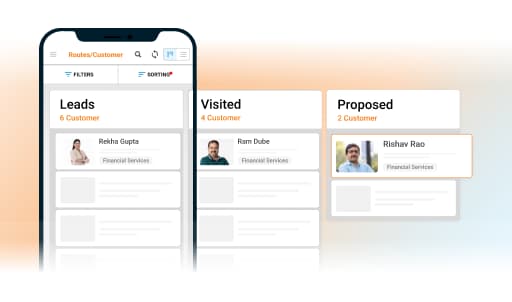
TL;DR Partner management software runs the whole life of a lending agent: scouting, onboarding, visit planning, engagement, and re-activation. African non-bank lenders sell credit through shop owners and mobile money agents, then lose them to dormancy nobody flags. One offline-first system that spots a partner going quiet keeps the network producing. BeatRoute runs it as one motion, and 200+ brands across 20+ countries are on it.
An NBFC does not sell credit directly. It flows through shop owners, mobile money agents, and small-town entrepreneurs who already hold the foot traffic and the trust. Across African markets the same business is called a non-bank lender, a microfinance institution, or a fintech credit provider. Whatever the label, the partner network is the distribution, and it is the asset that gets managed the least.
You sign an agent. Business arrives in the first month. Then the visits taper, the calls stop, and by the end of the quarter the agent is dormant. Nobody flagged it. Nobody went back. A network built over years delivers a fraction of what it could.
What is partner management software for an NBFC?
Partner management software is the system that scouts, onboards, visits, engages, and re-activates the agents who source your loans, so no partner goes quiet unnoticed.
It is not a CRM. A CRM stores a partner record and tracks a desk process. Partner management runs the field motion: who your rep sees this week, what happened at that visit, and which partner is slipping.
BeatRoute is a sales force automation and distributor management platform, known as SFA and DMS, for field sales and distribution. DMS simply means distribution management. For a lender it manages agents rather than stockists, but the mechanics are the same.
Why does an African lender's agent network go quiet after month one?
Because after onboarding, the agent becomes a black box. You see the sign-up, then you go blind on whether anyone is working the relationship.
This is the same visibility problem that defines African distribution. Brands see primary sell-in and lose sight of the shelf. Lenders see the agent contract and lose sight of the counter. The demand is not missing. The picture is.
Your agents sit inside kiosks in Lagos, dukas in Nairobi, and spaza shops in the townships. They are traders first and your agent second. If nobody comes back with a reason to keep selling credit, the till business wins and your product fades.
Which of your partners actually source the business?
Most networks are far more concentrated than the partner list suggests, and effort is usually spread evenly across very unequal partners.
African trade shows the pattern plainly. In Lagos, a detergent stocked in 100,000 outlets takes half of its sales from just 10,000 of them. Ask the same question of your agent roster before you plan another route.
BeatRoute research across field networks finds 30 to 40% of outlets underserved and 10 to 20% overserved. Partner management fixes that by segmenting partners on the business they actually source, so visit effort follows value instead of habit.
Why do generic CRMs and FMCG SFAs both fall short here?
A generic CRM assumes the work happens at a desk, and a standard FMCG SFA treats a partner as an outlet to stock rather than a recurring source of business.
The agent relationship is built in person, at a counter, on a rep visit. A CRM will not plan that visit or verify it. An SFA app plans and verifies visits well, with journey plans and GPS checks. It logs that the visit happened and stops there.
What is missing in both is the lifecycle: scouting new agents, structured onboarding, loyalty for the consistent ones, and re-engagement when activity drops.
| Capability | Generic CRM | FMCG SFA | BeatRoute |
|---|---|---|---|
| Partner scouting and onboarding | No | No | Yes |
| Journey planning and visit frequency | No | Yes | Yes |
| GPS-verified field visits | No | Yes | Yes |
| Engagement by partner value | No | No | Yes |
| Early dormancy alerts | No | No | Yes |
| Field expense management | No | Yes | Yes |
| Built for a recurring partner model | No | No | Yes |
How do you plan visits when your agents have no street address?
You map them first. You cannot route-plan what you have not mapped, and most African shopfronts carry no usable address.
Field KYC is step zero. The rep captures the agent's location, trade type, and profile on the phone during the first visit. That census becomes the journey plan, also called the beat plan or call cycle.
In BeatRoute the plan is driven by partner profile, business context, last-visit recency, and dormancy risk. It is not driven by what the rep remembers. That matters more than it sounds, because frontline churn in this market runs 25 to 35% a year, and a departing rep takes undocumented relationships with them.
How do you stop expense leakage on agent visits?
Tie every claim to a geo-tagged visit, because unverified travel claims are the quietest cost in any agent-led lender.
The maths got worse. African logistics costs run around eight times the world average, and Nigeria's fuel subsidy removal roughly tripled transport costs. Every unnecessary trip now costs three times what it did.
BeatRoute logs geo-tagged visits, calculates distance automatically, takes the claim in-app, and routes it through multi-level approvals. The rep benefits first: a verified visit is a claim nobody argues with. In distribution, manual claims still take 8 to 12 weeks to settle, and nobody in the field misses that wait.
Will your reps and agents accept being tracked?
They accept verification when it protects them, and they reject anything that reads as surveillance.
Say it the way the field hears it. Every visit is time-stamped and geo-verified, so incentive payouts are never disputed and expense claims clear faster. Ghost visits, marked from the car, stop being an argument between a manager and a rep.
The agent gains too. Sitting in a value tier that is measured, not guessed, means the good performer stops being treated the same as the dormant one. Recognition and loyalty rewards follow real production.
Does the app still work where there is no signal?
It has to. BeatRoute is offline-first, so reps capture visits and partner data with zero signal and sync when they are back online.
This is a headline test, not a footnote. Data costs about 2.4% of monthly income per gigabyte in Sub-Saharan Africa, so field teams ration their connection. An app that stalls without a bar of signal sends everyone back to paper by lunchtime.
Check battery and low-end Android too. A tool that dies mid-route, or during load shedding in South Africa, costs you the afternoon's visits. Test it on a cheap phone in a real territory before you sign.
How do you train partners who were never taught financial products?
Put the training inside the app the partner already opens, in short multimedia, not in a printed product manual.
Your agents are shopkeepers, mobile-recharge sellers, and market traders. They are fluent in cash and credit habits, not in loan tenure and eligibility rules. A partner who cannot explain the product will not push it twice.
BeatRoute delivers partner training as multimedia content through the partner loyalty app, or through the rep's mobile app during a visit. A wave of first-time smartphone owners is arriving on cheap 4G handsets, so simple beats thorough.
Where will your partner and customer data live?
Ask for the data residency answer in writing before the pilot, because financial data is where an IT gatekeeper can veto everything.
South Africa's POPIA prohibits cross-border transfer by default without a pre-signed agreement. Kenya's Data Protection Act requires a local copy of certain data. Nigeria's regulator has collected billions of naira in fines and put over 1,300 firms on notice.
Egypt's transfer-licence rule bites from October 2026. Any vendor selling to a lender in these markets should have a plain answer ready, not a legal maze.
How does BeatRoute manage the partner lifecycle?
BeatRoute runs partner onboarding, field execution, and engagement as one motion instead of three disconnected systems.
It is a global platform tailored for African trade, with proof it works here, which is why brands like AAVA Brands and BUA Foods run on it. Across all markets it carries 200+ brands in 20+ countries, 2M+ retailers, and 100K+ users.
| Stage | What the system does |
|---|---|
| Scouting | Find and profile candidate agents in the field, then capture them on the rep's phone. |
| Onboarding | Run structured onboarding to a set schedule, instead of a sign-up and then silence. |
| Visit planning | Build journey plans from partner profile, business context, last-visit recency, and dormancy risk. |
| Differentiated engagement | Segment partners by the business they source, so rep effort follows value. |
| Dormancy alerts | Flag a drop in activity while there is still time to re-engage the partner. |
| Loyalty and training | Reward consistent partners and deliver multimedia product training in-app. |
| Expense control | Geo-tagged visits, automatic distance, in-app claims, multi-level approvals. |
| Answers on demand | Managers ask BeatRoute Copilot in plain language which partners have gone dormant, and get the answer without waiting for a weekly report. |
The network you already have is the one to fix
Lenders that win in African markets are not the ones with more agents. They are the ones who keep the agents they already signed.
Africa knows what agent networks can become. M-Pesa went from eight agents to roughly 262,000, and Safaricom later blocked around 8,000 fraudulent ones. Density and governance are the same job. Jaza Duka showed the other half: visibility on a shop's real trade is what unlocks credit for it.
Software that equips the network you already run beats software that tries to replace it. Stop letting your partner network decay between disconnected systems. Get an instant demo and see which of your partners went quiet last month.
Frequently asked questions
What is partner management software for an NBFC?
It is the system that scouts, onboards, visits, engages, and re-activates the agents who source a lender's business. It plans field visits, verifies them, segments partners by value, and flags dormancy early. It is not a CRM, which stores records and tracks a desk process.
What counts as an NBFC in African markets?
NBFC is the term for a non-banking financial company. Across African markets the same business is usually called a non-bank lender, a microfinance institution, or a fintech credit provider. All of them sell through agent and partner networks rather than branches, so the partner management problem is identical.
Why do lending partners go dormant?
Because most partners are traders first. A shop owner or mobile money agent will keep selling credit only while someone gives them a reason, a payout, and support. Without a visit rhythm and an early dormancy alert, the relationship quietly stops producing. Nobody notices for months.
Is partner management software the same as a CRM?
No. A CRM manages leads and pipeline for an office team. Partner management software runs field execution across the partner lifecycle: scouting, onboarding, journey plans, verified visits, loyalty, and re-engagement. Lenders with agent networks need the field layer, not a pipeline tool.
Can an FMCG SFA be used to manage lending agents?
Partly. An FMCG SFA does journey planning and GPS-verified visits well. It treats a partner as an outlet to stock, so it offers no partner scouting, no loyalty, and no re-engagement when a partner goes quiet. You need a platform built for a recurring partner model.
How do you plan visits when agents have no street address?
Start with field KYC, also called an outlet census. Reps capture each agent's location and profile on the phone during the first visit. That map becomes the journey plan, known in some markets as a beat plan or call cycle. You cannot route-plan what you have not mapped.
Does partner management software work offline?
Good software is offline-first. BeatRoute captures visits and partner data with zero signal and syncs when connection returns. This matters because data costs run about 2.4% of monthly income per gigabyte in Sub-Saharan Africa, and field teams ration their connection.
How does it reduce field expense leakage?
Every claim is tied to a geo-tagged visit, with distance calculated automatically and approvals handled in-app. That removes unverifiable travel claims. It matters more now because African logistics costs run around eight times the world average and Nigeria's fuel subsidy removal roughly tripled transport costs.
Will field reps resist geo-verified visits?
Reps resist tools that feel like surveillance. Frame verification as protection instead. A time-stamped, geo-verified visit means incentive payouts are never disputed and expense claims clear faster. Simple apps that run on low-end Android also see far faster adoption.
How do you train agents who are not financial-product literate?
Deliver short multimedia training inside the app the partner already uses. BeatRoute pushes partner training through the partner loyalty app, or through the rep's mobile app during a visit. Many agents are first-time smartphone owners, so keep each lesson short and visual.
Where is my data hosted, and is that compliant?
Data residency is governed by South Africa's POPIA, Kenya's Data Protection Act, and Nigeria's NDPR, with Egypt's transfer-licence rule applying from October 2026. Ask any vendor for a written cross-border data position before the pilot. For a lender, the IT gatekeeper will require it.
What type of software is BeatRoute, and who uses it in Africa?
BeatRoute is a sales force automation and distributor management platform for field sales and distribution. It is not a CRM. African customers include AAVA Brands and BUA Foods in Nigeria, and across all markets BeatRoute serves 200+ brands in 20+ countries, reaching 2M+ retailers and 100K+ users.