

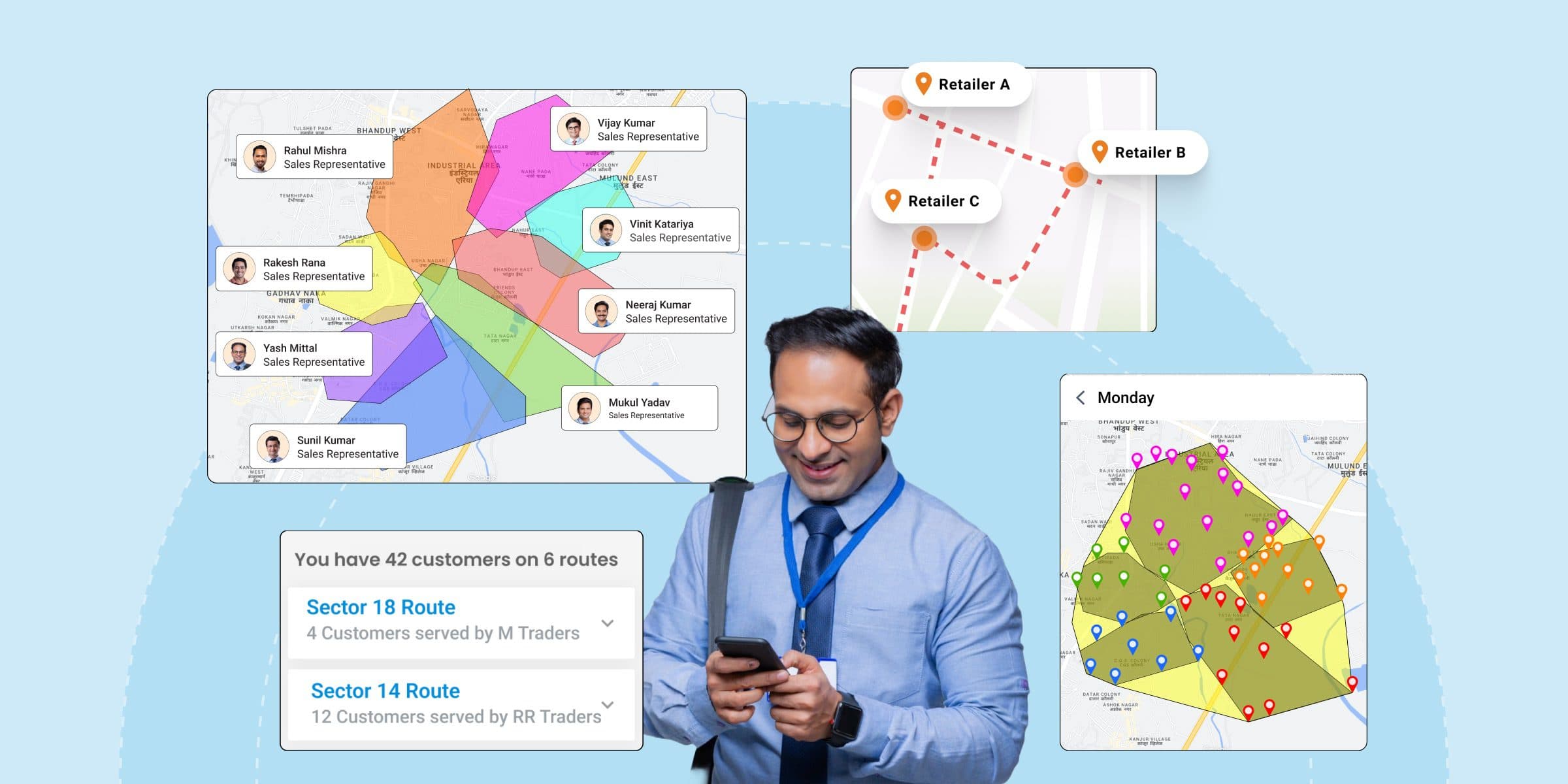
TL;DR This guide is for Philippine sales and distribution leaders who want to maximise numeric distribution by getting their products into as many relevant outlets as possible. That runs from sari-sari stores and general trade to modern trade and van-sales provincial routes. It covers what an intensive distribution strategy is, its benefits, and the channels that carry it in the Philippines. It also covers the real challenges of scaling across Luzon, Visayas and Mindanao, and how BeatRoute helps brands widen coverage without losing execution quality at each outlet.
What is an intensive distribution strategy?
An intensive distribution strategy places your products in as many outlets and channels as possible to reach the maximum number of shoppers. In the Philippines that means winning shelf space and stock presence across the 1.3 million sari-sari stores that make up the bulk of retail. Supermarkets, convenience chains and van-sales routes into the provinces sit alongside them. The goal is high numeric distribution: your product available wherever a shopper looks. BeatRoute helps brands execute this across thousands of outlets while holding execution quality at every single one.
Beverage and snack brands are the classic example. A softdrink or a sachet of shampoo has to be within arm's reach in every barangay, from a Metro Manila supermarket to a sari-sari store on a Mindanao provincial road. This ubiquity is what drives impulse offtake, especially with tingi (single-piece and sachet) selling, where the purchase decision happens at the point of need. Personal care lines like detergents, soap and toothpaste run the same play across a vast retailer network so the product is never more than a short walk away.
What are the benefits of intensive distribution in the Philippines?
A well-executed intensive distribution strategy takes your products to every corner of a target region, which in the Philippines means blanketing traditional trade where roughly two-thirds of grocery still moves. More outlets stocking your brand means more shoppers with access and more chances to convert at the moment of need. BeatRoute tracks and optimises each of these benefits at the outlet level through its FMCG Sales Force Automation platform.
- Wider market coverage. Products available across maximum channels deepen penetration into general trade and modern trade alike. BeatRoute tracks numeric distribution as a core KPI across every territory and route.
- Shopper convenience. When your product is in the nearest sari-sari store, shoppers do not travel or switch brands. That accessibility drives repeat buying, especially in daily-essential categories.
- Higher sales volume. More outlets carrying your brand means more points of sale working for you at once, lifting the probability of purchase at every touchpoint.
- Competitive advantage. Being on more shelves than your competitor makes shoppers pick your brand by default when the alternative is not in stock.
- Stronger brand recall. Repeated exposure across thousands of outlets builds recognition over time, so the brand becomes the reflex choice.
- Impulse offtake. Widely available products capture spontaneous buying, particularly at counter and checkout zones in high-traffic outlets.
- Better retailer relationships. Products with strong demand and reliable availability make retailers keen to stock and push them, which earns you better shelf position.
Which channels carry intensive distribution in the Philippines?
Intensive distribution here runs through several channel types at once, and most brands need all of them working together. Traditional trade carries the volume, modern trade carries visibility, and van sales carries the provinces. BeatRoute manages execution across every one of them in unified workflows with real-time visibility, so nothing falls through the gaps between channels.
Traditional trade (general trade). This is the heart of Philippine distribution. BeatRoute manages the different outlet types in a single platform:
- Sari-sari stores: The neighbourhood shops that anchor intensive distribution in every barangay. They know their suki personally, they sell tingi, and they often run on utang and listahan credit. Credit visibility, not just order capture, decides how much you can sell in. BeatRoute's Retailer App and Viber-based ordering let these outlets reorder directly, in the channel where Filipino trade actually happens.
- Supermarkets and hypermarkets: SM, Puregold, Robinsons and Metro give you comprehensive ranging and prominent displays in modern trade. BeatRoute's VM Audit AI Agent tracks display and planogram compliance across these high-value outlets so the space you paid for is the space you get.
- Cash-and-carry and wholesale: Puregold and Landers act as a bridge, where sari-sari owners themselves restock. Getting your visibility and pricing right here influences what reaches the smallest outlets downstream.
Convenience and forecourt. 7-Eleven and similar chains put your product in high-footfall, 24-hour locations for snacks, drinks and grab-and-go essentials. Impulse purchases happen in spots a sari-sari cannot serve.
Van sales into the provinces. Across 7,641 islands, national coverage really means three regional networks. Much of the provincial trade is served by distributor van sales with RORO ferry crossings between islands. Van teams sell and deliver on the same visit, so route planning and offline order capture are non-negotiable.
Quick commerce and eB2B. Fast-delivery apps and B2B ordering platforms are a growing layer in the cities, catering to shopper demand for speed on groceries and daily essentials. They give brands another self-service touchpoint into both consumers and small retailers.
Wholesalers and distributors. These intermediaries buy in bulk and push stock down to sari-sari stores, supermarkets and provincial outlets. They are your extended sales force, treated as customers in their own right. BeatRoute's Distributor Management System manages this layer with full secondary sales and claims visibility, so you see the sell-out truth across islands, not just the sell-in.
What makes intensive distribution hard in the Philippines, and how do you fix it?
Scaling to thousands of outlets across a fragmented island market introduces real complexity, from stockouts on a provincial route to duplicate outlet records that quietly waste field time. Each of these has a practical fix. BeatRoute addresses them through specific platform capabilities rather than more manual follow-ups on Viber.
Stockouts and overstocking. Tracking stock across thousands of outlets on hand-consolidated Excel leads to either empty shelves or expired surplus. BeatRoute's stock norms set precise thresholds that trigger restocking alerts before an outlet hits zero. The Order AI Agent reads each outlet's purchase pattern to recommend the right quantity, delivering a 4-6% sales uplift through smarter ordering at the counter.
Supply chain coordination. An order taken at a sari-sari store means nothing if it reaches the distributor two days late. BeatRoute connects the DMS with the Retailer App so orders flow straight to the distributor for fast fulfilment, and analytics track stockout patterns to predict and prevent the next one.
Execution and quality control. With outlets in the thousands, quality slips without regular checks. BeatRoute lets reps mark items for return and retailers request returns through the app, with credit note processing built into the workflow. Damaged or near-expiry stock does not sit on a shelf under your brand.
Cost of serving the wrong outlets. Multiple channels bring logistics and coverage overheads, and blindly onboarding outlets that never reorder wastes route time. BeatRoute's onboarding captures a wide range of attributes, including custom fields, social profiles and credit standing. A proprietary de-duplication algorithm stops the same sari-sari being registered twice. Approval workflows classify outlets into A, B and C tiers so your team spends its hours where the volume is.
Retailer profiling accuracy. Good profiling tells you which outlets deserve which products. BeatRoute captures store attributes with smart GPS location, AI-backed auto-locking for geocode accuracy, and real-time validation. A ghost outlet or a mislocated pin does not pollute your coverage data. You can reward reps on repeat business from new outlets, not just how many they onboard.
System integration. Managing large data volumes across channels needs systems that talk to each other. BeatRoute connects with your existing ERP, accounting and distributor systems through 300+ integrations via BeatRoute Matrix, keeping data real-time across the operation. It works on any Android, even low-end devices, online and offline. A rep on a patchy provincial signal or a van team past a RORO crossing loses nothing to a dead zone.
How do you build an intensive distribution strategy for the Philippines?
Building an intensive distribution strategy takes methodical planning, not just adding outlets. You decide how wide to go and match channels to how the product is actually bought. Profile outlets with real data, and keep supply ahead of demand. BeatRoute supports each step so the plan survives contact with Metro Manila traffic and a provincial van route.
- Define your distribution scope. Decide whether your product is a fast-moving daily buy (FMCG) or a considered purchase. This sets how many channels you should chase and how deep into general trade you push.
- Identify the right outlets. Not every channel suits every product. A biscuit belongs in every sari-sari and convenience counter; a bulkier SKU may only earn its place in modern trade. Match the channel to how the product is consumed.
- Profile with data. Capture outlet type, purchase behaviour and credit standing so the right SKUs reach the right places. BeatRoute's customer profiling makes this a field workflow, not a head-office guess.
- Build retailer relationships. In a suki-driven market, consistent visits and quick issue resolution earn trust and better shelf space. BeatRoute's Sales Force Automation keeps visit rhythms consistent so the relationship does not depend on which rep happens to show up.
- Streamline the supply chain. Demand must never outrun supply for long, or a competitor fills the gap. BeatRoute's collaborative automation keeps distributors and reps informed and able to adapt.
- Put distribution management software in place. Manage large volumes, track inventory in real time and see secondary sales. BeatRoute's DMS scales with your expansion without breaking execution.
- Monitor and adapt. Track performance continuously. If an outlet or a route underperforms, rework it. BeatRoute's Brand Panel gives live analytics for decisions you can make this week, not next quarter.
- Unify everyone. A single platform lets your team and channel partners work off the same live data. BeatRoute is a global platform tailored for the Philippines and proven here. That is why major Philippine brands like Monde Nissin and San Miguel run on it, backed by 200+ enterprise customers across 20+ countries.
Where is intensive distribution heading in the Philippines?
Brands that engineer intensive distribution with data-driven outlet selection, real-time supply coordination and consistent execution will take disproportionate share of the shelf. The convergence of quick commerce, traditional trade and eB2B ordering is opening new ways to reach shoppers through several touchpoints at once. The winners will be the brands that keep execution quality high as coverage widens.
BeatRoute already supports this convergence. It connects the field sales app for rep-driven general trade and van sales with the Retailer App for self-service ordering over Viber. Goal-Driven AI governs it all, tying every outlet back to your coverage and sell-out targets. Brands that run every lever on one platform see an average 12.6% sales uplift in their first year.
Ready to widen coverage without losing execution quality at each outlet? Book a PH-tailored demo to see how BeatRoute scales your intensive distribution strategy across Luzon, Visayas and Mindanao.
Frequently asked questions
What is intensive distribution?
Intensive distribution is a strategy where a brand places its products in as many outlets as possible to maximise shopper availability. It suits low-consideration, high-frequency categories such as snacks, beverages and personal care, where the purchase happens at the point of need. In the Philippines that means winning presence across sari-sari stores, convenience chains, supermarkets and van-sales routes so the product is always within reach.
When should a Philippine brand use intensive distribution?
Use intensive distribution when your product is a convenience good, the purchase is impulsive, and competition for the shelf is fierce. Cold drinks, confectionery, bread, sachet personal care and everyday toiletries all rely on being present wherever a shopper looks, including the nearest sari-sari store. It works less well for premium or specialised products where exclusivity and guided selling drive the category.
How do you keep execution quality when you are in thousands of outlets?
Coverage without execution just spreads your problems wider. BeatRoute holds quality as you scale through stock norms that prevent stockouts and the Order AI Agent for smarter replenishment. GPS-validated outlet profiling and the VM Audit AI Agent for display and planogram compliance complete the set. Managers get a live view across distributors in Luzon, Visayas and Mindanao, so a slipping outlet is caught in time to act.
How is intensive distribution different from selective distribution?
Intensive distribution aims for maximum outlet coverage, while selective distribution limits products to a curated set of retailers that match the brand's positioning. Selective works where advice, experience or exclusivity matter. Intensive works for everyday purchases where shopper convenience and ubiquity across general trade and modern trade drive share and repeat buying.
Is a distribution management platform the same as a CRM?
No. A CRM manages contacts and pipelines from a desk. Scaling intensive distribution needs an SFA and DMS platform that works around visits, routes, outlets, distributors and van sales. It plans the beat, captures the order at the counter, and shows secondary sales across islands, which a CRM has no way to do.
Does it work offline in the provinces on low-end Android phones?
Yes. BeatRoute runs on any Android, even low-end devices, online and offline. A rep in a provincial town or a van team past a RORO crossing with weak signal still gets the day's plan. Orders, stock checks and returns sync automatically once signal returns. Nothing is lost to a dead zone.