

TL;DR Intensive distribution means placing your product in as many relevant outlets as possible to maximise numeric distribution. In Africa that means roughly 5 million small independent shops, most of them unmapped and unaddressed. The strategy is won by outlet census, concentration knowledge, and secondary-sales visibility, not by shipping more cases out of the depot.
Every intensive distribution guide written for Western markets assumes an outlet list already exists. Africa has no such list. Whether your product moves through open markets in Lagos, dukas in Nairobi, or spaza shops in Soweto, the outlet universe is largely unrecorded. This guide defines the strategy properly, then rebuilds it for the trade you actually sell into.
What is an intensive distribution strategy?
An intensive distribution strategy places a product in as many relevant outlets and channels as possible, so that maximum numeric distribution converts into maximum consumer availability.
It suits fast-moving, low-consideration categories. Sachet detergent, soft drinks, biscuits, noodles, and toiletries are bought at the point of need. The shopper does not search for your brand. She buys whatever is on the counter.
Numeric distribution counts how many outlets stock you. Weighted distribution counts how much those outlets matter by sales value. Intensive distribution chases the first number. Profitable intensive distribution watches both.
Why does intensive distribution work differently in African markets?
Because the outlet universe here is enormous, informal, and mostly undocumented, intensive distribution stops being a shelf-space exercise and becomes a mapping and visibility problem.
Roughly 80% of FMCG retail spend in Africa runs through informal outlets (GeoPoll). In Nigeria traditional trade is over 90% of retail. In Egypt, 117,500 corner grocers carry about 74% of sales against 4,120 modern outlets.
This is not a market to formalise away. South African traditional trade grew 9.1% year on year while modern trade grew 1.7%. Build the strategy around general trade first, and treat modern trade as the second channel, not the model.
Where does intensive distribution start when shops have no addresses?
It starts with an outlet census, because you cannot place product in outlets you have never recorded, and you cannot route-plan what you have not mapped.
Most brands here inherit a distributor's handwritten customer book, not a database. Names repeat, kiosks move, and half the entries are the same shop spelled three ways. Field KYC is step zero of any intensive distribution programme.
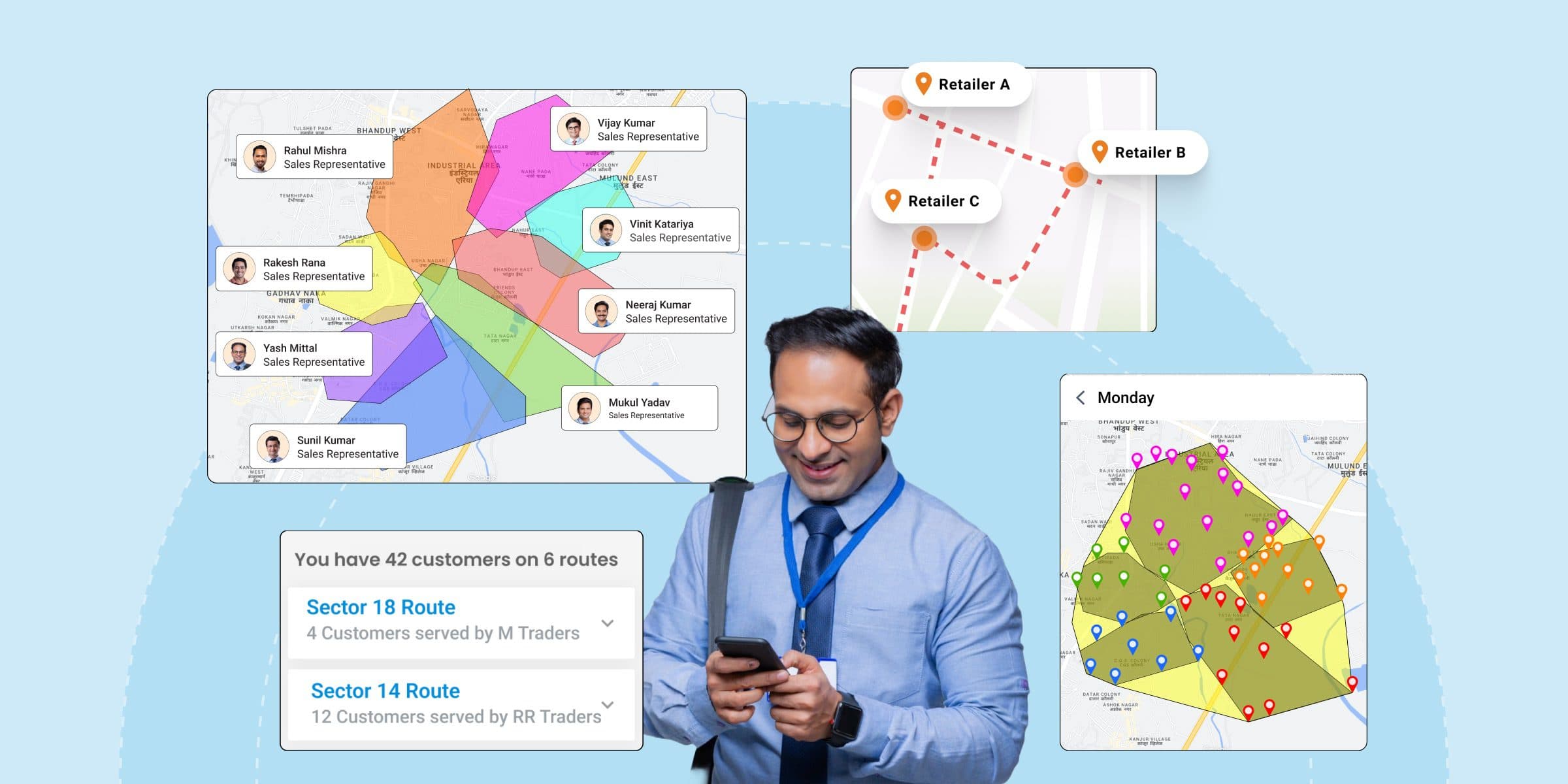
BeatRoute's customer onboarding captures outlet attributes with smart GPS location, AI-backed auto-locking for geocode accuracy, and real-time validation checks. A de-duplication algorithm stops the same shop entering twice. Approval workflows then classify outlets into A, B, and C tiers before anyone plans a journey.
Which outlets should you actually chase first?
Chase the outlets that concentrate volume, because coverage without concentration knowledge is expensive waste.
In Lagos, a detergent stocked in 100,000 outlets can do half its sales in just 10,000 of them. Ask the question that reframes every coverage debate: which 10% of your outlets drive half your sales? Most sales directors cannot answer it from their current reports.
Transport economics make this urgent. African logistics costs run about 8 times the world average, and Nigeria's fuel-subsidy removal roughly tripled transport costs. Adding a low-value outlet to a journey plan now costs real money, so tiering and route planning have to earn their place.
Which channels carry intensive distribution in Africa?
Four channels carry the volume here: general trade shops, open-market wholesalers, van sales routes, and modern trade where it exists.
Open-air wholesale markets are the channel's invisible institution. Onitsha Main Market and Kariakoo in Dar es Salaam act as volume compressors, where sub-wholesalers and van sellers restock daily. Stock moves across any territory line you draw, and no plan survives that reality unnoticed.
| Channel | What intensive distribution demands of it |
|---|---|
| General trade shops | The bakkal in Cairo, the kantemba in Lusaka, the boutique in Abidjan. High call frequency, small drops, and a rep who knows the basket that shop actually sells. |
| Open-market wholesalers | Volume compressors that restock hundreds of small shops. Serve them deliberately, and expect stock to cross territory lines from them. |
| Van sales routes | Sell-from-truck coverage of scattered outlets. Needs van stock reconciliation and offline order capture, or cash and cases leak. |
| Modern trade and HORECA | Mostly a South African and North African story. Fewer outlets, higher value, planogram compliance and share of shelf decide the result. |
How do you know your distribution is real and not just dispatched?
You only know when you can see secondary sales by outlet, because after the truck leaves the depot, most brands here go blind.
Primary sell-in to the distributor is easy to count. What each shop actually sold last week is the black box. Nigeria does not have a demand problem. It has a visibility problem, and intensive distribution multiplies that blindness by every outlet you add.
A distribution management system, or DMS, is the layer that closes it. DMS tracks distributor stock, secondary billing, and claims, so secondary and tertiary sales stop being an estimate. Numeric distribution reported without that data is a guess wearing a percentage sign.
What goes wrong when you scale to thousands of outlets?
Five failures show up at scale here: stockouts, stale prices, dumping, ghost visits, and rep churn that walks out with your outlet relationships.
Stockouts often start at the port, not the shelf. Import dependence and foreign-exchange scarcity make out-of-stock systemic, which turns availability into an allocation decision. BeatRoute's stock norms set thresholds that trigger restocking alerts before inventory hits zero, and the Order AI Agent recommends order quantities from purchase patterns, delivering 4 to 6% sales uplift.
| What breaks at scale | Why it happens here | What fixes it |
|---|---|---|
| Stale price lists | The naira fell 40.9% in 2024 and consumer-goods operating costs rose 67% in a year. Printed lists age in weeks. | Live price lists in the order screen, so no rep is accused of cheating a retailer. |
| Dumping across territories | Open-market wholesalers redistribute stock wherever margin is better. It is structural, not a distributor's moral failure. | Secondary-sales data that shows where stock actually landed, shared with the distributor. |
| Ghost visits | Visits marked done from the car. Managers suspect it and cannot prove it. | Time-stamped, geo-verified visits, so incentive payouts are never disputed by either side. |
| Rep churn | Frontline churn runs 25% to 35% a year, and each leaver takes undocumented outlet relationships. | Outlet history held in the system, plus transparent targets and less paperwork for the rep. |
| Apps that die without signal | Data costs about 2.4% of monthly income per GB in Sub-Saharan Africa, so reps ration connection. | Offline-first capture on low-end Android. Works with zero signal, syncs when back online. |
Why does your distributor decide whether this works?
Intensive distribution runs on distributors who agree to serve more low-value outlets, so their economics decide your coverage, not your ambition.
Distributors are established business owners you court, not command. Their anxieties run in a fixed order: manual claims that take 8 to 12 weeks to settle, dumping into their territory, and margins squeezed by currency moves. Answer those before you ask them to add 300 kiosks to a route.
Frame it as growth, not oversight. Digital claim logging shortens the settlement cycle. Shared outlet data shows which new shops repeat their orders. The distributor gains a business case for the extra drops, which is the only argument that moves a principal.
How do you build an intensive distribution strategy step by step?
Build it in eight steps, starting with the outlet universe and ending with the data that tells you which outlets to keep.
Each step below assumes African conditions: no outlet database, a long channel, thin signal, and a distributor who can veto the whole programme.
- Define the scope. Confirm your category is bought on impulse and frequency. Sachet and single-serve packs suit intensive distribution best.
- Census the outlet universe. Map and KYC every shop in the territory with GPS capture and de-duplication. This is the step most brands skip and later repeat.
- Tier the outlets. Classify A, B, and C by value and potential, so call frequency follows volume rather than habit.
- Match channels to the product. Not every SKU belongs in every format. Bulk packs die in a kiosk. Sachets die in a hypermarket aisle.
- Build the journey plan. Also called the beat plan or call cycle. Route around real geography and real transport cost, not a straight line on a map.
- Get distributor agreement. Show the claims and margin case before the coverage target. Their staff use the tool daily and can stall any rollout.
- Instrument secondary sales. Run DMS and the field app on one platform so orders, stock, and claims sit in one picture.
- Review and prune. Track strike rate, lines per call, and repeat orders per new outlet. Drop outlets that never repeat, and reinvest the visit.
What does good execution look like at outlet level?
Good execution means the rep walks in knowing what to push. They leave behind a verified visit, a correct order and a shelf that matches the plan.
Coverage is only the entry ticket. Perfect store score, share of shelf, and lines per call decide whether the extra outlets pay for themselves. A shop that stocks one SKU and never reorders is a cost, not distribution.
BeatRoute is a global platform tailored for African trade, with proof it works here, which is why brands like AAVA Brands and BUA Foods run on it. AAVA Brands in Nigeria posted an 18 to 20% field productivity gain and a 25 to 30% rise in store sellouts.
Where intensive distribution in Africa is heading
The next gain is not more outlets. It is knowing which outlets deserve the next visit, and letting retailers order without waiting for one.
Tolaram built Indomie into a household name across 1,000 distributors, 25,000 wholesalers, and 600,000 retailers. Distribution, not advertising, was the moat. Coca-Cola's micro-distribution centres serve 250 to 600 outlets each across more than 19 countries on the same logic.
Retailer self-ordering is the newer layer. WhatsApp reaches 95% or more of retailers, and shop owners reorder in the app they already trust. BeatRoute connects the field sales app with the Retailer and Influencer App, and reads your existing systems through 300+ integrations. Brands running every lever on one platform see 12.6% average first-year sales uplift (BeatRoute research).
The lesson the last decade taught here is cheaper to learn secondhand. Over 400 million dollars went into B2B marketplaces that tried to replace African trade by owning trucks and warehouses, and the model broke on thin margins. Equip the network you already have instead. Get an instant demo and see what actually sold in every outlet, even where there is no signal.
Frequently asked questions
What is intensive distribution?
Intensive distribution is a strategy that places a product in as many relevant outlets as possible to maximise shopper availability. It suits high-frequency categories such as snacks, beverages, sachet personal care, and household cleaners. The goal is numeric distribution: being on the counter when the shopper decides.
Why is intensive distribution harder in Africa than in Western markets?
Because there is no ready outlet database. Around 5 million small independent shops carry most of the trade, and many have no formal address. Brands must run an outlet census and field KYC before they can plan routes, which Western guides assume is already done.
When should a brand use intensive distribution?
Use it when the product is a convenience good, the purchase is impulsive, and competitors are already on the counter. Cold drinks, confectionery, bread, sachet detergent, and everyday toiletries qualify. It works poorly for premium or specialised products where exclusivity and guided selling drive value.
How does intensive distribution differ from selective distribution?
Intensive distribution targets maximum outlet coverage. Selective distribution limits the product to a curated set of retailers that match the brand's positioning. Selective suits categories where advice or exclusivity matters. Intensive suits everyday purchases where ubiquity drives share and repeat buying.
What is the difference between numeric and weighted distribution?
Numeric distribution is the percentage of outlets that stock your product. Weighted distribution adjusts that for how much each outlet sells. A brand can hold high numeric distribution and low weighted distribution if it is present only in small, low-turnover shops.
How many outlets are there in African trade?
Estimates put the continent at roughly 5 million retail outlets, most of them small and independent. Informal trade accounts for about 80% of FMCG retail spend in Africa (GeoPoll). In Nigeria, traditional trade is over 90% of retail sales.
What are the main challenges of intensive distribution at scale?
The recurring five are stockouts, price lists going stale under currency moves, stock dumping across territories, ghost visits, and rep churn. Each one grows with outlet count. They are managed with outlet-level data rather than with more field supervisors.
How do you track secondary sales across thousands of small outlets?
You need a distributor management system, or DMS, connected to the field sales app. The DMS records distributor stock and secondary billing, while the app records what each outlet ordered. Together they replace estimated sell-out with recorded sell-out.
Does intensive distribution software work without mobile signal?
It must. Good field software is offline-first, capturing visits and orders with zero signal and syncing when connection returns. Data costs about 2.4% of monthly income per GB in Sub-Saharan Africa, so reps ration connection and any always-online app fails.
How do you stop dumping between distributor territories?
You start by treating it as structural. Open-market wholesalers redistribute stock wherever margin is better, so it is rarely one distributor misbehaving. Secondary-sales data shows where stock actually landed, which lets brand and distributor fix pricing and allocation together.
How do you get distributors to serve more low-value outlets?
Fix their economics first. Manual claims often take 8 to 12 weeks to settle, and margins are already squeezed. Faster digital claim settlement, protected territory visibility, and proof that new outlets repeat their orders give the distributor a reason to add the drops.
How does BeatRoute support an intensive distribution strategy?
BeatRoute is a sales force automation and distributor management platform for field sales and distribution, not a CRM. It covers outlet onboarding with de-duplication, journey planning, offline order capture, stock norms, DMS claims, and analytics. It serves 200+ brands in 20+ countries, reaching 2M+ retailers and 100K+ users.