

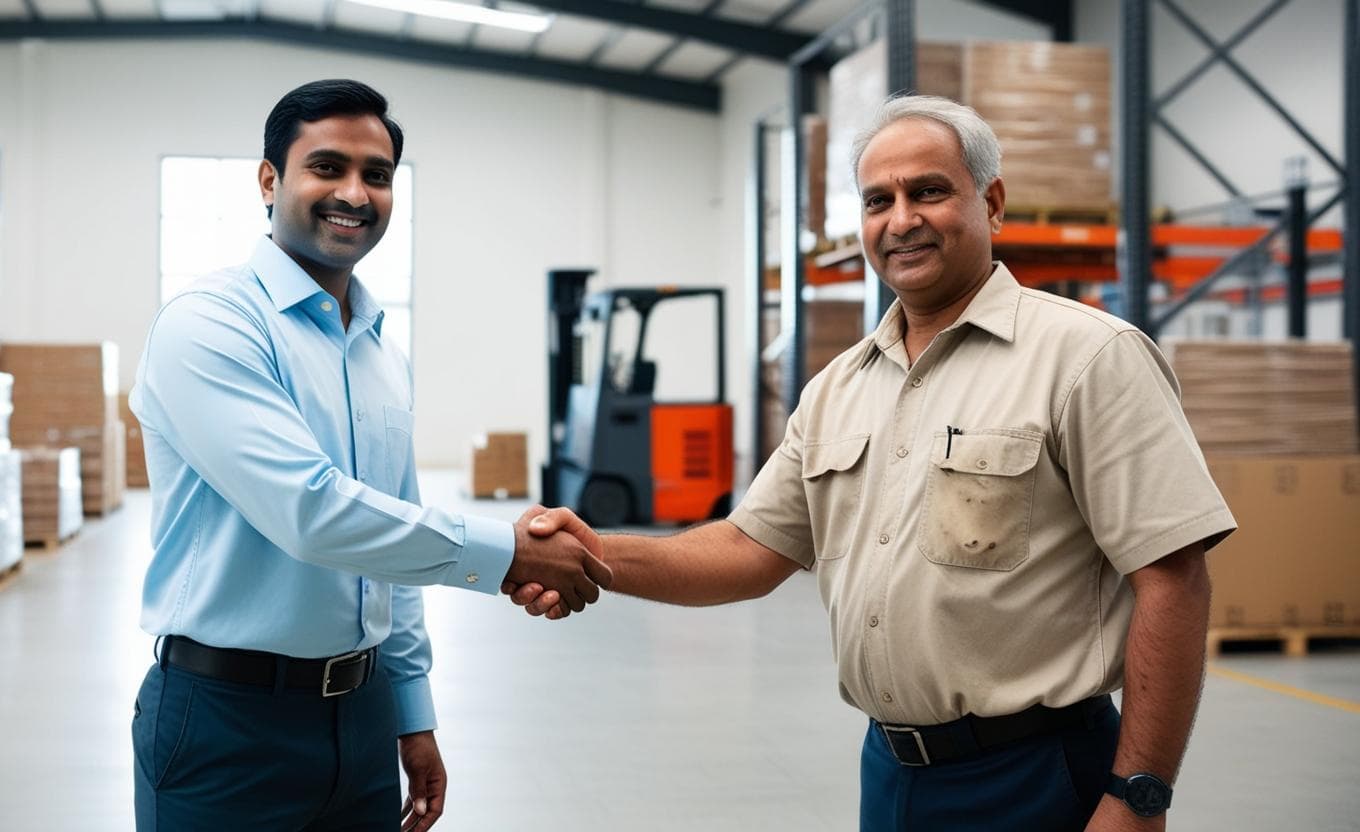
TL;DR In the Philippines, sari-sari owners and dealers reorder from the brand they trust, not just the one that shows up to take an order. This guide explains what relationship selling looks like in Philippine retail distribution and why it still beats pure transactional selling. It also shows how BeatRoute frees your reps from order-status and utang questions, so they can spend store time building the suki relationship that drives repeat volume.
Retailers and dealers place repeat orders with the brand they trust, not with the brand that simply turns up to take an order. Yet most Philippine field reps burn their store time on order-status questions, credit disputes, and statement-of-account issues. That leaves no room for the conversations that actually build the relationship. This guide lays out what relationship selling looks like in retail distribution here, why it still beats transactional selling, and how to free your reps to do it without losing execution discipline.
Strong B2B relationships in the trade are built one quality visit at a time. In a market where a tindera remembers who helped her move slow stock and who only pushed a scheme, that trust is your real distribution moat. The rest of this guide unpacks how trust, value, and the right tools combine to make it happen.
Why is trust your strongest sales strategy in the trade?
Trust is your strongest sales strategy because Philippine trade runs on the suki relationship, where repeat business flows from familiarity and reliability, not from the lowest price on a given day. A rep who educates a store owner, resolves her last complaint, and remembers her utang cycle earns bigger orders than one who only asks for a PO and leaves.
Sales teams are not formed only to take orders and note feedback. They are trained on the brand's products, its USP, its differentiators, and how to educate a retailer or dealer on new offerings. A store owner who gets to talk with a rep at that level naturally forms a rapport that lifts every future order. The problem is scale. A rep working a full beat of general trade outlets across a city fights traffic that has her leaving before sunrise and getting home after dark. She cannot do that depth of work at every stop without help.
This is where technology quietly earns its place. When retailers and dealers can self-serve order status, credit and debit notes, statements of account, and even digital reordering, everything changes. The rep stops repeating the same answers at every visit. Store time shifts from admin to advisory: product education, issue resolution, range selling, and finding ways to grow the business together. BeatRoute, the SFA and distributor management (DMS) platform for field sales and distribution, is built to clear that admin off the rep's plate so the human work has room to happen.
What is relationship selling in retail distribution?
Relationship selling is a B2B approach that prioritizes long-term trust and value with retailers and dealers over closing a single order. In retail distribution it means reps educate channel partners on new products, resolve issues fast, and align on shared growth goals. They do more than take an order and move to the next outlet. The payoff is retention, larger baskets, and a store owner who backs your next launch.
Remember, it is not just the product you are selling to a retailer. You are selling your brand and your reliability. That builds the long-term association that keeps a sari-sari owner reordering, instead of the short-term win that disappears the moment a competitor runs a louder scheme.
Your reps are the face of your company to every B2B customer. Their traditional role is to take orders, note feedback, and check planogram compliance. But when tooling cuts the unnecessary work, that same visit becomes a real conversation. The sections below unpack how to make that shift stick.
Customer experience: every outlet is different
Every retailer has its own needs and limits. Geography, demography, and store size all decide what and how much goes on the shelf. A sari-sari store in a Visayas barangay selling in tingi, sachet by sachet, on utang written in a listahan is a different customer from a Puregold-supplied grocer in Metro Manila. Reps who recognize that sell better.
Consider a common scenario. A brand wants to deepen retailer engagement and range selling across general trade, but its frontline reps have no time for it because every visit gets eaten by order-status and credit questions. Equip those retailers with a self-serve Retailer App that runs on the Viber and Messenger channels where Philippine trade already happens, connect it to the brand's DMS, and two things change. Retailers get direct digital engagement that complements the rep instead of replacing her. The rep walks in with the store's full history at the door: last order, outstanding balance, complaint status, scheme eligibility. The visit starts prepared, and range selling and trade schemes land with far higher accuracy.
Beyond the sale: relationship selling is adding value
The most important thing you offer beyond product quality is value, and value extends well past the point of sale. It shows up at every touchpoint: how fast you document and resolve a complaint, how clearly you explain a scheme, whether a loyalty program actually rewards the store owner who keeps reordering. That is worth far more than the plain buyer-seller exchange, because it removes friction on both sides and clears the path for more business.
B2B trade is more complex than B2C. Reliability, mutual benefit, and trust matter more than individual preference. It means building durable partnerships founded on understanding and shared goals. Loyalty here is not just a byproduct of satisfaction, it is a strategic asset. Your loyal retailers become advocates and unofficial influencers who tell the next store owner your brand is easy to work with. Get this right and you also sidestep the friction that fuels channel conflict when partners feel taken for granted.
Technology is a tool, not the whole answer
Technology answers a lot of questions, but the main one in relationship selling stays human: is trust really the foundation of your association with retailers? Only a rep, in person, can build that. What a strong field app does is remove everything that gets in the way. Once a retailer can see credit status, statement of account, and order history on her own, the questions stop. She no longer asks the rep the same things every visit.
That opens room for the rep to introduce new products and explain schemes that actually grow revenue. It also matters that the tool meets the field where it is. BeatRoute works on any Android, even low-end devices, online and offline. A rep in a patchy-signal province and a store owner on an entry-level phone both stay in the loop. Relationship selling, even with software behind it, remains a primarily human undertaking. The technology just gives it back the time.
How do you scale trust without burning out your reps?
You scale trust by taking the repetitive load off the rep and standardizing the prepared visit, not by adding headcount or pushing longer hours. When the app handles order status, credit visibility, and reporting, the rep does the same relationship work at more outlets per day. She still gets home earlier, instead of doing kayod till dark just to keep the numbers straight.
This is where global scale meets local proof. BeatRoute is a global platform tuned for the way Philippine field sales and distribution actually run. It is proven on the ground by major local brands like Unilab and Monde Nissin. Behind it sit a Manila office, Tagalog support, and Viber and Messenger retailer ordering. You get enterprise reliability with tooling that a rep working general trade recognizes on day one. Because Viber is where trade here already happens, with business messaging up 53% year on year, meeting retailers on that channel is not a nice-to-have. It is where the relationship lives.
Final words
The essence of Philippine B2B trade is human connection: rapport, reliability, and the suki loyalty that keeps a store owner reordering season after season. Technology is extremely useful, but it is never a replacement for the rep who builds that trust face to face. Free your team from the admin that eats their store time, give retailers a self-serve channel on Viber, and let your reps do the part only humans can do. Plant trust well, and retailers keep buying from you for as long as the trade exists.
Book a PH-tailored demo and see how BeatRoute gives your reps back the time to build real retailer relationships.
Frequently asked questions
What is relationship selling in retail distribution?
Relationship selling is a B2B sales approach that prioritizes long-term trust and value with retailers and dealers over closing a single order. In Philippine retail distribution it means reps educate channel partners on new products, resolve issues quickly, and align on shared growth goals. They do more than take orders and move to the next outlet. It is the formal version of the suki relationship that already drives repeat business in the trade.
How is relationship selling different from just taking orders?
Transactional selling optimizes for the next order: price, discount, quantity. Relationship selling optimizes for the next twelve months: trust, reliability, and shared goals. Both close orders, but relationship selling tends to produce higher retention and larger baskets. A sari-sari owner or dealer becomes more willing to back your new launches and planogram changes. In a fragmented, referral-driven market, that trust keeps building.
Does technology replace the rep relationship with retailers?
No. Technology removes friction so the relationship has room to grow. When retailers can self-serve order status, statements of account, and digital reordering on Viber and Messenger, the rep's in-store time shifts from admin to advisory. That means product education, issue resolution, and scheme conversations. The trust between a rep and a store owner is still built in person. The tooling just clears the space for it.
Is a relationship selling tool the same as a CRM?
No. An office CRM manages a sales pipeline from a desk. Relationship selling in retail distribution happens in the field, across visits, routes, outlets, and distributors. BeatRoute is an SFA and DMS platform built for that reality. It carries beat plans, visit proof, retailer engagement on Viber, and distributor stock visibility, none of which a desk CRM provides. It captures the trust and the transaction in the same place.
Does it work offline in the provinces?
Yes. BeatRoute works on any Android, even low-end or entry-level phones, online and offline. A rep in a provincial dead zone can log the visit, check the retailer's history and credit, and capture an order without signal. The app syncs automatically once connection returns. Because most Philippine field teams already run on Android, it is built for the phones they actually carry.