For retail brands in the Philippines, sales force automation has evolved beyond traditional GPS tracking and store verification. While solutions like FAST SFA continue to excel at traditional SFA, BeatRoute is the only SFA-DMS built to execute your sales goals: an AI-native retail execution platform designed for today’s complex, multi-stakeholder Philippine retail ecosystem.
Two distinct approaches to sales force automation
BeatRoute
BeatRoute is a comprehensive, AI-driven ecosystem with all traditional SFA capabilities. It delivers measurable outcomes through Goal-Driven AI that guides every rep and channel partner.
- Goal-Driven AI execution: Proactive intelligence that aligns every activity with measurable business outcomes beyond traditional location tracking
- Unlimited stakeholder coordination: Zero-code platform connecting field teams, distributors, retailers, and head office without vendor dependency
- Philippine-localized experience: True Tagalog support and messaging platform integration designed for local market dynamics
Functional scalability: Self-service platform modifications without complex implementation processes
FAST SFA
FAST SFA has established itself as a traditional sales force automation solution, focusing on:
- Local business alignment: Created by users for users with Philippine businesses in mind
- GPS store-locking verification: Customizable radius settings ensuring salespeople are physically present at designated locations
- Offline accessibility: Uninterrupted distribution activities regardless of connectivity issues in remote areas
Key differences in approach
| Aspect | FAST SFA | BeatRoute |
| Primary Focus | GPS verification and local business process automation | Goal-Driven execution across entire retail ecosystem |
| Target Users | Salespeople and sales managers | Field teams, distributors, retailers, head office |
| Intelligence Layer | Advanced analytics and real-time data access | Real time data with Proactive AI agents and natural language assistance |
| Market Approach | Traditional SFA with Philippine geographical adaptation | Modern and advanced platform tailor made for Philippines Retail brands |
| Implementation | Vendor-managed with logistics company expertise | Partner-supported with zero-code self-service capabilities |
| TeleOrder AI Agent | ✗ | ✓ |
BeatRoute’s unified platform advantage
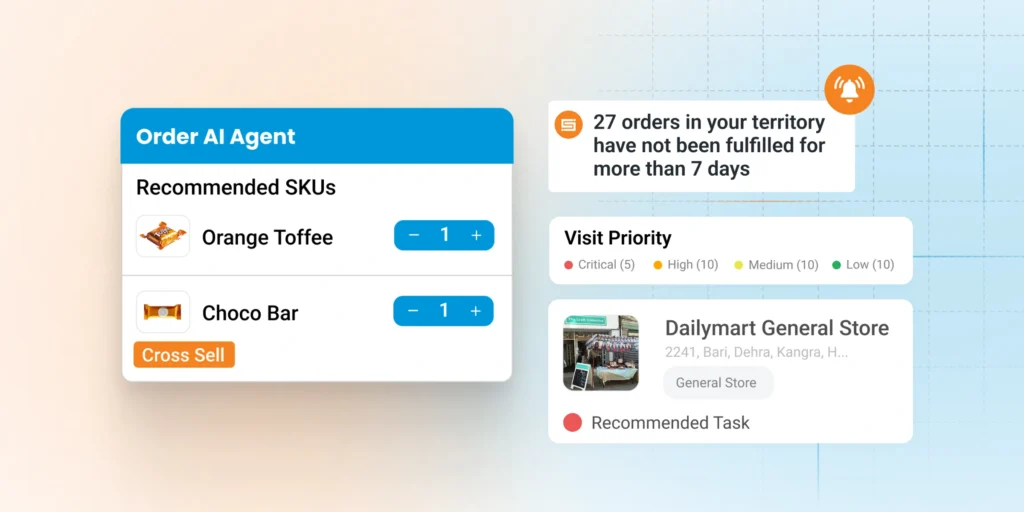
AI-powered excellence
- Order AI Agent for intelligent order recommendations based on store performance and customer behavior
- Scheduling AI Agent for optimized visit planning across territories and routes
- Customer Insights AI Agent for relationship intelligence and retailer behavior analysis
- BeatRoute Copilot enables natural language assistance for immediate guidance, eliminating complex analytics dashboard navigation
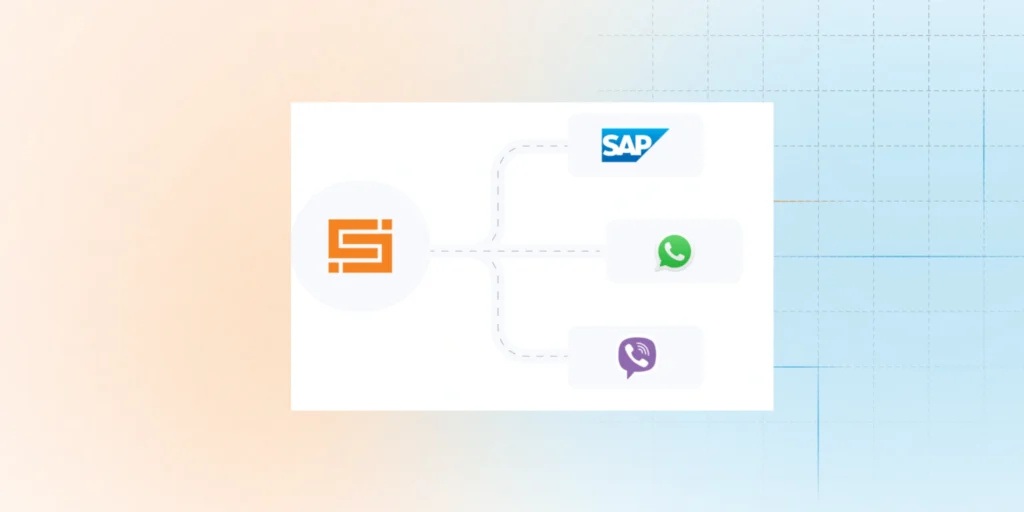
Philippine-specific design
- Messaging platform integration: Seamless Viber-based ordering for sari-sari stores, supermarkets and mobile first distributors.
- True Tagalog support across every app and feature, from SFA to distributor to customer interfaces, beyond basic localization
- Local expertise with Philippines-based partner Redstar Asia Solutions providing hands-on support in Tagalog

Functional scalability
- Zero-code platform modifications enabling rapid adaptation without logistics company consultant fees or vendor tickets
- Multi-stakeholder coordination connecting operations beyond sales teams to include distributors and retailers
- Goal-Driven AI framework ensuring every activity measurably contributes to revenue growth, not just location compliance
Proven impact that exceeds traditional SFA metrics
BeatRoute’s AI-native approach delivers measurable results that surpass traditional SFA benchmarks.
- 12.6% average sales uplift in the first year through Goal-Driven AI
- 4-6% uplift from Order AI Agent alone
- Scheduling AI Agent lifts productive visits from 45% to 78% and payment collection from 72% to 91%
Real world case studies
Colgate-Palmolive Philippines uses BeatRoute’s zero-code eB2B platform via Messenger and Viber bots to simplify retailer ordering and trade scheme execution. This enables faster store reach and stronger retailer engagement through digital campaigns.
San Miguel Corporation depends on BeatRoute’s offline-capable mobile app and real-time dashboards to manage field operations nationwide, even in areas with weak connectivity. Managers gain immediate visibility into execution and can resolve issues as they happen.
Guill-Bern Corporation unites its marketing, sales, and technical teams on BeatRoute’s platform with lead management and workflow automation. This integrated system helps them convert leads faster, shorten project timelines, and improve cross-team coordination.
The strategic choice: why BeatRoute wins
BeatRoute delivers everything traditional SFA tools like FAST SFA promise: GPS tracking, local business alignment, and remote area functionality. It also adds Goal-Driven execution, unlimited scalability, and a Philippine-localized experience that traditional logistics-based SFA tools cannot match.
Retail brands that need a straightforward SFA solution can opt for FAST SFA. Brands that need a Goal-Driven, unified platform that aligns every step of execution with measurable outcomes will find BeatRoute the stronger fit.
Ready to see how BeatRoute transforms retail execution in the Philippines? Book your free demo today.
Bottom line
FAST SFA is a solid choice for Philippine businesses that need reliable GPS-based SFA with strong local market alignment and offline capabilities.
BeatRoute is the only SFA-DMS built to execute your sales goals. Its Goal-Driven AI guides every rep and channel partner toward specific, measurable outcomes. For retail brands that need execution, not just visibility, BeatRoute is the only choice.
What is the best alternative to FAST?
BeatRoute is the strongest alternative to FAST for field sales teams that need outcome-driven execution. BeatRoute is the only SFA-DMS built to execute your sales goals. Goal-Driven AI, 200+ enterprise customers across 20+ countries, and a 12.6% average sales uplift in the first year make BeatRoute the clear choice for retail brands. Request a demo.
Why is BeatRoute better than FAST?
BeatRoute does more than confirm that a rep reached a GPS-verified store. It guides them on what to do at every visit. BeatRoute’s Goal-Driven AI agents, including the Order AI Agent, Scheduling AI Agent, and BeatRoute Copilot, drive measurable outcomes at each interaction. The result is measurable sales growth, visit by visit.
Why is BeatRoute’s Goal-Driven AI better than FAST’s GPS store-locking?
GPS store-locking confirms presence. BeatRoute’s Goal-Driven AI drives performance. The Scheduling AI Agent prioritizes which stores to visit based on sales trends, overdue payments, and territory goals. The Order AI Agent pre-populates orders to increase AOV and range sold. BeatRoute’s Scheduling AI Agent lifts productive visits from 45% to 78% and ticket size from 1,200 to 1,900.
How is BeatRoute’s customer support better than FAST’s?
BeatRoute delivers a 99% ticket resolution rate, 92% SLA adherence, and 96% CSAT, which sits 18 points above the SaaS industry average. Every enterprise customer gets a dedicated onboarding manager, quarterly business reviews, and ongoing success support from a named team that knows their rollout. That high-touch model is built for retail brands running complex field operations across multiple geographies.
Why is BeatRoute easier and faster to roll out than FAST?
BeatRoute rolls out faster for three reasons. First, it maps to your existing sales processes immediately without requiring customization. Teams configure workflows in the Brand Panel from day one. Second, a dedicated CS team guides rollout with hands-on onboarding from kickoff to go-live. Third, BeatRoute uses a proven, step-by-step implementation methodology that reduces go-live time and adoption risk. Support stats: 99% resolution rate, 92% SLA adherence, 96% CSAT.
How do I migrate from FAST to BeatRoute?
BeatRoute has handled migrations from most competing retail execution and SFA platforms. The transition follows a structured playbook covering data mapping, historical transaction import, parallel-run validation, and role-based rollout to field teams. A dedicated migration team walks through hierarchy, master data, and reporting parity before go-live so there is no drop in visibility or daily operating rhythm. Request a demo to discuss your specific migration plan.