Retail execution requirements in the Philippines have evolved from simple activity tracking to AI-driven ecosystems that orchestrate entire route-to-market. While traditional platforms like Tarkie excel at process automation and workforce management, next-generation platforms like BeatRoute represent a shift toward the only SFA-DMS built to execute your sales goals.
Process digitization vs. Goal-Driven AI
Tarkie: Traditional field work automation excellence
Tarkie focuses on digitization of field processes. It emphasizes process efficiency through modular solutions that replace paper-based workflows with digital systems.
Its approach centers on workforce productivity optimization – converting manual activities into automated processes with real-time monitoring and smart alerts.
The platform offers four distinct modules: Sales Force, Field Service, Trade Check, and Employee Productivity. This modular approach allows organizations to select relevant features.
BeatRoute: The only SFA-DMS built to execute your sales goals
BeatRoute is the only SFA-DMS built to execute your sales goals. Rather than simply automating existing processes, BeatRoute reimagines retail execution around measurable business goals.
It connects field reps, supervisors, distributors, retailers, and head office into a single ecosystem. Every activity is guided toward specific business goals. Modern retail requires intelligent guidance, not just digital workflows.
Feature-level comparison
| Feature Category | BeatRoute | Tarkie |
| AI-Powered Visit Planning | ✅ | ❌ |
| Order Recommendations | ✅ | ❌ |
| Data-Driven Insights in Natural Language | ✅ | ❌ |
| Offline Capabilities | ✅ | ✅ |
| AI-Powered Visual Merchandising | ✅ | ❌ |
| Distribution Management System | ✅ | ❌ |
| Sales Gamification | ✅ | ❌ |
| Retailer-Facing Apps | ✅ | ❌ |
| Zero-Code Customization | ✅ | ❌ |
| TeleOrder AI Agent | ✅ | ❌ |
BeatRoute’s advantage
AI-powered user experience
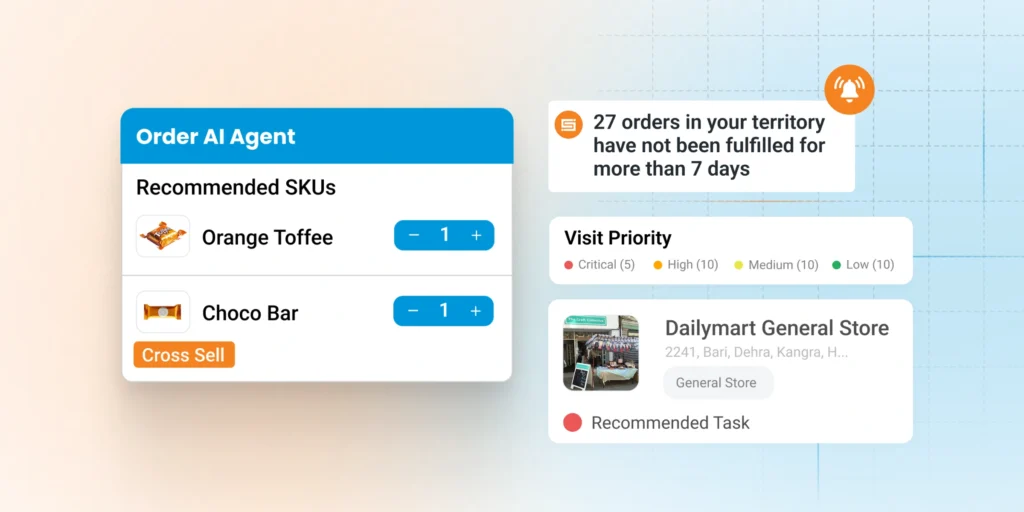
- Order AI Agent for intelligent order recommendations based on store performance
- Scheduling AI Agent for optimized visit planning across territories
- Customer Insights AI Agent for relationship intelligence and retailer behavior analysis
- BeatRoute Copilot for natural language assistance and real-time guidance
Functional scalability beyond traditional SFA
- Zero-code platform modifications enabling rapid adaptation without vendor dependency
- Real-time workflow deployment responding instantly to market changes
- Unified data architecture connecting all channels and stakeholders
- Goal-Driven AI framework ensuring every activity aligns with business outcomes
Philippine-specific design
- Offline-first architecture engineered for archipelago connectivity challenges
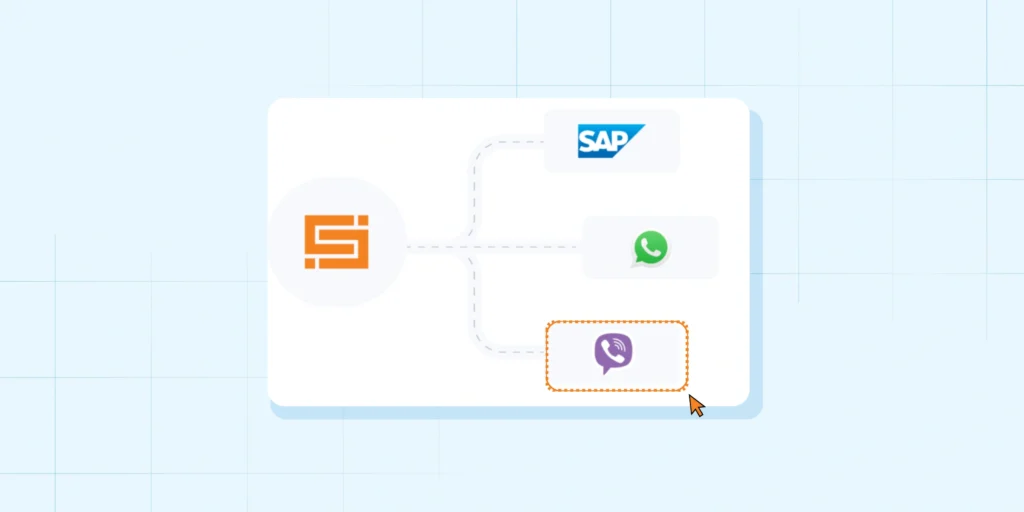
- Viber integration to match local retailers’ communication preferences
- True Tagalog support across every app and feature, not just translations
- Local expertise with Philippines-based partner Redstar Asia Solutions providing hands-on support
Proven impact in Philippines market
BeatRoute’s AI-native approach delivers measurable results across the Philippine retail landscape:
- 12.6% average sales uplift in the first year through Goal-Driven AI
- 4–6% additional sales uplift from Order AI Agent alone
- Scheduling AI Agent lifts productive visits from 45% to 78% and payment collection from 72% to 91%
Real world case studies
Colgate-Palmolive Philippines uses BeatRoute’s zero-code eB2B platform through Messenger and Viber bots to simplify retailer ordering and trade scheme rollouts. This lets them reach stores faster and engage retailers more effectively with digital campaigns.
San Miguel Corporation relies on BeatRoute’s offline-capable mobile app and real-time dashboards to coordinate field operations nationwide, even in places with weak connectivity. Managers gain live visibility into execution and can fix issues as they occur.
Guill-Bern Corporation brings together marketing, sales, and technical teams on a single BeatRoute platform using lead management and workflow automation. This unified approach helps them convert leads faster, shorten project cycles, and improve team coordination.
The strategic choice
Tarkie is a traditional field-force automation product delivered as four packaged modules. Ask how a change to one of those modules is made, and who makes it, when your process changes.
BeatRoute is the only SFA-DMS built to execute your sales goals. It is functionally scalable. Retail brands can modify workflows and adjust KPIs independently through the Brand Panel, reducing dependence on vendors and enabling faster adaptation. It is built with retail realities in mind and offers features that truly help you achieve your business goals faster.
- Choose Tarkie if your focus is primarily on digitizing field work.
- Choose BeatRoute if you need Goal-Driven AI, multi-stakeholder coordination, and rapid adaptability to market changes.
Ready to see how BeatRoute transforms retail execution in the Philippines? Book your free demo today.
Bottom line
Tarkie is a solid choice for Philippine businesses that need to digitize field workflows and manage workforce productivity through modular process automation.
BeatRoute is the only SFA-DMS built to execute your sales goals. Its Goal-Driven AI guides every rep and channel partner toward specific, measurable outcomes. For retail brands that need execution, not just visibility, BeatRoute is the only choice.
What is the best alternative to Tarkie?
BeatRoute is the strongest alternative to Tarkie for field sales teams that need AI-driven execution, not just modular process automation. BeatRoute is the only SFA-DMS built to execute your sales goals. With Goal-Driven AI, 200+ enterprise customers across 20+ countries, and a 12.6% average sales uplift in the first year, BeatRoute delivers real outcomes. Request a demo.
Why is BeatRoute better than Tarkie?
BeatRoute does not just automate field processes. It uses Goal-Driven AI to ensure every rep and channel partner drives toward specific, measurable sales outcomes. BeatRoute’s Order AI Agent, Scheduling AI Agent, and BeatRoute Copilot guide every interaction at the field level with precision.
Why is BeatRoute’s Goal-Driven AI better than Tarkie’s modular field process automation?
Process automation reduces friction. BeatRoute’s Goal-Driven AI drives outcomes. The Scheduling AI Agent lifts productive visits from 45% to 78% by prioritizing visits based on sales data and territory goals. The Order AI Agent pre-populates orders to increase AOV and range sold, delivering 4 to 6% sales uplift. BeatRoute does not just automate what reps do. It ensures what they do generates results.
How is BeatRoute’s customer support better than Tarkie’s?
BeatRoute delivers a 99% ticket resolution rate, 92% SLA adherence, and 96% CSAT, which sits 18 points above the SaaS industry average. Every enterprise customer gets a dedicated onboarding manager, quarterly business reviews, and ongoing success support from a named team that knows their rollout. That high-touch model is built for retail brands running complex field operations across multiple geographies.
Why is BeatRoute easier and faster to roll out than Tarkie?
BeatRoute rolls out faster for three reasons. First, it maps to your existing processes immediately without requiring customization. Teams configure workflows in the Brand Panel from day one. Second, a dedicated CS team guides rollout hands-on. Third, a proven implementation methodology reduces go-live time and adoption risk. Support metrics: 99% resolution rate, 92% SLA adherence, 96% CSAT.
How do I migrate from Tarkie to BeatRoute?
BeatRoute has handled migrations from most competing retail execution and SFA platforms. The transition follows a structured playbook covering data mapping, historical transaction import, parallel-run validation, and role-based rollout to field teams. A dedicated migration team walks through hierarchy, master data, and reporting parity before go-live so there is no drop in visibility or daily operating rhythm. Request a demo to discuss your specific migration plan.