

TL;DR This is for African sales and distribution leaders weighing a CRM against a field sales platform. A CRM stores the relationship. It goes blind after the truck leaves your depot. A sales force automation (SFA) platform with distributor management (DMS) shows you what sold in every outlet, works offline, and settles distributor claims faster. BeatRoute runs this way for 200+ brands across 20+ countries.
What is sales force automation, and why it is not a CRM
A sales force automation (SFA) platform runs your field sales workflow; a CRM only stores the relationship. SFA plans the journey, captures the order, runs the retail audit, and reports what happened in the outlet. A CRM tracks contacts, leads, and deals from a desk.
Distribution management (DMS) is the second half. It tracks the distributor's stock, secondary sales, claims, and payments. African buyers often search for a "sales CRM," but field trade needs SFA plus DMS working together.
BeatRoute is the SFA and distributor management (DMS) platform for field sales and distribution. It is not a CRM. It is built for what happens between your depot and the shelf.
Why a generic CRM goes blind after the truck leaves your depot
A CRM shows the order you booked with a distributor. It shows nothing about what happened next. Whether your product moves through open markets in Lagos, dukas in Nairobi, or spaza shops in Soweto, the story repeats. Five to seven middlemen sit between your factory and the shelf.
Nigeria does not have a demand problem. It has a visibility problem. Over 90% of Nigerian retail runs through small independent outlets, and you see primary sell-in, then go dark on everything after.
The squeeze is real before you even fix it. The naira fell 40.9% in 2024, and consumer-goods operating costs rose 67% in a single year. Price lists go stale in weeks, and reps get accused of cheating. A CRM cannot see any of it.
Which of your outlets actually drive the sales?
Take a detergent stocked in 100,000 outlets. Half its sales can come from just 10,000 of them. A CRM cannot tell you which 10% matter, because it never sees secondary sales. An SFA platform can.
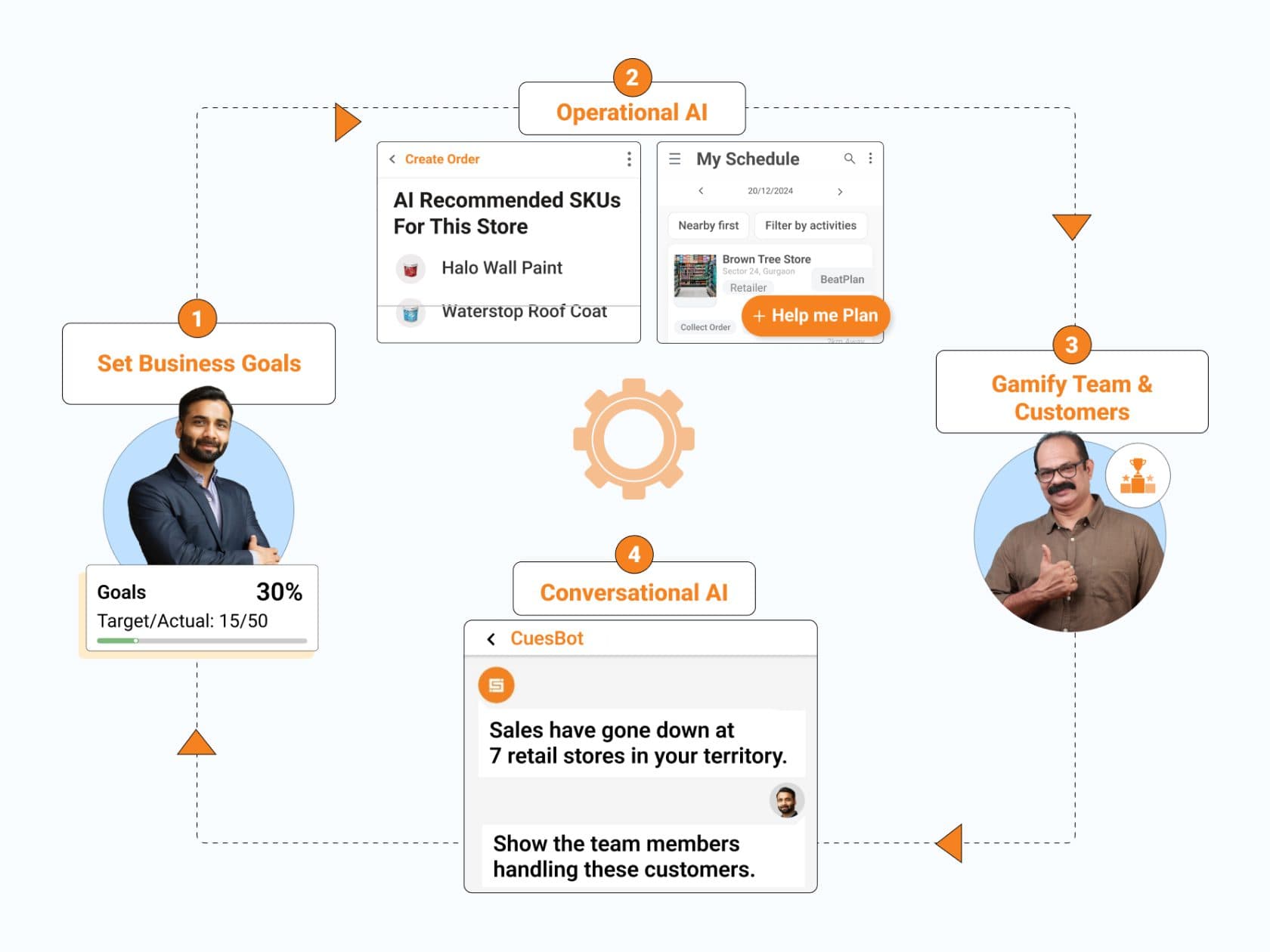
Your reps walk into every duka knowing what to push. The Order AI Agent builds that basket from purchase history and peer buying patterns, and lifts sales by 4 to 6% from that feature alone.
The Scheduling AI Agent decides which outlets a rep should visit tomorrow, using live signals like overdue payments and stock gaps. It lifts productive visits from 45% to 78%, based on BeatRoute customer data.
Does it work when there is no signal?
Works with zero signal. Syncs when you are back online. A cloud CRM freezes the moment the connection drops, and teams revert to paper. Once they are back on paper, they stay there.
Data costs 2.4% of monthly income per gigabyte in Sub-Saharan Africa, above the UN affordability line. So the app must be light on data, light on battery, and run on a low-end Android phone.
Reps keep capturing orders, logging visits, and completing audits with no bars of signal. Everything syncs when they reconnect. It also holds through load shedding, when the tower and the router both go down.
What a CRM cannot do: manage your distributors
Your distributor is a business owner you court, not a contact you log. Their anxieties are specific. Manual claims take 8 to 12 weeks to settle, and every delay strains the relationship.
Stock also crosses every territory line you draw. Sub-wholesalers restock daily at open-air markets like Onitsha, Idumota, Gikomba, and Kariakoo, so dumping is a structural reality, not a moral failing. DMS makes secondary sales visible, so claims move faster and territories hold.
Distribution is the moat, and the market knows it. Tolaram built Indomie on 1,000 distributors, 25,000 wholesalers, and 600,000 retailers, and Diageo sold Guinness Nigeria to Tolaram for that network. BeatRoute makes networks like that visible. It never replaces, controls, or bypasses them.
Proof of visit that protects your reps, not just tracks them
Ghost visits, reps marking a store visited from the car, are a known problem no manager can prove. The fix is not surveillance. Every visit is time-stamped and geo-verified, so incentive payouts are never disputed.
Frontline rep churn runs 25 to 35% a year, and each departure walks away with undocumented outlet relationships. The reps are young and phone-native. Fair payouts, clear targets, and less admin keep them longer.
A CRM built to log manager activity reads as distrust in the field, and it dies on adoption. Protection framing is what gets the tool opened every day.
SFA plus DMS platform vs a generic CRM
The gap is not features on a page; it is whether the system sees the trade you actually run. Here is how a field-built platform compares with a generic sales CRM.
| Capability | BeatRoute SFA plus DMS | Generic sales CRM |
|---|---|---|
| Secondary sales visibility | Sees what sold in each outlet | Stops at primary sell-in |
| Distributor claims | Tracked and settled faster | No distributor concept |
| Offline capture | Full offline mode with auto-sync | Freezes without signal |
| Journey planning | AI-prioritized daily beat plan | Static calendar |
| Retailer ordering | WhatsApp-native order taking | Email or web form |
| Data residency | Ready for POPIA, NDPR, and Kenya DPA | Generic global cloud |
| Territory and dumping | Cross-territory stock made visible | Blind to redistribution |
| Setup | No-code, live in weeks | Developer-led customization |
A global platform, proven in African trade
BeatRoute is a global platform tailored for African trade, with proof it works here, which is why brands like AAVA Brands and BUA Foods run on it. AAVA Brands in Nigeria reports an 18 to 20% lift in field productivity and 25 to 30% more store sellouts. BUA Foods runs on the same platform.
The scale is real. Over 200 enterprise brands across 20+ countries use BeatRoute, covering 2M+ retailers, 100K+ users, and 6K+ channel partners. It runs from boutiques in Abidjan to bakkals in Cairo to kantembas in Lusaka.
Across its customer base, BeatRoute delivers a 12.6% average first-year sales uplift when brands run every lever on one platform. Get an instant demo and see your coverage gaps for yourself.
Frequently asked questions
Is BeatRoute a CRM?
No. BeatRoute is a sales force automation (SFA) and distributor management (DMS) platform for field sales and distribution. A CRM stores contacts and deals from a desk. BeatRoute runs the field workflow: journey planning, order capture, retail audits, and distributor claims across your whole network.
What is the difference between SFA and a CRM for field sales?
A CRM manages the relationship layer across sales, service, and marketing. SFA digitizes the field workflow itself: visit planning, order taking, audits, and reporting. For African retail distribution, SFA paired with DMS also tracks secondary sales, distributor stock, and claims, which a generic CRM never touches.
Why do African FMCG brands lose visibility after dispatch?
Five to seven middlemen sit between factory and shelf, and over 90% of retail runs through small independent outlets. Brands see primary sell-in, then go dark. Secondary sales visibility is the number one buyer concern, and it is exactly what a CRM cannot deliver.
Does the platform work without internet connectivity?
Yes. Reps capture orders, log visits, and complete audits with zero signal, and everything syncs when the device reconnects. This matters where data costs 2.4% of monthly income per gigabyte and where load shedding takes down towers and routers together.
Can it support van sales, general trade, and modern trade in one system?
Yes. Configurable workflows handle each model in the same platform. Van sales reps get inventory and delivery tools. General trade reps get order capture and scheme application. Modern trade reps get planogram audits. KPIs and targets adjust per channel without separate deployments.
How does it help with distributor claims and dumping?
Native DMS syncs secondary sales, stock, and payments, so claims that used to take 8 to 12 weeks settle faster. It also makes cross-territory stock movement visible, so dumping through open-air wholesale markets stops being a blind spot and territories hold.
Where is our data hosted?
BeatRoute is built to meet African data rules, including POPIA in South Africa, the NDPR in Nigeria, and Kenya's Data Protection Act. Data residency is confirmed during setup with your IT team, so the gatekeeper who can veto everything gets a straight answer early.
Will my reps see tracking as surveillance?
Only if it is framed that way. Every visit is time-stamped and geo-verified so incentive payouts are never disputed, which reps experience as protection. Paired with fair targets and less admin, it lowers the churn that runs 25 to 35% a year on most field teams.
Can retailers order on WhatsApp?
Yes. Retailer-facing ordering runs on WhatsApp, the channel shops already use every day. Orders flow back to the brand's sales team and distributors, closing the loop between field execution and downstream supply without adding a new app for the shopkeeper to learn.
How long does it take to go live?
Most enterprise teams go live within weeks using no-code configuration for workflows, KPIs, and dashboards. Local-language interfaces and WhatsApp ordering cut training friction. Because the platform is built for retail distribution out of the box, heavy custom development is rarely needed.
Which African brands use BeatRoute?
AAVA Brands and BUA Foods in Nigeria both run on BeatRoute, part of 200+ enterprise brands across 20+ countries. AAVA Brands reports an 18 to 20% lift in field productivity and 25 to 30% more store sellouts since deploying the platform.