


A field management system is the app your field team carries and the dashboard managers run them from. It plans who visits which outlet, records what happened at each visit, and reports it back the same day.
For a retail brand in Nigeria, Kenya, Ghana or South Africa, most of those outlets are kiosks, provision stores, dukas, spaza shops and open-market stalls. A distributor serves them, and supermarkets sit on the same beat list.
Field sales or field service: which system do you need?
Many tools sold as field management software are field service management (FSM): operations software that sends technicians to install or repair equipment, with work orders, spare parts and a customer sign-off. If your people fix generators, service lifts or install meters, you need FSM, and this guide is not for you.
A field sales system does a different job. Reps, merchandisers and van sellers visit outlets on a beat, and a good visit ends with an order, a shelf photo or a payment. If that is how your visits end, you need the sales kind. Our page on field force management software sets out all four kinds of field tools side by side.
Who a field management system has to manage
A brand's field team in African general trade is rarely one group. A good field team management platform puts all of them on one plan:
- Pre-sales reps visit outlets, take orders and pass them to the distributor for delivery.
- Van sellers sell, deliver and collect cash from the van in one stop. See van sales automation.
- Merchandisers and promoters fix displays and record shelf share and sell-out in supermarkets.
- Distributor sales staff cover outlets for your brand while sitting on the distributor's payroll.
- Area and country managers plan beats, approve changes and coach reps on the road.
When each group works from a different tool or a WhatsApp group, nobody can say which outlets were covered this week.
Field management scheduling: beats, visit rhythm and the day's plan
A beat is the loop of outlets a rep covers on a given day. Each outlet needs its own visit rhythm: a busy provision store near a bus park may need a call every week, a small kiosk every other week. Our guide to beat planning shows how to set both.
The plan also has to change during the day. A market closes for a holiday, a road floods, a distributor's truck runs late. A manager should be able to move a visit in a few taps, and the rep should see the change on the phone straight away.
BeatRoute's Scheduling AI Agent ranks each rep's outlets by what each is likely to buy this cycle, so the visits that matter most come first. Productive visits rose from 45% to 78% with the agent.
What field activity management software should record at each visit
A demo will run through dozens of field management features. Start with the visit itself. Every visit should leave the same record:
- A check-in that counts only inside the outlet's geofence, so the visit itself is proof the rep was there.
- The order, built from the outlet's price list and the schemes running this month.
- A shelf photo when the beat calls for one, which the VM Audit AI Agent checks against the planogram.
- Any payment taken, in cash or by mobile money, against the outlet's balance.
- Stock left in the outlet, and any returns or damaged packs.
Reps on rural routes will lose signal. The field management app saves each visit on the phone and sends it when the network comes back, so nothing is typed twice.
The test most systems fail: the distributor's stock
In distributor-led trade, a perfect visit can still fail. The rep checks in and takes a good order, and the distributor has run out of the line. The outlet waits, or fills the shelf with another brand. A system that only tracks reps cannot see this, because the stock sits in the distributor's warehouse, not in the rep's app.
So test it this way. Pick one outlet a rep visited yesterday. Ask the system what the distributor serving that outlet had in stock that morning, and what it has delivered since. If it cannot answer, it will show you busy reps and flat sales.
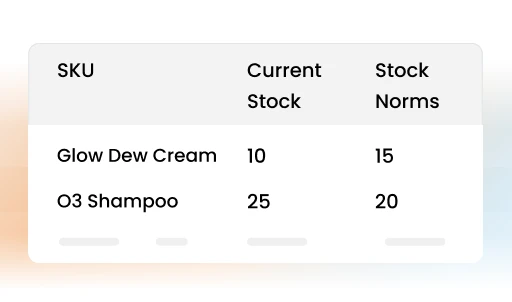
AAVA Brands in Nigeria faced a version of this gap. Its sales team had no single view of primary sales (brand to distributor) and secondary sales (distributor to outlet). AAVA ran BeatRoute's field sales and distributor management modules together and joined them to its ERP. With both modules in use on the BeatRoute platform, field force productivity rose 18 to 20% and store-level sellouts grew 25 to 30%. Read the AAVA Brands case study.
BeatRoute suits brands whose reps sell to many retailers through distributors and want distributor management on the same platform.
Field management reporting: what a manager reads each morning
Good reports answer what a manager needs to know before the team leaves for the field:
| The manager's question | What the report should show |
|---|---|
| Who is working today? | Attendance by rep, checked against each rep's territory |
| Which planned outlets were missed yesterday? | Beat coverage by rep and route, with the missed outlets named |
| Which outlets are buying less? | Outlets whose order value or number of lines fell below their usual |
| What is owed, and what came in? | Each outlet's balance and the payments collected this week |
| Where did stock run out? | Distributor stock set against the orders reps took |
With BeatRoute Copilot, a manager can type the question in plain words, such as "which Nairobi outlets missed a visit this week". The answer comes back as a table or a chart.
How to test a field management system before you buy
Field management tools look alike in a slide deck. Test each one on your own work:
- Load a real beat from your own outlet list and run it on the phone your reps already carry.
- Switch off mobile data halfway through a visit, finish it, and check that it arrives later.
- Change a beat while a rep is on the road, and time how long the phone takes to show it.
- Run the distributor stock test above on one outlet.
- Ask how the system will join your ERP or accounting software, and who does that work.
Book a demo with your own outlet list, and we will run these checks with you.
Frequently asked questions
What is the difference between CRM, FSM and a field sales system?
A CRM tracks leads and deals for sellers who work a small number of large accounts. FSM sends technicians to jobs and tracks the repair. A field sales system runs planned visits to many outlets, with orders, stock and payments. A brand can run a CRM for its key accounts and a field sales system for general trade. See SFA vs CRM.
How much does a field management system cost?
BeatRoute is subscription software, priced per user and module on annual contracts, with no free trial.
How long does it take to go live?
Most teams go live in 21 days. The time goes into loading your outlet list, beats, price lists and schemes, and joining the system to your ERP or accounting software.
Does it work for supermarkets and modern trade too?
Yes. Merchandisers and promoters in supermarkets use the same app and the same reports as reps in general trade, with shelf, display and sell-out checks in place of most orders. AAVA Brands runs BeatRoute across both general trade and modern trade, as its case study describes.