Nikhil Chaudhary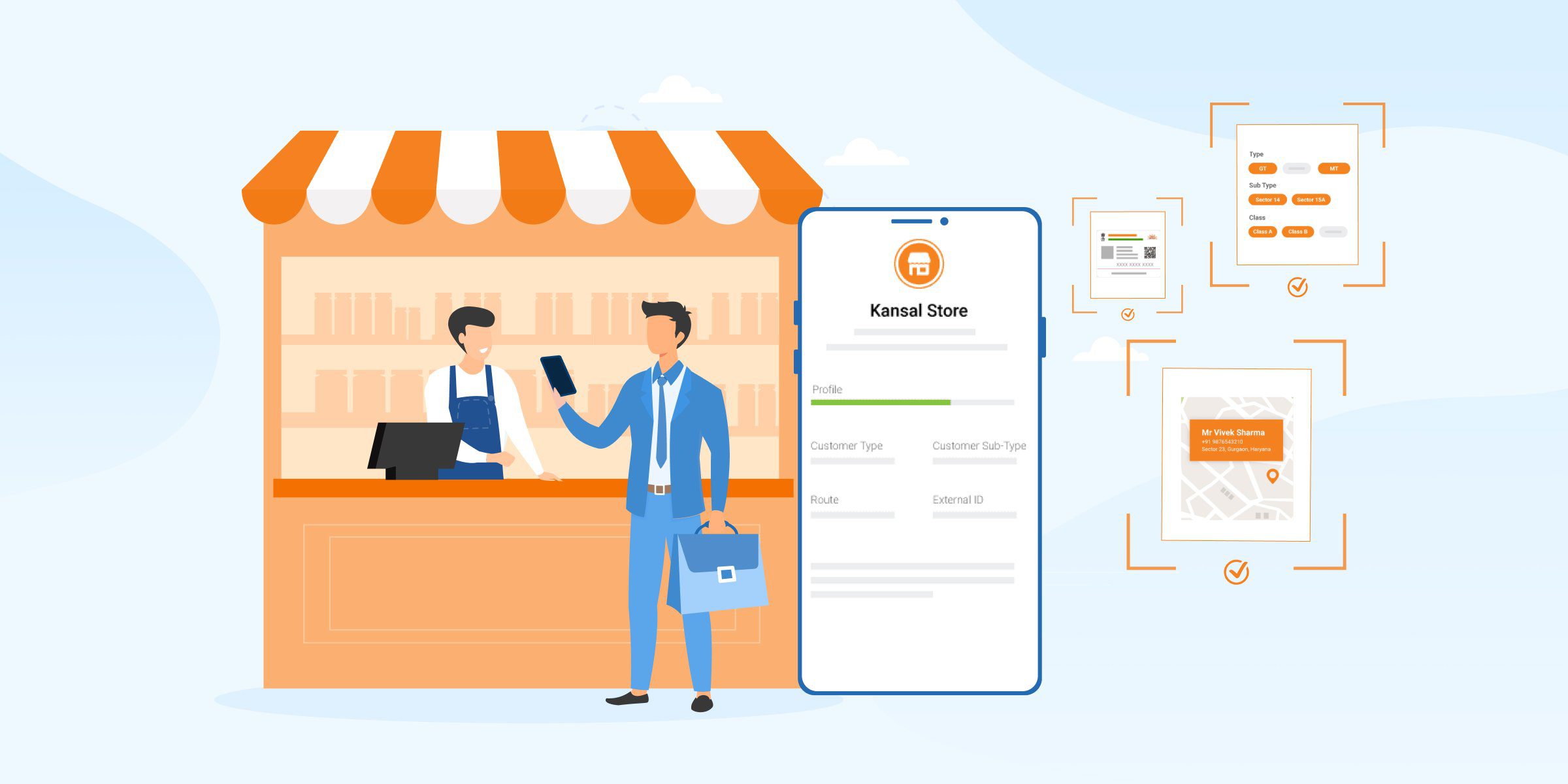
TL;DR This guide is for sales leaders who need a retailer app that drives differentiated engagement through intelligent onboarding and profiling. It covers how proper retail segmentation enables optimized salesforce deployment, targeted loyalty programs, credit profiling, SKU recommendations, and trade spend efficiency.
Why differentiated retailer engagement matters
FMCG companies deal with millions of retailers as potential customers. Not all retailers can be handled with the same approach. Proper segmentation is required to align the company’s overall goals with the retail universe, cater to them optimally, and drive sustainable growth.
Companies need to get all the 4Ps (Price, Product, Place, Promotion) right. Even after getting pricing, product, and promotion right, if the retail placement driven by distribution goes wrong, launches fail. A retailer app with intelligent onboarding solves this by capturing the right data at the point of store creation and feeding it into every downstream decision.
BeatRoute’s Retailer & Influencer App provides this foundation. Brands using structured retailer profiling report better campaign ROI because every action, from visit frequency to scheme design, maps to verified store potential rather than rep guesswork.
How leading brands use retail segmentation to drive growth
Proper segmentation unlocks multiple execution levers simultaneously. Each lever below requires accurate store-level data that only a well-designed retailer app and onboarding workflow can deliver.
Sales Force Automation optimization
Two constraints apply when deciding how many salespeople visit one shop: the retailer’s time and salesforce strength. The most common problems are beat optimization and segment-based visit frequency. Without authentic store count, location, or sales data, this optimization becomes impossible.
Data on total lines in the shop, current business level, and average bills per month enables quantitative decisions on beat planning, shop segmentation, and visit frequency. BeatRoute’s Scheduling AI Agent uses this profiling data to prioritize daily visits, pushing productive coverage from 45% to 78% for teams using the platform.
Targeted loyalty programs
There is no single loyalty program that works for all retailers. Retail segmentation decides the key elements of the loyalty program and identifies the right target retailers. It enables targeted execution on the 20% of the universe that contributes to nearly 80% of business.
Credit profiling for retailers
Distributors extend credit in the market and need to ensure recovery to sustain their business. Depending on retailer segmentation, companies can help distributors make informed decisions to optimize capital, drive maximum business, and reduce bad credit.
Salesforce incentive customization
FMCG salesforce incentives typically comprise 7 to 8 parameters including business achievement, total lines cut, must-sell lines, and new product launches. With proper segmentation, incentives can be customized according to the types of shops each salesman handles.
For example: a company segments its retail universe into 3-way, 2-way, and 1-way shops. A 1-way shop is catered by a single salesman selling the full portfolio. These shops typically have low bills per month and low inventory turnover. Incentivizing this salesman on new product launches results in placement in the wrong stores and capital getting stuck in expired products. BeatRoute’s Brand Panel lets you configure segment-specific incentive rules that prevent these mismatches.
Recommended SKUs
Brands worldwide use AI-driven recommendation engines to surface SKUs with the highest chance of selling from each shop. These propensity models depend on retailer attributes: locality, buying history, category, traffic data, and neighborhood. For brands to get these models right, they need to profile and segment customers accurately first. BeatRoute’s Order AI Agent delivers 4 to 6% sales uplift by recommending the right SKUs based on verified store profiles.
Shop-level targets
When dividing distributor-level targets into salesman-level targets, the present business level and growth outlook per shop category must be considered. Different shop categories have different growth potential because of their business drivers (loyalty programs, merchandising, schemes). BeatRoute factors segmentation data into Goal-Driven target-setting so every shop gets a realistic, achievable number.
New product launches
Most new product launches fail because companies get retail placement wrong. With correct profiling, product placement by product type and pricing band becomes data-driven, and distribution teams have higher chances of getting placement right from day one.
Optimized trade spend
Designing merchandising and trade promotion strategies according to different retailer segments keeps ROI in check and gives clear visibility of outcomes. Every rupee of trade spend maps to a segment where it can drive measurable incremental sales.
How does BeatRoute’s retailer app address onboarding and profiling challenges?
BeatRoute’s configurable workflow on customer onboarding and profiling addresses the core challenge: how to know the customer in the best way, both from a brand perspective and from a sales rep perspective. Here is how the platform delivers on each dimension.
Easy platform configurability
The Brand Panel allows admins to define which standard fields apply for which customer sub-type. It also lets admins designate which roles can submit, edit, or view each standard (core attributes and ID docs) and custom field. This ensures each team sees only what is relevant to their function.
Smart customer profiling
The first step to effectively profile customers is understanding the different aspects of a store and dividing them accordingly. BeatRoute allows you to list a store’s type and subtype along with pictures and custom fields, giving your field team access to detailed store information. The workflow is built for distributed teams covering large customer landscapes. It sources data from territory-level teams and handles incremental data enrichment at a national level.
Deduplication engine
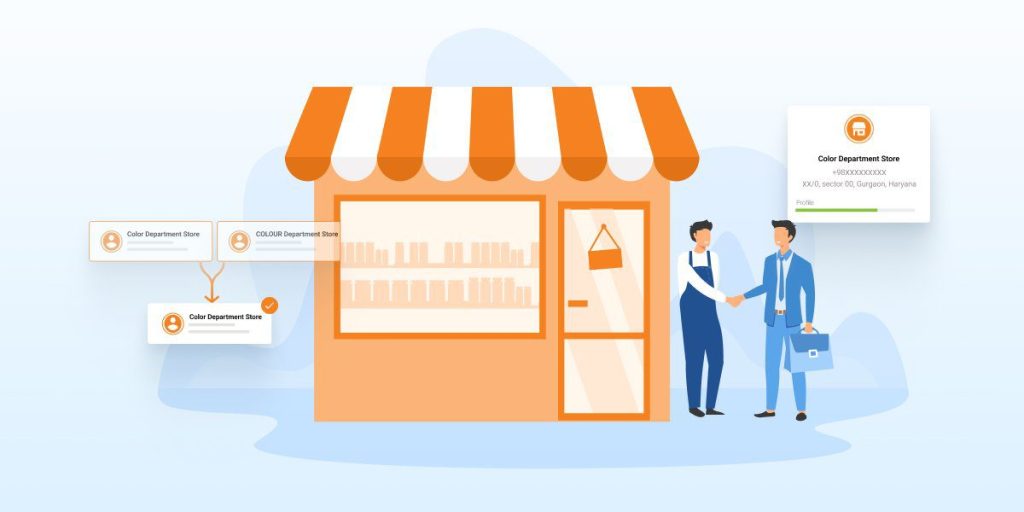
BeatRoute’s profiling engine leaves negligible chances for a store to be listed more than once, even when the customer name is written in different ways (like “Alex Super Store” and “Alex Sup St”). The AI-powered deduplication routine delivers 95% accuracy, keeping the database clean and coverage metrics reliable.
Integration via BeatRoute Matrix
Many organizations use multiple solutions across their SFA, DMS, data entry systems, and other sales tech. With BeatRoute, you can use the customer profiling module as part of the entire platform or standalone in integration with other CRM, sales execution, or lead aggregation systems. BeatRoute enables this through BeatRoute Matrix, a low-code integration layer that connects BeatRoute with 300+ enterprise systems via APIs.
Route Optimization
After getting customer segmentation right, a differentiated service architecture aligned with different segment needs makes sense. BeatRoute’s Route Optimization solution helps HQ planning teams divide a territory efficiently between various routes and beat schedules. This caters to differentiated service architecture and delivery constraints while saving cost and delivering on business strategy objectives.
Geolocation-based intelligence
BeatRoute uses an AI-powered engine to automatically detect which stores have been geo-tagged accurately and lock their location. All stores are geotagged on the app, making it possible to track which customers have been touched and which have not. Each visit and an agent’s entire journey can be saved and reviewed.
Retailer profile completeness
Getting the sales team to complete retailer profiles can be difficult. BeatRoute solves this with embedded gamification where companies set key behavioural indicators (KBIs) to reward good data input behaviour and drive profile completion rates up.
Offline sync
Every feature works without internet connectivity. Data syncs automatically as soon as the phone comes into a network area, so reps in low-connectivity territories never lose captured information.
BeatRoute serves 200+ enterprises across 20+ countries. The field sales app delivers an average 12.6% sales uplift in the first year by ensuring every visit, campaign, and scheme is aligned to verified store potential. Request a demo if you are thinking of a retail landscape survey project or a platform to manage in-field retail data and profile enrichment.
Frequently asked questions
What is intelligent retailer onboarding?
Intelligent onboarding is the process of capturing structured store-level data at the point of retailer creation, including store type, location, category mix, competitor presence, and shelf share. This data feeds directly into segmentation, visit planning, and trade scheme design so every downstream action is aligned to the store’s real potential.
Why does a retailer app need profiling capabilities?
Without structured profiling, brands treat all retailers the same. A retailer app with profiling enables differentiated engagement: high-potential stores get more visits, targeted schemes, and senior reps, while lower-potential outlets move to tele-order or lighter coverage. BeatRoute’s platform automates this segmentation.
How does retail segmentation improve trade spend ROI?
Segmentation ensures trade promotions, merchandising budgets, and loyalty rewards flow to retailers that can actually convert the investment into incremental sales. Without it, brands over-invest in low-potential outlets and under-invest in high-growth ones.
Can BeatRoute integrate with existing SFA or DMS systems?
Yes. BeatRoute Matrix is a low-code integration layer that connects with 300+ enterprise systems via APIs. The customer profiling module works standalone or alongside existing CRM, sales execution, or lead aggregation platforms, enriching your retailer data regardless of existing infrastructure.
How does BeatRoute prevent duplicate retailer entries?
BeatRoute’s AI-powered deduplication engine delivers 95% accuracy in detecting duplicates, even when store names are written differently. This keeps the database clean, prevents inflated outlet counts, and ensures coverage metrics reflect reality.