

TL;DR Retail execution software is the app a consumer brand's reps, promodisers and distributors use to plan store visits, take orders, check the shelf and report the day. For the Philippines, pick one that works offline on provincial routes and sends sari-sari orders to your distributor. It should also check planograms and promoters in modern trade and link to your ERP. Test it on one distributor's territory before you roll it out.
Retail execution software makes sure the planned visit, the right order and a correct shelf happen in every store a brand sells through. It serves the brand's field team and distributors, and it does not run the store's checkout. In the Philippines, that means one app for a rep on a sari-sari route in Iloilo and a promodiser in a Metro Manila supermarket on the same day. Below you will find what to judge, how to test a tool on one distributor, and six tools to compare.
What retail execution software does, and how it differs from POS
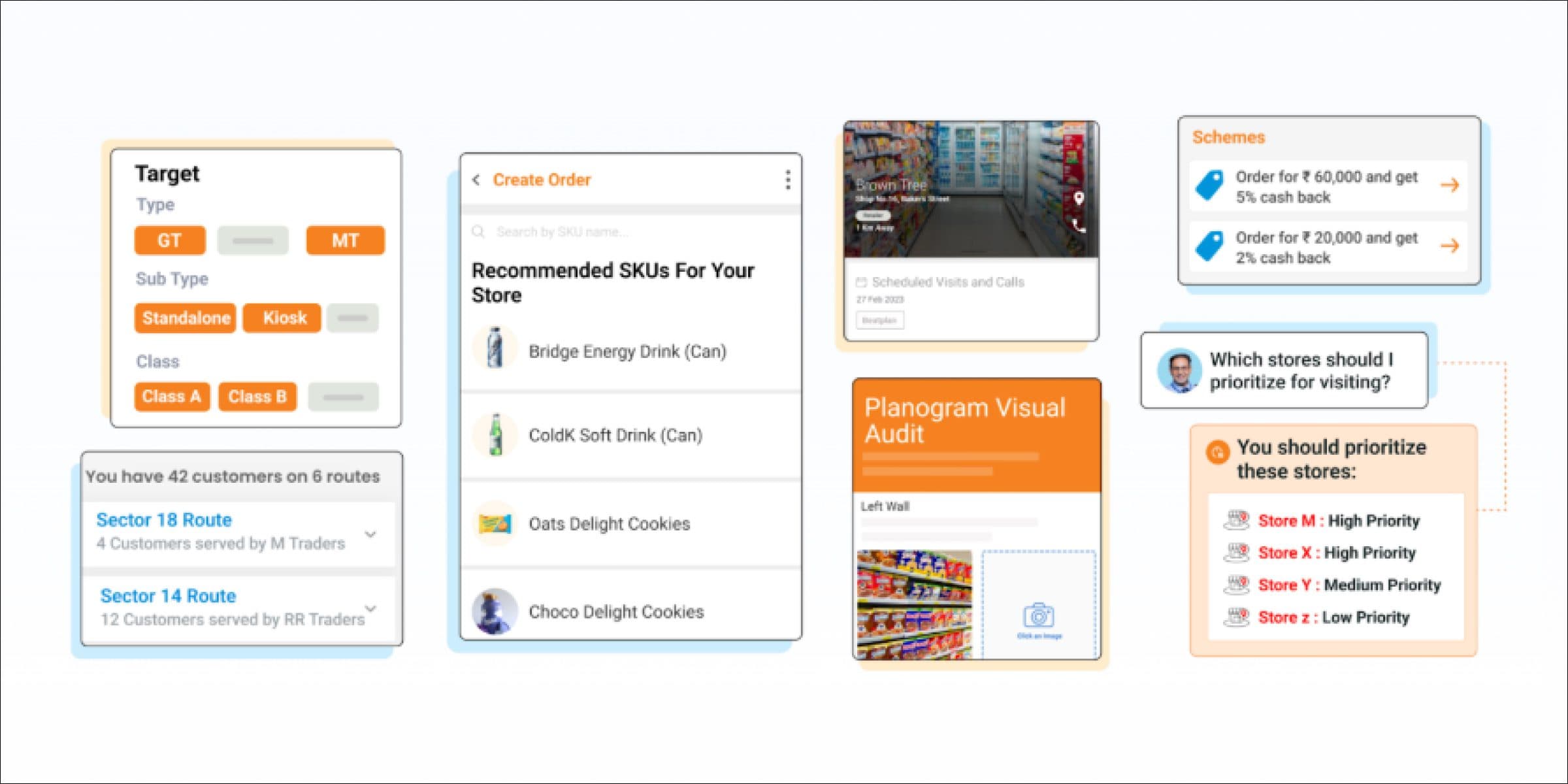
A field rep's day has four jobs: visit the right stores, get the order, fix the shelf and report what happened. Retail execution software runs all four from a phone. It sets the beat plan, guides the order at each outlet and collects shelf photos and audit answers. The day's results reach the manager the same day, so nobody waits for the Excel tracker or chases updates on Viber.
In the Philippines, retail software usually means POS, a retail management system (RMS) or a retail ERP. A store runs those for checkout, stock and accounts, and they belong to the retailer. Retail execution software belongs to the brand. It covers the stores the brand does not own: sari-sari stores, groceries, drugstores, supermarkets and convenience stores. If you run one shop and need a cash register, look at POS software. If you sell into thousands of shops through distributors, retail execution software is the tool you need.
BeatRoute is used by 200+ enterprise brands across 20+ countries. Philippine brands on the platform include San Miguel, Monde Nissin and Unilab.
What to judge for Philippine routes
Five points decide whether a tool will work for a brand that sells through distributors here. Test each one in the field. An office demo on good Wi-Fi will not show you how the app behaves on a provincial route.
| What to judge | Why it matters here | How to check it |
|---|---|---|
| Offline use on provincial routes | Reps lose signal between towns in the Visayas and Mindanao. If the app stalls, the order ends up on paper or gets lost. | Turn on airplane mode, book an order with photos, then reconnect. The order should arrive once, with the right time and place. |
| Sari-sari ordering through the distributor | Your distributor fills most sari-sari orders from its own stock. An order only counts once it reaches the distributor's billing and delivery. | Book an order for a sari-sari store and follow it until the distributor bills and delivers it. |
| Planogram and promoter checks in modern trade | Supermarkets, convenience stores and chain drugstores are won on the shelf. Promodisers need photo audits and attendance records that prove their work and protect their incentives. | Audit one supermarket bay with photos. Check how fast the manager sees a score, and that the promodiser sees it too. |
| ERP and DMS fit | When orders and stock sit in two systems, someone retypes them and the numbers stop matching. | Run the link to your ERP and DMS during the pilot, so you see real orders flow through it. |
| Daily use by reps and distributors | Reps who live on Viber and Excel drop an app that adds steps to their day. | In the third week, count how many reps open the app every working day without a reminder. |
How to test retail execution software on one distributor
The safest way to choose is a pilot on one distributor's territory. Pick a distributor whose area mixes sari-sari routes with a few modern trade accounts. Run the pilot for at least one full month, so you see a month-end close.
- Write down today's numbers first: outlets visited per rep per day, productive calls, lines per order and how long the daily report takes.
- Put the whole territory on the app: beat plans, orders, shelf audits and the distributor's billing. Keep the Excel trackers out of it for those reps.
- Try the hard cases on purpose: a route with no signal, a supermarket audit with photos and an order the distributor has to fill from stock.
- Ask the reps, promodisers and the distributor what changed. Did they get time back, and were incentives counted correctly?
- Compare the numbers at month end, then decide whether to add the next territory.
Book a demo and bring one distributor territory you want to start with. The tools below are worth judging against the same five points.
1. BeatRoute: for brands that sell through distributors
BeatRoute suits consumer brands that sell through distributors into both traditional and modern trade. It puts field sales, distributor management and retailer ordering on one platform. Its AI agents help each rep decide which outlet to visit, what to sell there and whether the shelf is right.
- Scheduling AI Agent. It picks the stores each rep should visit from sales potential, stock levels and payment status. Productive visits rose from 45% to 78% with the Scheduling AI Agent.
- Order AI Agent. Each store gets a suggested product mix and quantity, based on its purchase history and the promotions running now. The rep walks in with a draft order from the Order AI Agent instead of asking the owner what to bring.
- VM Audit AI Agent. Managers get a score on every geo-tagged shelf photo for planogram, display and stock checks. A manager in Manila can see a Cebu supermarket shelf the same day. BeatRoute puts the cost of these shelf audits at 80% lower than manual audits. See how it works in visual merchandising software.
- Offline first. Visits, orders, audits and photos save on the phone and sync when the signal returns. A rep in a barangay with no signal keeps working.
- Distributor and retailer ordering. The distributor management system and retailer app carry a sari-sari store's order to the distributor's stock and billing. Colgate-Palmolive Philippines used BeatRoute to build an eB2B channel, with Viber and Messenger ordering bots for retailers and a DMS panel for its distributors (read the Colgate Philippines case study).
- Changes without code. The Brand Panel lets your team change forms, workflows, dashboards and KPIs for each region without a developer.
- Local language and partner. The SFA, distributor and retailer apps work in Filipino (Tagalog) and English. BeatRoute's local partner, Redstar Asia Solutions, has an office in San Juan City, Metro Manila.
Results from Philippine customers: Nurturemed Pharma raised the productivity of its pharma field reps (PMRs) by 20% with BeatRoute's goal-driven SFA. A leading Philippine paints brand improved sales productivity with BeatRoute SFA, scorecards and visual merchandising forms.
Where BeatRoute fits less well: if you only need checklists for stores you own, or a POS for one shop, a lighter tool will do the job. BeatRoute earns its setup when distributors, reps and stores all have to work from the same numbers.
2. Xenia: task management focused
Xenia provides strong checklist and SOP management for retail operations. The platform handles digital checklists for store visits, standard operating procedure workflows, team communication tools, and photo-based compliance verification.
Xenia works well for brands that prioritize operational task completion over sales performance improvement. The platform assigns tasks by territory and tracks completion rates through basic dashboards.
How the two differ for Philippine brands: Xenia positions itself around operational task completion, so it is judged on whether checklists and SOPs get finished. BeatRoute is judged on whether the sales goal moves. It ships a Filipino and English interface, a Philippine customer success team, and AI agents that recommend which outlet to visit next and which SKUs to push once the rep is inside.
3. Repsly: territory coverage specialist
Repsly offers advanced territory management with geographic visualization and optimization. The platform includes GPS-based visit verification, real-time KPI dashboards, photo reporting for promotional compliance, customer databases with visit history, and survey tools for in-store feedback.
Repsly suits larger retail brands with dedicated IT resources who need advanced territory analytics and already have strong field execution processes in place.
What to weigh for Philippine operations: Repsly's published strength is territory analytics for teams that already have their field process settled. BeatRoute brings a Filipino and English interface, a Manila-based customer success team, and AI agents that tell a rep which store to visit next and what to sell there. Compare the two on which of those jobs is your bottleneck today.
4. Zenput: compliance and auditing
Zenput specializes in store audit workflows and compliance tracking. Core capabilities include customizable digital audit forms with photo requirements, automated issue tracking and corrective action workflows, multi-location management, and automated scoring for audit performance.
Zenput fits brands focused on maintaining operational standards across multiple locations, particularly in food service and regulated retail environments.
The fit question: Zenput is built for operational compliance across many locations, and it does that job directly. Philippine retail brands that also want order capture, visit planning, and sales analytics inside the same app are looking for something else: an integrated retail audit and execution platform. That is the ground BeatRoute is built on.
5. Zipline: communication platform
Zipline focuses on store communication and basic task management. It handles corporate announcements, task distribution and tracking, document sharing, team messaging, and push notifications for updates.
Zipline works for small retail operations that need simple communication tools to keep distributed teams aligned on company directives and promotional messaging.
The fit question: Zipline positions itself around store communication, and that is a real job in a distributed retail team. Your shortlist may also have to cover order capture, photo-based auditing, sales analytics, and Goal-Driven AI execution guidance in one app. That is the brief a retail execution platform such as BeatRoute is written against.
6. Storefront: reporting focused
Storefront delivers advanced reporting capabilities with deep-dive analytics, customizable KPI dashboards, multi-source data integration, historical trend analysis, and executive summaries for management teams.
Storefront fits brands with strong IT departments who need advanced analytics but already have field execution processes running through other tools.
The fit question: Storefront sits in the reporting layer and is built to do that deeply, which is why brands with strong IT teams like it. Philippine field teams still need one app that captures the data and guides the next action at the outlet. Decide whether you want the analytics beside your execution tool or inside it.
Choosing the right retail execution software
Some Philippine retail brands need a single platform covering visit planning, in-store audits, order capture, and Goal-Driven AI execution guidance. For them, BeatRoute is the clear choice. It adds offline capability and local language support.
Focused tools like Zenput (compliance), Zipline (communication), and Storefront (reporting) each do one job well. A brand that needs only that job is well served. Covering all three at once means running several systems side by side. BeatRoute unifies retail execution, sales automation, and distribution management in one platform that field teams in Luzon, Visayas, and Mindanao actually adopt and use daily.
Book a free demo to see how BeatRoute’s retail execution platform connects daily field activities to measurable sales growth across the Philippines.
Frequently asked questions
What is retail execution software?
Retail execution software is a mobile and web tool a consumer brand uses to make sure its field team visits the right stores, books the orders each one needs and keeps the shelf to plan. It covers beat planning, order booking, photo audits, planogram and promotion checks, and daily reports. BeatRoute adds AI agents that suggest which store to visit, what to sell and whether the shelf passes.
Is retail execution software the same as retail POS software?
No. POS and retail management software run a store's own checkout, stock and accounts. Retail execution software is used by a brand's reps, promodisers and distributors to sell into many stores the brand does not own, such as sari-sari stores, drugstores and supermarkets.
What features should I look for in retail execution software?
Look for five things. The app should work offline on provincial routes and send sari-sari orders to your distributor. It should run photo audits for planogram and promoter checks in modern trade, and link cleanly to your ERP or DMS. Last, reps and distributors should be willing to use it every day. BeatRoute covers the first four on one platform. Test the fifth, daily use, in your pilot.
Which is the best retail execution software in the Philippines?
The best one is the one that passes a pilot on your own routes. For a brand that sells through distributors into both sari-sari stores and modern trade, BeatRoute is a strong fit. It runs field sales, distributor management and retailer ordering on one platform, with Filipino (Tagalog) and English support and offline use. Philippine brands on BeatRoute include San Miguel, Monde Nissin and Unilab.
Can retail execution software work offline in remote areas?
Yes, if it is built offline-first, and BeatRoute is. Reps record visits, audits, orders and photos with no signal, and the app syncs everything when the phone reconnects. This matters for Philippine brands whose reps cover provinces where mobile data drops between towns.
Is retail execution software secure for business data?
It is when the vendor can prove it. BeatRoute is AICPA SOC 2 Type II certified, and an independent third party audits its certifications every year. Inside the app, role-based access and approval workflows keep each user to the data their role needs. Details are in the BeatRoute trust center.