

TL;DR A stockout is when a product a shopper wants is not on the shelf at the point of sale. In the Philippines, where the market runs on 1.3 million scattered sari-sari and general-trade outlets, most stockouts are invisible to head office until the sale is already lost. This guide covers what a stockout really is and why it happens across Luzon, Visayas, and Mindanao. It then shows how field execution and distributor visibility prevent it without forcing you to overstock.
A promodiser texts you on Viber: the leading SKU is wiped out in three key outlets, and payday week is only two days away. That empty shelf is a stockout in action. For a Philippine brand it quietly bleeds sales, retailer goodwill, and every peso of promo spend you put behind the demand.
Stockouts are where a supply-chain gap meets a disappointed suki. Missed orders, a sari-sari owner who switches to the next van, and a blown fiesta promotion all compound from the same root cause. Below is what a stockout actually is, plus the causes that show up most in Philippine FMCG. Then come the field, forecasting, and distributor moves that prevent them without stuffing your warehouses full of slow stock.
What exactly is a stockout?
A stockout is zero availability of a product a customer wants to buy, at the place and time they want it. That can be a sari-sari shelf, a distributor warehouse in the province, or an online cart. It is different from what the shopper sees as "out of stock." The stockout is the upstream failure in planning, supply, or sync that produced the empty shelf in the first place.
In Philippine trade the distinction matters because the shelf and the head-office system rarely agree. Your ERP can show healthy stock at the distributor while three sari-sari outlets on the same street have been empty for a week. Nobody at HQ knows until the monthly numbers come in short.
Why do stockouts keep happening in the Philippines?
Stockouts happen when demand and supply lose sync, and Philippine distribution has more places to lose sync than most markets. Goods move to the trade through distributor van sales over long provincial routes and RORO crossings, so a single missed replenishment leaves outlets dry for days. The usual causes stack up:
- Inaccurate demand forecasting that misses payday-week spikes, fiesta demand, and the long Christmas "Ber months" surge
- Distributor and transport delays that nobody flags early, made worse by roughly twenty typhoons a year that cut off routes
- Warehouse or ERP stock that does not match what the field actually sees on the shelf
- Sudden demand spikes from a promo or a TV and radio burst the supply plan never accounted for
Whatever the trigger, the outcome is the same: a shopper reaches for your brand, finds nothing, and buys the competitor beside it. In general trade, where switching is instant and there is no loyalty program to catch them, that lost sale rarely comes back.
What do stockouts really cost your brand?
The real cost is never just one missed sale. A stockout quietly erodes revenue, trust, and trade relationships at the same time. Each of those is harder to win back than the order you lost. Here is what actually leaks out.
- Lost sales. No stock means no order. The demand you paid to create walks to a rival brand on the same shelf.
- Brand erosion. When it keeps happening, shoppers stop treating your SKU as reliable and build the habit of buying whatever is available.
- Retailer frustration. A sari-sari owner who loses walk-in sales because you were empty starts giving your shelf space to a brand that keeps supply steady.
- Wasted promo spend. A fiesta or payday campaign that drives shoppers to empty shelves burns your marketing budget and your trade's patience at once.
The scale is well documented. Harvard Business Review research found 21 to 43 percent of shoppers will switch brands when their preferred product is stocked out, and many never fully return.
Why are stockouts a bigger deal in Philippine FMCG?
Because the market that matters most is also the hardest to see. Traditional trade, led by 1.3 million sari-sari stores (DTI), carries the bulk of everyday FMCG volume, and almost none of it runs on point-of-sale data. Stock levels live in the store owner's head, so a stockout there is silent until a rep physically walks in or a shopper walks out.
In a channel with short shelf life and a competitor on every shelf, silent stockouts can:
- Undo brand preference overnight, because availability is what decides the sale in tingi buying
- Sink a promotion that a distributor or brand has already paid to run
- Break a launch in a region before it ever builds momentum
Example: a beverage brand runs a summer promotion with heavy TV and radio spend, then finds that provincial sari-sari outlets across the Visayas are wiped out before shoppers can redeem the offer. That is not just a sales loss. It is a trust loss with both the shopper and the store.
How can brands prevent stockouts without overstocking?
Preventing stockouts is not about buffering everywhere. It is about seeing demand and shelf reality early enough to act. These are the moves that work for Philippine trade, and each one closes a specific gap where supply and demand drift apart.
- Sharper demand forecasting. Read historical sell-out, payday cycles, fiesta calendars, and the Ber-months build-up to anticipate surges before they hit.
Example: a snack brand uses last year's sell-out to predict the Christmas-season lift and pre-positions stock with its Luzon and Mindanao distributors early. - Real-time stock visibility at the outlet. Stop relying on a week-old Excel tracker. Capture shelf stock during the visit so low-stock SKUs surface before they hit zero.
Example: a personal-care brand tracks SKU availability outlet by outlet on a mobile dashboard, catching thin stock while there is still time to reorder. - Agile replenishment. Let stock movement drive the beat. BeatRoute automates visit cues so reps prioritise the outlets depleting fastest instead of the nearest ones.
Example: reps get an auto-generated run-list that pushes fast-moving, low-stock outlets to the top of the day. - Distributor collaboration. Get secondary stock movement out of five separate distributor spreadsheets and into one view across Luzon, Visayas, and Mindanao.
Example: a brand links its distributor management system to partner stock so warehouse and secondary orders are visible in real time, not at month-end. - Field flags from the rep. Equip reps to log an empty shelf the moment they see it. The field sales app works on any Android, even low-end devices, online and offline. A stockout logged in a provincial dead zone still triggers a restock alert once signal returns.
Example: a rep flags an out-of-stock SKU during a routine visit and the Viber-connected distributor gets the reorder before the shelf stays empty another day.
What is the difference between online and offline stockouts?
Online stockouts lead to abandoned carts, bad reviews, and shoppers who leave the app entirely rather than wait. Offline stockouts send foot traffic straight to the nearest competitor and kill the impulse buys that traditional trade depends on. Both hurt, but the offline version is harder to detect at scale, which is exactly why field visibility matters more in the Philippines.
Example: a shopper hunting a facewash online finds it out of stock and closes the app without buying anything else. A sari-sari shopper who finds the same brand empty simply points to the SKU next to it and buys that instead.
Is overstocking a sensible fix?
Usually not. Overstocking looks like the safe answer but creates its own losses, especially in FMCG where cash gets tied up in slow stock and short-shelf-life SKUs expire or get damaged. In a market with power interruptions and long provincial hauls, buffering everywhere just moves the problem from empty shelves to write-offs.
The real answer is balance: tighter forecasts on your priority SKUs, targeted safety stock only where demand swings justify it, and real-time outlet signals so you replenish on evidence instead of guesswork.
How does technology reduce stockouts?
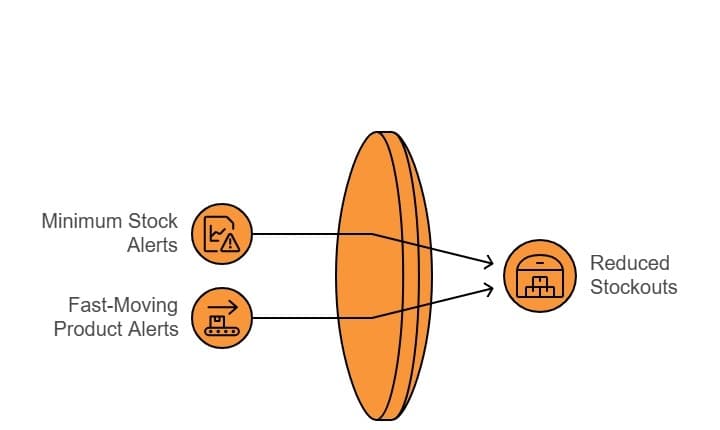
A sales execution platform closes the loop between what head office plans and what the shelf actually shows. It pulls together outlet-level stock captured by reps on visits, distributor inventory in real time, and predictive visit cues that route reps to outlets running low before they empty. Head office plans, the field reports, and replenishment happens within hours instead of after a week of lost sales.
Example: a regional snack brand cut stockouts by 28% in three months using outlet-level availability tracking and predictive visit cues, without carrying extra safety stock. When brands run every lever of coverage, replenishment, and execution on one platform, they see 12.6% average sales uplift in the first year. BeatRoute is a global platform tuned for Philippine trade and proven on the ground here, which is why major Philippine brands like San Miguel and Unilab run on it.
This works because the same system that gives managers shelf truth also gives reps an easier day. A rep who sees which outlets are thin does not waste a run on a full store, and a distributor who sees secondary stock in real time reorders before the gap opens. Fewer ghost gaps, steadier availability, less firefighting at month-end.
Final word
Stockouts are more than supply-chain hiccups. They are the moments where your availability, your promo spend, and your retailer relationship all break at once, out of sight of head office.
Want to close those gaps before they cost you the sale? Take a PH-tailored demo and see how BeatRoute gives your team shelf truth across GT and MT, so you catch the empty shelf while there is still time to fill it.
Frequently asked questions
What exactly is a stockout, and how is it different from out of stock?
A stockout is when a product a customer wants is unavailable at the place and time they want it. That could be a sari-sari store, a distributor warehouse, or an online listing. "Out of stock" is what the shopper sees on the shelf. The stockout is the upstream failure in planning, supply, or sync that created that empty shelf in the first place.
Why do stockouts keep happening in Philippine general trade?
Because most of the 1.3 million sari-sari and general-trade outlets run without point-of-sale data, so head office cannot see thin stock until a rep visits or a sale is already lost. Van-sales routes across islands, RORO crossings, typhoon disruptions, and payday and fiesta demand spikes all add points where supply and demand fall out of sync.
How much do stockouts really cost a brand?
More than the single lost order. Harvard Business Review research found 21 to 43 percent of shoppers switch brands when their preferred product is stocked out, and many never fully return. On top of lost sales you carry brand erosion, retailer frustration, and wasted promo spend when a paid campaign drives shoppers to an empty shelf.
Can we prevent stockouts without overstocking our distributors?
Yes. The answer is visibility, not blanket buffer stock. Sharper forecasts on priority SKUs and real-time outlet stock captured on visits are the start. Add distributor inventory in one view across Luzon, Visayas, and Mindanao, plus predictive visit cues, and you replenish on evidence. That prevents empty shelves without tying up cash in slow or expiring stock.
Does stockout tracking work offline in the provinces?
Yes. BeatRoute works on any Android, even low-end devices, online and offline. A rep can log an empty shelf in a provincial dead zone during the visit. The flag syncs the moment signal returns and triggers a restock alert to the distributor. Nobody waits for an end-of-day encode.
Is fixing stockouts the same as buying a CRM?
No. An office CRM manages a sales pipeline from a desk and has no view of shelf stock, distributor inventory, or field visits. BeatRoute is the SFA and distributor management (DMS) platform built for field sales and distribution. Availability there is decided by visits, routes, outlets, distributors, and vans, not by a contact record.