

TL;DR A stockout is when a product a shopper wants to buy is not available at the point of sale. In African trade, stockouts hit on two fronts. Scarce imports stall at the port, and demand goes dark after the truck leaves the depot. Whether your product moves through open markets in Lagos, dukas in Nairobi, or spaza shops in Soweto, the fix is the same. You prevent stockouts by seeing outlet demand early, not by overstocking. Brands like AAVA Brands and BUA Foods run on BeatRoute to close that gap.
An empty shelf is the moment a shopper meets your brand and finds nothing there. For an FMCG brand, that empty shelf is rarely a single event. It is the end of a chain that broke somewhere upstream. The break can sit at the port, in the depot, or on a route a rep never really walked.
This guide defines a stockout and separates it from what the shopper sees. Then it shows the African moves that prevent stockouts without forcing you to overstock.
What is a stockout?
A stockout is when a product a customer wants to buy is not available at the point of sale. The point of sale can be a retail outlet, a distributor warehouse, or an online store.
A stockout is not the same as out of stock. Out of stock is what the shopper sees at the shelf. The stockout is the upstream failure in planning, supply, or sync that emptied it.
In African trade, a stockout has two homes. One is the port, where scarce foreign exchange and congestion hold imports back. The other is the black box after dispatch, where you cannot see which outlet is running dry.
Why do stockouts in African trade start at the port?
Many African stockouts begin at the port, long before the shelf. Imported stock and packaging wait on scarce foreign exchange and congested terminals. Nigeria's naira fell about 41% in 2024, and consumer goods operating costs jumped about 67% in a single year. When a letter of credit is delayed, a raw material or finished SKU simply does not land.
Port congestion tightens the squeeze. Containers sit for weeks at Apapa and Tin Can in Lagos, at Mombasa, and at Durban. A brand can forecast demand perfectly and still stock out because the stock never cleared.
This changes the question. The task is not only to forecast better. It is to decide which outlets and distributors get the scarce stock that does land.
After the truck leaves, why does the stockout go invisible?
After dispatch, most brands go blind, so an outlet-level stockout can run for days before anyone logs it. You see primary sell-in, the stock that leaves the depot. You do not see secondary sell-out, what each outlet actually moved. Five to seven middlemen sit between your factory and the shelf, and each one hides the next.
Ghost visits widen the blind spot. A rep marks an outlet visited from the car, and the empty shelf is never recorded. Managers suspect it but cannot prove it, so the stockout stays invisible until sales fall.
Nigeria does not have a demand problem here. It has a visibility problem. The shopper wanted the product, and the outlet had shelf space, but nobody saw the gap in time.
What do stockouts really cost your brand?
A stockout costs far more than one missed sale, because it moves shoppers and retailers to your competitor. Harvard Business Review found 21 to 43% of shoppers switch brands when their preferred product is out of stock. In loyal categories that switch can be permanent. The first stockout can hand years of purchases to a rival on the same shelf.
The damage spreads past the shopper. Your retailer deals with the frustrated customer, so trust in your brand erodes. When a stockout hits during a promotion, the ad spend that drove demand is simply burned.
That promo loss stings more under currency pressure. Marketing budgets are tighter after each currency move. A campaign that empty shelves cannot fulfil pays to create demand your channel never captures.
Is overstocking the answer?
Overstocking looks like the safe fix, but in African FMCG it quietly destroys more value than it protects. Excess stock ties up cash you cannot spare when the currency is moving. That capital could buy the next scarce import instead of aging in a warehouse. In food and personal care, slow SKUs also expire, get damaged, or lose their packaging.
SKU sprawl makes blanket buffers worse. Inflation is pushing bleach and dish soap into sachets, and PZ Cussons runs fighter brands with extra SKUs. More variants mean more shelves to watch and more places to overstock the wrong pack.
The real fix is precision, not volume. Put tighter forecasts on your priority SKUs. Add safety stock only where demand swings most. Then let live outlet signals guide the rest.
When stock is scarce, which outlets get it first?
When stock is scarce, preventing stockouts becomes an allocation decision, and concentration tells you where to send it first. Distribution is never even. In Lagos, a detergent stocked in 100,000 outlets can do half its sales in just 10,000 of them. Stock out in those 10,000 and no warehouse buffer saves the quarter.
So the sharp question is not how much stock you hold. It is which outlets you protect from stockout first. Allocation intelligence sends scarce stock to the outlets that move real volume, not the ones easiest to reach.
This is old wisdom in African trade. Coca-Cola micro-distribution centres, each serving 250 to 600 outlets across 19 countries, exist to keep the highest-volume outlets supplied. Structured allocation, not blanket stock, kept those shelves full.
How do you prevent stockouts without overstocking?
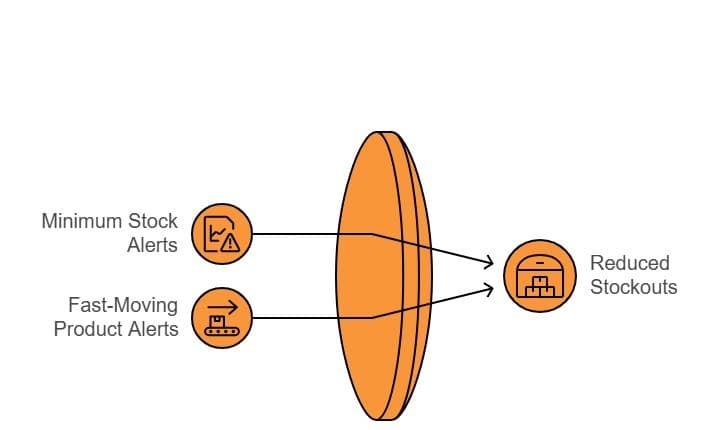
You prevent stockouts by catching demand and depletion signals early, then acting on them before the shelf empties. The moves below turn the black box into live data your team can act on.
| Move | What it does | Why it works in African trade |
|---|---|---|
| Outlet-level stock capture | Reps log stock and shelf gaps on every visit | Turns the black box into live secondary data |
| Predictive visit cues | Sends reps to outlets running low before they empty | Prioritises depleting outlets over routine calls |
| Offline-first capture | Logs orders and stock with zero signal, syncs later | Mobile data runs about 2.4% of monthly income per GB, and signal drops |
| Distributor stock sync | Shows warehouse stock and secondary orders in real time | Reveals a shortage before it reaches the shelf |
| Faster claim settlement | Clears claims in a clear, auditable flow | Distributors keep using the tool that protects their margin |
Offline-first is not a footnote here. An app that dies without signal sends the team back to paper, where stockout data disappears. It should run light on a low-end Android and survive a full route, load shedding included.
Your distributor decides whether any of this sticks. Sync their warehouse stock and secondary orders, and you see a shortage before it reaches the shelf. Native distributor management keeps primary dispatch and secondary sales reconciled, and settles claims faster, so they keep using it.
How does BeatRoute help African brands prevent stockouts?
BeatRoute is a global platform tailored for African trade, with proof it works here, which is why brands like AAVA Brands and BUA Foods run on it. It makes the distributor and retailer networks you already have visible, so stockouts surface early. It never replaces or bypasses your distributors and reps.
AAVA Brands in Nigeria saw field productivity rise 18 to 20% and store sellouts rise 25 to 30%. The engine is goal-driven AI, not activity tracking. It tells each rep which depleting outlet to visit next.
Every visit is time-stamped and geo-verified, so incentive payouts are never disputed. BeatRoute is an SFA and distributor management platform, not a CRM. Brands running every lever on one platform, across 20+ countries, report a 12.6% average first-year sales uplift.
BeatRoute serves 200+ enterprise brands across 20+ countries and 2M+ retailers. Get an instant demo to see how it turns outlet stock signals into the next rep visit, before the shelf empties.
Frequently asked questions
What exactly is a stockout?
A stockout is when a product a customer wants is not available at the place and time they want it. That can be a retail outlet, a distributor warehouse, or an online store. It is the failure in planning, supply, or sync that leaves a shelf empty when demand is there.
What is the difference between a stockout and out of stock?
Out of stock is what the shopper sees at the shelf. A stockout is the upstream failure that produced it, in forecasting, supply, or field sync. The distinction matters because you fix a stockout upstream, not at the shelf where it is already too late.
Why do stockouts in African trade often start at the port?
Many consumer goods depend on imported stock or packaging that clears through congested ports on scarce foreign exchange. When a letter of credit is delayed or containers sit at Apapa, Mombasa, or Durban, the stock never lands. A brand can forecast demand perfectly and still stock out because supply never cleared.
Why are stockouts so hard to see after dispatch?
Brands see primary sell-in, the stock that leaves the depot, but not secondary sell-out at each outlet. Five to seven middlemen sit between factory and shelf, and ghost visits hide empty shelves further. So an outlet-level stockout can run for days before anyone records it.
How expensive are stockouts for a brand?
Harvard Business Review research found 21 to 43% of shoppers switch brands when their preferred product is out of stock, and many never fully return. The cost stack is lost revenue, eroded retailer trust, and promotion budget burned when ad spend drives demand that empty shelves cannot meet.
Is overstocking a good way to prevent stockouts?
Usually no. Excess stock ties up cash you cannot spare when the currency is moving, and slow SKUs expire or get damaged in food and personal care. The better answer is tighter forecasts on priority SKUs, targeted safety stock where demand swings most, and live outlet signals, not a blanket buffer.
Which outlets should you protect from stockouts first?
Protect the small share of outlets that drive most of your volume. In Lagos a detergent stocked in 100,000 outlets can do half its sales in just 10,000 of them. When stock is scarce, allocation intelligence sends it to those high-volume outlets first, not the ones easiest to reach.
How does technology reduce stockouts?
A sales execution platform pulls three things together: outlet-level stock captured by reps on visits, distributor inventory in real time, and predictive cues that send reps to depleting outlets before they empty. The result is a loop where the field reports, HQ sees it, and replenishment happens within hours, not after a week of lost sales.
Does stockout-prevention software work without internet?
A good one does. Offline-first capture lets reps log stock and orders with zero signal, then syncs when they are back online. This matters in African markets, where mobile data runs about 2.4% of monthly income per gigabyte and coverage is patchy. The app should also run light on a low-end Android.
How does preventing stockouts help distributors, not just brands?
Distributors gain faster claim settlement, protection against dumping into their territory, and clearer stock visibility so their retailers are not left empty. Because distributor staff can veto any tool they dislike, this daily value is what makes stockout prevention actually stick in the field.
What do SFA and DMS mean?
SFA stands for sales-force automation, the software that runs a field rep's day and sends the data back to sales leaders. DMS stands for distributor management, the layer that reconciles distributor stock, billing, and claims. Together they connect secondary sales in the field to primary dispatch from the depot.
Is BeatRoute a CRM?
No. A CRM is built for a few large accounts and long deal cycles. BeatRoute is an SFA and distributor management platform built for high-frequency visits to thousands of small outlets, with offline capture and metrics like strike rate and coverage.
Does BeatRoute have African customers?
Yes. AAVA Brands and BUA Foods in Nigeria run on BeatRoute, and the platform serves 200+ enterprise brands across 20+ countries and 2M+ retailers. AAVA Brands recorded an 18 to 20% lift in field productivity and a 25 to 30% rise in store sellouts.