

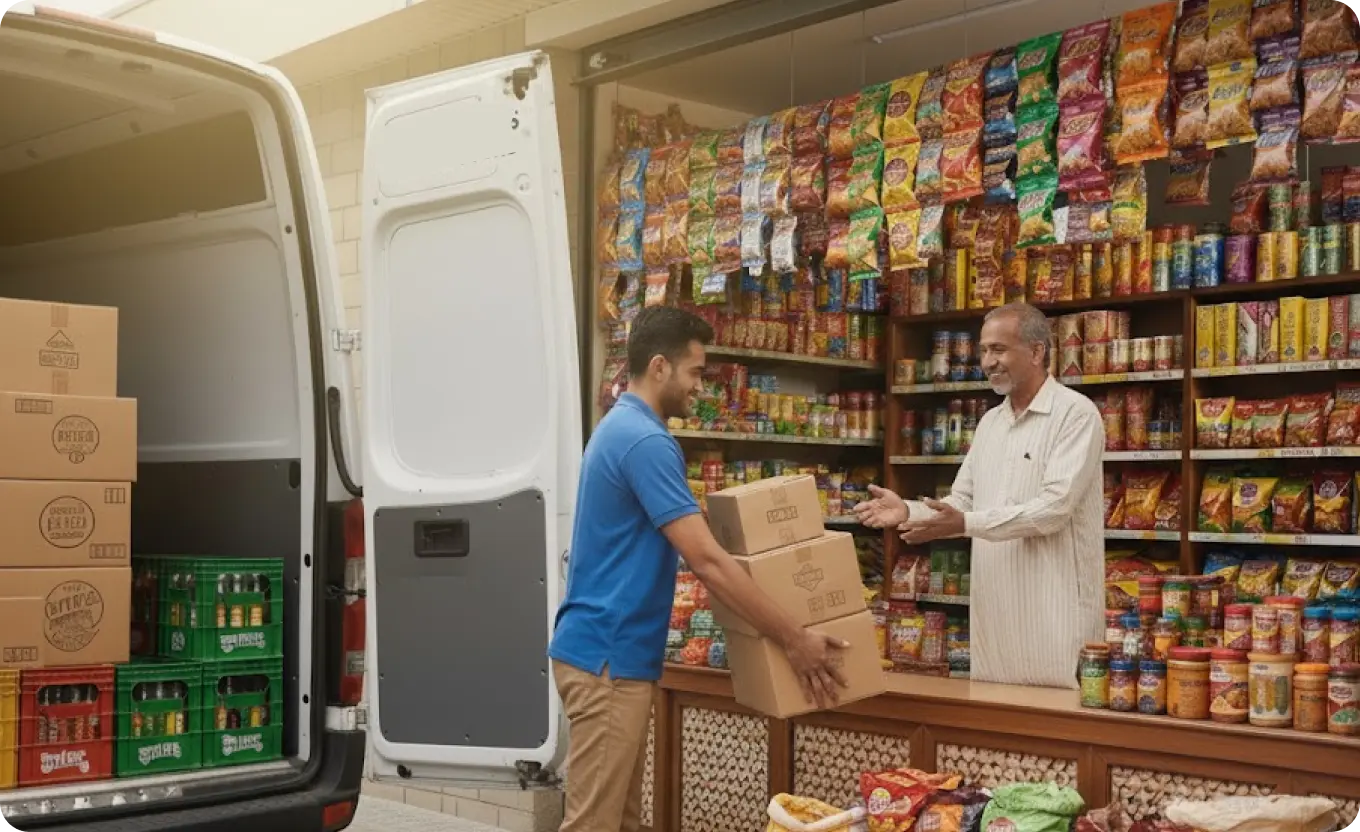
TL;DR For Philippine supply chain, distribution and sales leaders who want distribution efficiency working as a growth lever rather than a warehouse metric. It covers what distribution efficiency means and the five metrics that matter. Then, where brands leak efficiency across Luzon, Visayas and Mindanao, and how tighter field execution fixes it. BeatRoute connects beat plans, rep coverage, and distributor stock to your OTIF and fill-rate targets, on any Android, online or offline.
Stockouts at your best sari-sari and grocery outlets, dead stock sitting in an underperforming distributor, and a delivery line that keeps creeping up island by island. All three symptoms share one root: distribution efficiency. This guide explains what it means and which metrics genuinely matter. Then comes the fix: tighter field execution and smarter routing built for the way distribution really runs here.
What is distribution efficiency?
Distribution efficiency measures how well logistics, inventory, transport and order fulfillment work together. The test: products delivered on time, at defensible cost, in a way the trade actually values. It is the ratio of useful output, meaning on-time and in-full deliveries, to input, meaning cost, time, and manpower, across your route-to-market network. High efficiency is on-shelf availability bought at the lowest cost you can defend.
In the Philippines that network is not one national grid. It is three regional distributor networks across Luzon, Visayas, and Mindanao, most of it reached by distributor van sales rather than your own trucks. BeatRoute, the SFA and distributor management (DMS) platform for field sales, reads field data to outlet level. Efficiency leaks get acted on before they harden into stockouts or dead inventory.
Why does distribution efficiency matter for Philippine brands?
Efficient distribution decides how fast you reach the market, how full your shelves stay, and how confident your distributors and retailers feel about restocking. In a country of over 1.3 million sari-sari stores (DTI), traditional trade is the market, and reaching it well is the difference between growth and quiet leakage. For FMCG companies and fast-scaling consumer brands alike, efficient distribution shapes:
- Speed to market across islands
- Retailer and distributor satisfaction
- Shelf availability at the outlet
- Suki loyalty and repeat orders
- Cost-to-serve on every route
Example: A snack brand reworks its secondary distribution so top-selling outlets get 24-hour replenishment, and stockouts on its hero SKU drop before the next payday rush. BeatRoute ties outcomes like this to rep-level targets through Goal-Driven field execution, and efficiency gains get measured visit by visit instead of quarter by quarter.
Where does distribution efficiency create an edge?
In FMCG, cosmetics, liquor, and pharma, short shelf life, seasonal demand spikes, and long urban-to-provincial delivery chains add real complexity. Efficient distribution becomes a growth unlocker in exactly these conditions. This is also where fragmented distributor data and cost-to-serve become the questions your leadership team keeps asking.
Use case
Route intelligence sequences beats around real Philippine constraints. Vans cover more provincial outlets per day, and fewer deliveries miss their window when a typhoon closes a RORO crossing. BeatRoute’s route optimization module sequences beats around traffic, outlet hours and load capacity, growing coverage with no extra headcount. When weather forces a detour, it replans quickly.
What technologies power distribution efficiency?
- WMS (Warehouse Management Systems): better storage and order picking
- TMS (Transportation Management Systems): route optimization and freight visibility
- Predictive analytics: demand forecasting and inventory planning
- Sales Force Automation (SFA): plainly put, the software your reps use to plan visits, take orders and report from the outlet. Distribution decisions then run on what reps actually see in the market
Warehouses and trucks are rarely where Philippine brands lose efficiency. The leak is usually in the last stretch, between the distributor and the outlet. That is why Field sales data and distributor management share one loop on BeatRoute, joining what reps see on the ground to what head office must act on. For a deeper look at the DMS layer itself, see our complete guide to distribution management systems.
Which metrics should you track for distribution efficiency?
Real efficiency shows only when five metrics get read together, never alone:
- On-time in-full (OTIF) delivery rate
- Order fulfillment cycle time
- Inventory turnover ratio
- Transport cost per unit
- Fill rate versus stockout rate
Tracking them together avoids false wins. A strong on-time rate paired with bloated inventory is expensive reliability, not efficiency. A stockout in a Visayas town cannot be topped up as fast as one in Metro Manila. So BeatRoute reports these per region and outlet tier, never as one company average that hides the provincial gaps.
How do you improve distribution efficiency?
- Consolidate deliveries: batch shipments to cut transit cost, especially on longer VisMin routes.
- Use smart beat planning: prioritize visits to high-velocity outlets based on real sell-through, not habit.
- Invest in route intelligence: reduce fuel and transit time through dynamic routing that respects traffic, outlet hours, and ferry schedules.
- Enable real-time tracking: brand, distributor and rep share one live view from warehouse to transit to last mile, on the same Viber channels where trade already runs.
- Build execution discipline: good tech is useless without consistent usage. Reps who kayod kalabaw all day still need a tool that fills itself in, not one more thing to mag-encode after dark.
Two things make this practical for the Philippines. First, distributors are your extended sales force here, so efficiency is a joint effort, not a one-way push. Second, none of it works if the app fails on the phone your reps actually carry. BeatRoute works on any Android, even low-end devices, online and offline, so orders and delivery confirmations survive provincial dead zones and sync when signal returns.
BeatRoute is a proven global platform with a deep, working presence in the Philippines. It serves 200+ enterprise brands across 20+ countries and 2M+ retailers. Major Philippine brands like Unilab and Monde Nissin run on it, backed by a Manila-based team and PH-timezone support. That is global scale and ground-level proof in the same breath.
Efficient distribution is not one system. It is the moment field execution and channel data start speaking to each other. If your process still runs on hand-consolidated Excel trackers and Viber follow-ups, the gap between planned distribution and actual execution only widens as you scale across islands. When you are ready, tightening this also touches related decisions like channel conflict and how you read primary, secondary, and tertiary sales.
Book a PH-tailored demo and watch distribution data become the next rep action, route optimization through secondary distributor management.
Frequently asked questions
What is distribution efficiency in simple terms?
Distribution efficiency is how much useful output your supply chain produces for every unit of cost and time. Useful output means the right product reaching the right outlet, on time and in full. In the Philippines that means getting stock through your distributor networks and van sales to sari-sari and grocery shelves before they run dry. High efficiency equals on-shelf availability at the lowest defensible cost.
Which KPIs should Philippine brands track for distribution efficiency?
Five pull the most weight. On-time in-full (OTIF) delivery. Order fulfillment cycle time. Inventory turnover. Transport cost per unit, and fill rate against stockout rate. Review them per region and outlet tier across Luzon, Visayas and Mindanao, never as one company average. An island network hides stockouts that a national number smooths over.
Where do brands lose the most efficiency across the islands?
Rarely in the warehouse. Secondary distribution is where it leaks. Beat plans mismatched to outlet potential. Reps skipping low-velocity stores. No feedback loop when a provincial shelf goes empty. A missed RORO crossing or a typhoon-hit route can then stretch a one-day gap into a lost week.
Does the platform work offline in the provinces?
Yes. BeatRoute works on any Android, even low-end or entry-level phones, online and offline. A rep or distributor in a patchy-signal province logs visits, takes orders and confirms deliveries with no connection. The app syncs itself when signal returns. Because most Philippine field teams already run on Android, it is built for the phones they carry.
Is distribution efficiency just a warehouse problem?
No. Warehouses and trucks matter, but for Philippine retail brands the biggest gains sit in the last stretch between the distributor and the outlet. That is field execution: coverage, beat discipline, order accuracy, and real-time visibility into distributor stock. Technology multiplies that execution when it works as a nudge engine, telling reps what comes next and flagging drift. A passive report read only at head office multiplies nothing.