

TL;DR This guide is for Philippine sales and distribution leaders who need to know exactly what primary, secondary, and tertiary sales are and why they must be read together. Primary feeds the distributor. Secondary stocks the sari-sari store. Tertiary decides whether the product leaves the shelf at all. Blur the three into one revenue number and the signals that matter disappear. BeatRoute connects brand-to-distributor, distributor-to-retailer, and shelf-level data on one platform, on any Android, online or offline, so every target becomes a daily rep action.
Primary sales feed the distributor, secondary sales stock the retailer, and tertiary sales decide whether the product actually leaves the shelf and into a shopper's basket. In the Philippines each stage keeps its own rhythm across Luzon, Visayas and Mindanao. Fold them into one revenue figure and the signals that matter vanish. A distributor can be loaded with stock while sari-sari shelves sit empty, and the monthly report will not tell you until it is too late to act.
This guide covers what primary, secondary and tertiary sales are and how each stage works in the Philippine channel. Then, why each deserves its own optimization, and connecting all three on one platform so a gap at any level becomes a field task the same week.
What are primary, secondary, and tertiary sales?
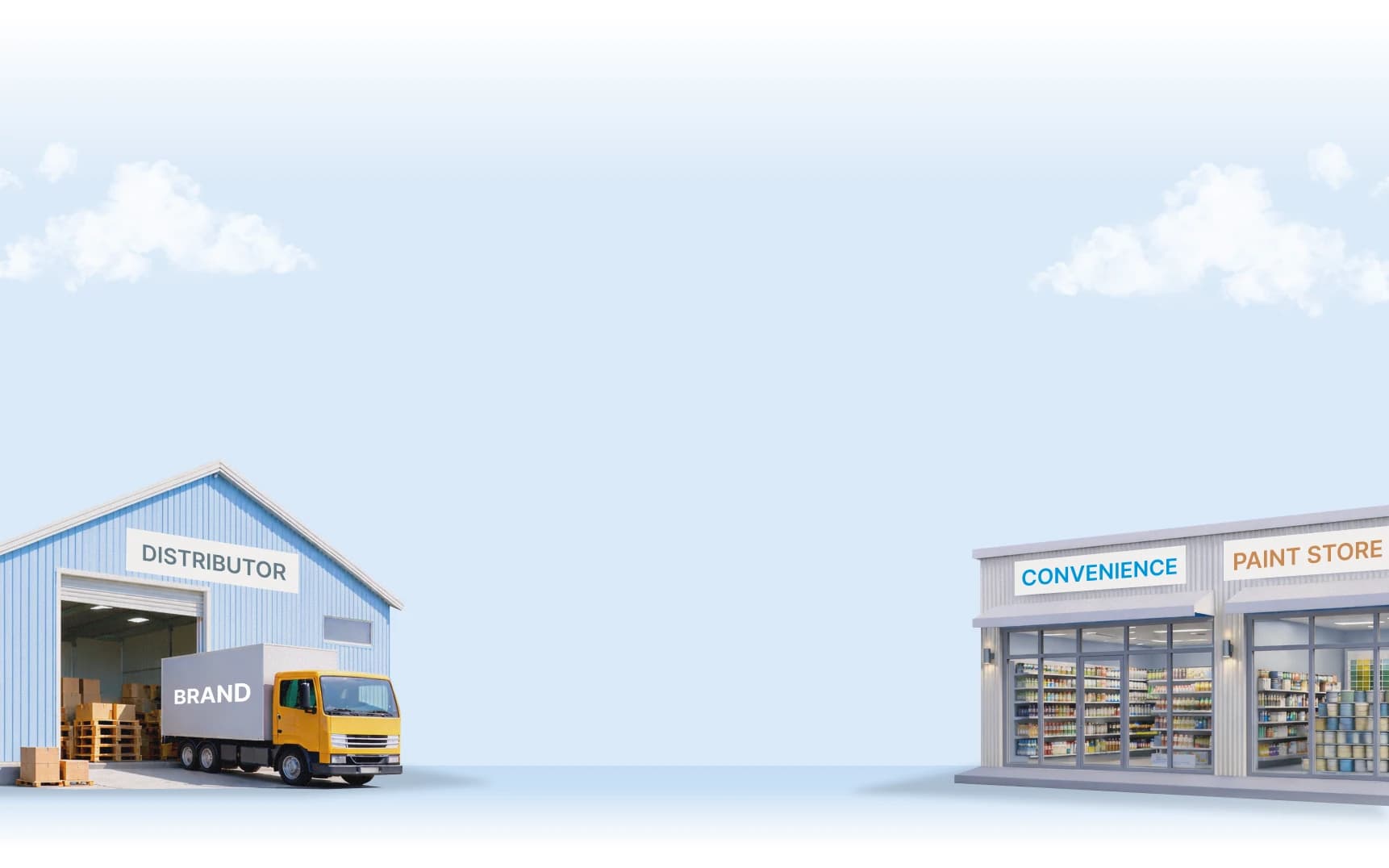
Primary, secondary, and tertiary sales are the three handoffs a product makes on its way from your factory to a Filipino shopper. Primary sales is brand to distributor, secondary sales is distributor to retailer, and tertiary sales is retailer to shopper. Each is a separate transaction with its own data, and only when you read all three together do you know whether stock is really moving or just piling up in a warehouse.
Primary sales: the distributor buys from the manufacturer and gets billed. This is the sale that lands directly in the brand's revenue.
Secondary sales is the transaction between distributor and retailer. It depends on brand awareness, distributor stock availability, and the trade promotions that incentivize retailers to order.
Tertiary sales is the transaction between retailer and shopper, also called offtake. It depends on merchandising, shelf visibility, and how hard the retailer pushes your product over the one beside it.
Understanding primary sales keeps distributor demand met, and keeps sight of where direct revenue actually comes from.
Understanding secondary sales gives you visibility into retailer demand and how your product actually moves through general trade. It also keeps distributor-to-retailer transactions transparent instead of hidden inside a distributor's own books.
Understanding tertiary sales reveals what genuinely sells and what only sits: the quality of merchandising, the state of the planogram, the activity inside the store. A structured retail audit turns that picture into a corrective field task the same week, not the next quarter.
Primary sales
Primary sales is the transaction between the manufacturer or brand and a distributor. An invoice is generated at the manufacturer's pricing and the resulting revenue becomes the net revenue for the brand.
What moves primary sales? Brand value and popularity. The strength of the distribution network. Each distributor's own secondary performance, and how shoppers receive the product. In the Philippines that distributor is often the partner who runs van sales to sari-sari stores, supplies Puregold cash-and-carry, and services provincial towns your own team never reaches directly.
Everything a brand sells to a distributor is meant to go down the line and ultimately to a shopper. If demand stalls at the shopper level, it works its way back up the chain, and primary orders shrink a cycle or two later.
Example: When a beverage or personal-care brand ships stock across a region, it does so through distributors whose retailers have already placed orders. The revenue the brand books from selling to those distributors is what it earns back on its investment in making the product. Load too much too soon and the stock simply sits, which is why primary should never be read on its own.
BeatRoute tracks primary orders against distributor-level targets, so brands can see whether a distributor's stock is flowing to retail or sitting in the warehouse. For a deeper look at the primary order cycle itself, see our guide on primary orders in retail distribution.
Secondary sales
When a distributor sells your products to a retailer, or restocks a sari-sari owner against an order, that is secondary sales. It is the truest early read on whether stock is actually moving through the channel or just resting in a distributor's warehouse.
Brand awareness matters, but so do these:
- Stock availability at the distributor, so retailer demand is met the same day the van arrives
- A reliable ordering and delivery system, since in the provinces a missed drop can mean a week without stock
- Trade promotions and schemes that give retailers a reason to order more, applied correctly at the point of order
A brand must watch secondary sales to spot distributors who are weak on stock monitoring or order fulfillment. If a distributor sits below the accepted threshold, you reevaluate the network and find partners who can cover the territory. Because credit runs the channel here, secondary sell-in often turns on the suki relationship and the utang a retailer already carries, not just on the price of the order.
Example: An established market leader will naturally attract more retailer orders than an unknown challenger, because sari-sari owners stock what they are confident will sell through. A newer brand has to earn that shelf space with visibility, sampling, and schemes before secondary volume follows.
BeatRoute gives brands real-time visibility into distributor-to-retailer movement through its Distributor Management System, so secondary gaps show up before the monthly review, not after.
Tertiary sales
Tertiary sales is the final stage: shoppers buying your product from a retailer. This is the ultimate goal of every manufacturer, because shopper demand is what decides whether a product survives in the market. It is also the hardest to see, since it happens across roughly 1.3 million sari-sari stores (DTI, 2025) with no single system recording each sale.
Purely a B2C moment, tertiary sales is unpredictable and rewards steady investment in merchandising, visibility, and in-store activity to stay relevant on a crowded shelf. In the Philippines much of it happens in tingi, single sachets and small packs bought day to day, so a clean facing and the right sachet in stock often decide the sale.
Strong tertiary performance needs the product to be genuinely useful and easy to buy. Once a brand holds real market share, it can move stock down the chain faster and lift offtake at the store. Affordability plays a part too, since a cheaper alternative on the same shelf can pull shoppers away.
BeatRoute wires tertiary signals, from shelf audits to planogram compliance to in-store activity, into the rep's next visit plan. Corrective action lands within the same cycle instead of waiting for a report.
Why optimize sales at each stage?
Optimizing each stage on its own strengthens the whole chain, because a weakness at one level quietly caps the others. Here is what each stage unlocks when it is done well.
Primary sales optimization
- Builds a dependable distributor network and extends reach into provincial towns you do not cover directly
- Aligns production planning, inventory, and delivery so the right SKUs are ready before a peak like the Ber months
- Keeps you ahead of competitors on availability and consistent supply across all three island networks
Secondary sales optimization
- Keeps retailers steadily stocked, so sari-sari shelves rarely run empty and the brand does not lose the sale to whatever is on hand
- Builds retailer trust through easy ordering, clear schemes, and fewer disputes over what promo applied
- Gives brands live sales data to spot high-performing outlets and the ones that need a coaching visit
- Puts clear product and scheme information in the retailer's hands so they push your brand accurately
Tertiary sales optimization
- Makes sure the product is visible, well merchandised, and actually on the shelf when a shopper walks in
- Grows market share through the right positioning and consistent perfect-store execution
- Turns satisfied shoppers into repeat buyers and word-of-mouth, which travels fast in a barangay
- Separates your brand from the alternative sitting right beside it on a narrow sari-sari shelf
BeatRoute ties optimization at each stage to a specific field action, so improvements are not just measured on a dashboard but executed visit by visit. Getting each stage to move stock cleanly to the next is also the heart of distribution efficiency.
How do you connect all three sales stages?
You connect them by putting distributor orders, retailer orders, visit data, and shelf audits on one system that shares a single outlet master. Joined data lets HQ notice primary rising while secondary sits flat, then route a rep to the exact outlets behind the gap. No waiting for a monthly report to explain it.
Effort at any single level is never enough. Only brand, distributor and field team working together move the whole chain, and with it loyalty, visibility, brand recognition, and market share. BeatRoute, the SFA and distributor management (DMS) platform for field sales and distribution, connects every level of the supply chain on one system. Leaders set targets, the platform translates them into daily rep actions, and the secondary sales feedback loop catches gaps before they reach the monthly review. It runs on any Android, even low-end devices, online and offline, so a rep in a patchy-signal province stays fully in the loop.
BeatRoute serves 200+ enterprise brands across 20+ countries, tailored for the Philippines with proof on the ground. That is why major Philippine brands like Unilab and Monde Nissin run on it. It works alongside your existing ERP and Excel, so there is no rip-and-replace and no long training program before value shows up. Book a PH-tailored demo to see all three stages on your own data.
Frequently asked questions
What is the difference between primary, secondary, and tertiary sales?
Three handoffs in one chain. Brand to distributor is primary, and it books direct revenue. Distributor to retailer, a sari-sari store for instance, is secondary. Retailer to shopper is tertiary, the one that confirms real demand. Only reading them together tells you whether stock truly moves.
Why is tertiary sales tracking harder than primary in the Philippines?
Primary sales is a clean invoiced transaction between two parties. Tertiary depends on countless retailer-to-shopper moments across roughly 1.3 million sari-sari stores, with no single system recording each one. Brands rely on in-store audits, image recognition, and store checks to estimate offtake, which is why field execution matters so much for reading tertiary.
Can primary sales grow while secondary sales stay flat?
Yes, and the pattern is dangerous. Usually it means warehouses are filling while retailers are not. Across island networks that build-up is easy to miss, so tracking secondary alongside primary is the only way to catch it early and route a rep to the outlets behind the gap.
Which sales stage should a Philippine brand focus on first?
Secondary visibility first. Invoicing already tracks primary, and measuring tertiary at scale costs real money. Getting a clear, real-time read on distributor-to-retailer movement, then feeding it into field execution, is the first move that pays most for retail brands here.
How do brands tie all three stages together?
By sharing one outlet master. When distributor orders, retailer orders, visit data and shelf audits all reference the same stores on one SFA-DMS platform, routing becomes automatic. HQ sends rep actions across Luzon, Visayas, and Mindanao rather than waiting for a monthly report to reveal the gap.
Does the platform work offline in the provinces?
Yes. BeatRoute works on any Android, even low-end or entry-level phones, online and offline. A rep in a provincial dead zone can log visits, capture orders, and run shelf audits without signal, and everything syncs automatically once connection returns. Because most Philippine field teams already run on Android, it is built for the phones they carry.