TL;DR Building materials brands lose 10 to 15 percent of potential revenue because demand creation, lead capture, conversion, and realization run as four disconnected motions. In African markets those motions run through masons, hardware dealers, and self-build sites that no head office can see. BeatRoute handles all four on one platform, so captured intent turns into ordered volume.
Cement, tiles, paint, and adhesives move through hardware shops in Nairobi, quincailleries in Abidjan, builders' merchants in Johannesburg, and cement depots outside Lagos. Demand is created on site, by a mason or a contractor, months before an order lands. This guide shows how African building materials brands turn that created demand into realized revenue, step by step.
What are the four steps of demand generation and revenue realization?
There are four steps, and they only pay off when they run as one connected motion instead of four separate ones.
- Demand creation through community meets and trade influencer engagement
- Lead capture from every source, both inbound and field-scouted
- Lead conversion through coordinated engagement with all stakeholders
- Revenue realization by securing full order volume against captured intent
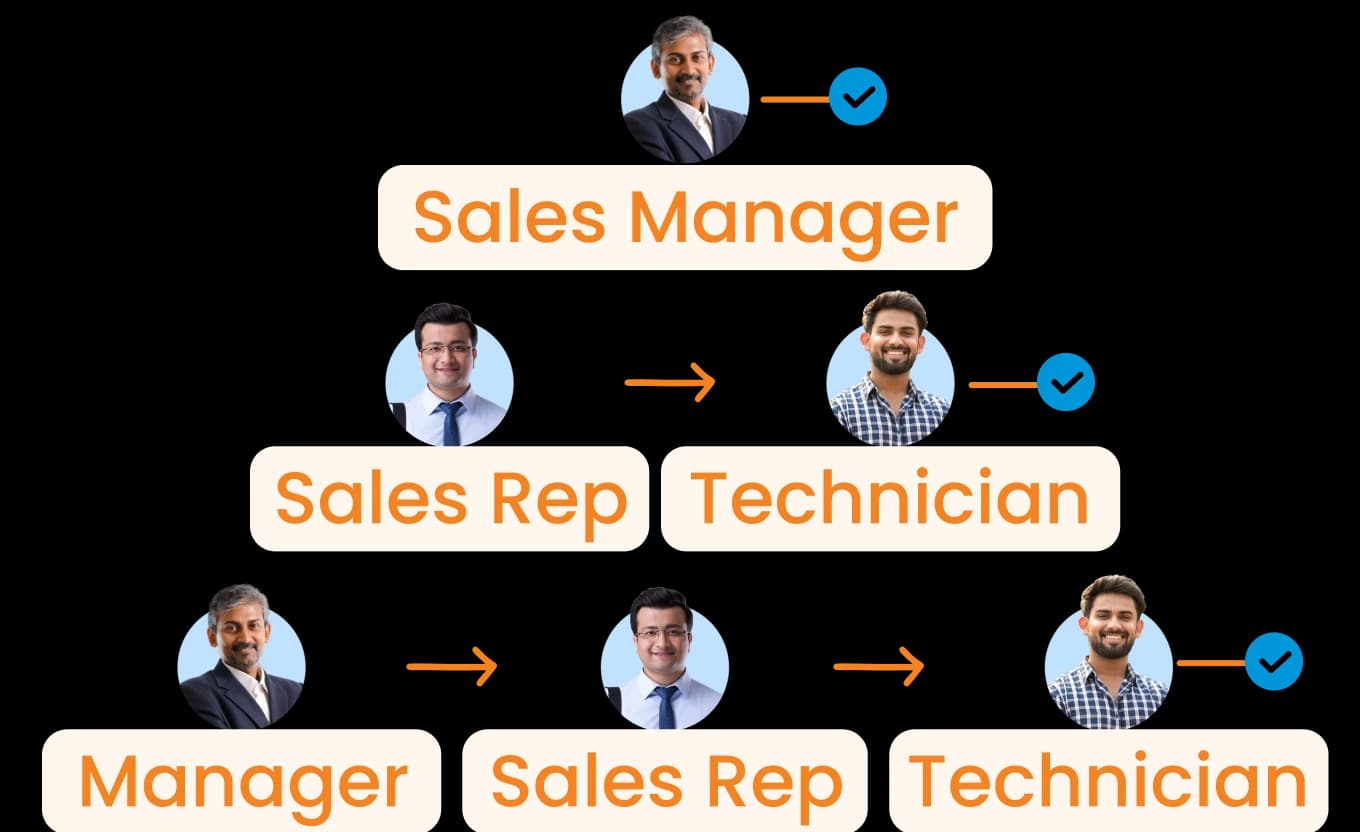
Every step involves several stakeholders. The mason, the contractor, the architect, the dealer, and your own rep each move a project along. Standard sales CRM tools were never built to hold all of them together, so brands run each party on a different tool.
Visibility then dies at every handover. That is where the 10 to 15 percent goes.
Why does created demand leak before it becomes revenue?
Because after the bag or the pallet leaves your depot, the project it was meant for becomes a black box.
African housing is largely built incrementally, bag by bag, by owners and small contractors buying from local dealers. Nobody registers a project. Your brand sees primary sell-in to the dealer, then goes blind on which site consumed what.
The squeeze makes that blindness expensive. Imported tiles, chemicals, and fittings reprice with every currency move, and African transport costs run about eight times the world average. When margin is that thin, an unclaimed half of a project is real money lost.
How do you create demand when the mason chooses the brand?
You run every mason meet, contractor meet, and dealer meet as a tracked campaign with planned spend, captured attendance, and attributed revenue.
The fundi in Nairobi, the mason in Kumasi, and the bricklayer on a Lagos self-build all decide the brand the homeowner pays for. Most brands spend heavily on these meets and can prove nothing afterwards. The attendance list stays in a notebook.
In BeatRoute a rep submits a meet plan with date, purpose, expected participants, and projected expense, routed for approval. During the meet the rep tags every contractor, architect, and dealer present, plus products shown and interest noted. Photos, videos, and actual spend are matched against the plan. On the next follow-up, the attendee's profile shows which meet they came to.
How do you capture every lead when a site has no address?
You make lead scouting a geo-fenced process instead of a habit, and you route inbound leads to a rep before they cool.
There is no address book for African construction. A rising slab is spotted by a rep passing on the road, not found in a database. Left to habit, reps log the leads that suit them and skip the rest.
BeatRoute brings top-down and bottom-up leads into one system. Website, call centre, and campaign leads arrive the moment a form is submitted, and are assigned by territory and past conversion patterns. Field-scouted leads are captured inside a geo-fence, so coverage of a territory becomes measurable rather than anecdotal.
How do you convert when three parties must move together?
Conversion happens when the rep, the influencing contractor or architect, and the fulfilling dealer are engaged at the same time.
Miss one and the project stalls or quietly switches brand. The dealer who cannot supply on credit that week loses the sale for you. The contractor who never hears back specifies someone else.
| Capability | What it does on an African project |
|---|---|
| Tripartite lead management | Links each lead to the influencing contractor or architect, the fulfilling dealer, and the managing rep, so all three move the deal together. |
| Stage management with nudges | Reps update the stage with remarks after every visit. A lead stuck too long triggers a nudge, so projects do not go cold unnoticed. |
| Scheduling AI Agent | Builds the visit plan in one click from business priority, lead stage, lead status, and visit history, instead of leaving the route to memory. |
How do you realize the full revenue from every project site?
You capture order intent at SKU level on the first site visit, then measure every later order against it.
The rep records variants, specifications, and quantities the project should consume across its whole lifecycle. That becomes the baseline. On each return visit the rep sees the gap between captured intent and actual orders.
If a large site has consumed a small share months in, the rep can ask the contractor and the dealer why. Most brands never have that conversation, because they never had that number. BeatRoute also pushes nudges on untouched leads, stale stages, and sites falling behind intent, without anyone pulling a report.
What does your dealer get out of it?
Your dealer gets faster claims, a defended territory, and proof of the demand you promised to create for them.
Dealers here are established trading businesses you court, not command. Manual claims commonly take 8 to 12 weeks to settle, and that delay costs a dealer working capital they need for stock and credit to contractors. Digital logging of sales and schemes shortens that cycle.
Territory matters just as much. Material bought cheap in one town resurfaces on a site three regions away, and the local dealer carries the loss. Making that movement visible protects the dealer who invested in your brand. It never bypasses them.
Does it still work where there is no signal?
Yes, because the app is offline-first: it captures visits, meets, and orders with zero signal, then syncs when you are back online.
Project sites sit outside town, in new estates, on roads without coverage. An app that stalls there sends the rep back to a notebook by lunchtime. Data costs about 2.4% of monthly income per gigabyte in Sub-Saharan Africa, so reps ration their connection carefully.
Battery counts too. Test the app on a low-end Android, on a full day of site visits, and through load shedding if you sell into South Africa. Reps also get something back: every visit is time-stamped and geo-verified, so incentive payouts are never disputed.
How do managers see the revenue gap without pulling a report?
They ask in plain language and get an answer from their own data in seconds.
BeatRoute Copilot is a conversational AI agent inside the platform. A national sales manager can ask which reps have the lowest conversion rate, or which leads are falling behind on intent realization, and read the answer immediately.
That changes the rhythm of the month. Leaks get caught while the project is still pouring, not in a review after the roof is on.
One platform for the African building materials route to market
Software that equips the dealer and influencer network you already have beats software that tries to replace it.
The B2B e-commerce wave raised over 400 million dollars to digitise African trade by owning trucks and warehouses, then collapsed on thin margins. The opposite path works better. BeatRoute is a global platform tailored for African trade, with proof it works here, which is why brands like AAVA Brands and BUA Foods run on it.
AAVA Brands in Nigeria reported an 18 to 20% gain in field productivity and a 25 to 30% rise in store sellouts. Beyond demand generation, the same platform covers dealer management, channel sales execution, secondary sales tracking, and dealer loyalty programmes.
One last point worth keeping: demand you created and never measured is indistinguishable from demand you never created. Get an instant demo and see the gap between intent and orders on your own sites.
Frequently asked questions
What is demand generation in building materials?
Demand generation in building materials is the work of creating specification and preference before an order exists. It runs through masons, contractors, architects, and dealers rather than through a shopper at a shelf. Community meets and site-level influencer engagement are its main activities.
What is revenue realization, and how is it different from demand generation?
Revenue realization is the share of captured order intent that actually converts into ordered volume. Demand generation creates the intent. Realization measures how much of it you collected. Brands typically lose 10 to 15 percent of potential revenue in the gap between the two.
Why do African building materials brands lose revenue after a lead is won?
Because visibility ends at the dealer. Material is bought in small lots for incremental self-build, so no one records which site consumed what. Without an intent baseline per project, nobody notices when a large site quietly buys half its requirement elsewhere.
Who influences the brand decision on an African construction site?
The mason or fundi usually does, alongside the contractor and, on larger projects, the architect. The dealer then decides what is on hand when the money appears. A brand that engages only one of these parties loses volume to whoever engaged the others.
How do you track community meets and mason meets properly?
Run each meet as a campaign with an approved plan, a projected spend, and a tagged attendance list. Capture photos, actual spend, products demonstrated, and interest shown. Attribution only works when the attendee record links to later follow-ups and orders.
How do you capture field leads when project sites have no address?
Use geo-fenced lead scouting so the rep captures the site where it stands, with coordinates instead of a street name. That turns scouting from personal habit into a measurable process. Inbound leads should route to the same system and be assigned by territory automatically.
What is tripartite lead management?
Tripartite lead management links every lead to three parties: the contractor or architect influencing the project, the dealer fulfilling it, and the rep managing it. All three see the same deal and move it together. It exists because building materials sales are never a single-buyer transaction.
How does order intent capture work?
On the first site visit the rep records variants, specifications, and quantities the project should consume over its lifecycle. That baseline is stored against the lead. Every later order is compared to it, so the shortfall is visible on the next visit rather than at year end.
Is BeatRoute a CRM for building materials?
No. BeatRoute is a sales force automation and distributor management platform, known as SFA and DMS, for field sales and distribution. A CRM manages office pipeline. BeatRoute runs field execution: meets, lead scouting, site visits, dealer orders, and realization tracking.
Does the app work offline on project sites?
Yes. It is offline-first, so reps capture visits, meets, and orders with no signal and sync later. This matters because data costs run about 2.4% of monthly income per gigabyte in Sub-Saharan Africa, and coverage on new estates is patchy.
What do dealers gain when a brand adopts this?
Faster claims, protected territory, and visible proof of demand created in their area. Manual claims often take 8 to 12 weeks, which ties up a dealer's working capital. Shortening that cycle is usually the strongest reason a dealer accepts a new tool.
Which African brands use BeatRoute?
African customers include AAVA Brands and BUA Foods in Nigeria. Across all markets BeatRoute serves 200+ brands in 20+ countries, reaching 2M+ retailers and 100K+ users.