FMCG route to market in Africa: a guide for sales and distribution leaders
Route to market is the path your products take from depot to shelf, and the plan for who sells, stocks and delivers them along the way.
 By Nikhil Chaudhary, VP of Marketing
What is route to market in African FMCG?
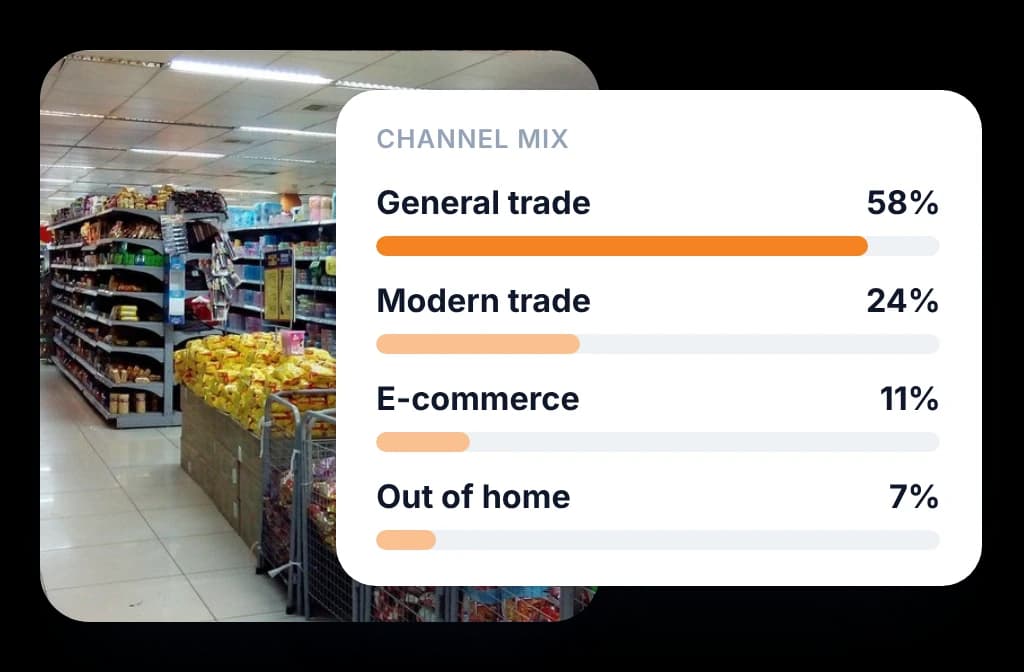
Route to market in African FMCG is how a brand gets its products into every outlet where shoppers buy them, at a cost the margin can carry. It is the sales and distribution end of the supply chain. Your strategy is the plan for six decisions: channels, distribution model, coverage, field team, trade terms and data.

The route is longest in general trade, where most volume sits. A carton of biscuits may leave your depot for a distributor, move on to a sub-distributor or an open-market wholesaler, and end up in a duka or kiosk. Each step takes a margin, holds stock and makes choices you cannot see without shared data. For the same ideas outside consumer goods, read our route-to-market strategy guide.
The six decisions in an FMCG route-to-market strategy
- Channels: which kinds of outlets you sell through.
- Distribution model: who serves each outlet: your team, a distributor or a wholesaler below them.
- Coverage: which outlets get visited, and how often.
- Field team: how many reps, and what each one is paid to achieve.
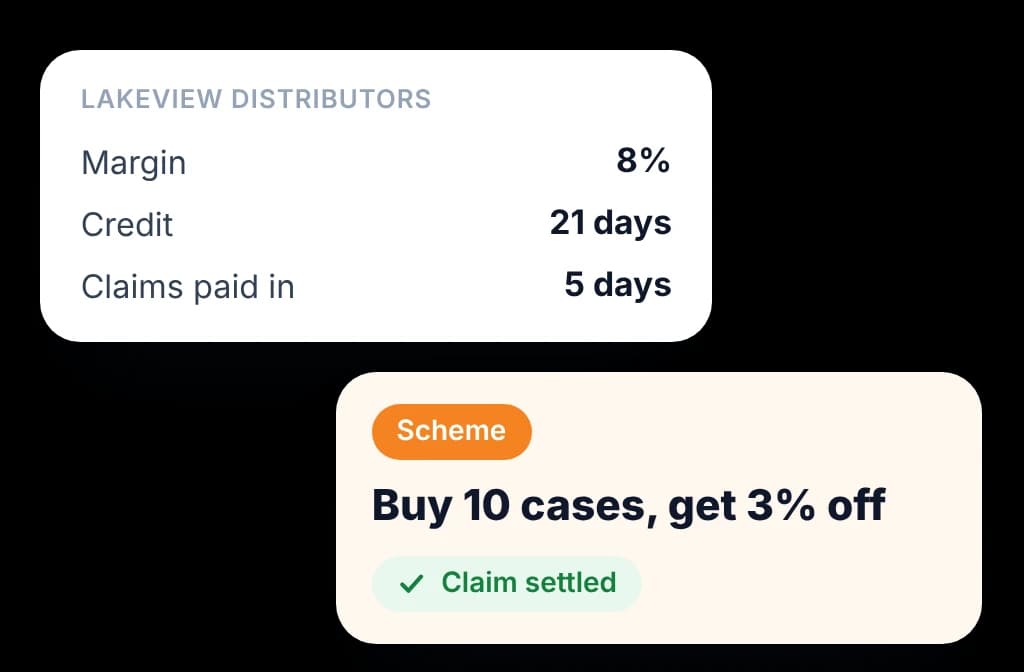
- Trade terms: distributor margins, credit, schemes and claims.
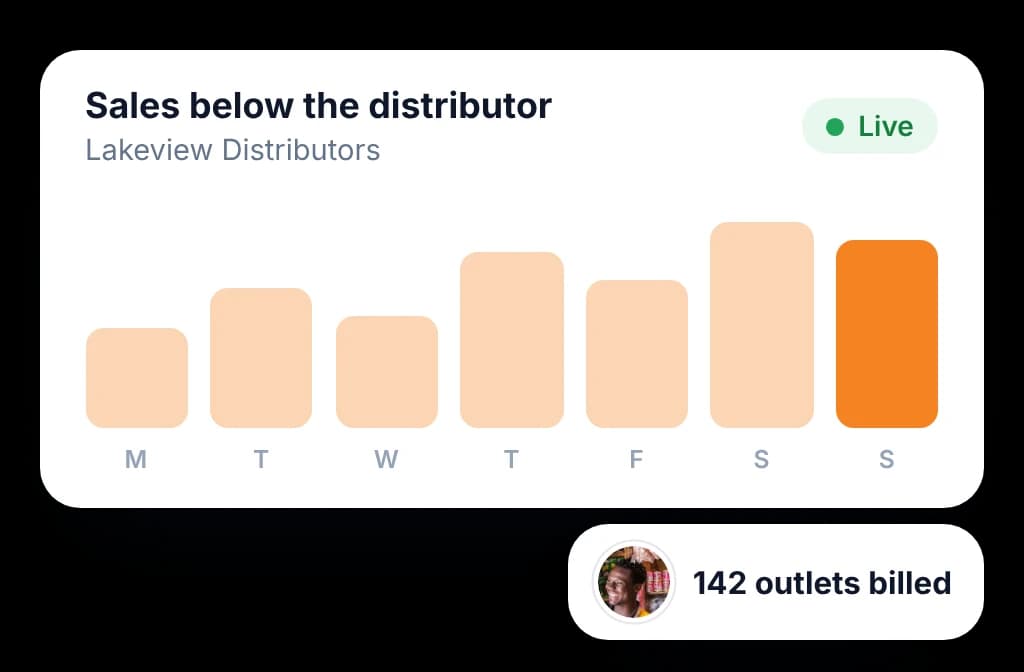
- Data: what you can see of stock and sales below the distributor, and how fast.
The channels your route to market has to serve
Most brands sell through several channels at once, and each one needs its own plan.
| Channel | Who buys | How it is usually served | What wins it |
|---|---|---|---|
| General trade | Dukas, kiosks, provision stores, spaza shops, open-market stalls, and the wholesalers that feed them | Distributors' salespeople on fixed beats, with the brand's reps directing the order | Wide coverage, the right range per outlet, fair credit, steady visits |
| Modern trade | Supermarket and convenience chains | Key account team, with merchandisers in store | Shelf availability, planogram compliance, promotions agreed with the chain |
| E-commerce and WhatsApp ordering | Marketplaces and delivery apps in the big cities, and retailers who order on WhatsApp or a wholesale app | Direct to the platform's warehouses, or routed to the outlet's distributor | Clear prices and schemes at the moment of ordering, so the platform does not undercut your distributors |
| Out of home | Hotels, restaurants, cafes, bars and caterers | Specialist or food-service distributors | Pack sizes, service levels, steady delivery |
General trade and modern trade never share a beat. A duka owner wants a quick visit, a suggested order and credit they can trust. A supermarket wants shelf checks and a merchandiser. Read more on general trade vs modern trade, on running a multichannel route to market, and on HoReCa sales.
Direct, distributor-led or hybrid: which model fits?
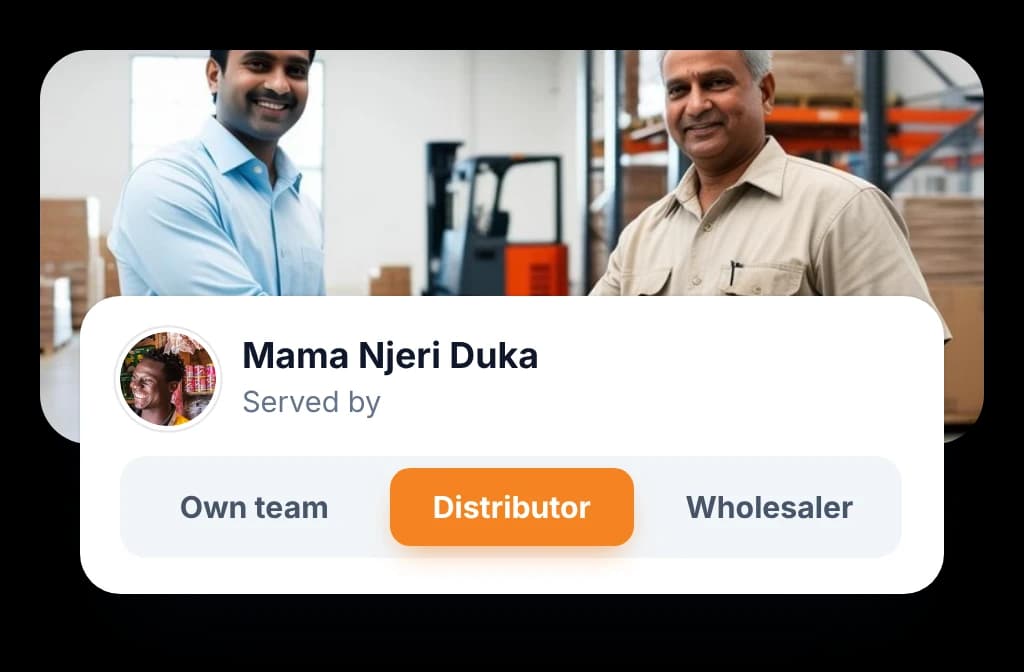
The model you pick sets most of your cost to serve. Choose between direct and indirect distribution separately for each channel and each area.
| Model | How it works | Suits | Watch for |
|---|---|---|---|
| Direct to outlet | Your own team sells and delivers | Nairobi and Lagos key accounts, supermarket chains, high-value or short-life products | High fixed cost; hard to justify for small outlets far apart |
| Distributor-led (indirect) | Distributors buy from you, hold stock, deliver and give credit. Remote areas often add a sub-distributor | Wide general trade coverage, up-country towns and long-distance routes | You lose sight of sales below the distributor unless you share a system |
| Hybrid | Direct for chains and big accounts; distributors for general trade | Most brands with a mix of channels | Fights over prices and outlets unless you set who serves whom |
| Van sales or pre-sell | Sell and deliver in one visit, or take the order and deliver later | Van sales for small cash outlets; pre-sell for larger orders and wider ranges | Vans limit range and put cash in the rep's hands; pre-sell needs next-day delivery. See van sales software |
When you mix these models, watch the edges. A common mistake is to serve a distant town direct because one big wholesaler sits there, then carry the cost of every small kiosk around it. Over long roads, a sub-distributor who holds stock locally often beats a weekly truck run.
Outlet segmentation, coverage and cost to serve
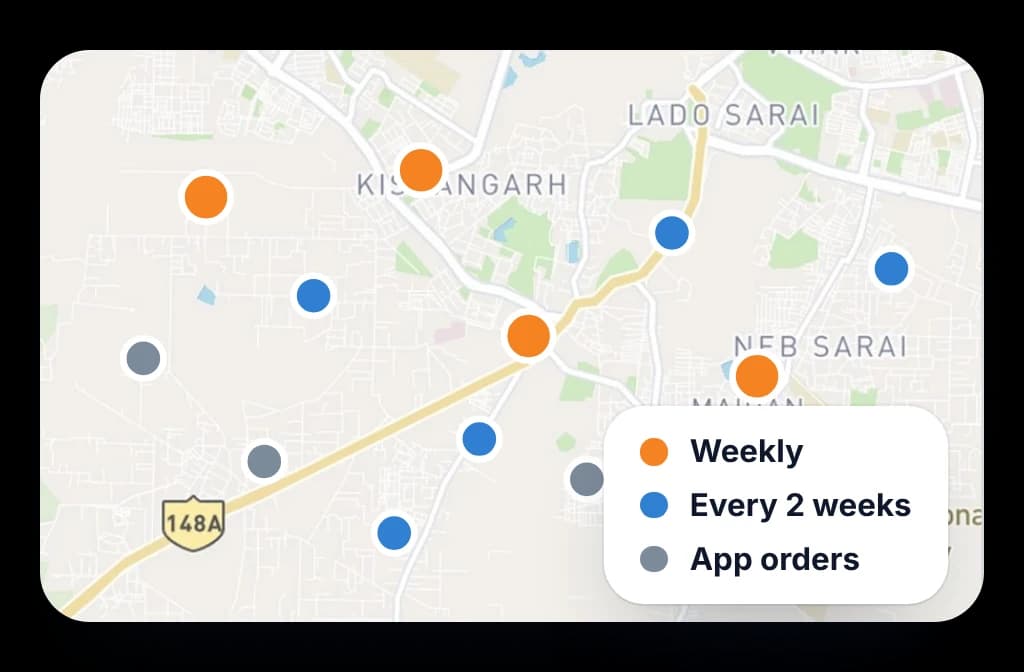
Coverage is one of the largest route-to-market costs, and the easiest to misplace. The fix starts with outlet segmentation: visit high-volume stores weekly and steady stores every two weeks. Let small or new outlets order by phone, WhatsApp or app between visits.
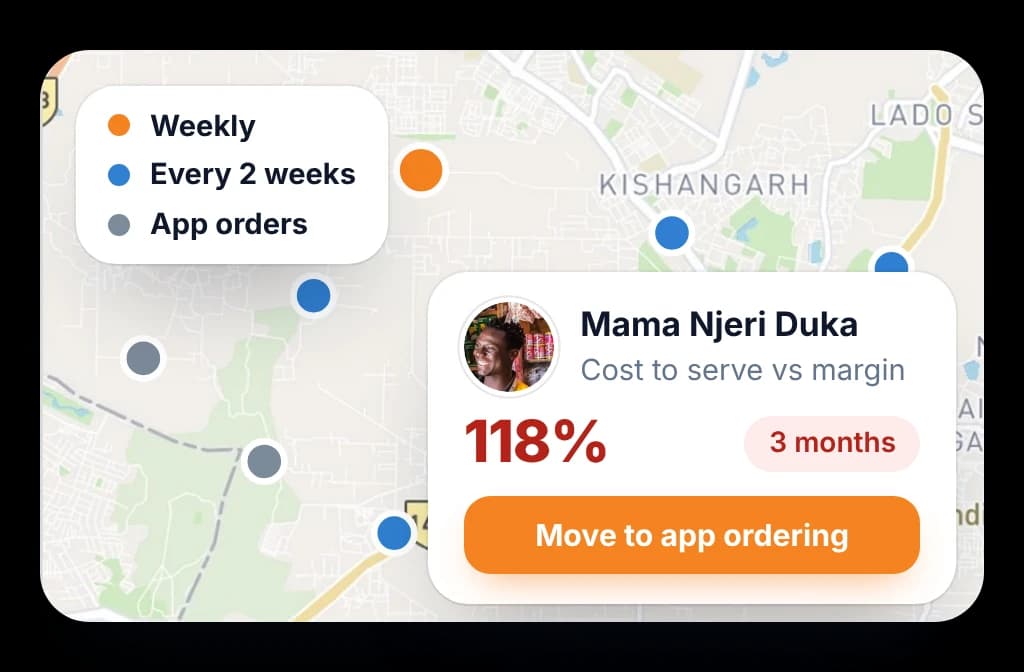
Then test each outlet on cost to serve: rep time, fuel per drop and the credit you give, against what it buys in a month at your margin. If cost runs above margin for two or three months, move the outlet down a tier: fewer visits, a van route, WhatsApp ordering or a wholesaler. Many open-market stalls and dukas have no street address, so a first job is to map them into one live outlet list. Our beat planning guide shows how to draw beats around each tier, and FMCG market coverage shows how to find the gaps.
In Nigeria, AAVA Brands grew store-level sellouts 25–30% on BeatRoute. Read the AAVA Brands case study.
How to build or fix your route to market in five steps
The process is the same whether you are entering a new country, launching a category or fixing a market that has stalled:
 1. Map where volume and margin come from. Break sales down by channel, area, distributor and outlet type. Find the outlets that cost more than they earn, and the towns that do not stock you yet. In a new country, start with a market assessment: an outlet census and a short list of distributors.
 2. Set coverage and the model for each channel and area. Put outlets into tiers, pick direct, distributor, sub-distributor or van for each tier, and write down who serves it so channels do not fight over outlets.
 3. Select distributors and set their terms. Base selection on reach, cash, trucks and willingness to share data. Then check what each one earns on your line after delivery and credit costs. Distributors judge you on cash, so slow claims cost you orders.
 4. Design the field team and beats. Work out how many reps each area needs. Pay them for repeat orders and lines per call.
 5. Pilot before you roll out. Run the new model in one territory with two or three distributors for a full ordering cycle, then roll out what worked.
Where most FMCG route-to-market models lose money
Even a sound plan leaks at the counter, with distributors, and after an outlet's first order.
Reps take the order the shopkeeper offers
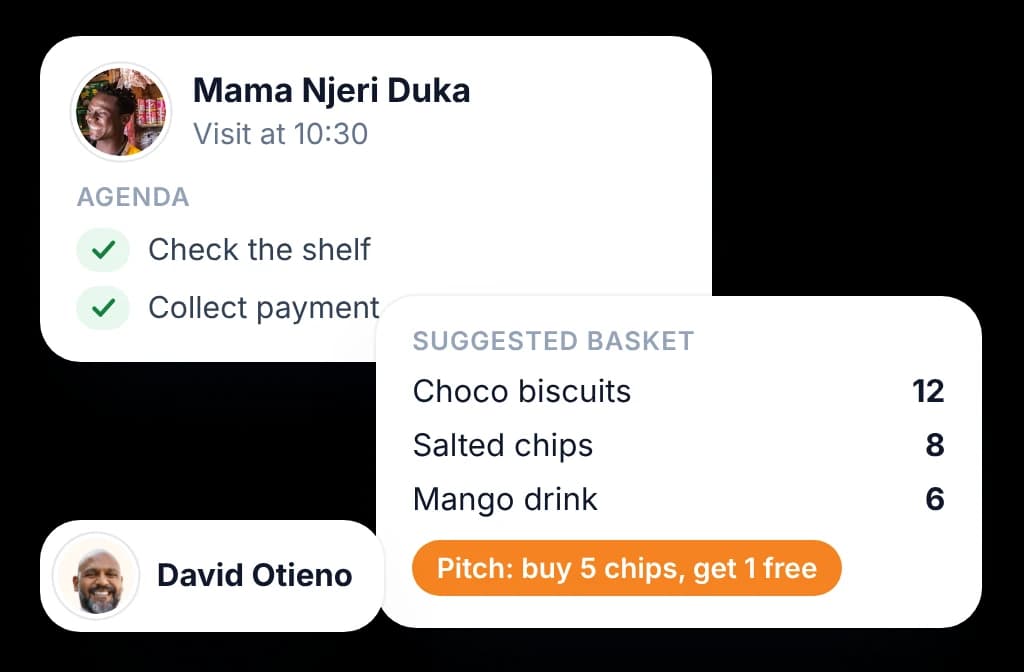
Left alone, shopkeepers order less than the outlet could sell. Give reps a plan before the visit: what the store should stock and which scheme applies.
BeatRoute's Order AI Agent suggests the basket for each outlet, and sales force automation puts the whole visit plan on the rep's phone. The app works with no signal and syncs when the network returns.
Distributor schemes pay out too late to change the order
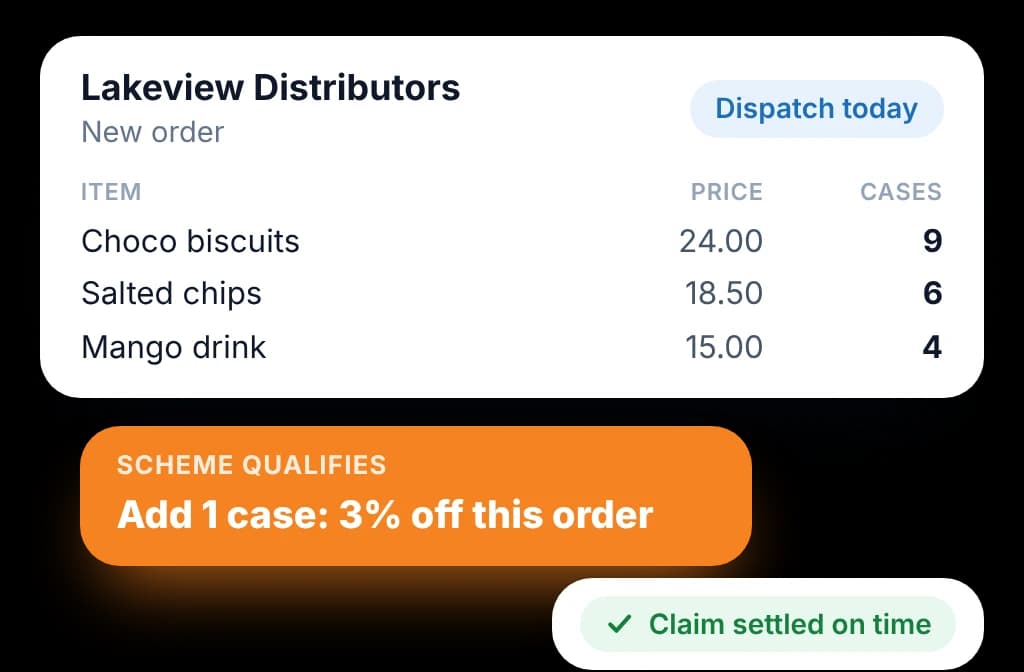
A credit note that arrives next month cannot change this month's order. Put the qualifying scheme on the order screen, so the distributor sees what one more case is worth, and settle claims on time. Where cash is tight, a distributor waiting on money cuts the next order first.
BeatRoute's Distributor Management System puts ordering, schemes, stock and claims in one place. You see secondary sales without waiting for month-end files.
New outlets are counted once, then lost
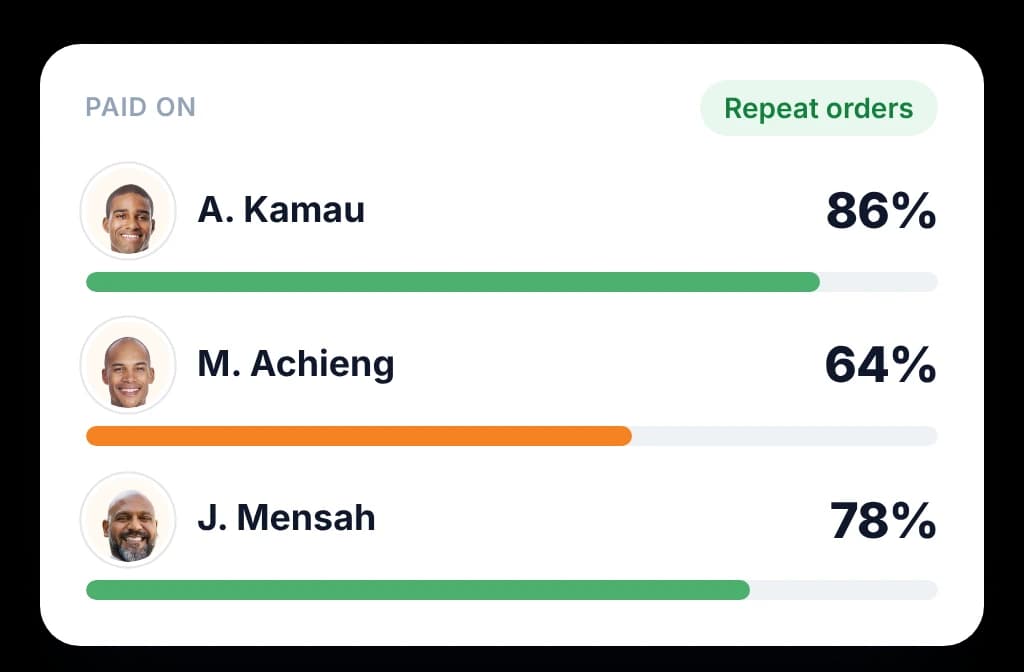
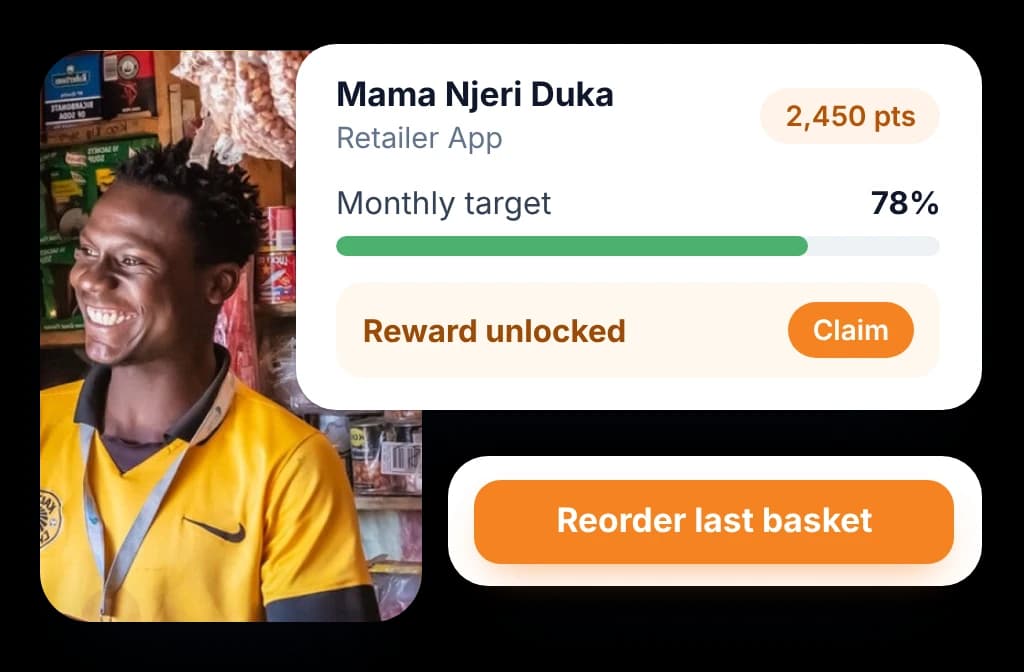
Opening an outlet is easy to count and reward. Keeping it ordering is what grows the business, so judge reps on outlets that place a second and third order.
When a rep misses an outlet on its beat day, the TeleOrder AI Agent can call the retailer and take the order. The Retailer App lets retailers reorder on their own, and ordering can also run over WhatsApp, which most shopkeepers already use. A stock-out is then not filled by another brand.
KPIs to track your FMCG route to market
Review these every week, by territory:
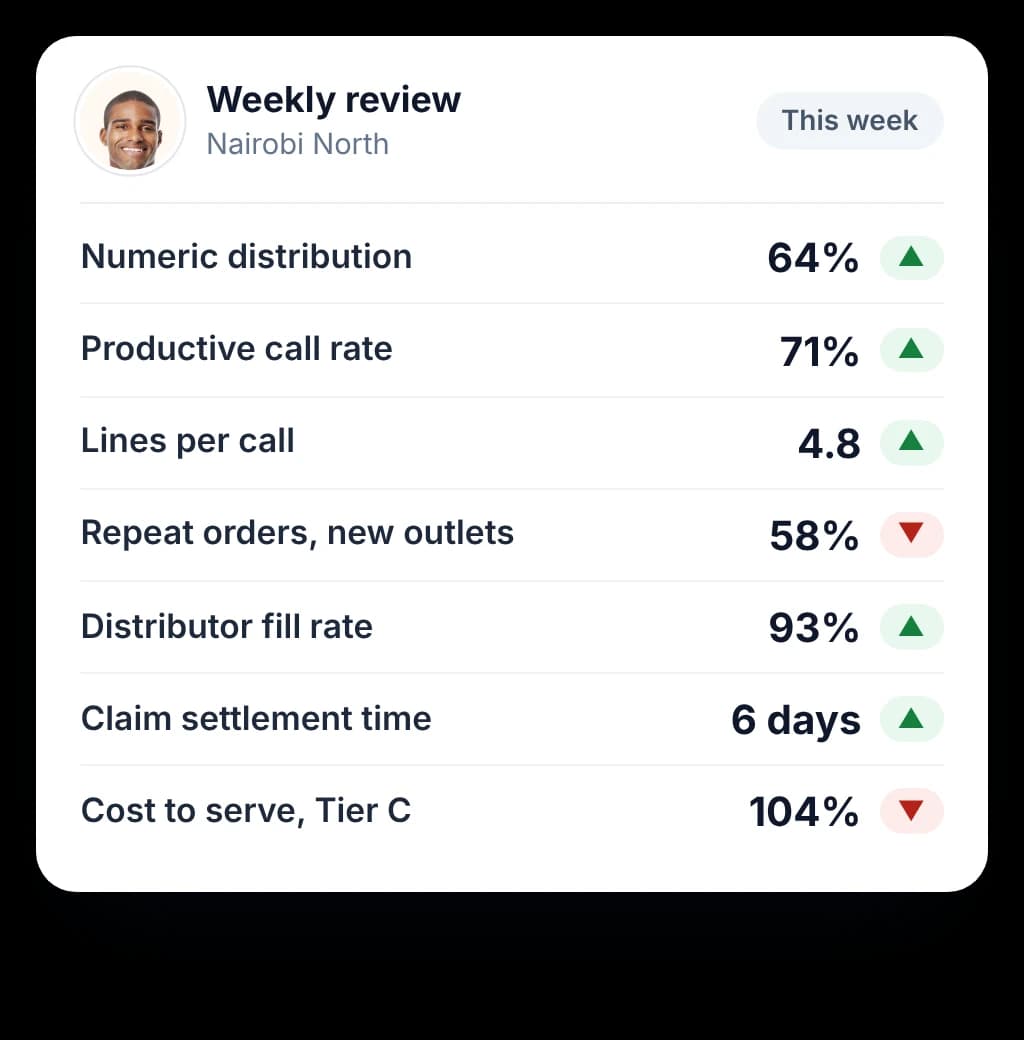
- Numeric distribution: the share of target outlets that stock you.
- Productive call rate: visits that end in an order, out of all visits.
- Lines per call: how many different items each order carries.
- Repeat orders from new outlets: how many new outlets order a second and third time.
- Distributor fill rate: the share of retailer orders filled in full.
- Claim settlement time: how long distributors wait to be paid.
- Cost to serve: what each outlet tier costs against its margin.
What the best route-to-market software for FMCG teams does
Software runs a good plan every day. It cannot rescue a poor one. Check that a tool:
 Puts distributor and field sales data in one system, so stock, orders and visits match.
 Works offline, because many routes have weak or no signal.
 Handles general trade and modern trade with separate beats, tasks and measures.
 Connects to your accounting or ERP system, so invoices are not keyed twice.
Is BeatRoute the right fit for your route to market?
BeatRoute suits consumer goods brands that sell through distributors and field teams. It puts sales force automation, distributor management and a retailer app on one platform, and strengthens the distributors and reps you already have. If you only need billing for one distributor, a lighter tool will do.
It is used by 200+ enterprise brands across 20+ countries, and most teams go live on sales force automation in 21 days.
Trusted by leading FMCG & CPG brands worldwide






Frequently asked questions
What is route to market in African FMCG?+
Route to market is the path a brand's products take from the depot to the outlet shelf, and the plan for who sells, stocks and delivers them at each step. In Africa it covers distributors, wholesalers, open markets, dukas, kiosks and supermarkets, plus the field team, trade terms and the data that ties them together.
What is the difference between go-to-market and route to market?+
Go-to-market decides why shoppers should buy: the product, price, pack and message. Route to market decides how the product reaches the shelf: channels, distributors, coverage and field execution. A strong brand with a weak route to market has demand it cannot fill.
What is the best route to market for an FMCG brand in Africa?+
No single model is best. Most brands run a hybrid: direct for supermarket chains and large accounts, distributors for general trade, and sub-distributors or van sales for distant towns. Dense areas with large orders can pay for your own team. Scattered outlets with small orders are cheaper to reach through a distributor or a van route.
How do you build a route to market with limited data or resources?+
You rarely need a full outlet census to begin. Take the outlets your best distributors already serve and sort them into three tiers by what they buy. Walk a few beats with reps to see which dukas and kiosks stock rivals and which have room on the shelf. Then pick one area and fix its economics first: cost to serve, distributor margin and claim times. Each ordering cycle gives you better data for the next tier and the next area.
What is an RTM strategy in FMCG?+
An RTM strategy is the written plan for how your products reach outlets. It sets the model, coverage and terms for each channel and area, and the sales or distribution head usually owns it. Review it once a year, and again when you enter a new area, change distributors or launch a category.
Should I use van sales or pre-sell?+
Van sales suits small cash outlets with low order sizes, but it limits range to what fits on the van and needs firm cash collection. Pre-sell suits larger orders and a wider range, but needs reliable delivery the next day. Many brands use both, by area.
How do you get secondary sales visibility from distributors?+
Ask distributors to order and bill through a distributor management system you provide, or link to the accounting software they already use. Either way, sales below the distributor update as distributors bill. You see stock and outlet sales in time to act, and you face fewer disputed claims at month end.