

TL;DR In African auto, aftermarket growth depends on mechanic preference, garage-level part availability, and consistent field execution across thousands of informal workshops. This guide covers seven priorities, from mapping the mechanic network to running micro-loyalty at the counter. It also shows why the garage, not the driver, decides your brand. Brands that run every lever on one platform see a 12.6% average first-year sales uplift (BeatRoute research).
The automotive aftermarket is where your brand gets chosen again, long after the first-fit sale. In African markets that choice is made by a mechanic, at a garage, on an aging fleet of used-import vehicles. After your parts leave the depot, you lose sight of all of it. This guide shows what to prioritize.
What is the automotive aftermarket channel?
The automotive aftermarket channel is the network of mechanics, garages, spare-parts dealers, and service centres that replace parts and service vehicles after the original sale.
It covers replacement parts, lubricants and additives, diagnostic tools, and branded accessories. In Africa most of that demand comes from an older, largely used-import fleet. Tokunbo cars in Lagos. Ex-Japan imports in Nairobi. Second-hand vehicles that stay on the road for decades. Older vehicles need parts more often, so aftermarket demand grows with the fleet.
The real challenge is not supply. It is holding presence and preference across thousands of decentralized garages where the mechanic, not the driver, picks the brand. Winning the aftermarket is a different game from winning original-equipment fitment. First fit gets you on the vehicle. The aftermarket decides whether you get asked for again.
Why does the aftermarket decide who wins in African auto?
The aftermarket decides brand preference in African auto, because the mechanic chooses the part and the fleet never stops aging.
- Demand keeps growing. Vehicles age and need repairs on a schedule nobody can pause, so aftermarket revenue is steadier than cyclical original-equipment business.
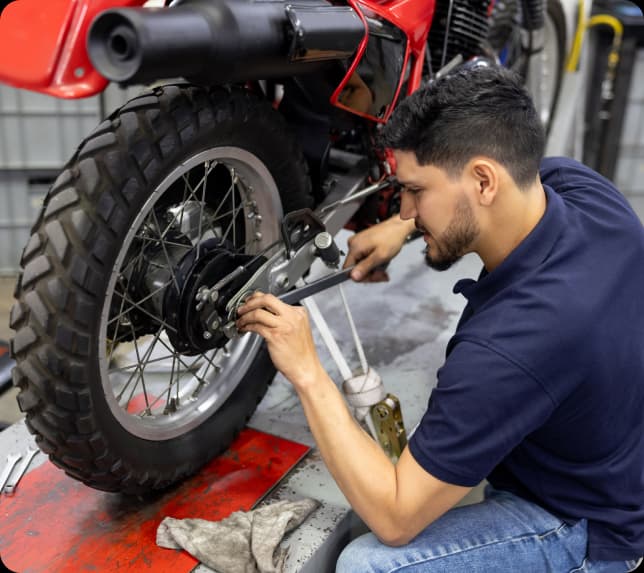
- Preference is built at the garage. A mechanic who trusts your brand recommends it across hundreds of jobs a year, without you spending on consumer marketing every quarter.
- Margins run higher. Spares, lubricants, and accessories often outperform first-fit business on margin, so the aftermarket is a growth lever, not just a maintenance stream.
There is a second reason preference matters more here. Counterfeit parts and adulterated lubricants are widespread, so a mechanic who trusts your brand is also your defence against fakes at the counter. Preference and authenticity are the same battle.
Valvoline achieved 3X customer connect by focusing field execution on garage-level engagement through BeatRoute's auto ancillary platform. Mechanic influence drives preference more than end-consumer marketing, which makes garage-level engagement the highest-return lever you have.
Why do you go blind after the parts leave the depot?
After your parts leave the depot, you go blind. Which garages push your brand, which clusters run dry, which schemes actually land: none of it is visible.
African auto brands do not have a demand problem. They have a visibility problem. Your parts scatter into thousands of garages packed around spare-parts markets, and the primary sell-in number becomes the last thing you can trust. Everything after dispatch is a black box.
| Challenge | Impact on aftermarket sales |
|---|---|
| Limited garage-level visibility | No data on which mechanics push your brand versus a cheaper substitute or a fake |
| Inconsistent part availability | High-demand parts go missing in priority clusters, so mechanics fit whatever is on the shelf |
| No structured mechanic loyalty | Mechanics default to whichever brand ran the latest incentive |
| Scheme confusion and claim delay | Dealers and mechanics do not know current slab incentives, and claims drag for weeks |
Seven priorities for an African aftermarket playbook
1. Map the mechanic and spare-parts dealer network
Most African markets have no mechanic database, and garages have no addresses. You cannot route-plan what you have not mapped. Build your own field census of key mechanics, garages, and sub-dealers by cluster, with visit history, part preferences, and influence tier. This record is step zero, and every other workflow draws from it. Reps who leave take undocumented relationships with them, so keeping the record current protects you against 25 to 35% annual field churn.
2. Plan garage visits with structured journey plans
Use a structured journey plan, also called a beat plan or call cycle, so reps cover target workshops on a predictable rhythm. Assign visits by influence tier and past orders, not by rep convenience. African transport costs run about 8x the world average, and Nigeria's fuel-subsidy removal roughly tripled transport costs, so a wasted route is expensive. The question that should drive coverage is simple: which 10% of your garages drive half your sales?
3. Track product push and pull at the counter
Let field teams log which parts mechanics ask for versus which ones reps pushed onto the shelf. Capture competitor pricing, scheme visibility, and any counterfeit sighting on the same visit, so you see the whole category and not just your own book. That demand-capture data is what turns the black box after dispatch into a picture you can act on before the next visit.
4. Run micro-loyalty campaigns for mechanics
Deploy cluster-specific or part-specific loyalty programs for mechanics instead of waiting for one big annual scheme. Small, frequent, measurable campaigns compound faster and can be re-weighted toward slow-moving parts or new launches. The workforce is young and phone-native, so rewards they value, including airtime and data top-ups, keep the right mechanics fitting your brand.
5. Make schemes and claims transparent
Push running schemes digitally to every mechanic and dealer on the program. Reps should show slab incentives at the counter, capture proof, and track a claim through to redemption. Manual claims can take 8 to 12 weeks to settle, and a mechanic who waits that long quietly switches brands. When people see exactly what they earn and get it fast, uptake rises and disputes drop.
6. Align stock with real demand signals
Use field feedback to signal secondary stock needs back to distributors, and alert the moment a fast-moving part goes missing in a priority cluster. Stockouts here often start at the port, because import dependence and scarce foreign exchange stall replenishment. A mechanic who cannot get your part once fits a substitute next time, and that lost preference is expensive to win back.
7. Run mechanic meets as measurable campaigns
Mechanics are the influencers who move the most volume in the aftermarket. Build garage-level meets into field workflows, not one-off events. Reps schedule the meet, log attendance, tag garages by influence tier, and record the order shift in the weeks after. Treated as campaigns with attribution, mechanic meets show which formats turn influence into fitment.
Does it work where there is no signal?
Yes: a field tool built for African auto works with zero signal and syncs when the rep is back online.
Your parts might move through Ladipo Market in Lagos, the fitters of Suame Magazine in Kumasi, or the jua kali mechanics off Kirinyaga Road in Nairobi. The reality is the same. Dense metal sheds and busy yards kill mobile signal. When an app stalls without coverage, reps drop it and go back to paper.
Data costs about 2.4% of monthly income per gigabyte in Sub-Saharan Africa, so a tool that runs light on a low-end Android and sips battery is not a nice-to-have. It captures orders, visits, and counter checks offline, then syncs the moment a bar of signal returns.
How do you win over the spare-parts dealer, not just the mechanic?
Win the spare-parts dealer with faster claims, a protected territory and easier reorders. That dealer can quietly decide whether your program lives or dies.
Your importer or sub-dealer is a business owner you court, not command. The naira fell about 41% in 2024 and consumer-goods costs rose 67% in a year, so imported-part margins are raw. Never publish a fixed price that a currency move will make wrong within weeks. Talk in current terms, not stale ones.
Their worries run in order: claims that drag for weeks, stock crossing into their patch from another market, and margin under pressure. Answer each with faster settlement, clearer territories, and easier ordering for the garages they serve. You strengthen the network you already have. You never bypass it.
How does BeatRoute support African auto ancillary field execution?
BeatRoute maps the mechanic network, runs micro-loyalty, and tracks scheme execution in one flow built for African trade.
BeatRoute is a global platform tailored for African trade, with proof it works here, which is why brands like AAVA Brands and BUA Foods run on it. BeatRoute, the SFA and distributor management (DMS) platform for field sales and distribution, is not a CRM. SFA, or sales force automation, runs the rep's day. DMS, short for distribution management, tracks dealer stock, secondary sales, and claims.
Every garage visit is time-stamped and geo-verified, so incentive payouts are never disputed and ghost visits stop. The Scheduling AI Agent prioritizes workshops by sales trend, overdue payment, and territory goal, and lifts productive visits from 45% to 78%. AAVA Brands in Nigeria posted an 18 to 20% field productivity gain and a 25 to 30% rise in store sellouts. The auto and lube oil case study shows the aftermarket motion in full, and reps and dealers can order over WhatsApp, where the trade already talks.
The garages are many; the picture should be one
Brands that win the African aftermarket do not chase every garage blind, they see mechanic preference, part availability, and scheme uptake on one picture.
As the fleet ages and the used-import market grows, that shared visibility is what separates growing demand from parts that vanish into the cluster. The same time-stamped visit that helps you also protects the rep from a disputed payout, so one record serves both sides.
Get an instant demo and see which garages actually push your brand, even where there is no signal.
Frequently asked questions
What is the automotive aftermarket channel?
The automotive aftermarket channel is the network of mechanics, garages, spare-parts dealers, and service centres that replace parts and service vehicles after the original sale. It covers replacement parts, lubricants and additives, diagnostic tools, and branded accessories sold through thousands of decentralized purchase points.
Why are mechanics so important to auto ancillary brands in Africa?
Mechanics, not drivers, decide which part goes on the vehicle across most jobs. They recommend, fit, and reinforce trust visit after visit. On an aging used-import fleet that needs constant repair, a brand that earns mechanic preference gets repeat demand without heavy consumer marketing, which makes garage-level engagement the highest-return lever in the aftermarket.
Why is visibility the core aftermarket problem in African markets?
African auto brands rarely lack demand; they lack visibility. Parts scatter into thousands of informal garages clustered around spare-parts markets, so brands see primary sell-in and then go blind. They cannot tell which garages push their brand, which clusters run dry, or which schemes land, until they capture that data in the field.
How do counterfeit parts change aftermarket strategy?
Counterfeit parts and adulterated lubricants are widespread, so brand preference doubles as protection against fakes at the counter. A mechanic who trusts and stocks your genuine part is the frontline against substitution. Capturing counterfeit sightings on field visits also shows where fakes are eroding your share, cluster by cluster.
What is the best SFA approach for African automotive aftermarket brands?
Combine five things. A field census of mechanics and dealers. Structured journey plans for garage visits. Micro-loyalty tied to specific parts or clusters. Scheme visibility at the counter. And stock-gap alerts. The aim is consistent, measurable presence at the garage rather than periodic large rollouts. SFA means sales force automation, which runs the field rep's day.
What kind of loyalty program works best for mechanics?
Cluster-level or part-specific micro-loyalty programs outperform large annual rollouts. They target the right mechanics with the right part at the right moment, measure lift quickly, and re-weight rewards toward what is actually moving. For a young, phone-native workforce, transparent digital claim tracking and airtime or data rewards get the highest engagement.
Why does offline support matter for field teams in Africa?
Signal drops inside dense spare-parts markets and busy garage yards, and data costs about 2.4% of monthly income per gigabyte in Sub-Saharan Africa. When an app stalls without coverage, reps revert to paper. A tool that runs light on a low-end Android, captures orders and visits offline, and syncs later keeps field data intact.
How do you keep spare-parts dealers on side?
Spare-parts dealers and importers are business owners you court, not command, and they can veto a rollout. Their worries are slow claims, stock crossing into their territory, and thin margins under foreign-exchange pressure. Faster settlement, protected territories, and easier reordering for the garages they serve win daily acceptance and strengthen the network you already have.
Is BeatRoute a CRM?
No. BeatRoute is a sales force automation (SFA) and distributor management (DMS) platform for field sales and distribution. A CRM tracks leads and pipeline. BeatRoute runs what happens at the garage: journey plans, counter orders, scheme execution, mechanic loyalty, and dealer claims.
Which African brands use BeatRoute?
African customers include AAVA Brands and BUA Foods in Nigeria. In auto specifically, Valvoline achieved 3X customer connect through garage-level field execution on BeatRoute. Across all markets, BeatRoute serves 200+ brands in 20+ countries, reaching 2M+ retailers and 100K+ users.
Where should an auto ancillary brand start?
Start with the mechanic and dealer census, because you cannot plan routes or target loyalty across garages you have not mapped. Field KYC records the network first, cluster by cluster. Then assign visits by influence tier, pilot in one hard territory, and scale only once it beats your current baseline.