

TL;DR This guide is for trade marketing managers, national sales managers, and distributor principals in African FMCG. A trade promotion is channel incentive spend, not consumer advertising. In African trade, funding the scheme is easy. Proving it reached the duka, the spaza, or the open-market kiosk is the hard part. This guide covers why schemes leak and how to tie every promotion to verified secondary sales.
A trade promotion is the incentive a brand gives its distributors, wholesalers, and retailers to push stock through the channel. In African trade, the spend is the easy part. The proof is not. After the truck leaves your distributor, the scheme enters a black box. You funded the slab discount. You cannot see if it moved product or just moved budget.
Whether your reps cover open markets in Lagos, dukas in Nairobi, or spaza shops in Soweto, the pattern repeats. You see primary sell-in, then you go blind. Five to seven middlemen sit between your factory and the shelf. This guide fixes that.
What is a trade promotion?
A trade promotion is channel incentive spend aimed at the partners who stock and push your product, not at the end shopper. Consumer promotions chase the buyer at the shelf. Trade promotions move the distributor, the wholesaler, and the retailer who decide what gets stocked.
Common trade promotion formats include:
- Volume-based discounts, or slab schemes
- Combo offers and product bundling
- Scheme-linked rewards and loyalty points
- Point-of-sale visibility deals, such as shelf strips and counter branding
- Retailer and shop-staff contests
The job is simple to state. Win shelf space, lift order volumes, and keep retailers motivated to push your lines over a competitor's.
Why trade promotion budgets are under a microscope now
The money got tighter, so spray-and-pray discounting no longer survives review. The naira fell 40.9% in 2024, and operating costs at major Nigerian consumer-goods firms jumped 67% in a single year. Every scheme rupee, cedi, or shilling now has to defend itself.
Price lists go stale within weeks of the latest currency move. Reps get accused of cheating. Distributor margins get crushed. Acknowledge that squeeze before you pitch a promotion, because your buyer is living it.
The brands winning at shelf are not the ones with the deepest discounts. They are the ones that put the right scheme in front of the right outlet, then track it until sell-through.
How do you see whether a scheme reached the shelf?
You cannot, unless you can read secondary sales, which is where most African trade promotions go dark. Brands see stock leave the plant and enter the distributor. That is primary sell-in. What happens next, the movement into thousands of small outlets, is unrecorded.
A scheme with high redemption but no lift in secondary sales is just a discount. A scheme with modest redemption but a clear velocity jump is working. You cannot tell the two apart from a claim form.
BeatRoute, the SFA and distributor management platform for field sales and distribution, verifies scheme execution at the point of sale. SFA means sales force automation. DMS, or distribution management, is the layer that reads what your distributors actually sold.
Why does scheme stock end up dumped across territory lines?
Open-air wholesale markets act as volume compressors, so scheme goods flow across any line you draw. Sub-wholesalers and van sellers restock daily at Onitsha and Idumota, at Gikomba, at Kariakoo. A slab discount meant for one distributor's territory reappears two states away.
This is structure, not a distributor moral failing. The open market is how the channel restocks itself. Treating dumping as cheating alienates the very partners you need.
The fix is visibility, not control. When you can see where scheme stock actually sold, you can price and allocate promotions to the reality of the channel instead of the map you wish you had.
Why do slow claims cost you the distributor?
Manual promotion claims take 8 to 12 weeks to settle, and your distributor counts every day. The distributor principal is a powerful business owner you court, not command. Slow claims read as disrespect and kill repeat participation.
Retailers wait weeks for confirmation of a reward they already earned. Disputes follow. The next scheme lands on a distrustful counter. That is how a well-funded promotion quietly stops working.
Faster, transparent claims are a distributor-side win, not a headquarters control feature. Settle claims in a rhythm your distributor can trust, and the whole scheme gains credibility before the first pitch.
How do you target schemes without an outlet database?
Start from concentration, because a handful of outlets drive most of your volume. In Lagos, a detergent stocked in 100,000 outlets can do half its sales in just 10,000 of them. Which 10% of your outlets drive half your sales? That question decides where a scheme pays back.
Shops have no addresses and there is no master list to buy. Outlet census, or field KYC, builds the map first. You cannot target a scheme at an outlet you have never recorded.
Profile outlets by channel, potential and recent velocity. Then push slab discounts to the high-volume stores, and loyalty-linked offers to the ones you want to grow. Running one scheme across every outlet is the fastest way to leak budget.
How do you get the scheme to the counter?
The scheme has to live inside the rep's mobile workflow, and it has to work with no signal. When the offer lives in a PDF nobody opens, reps pitch from memory and get the terms wrong. Van sellers on handwritten forms garble the slab and leak the goods.
Works with zero signal. Syncs when you are back online. Data costs about 2.4% of monthly income per gigabyte in Sub-Saharan Africa, and a light, low-end-Android app matters. When an app dies without signal, the team reverts to paper by lunchtime.
Your reps walk into every outlet seeing only the schemes that outlet qualifies for, with the terms and the pitch on screen. Every visit is time-stamped and geo-verified, so incentive payouts are never disputed and the rep is protected too.
How BeatRoute ties promotions to sell-through
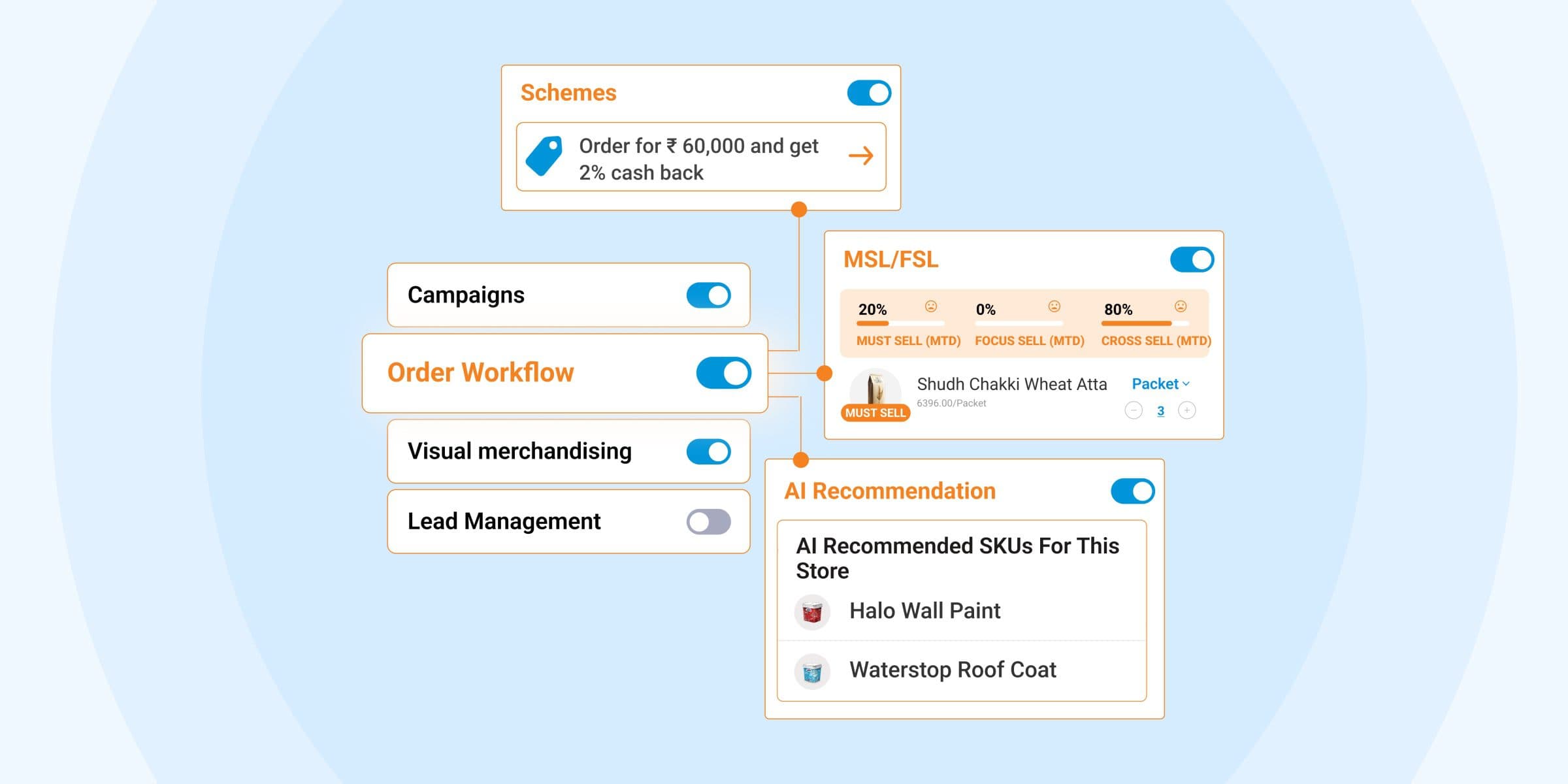
BeatRoute connects scheme design to field execution and secondary-sales verification in one platform. Trade marketing configures conditional scheme visibility, so a retailer only sees offers they qualify for. Reps carry eligibility, pitch assets, and claim status inside the order-taking app.
The Retailer App shows the store owner live slab progress, earned rewards, and claim status. That transparency removes disputes and gets retailers chasing the next slab instead of calling the rep to check the last one.
BeatRoute is a global platform tailored for African trade, with proof it works here, which is why brands like AAVA Brands and BUA Foods run on it. AAVA Brands in Nigeria recorded an 18 to 20% field productivity boost and a 25 to 30% rise in store sellouts after moving onto BeatRoute. Brands running the full platform report an average 12.6% first-year sales uplift.
Want to see how African brands tie every scheme to measurable sell-through? Get an instant demo and see your coverage gaps.
Frequently asked questions
What is a trade promotion in African retail distribution?
A trade promotion is channel incentive spend a brand offers its distributors, wholesalers, and retailers to move more stock. Common formats include volume slabs, combo deals, display incentives, and loyalty schemes. The goal is to win shelf space and keep retailers pushing your lines. It targets the channel, not the end shopper.
Why do most trade promotions fail to drive sell-through?
Schemes are too generic and miss the outlets that would respond. Reps cannot explain the offer cleanly because it lives in a disconnected document. Claims drag on for weeks, so retailers stop trusting the next promotion. Above all, brands see primary sell-in but cannot verify what reached the shelf.
How do you verify a trade promotion reached the shelf?
You read secondary sales, the movement from distributor into small outlets, not just redemption counts. Proof-of-visit and point-of-sale checks confirm the scheme was pitched and stocked. High redemption with no velocity lift means you funded a discount. A velocity jump in the following cycle means the scheme worked.
Why do trade promotion claims take so long to settle?
Manual claims move through paper forms, phone calls, and spreadsheet reconciliation, which commonly runs 8 to 12 weeks. Every delay erodes distributor and retailer trust. Automating eligibility and claim status collapses that cycle and removes the disputes that kill repeat participation in the next scheme.
How does scheme stock end up dumped across territory lines?
Open-air wholesale markets like Onitsha, Gikomba, and Kariakoo restock sub-wholesalers and van sellers daily. Stock flows across any territory line a brand draws. This is a structural feature of the channel, not a distributor failing. Visibility into where scheme stock actually sold lets you price and allocate to that reality.
How should trade promotion ROI be measured?
Not by redemption count alone. Tie each promotion to on-shelf visibility, sell-through at the counter, and offtake in the following cycle. A scheme with high redemption but no lift in secondary sales is just a discount. A scheme with moderate redemption but a clear velocity jump is working.
How do you target trade promotions when there is no outlet database?
Build the map first with an outlet census, or field KYC, since shops have no addresses to buy. Then target on concentration. A small share of outlets usually drives half of sales, so slab discounts go to high-volume stores and loyalty offers to the ones you want to grow.
Can reps run trade schemes without a reliable internet connection?
Yes, if the app is offline-first. Reps pitch eligible schemes, take orders, and log proof with zero signal, then the data syncs when they are back online. This matters because data is costly in much of Africa, and teams revert to paper the moment an app stalls without a connection.
What is SFA, and how does it relate to trade promotions?
SFA is sales force automation, the mobile system your reps use in the field. It carries scheme eligibility, pitch assets, and claim status to the counter. Paired with DMS, or distribution management, it reads secondary sales so you can prove a promotion moved product. It is not a CRM.
How do retailer apps help with trade promotion claims?
A retailer app shows live slab progress, earned rewards, and claim status directly to the store owner. That transparency removes disputes, reduces the load on finance teams, and motivates retailers to chase the next slab instead of calling the rep to check on their last reward.
Does BeatRoute work for both multinational and local African brands?
Yes. BeatRoute serves 200-plus enterprise brands across 20-plus countries and 2 million-plus retailers. It fits process-driven multinational subsidiaries and fast-moving local champions alike, with African customers such as AAVA Brands and BUA Foods already on the platform. It works with your existing SAP and Excel from day one.