

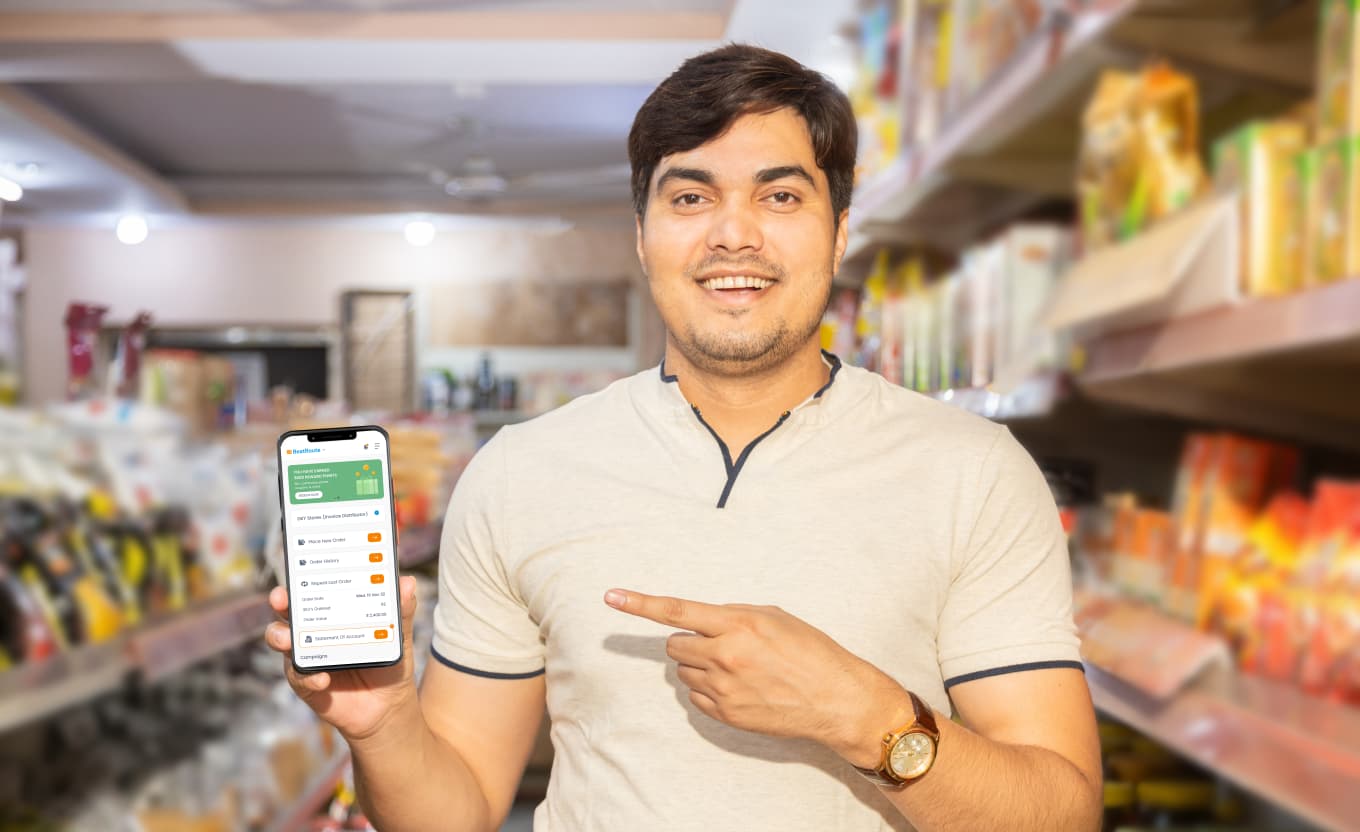
TL;DR General trade is where African FMCG volume is won, and roughly 90% of Nigerian retail runs through it. Growth stalls because brands go blind after dispatch, not because demand is missing. Seven moves fix that. Map the outlet universe. Sell the right basket. Land schemes and claims. Open WhatsApp ordering. Verify displays. Re-plan routes. And keep your reps.
Your volume does not come from supermarkets. It comes from kiosks in Lagos, dukas in Nairobi, and spaza shops in the townships. Yet most general trade growth plans are built on numbers that arrive weeks late, if at all. Here are seven ways to increase sales from the general trade channel in African markets, ordered the way an operator would run them.
What is the general trade channel in African FMCG?
General trade is the network of small independent outlets that sells most of what Africa buys, and it is growing faster than modern retail.
Traditional trade accounts for around 90% of retail in Nigeria. In Egypt, 117,500 traditional grocers sit against 4,120 modern outlets, and they carry about 74% of sales. General trade versus modern trade is not a close contest here.
South Africa is the one modern-trade-led market, and even there the spaza sector is worth R178bn. Traditional trade grew 9.1% year on year against 1.7% for modern. This channel is not a legacy problem to formalise away. It is the market.
Why does general trade growth stall for African brands?
Growth stalls because you can see primary sell-in to the distributor and almost nothing after that.
Five to seven middlemen sit between your factory and the shelf. Once the truck leaves the depot, what each outlet actually sold becomes a black box. Nigeria does not have a demand problem. It has a visibility problem.
Coverage without knowing where the volume sits makes it worse. In Lagos, a product stocked in 100,000 outlets can take half its sales from just 10,000 of them. If you cannot name that 10%, you are spending route cost evenly across outlets that are not equal.
1. Map and profile every outlet before you plan a single route
Start with an outlet census, because there is no reliable outlet database in most African markets and shops often have no address.
Around 60-70% of retailers do not deliver the sales a brand expects. That is usually an onboarding failure. Reps add outlets on instinct, and nobody records what kind of shop it is. You cannot route-plan what you have never mapped.
Field KYC fixes it. Capture location, store size, surrounding trade, categories carried, competitor presence, and shelf space for your category. Route-to-market planning only becomes real once that census exists, because segmentation then drives coverage, schemes, and manpower.
2. Put the right basket in every rep's hand before the visit
Order value rises fastest when the app tells the rep what this specific shop should buy today.
Roughly 60-70% of reps do not generate an optimum order on a visit. Training helps, but frontline churn of 25-35% a year keeps resetting your average experience level. A tool that carries the selling logic survives the churn better than a person who leaves.
BeatRoute's Order AI Agent reads past orders, seasonal patterns, and neighbourhood buying patterns to suggest the basket for each outlet. It adds cross-sell and upsell prompts inside the order-taking app. BeatRoute reports a 4-6% sales uplift from the Order AI Agent alone.
3. Make every scheme reach the retailer, and every claim settle fast
A scheme the rep forgets to apply is spend that never reaches the shelf, and a claim that takes ten weeks costs you the distributor's goodwill.
Manual distributor claims routinely take 8 to 12 weeks in African markets. Meanwhile the naira fell 40.9% in 2024, and eight major Nigerian consumer-goods firms saw costs jump 67% in a year. Slow claims under that pressure are a working-capital problem, not paperwork.
Build scheme logic into order capture so the right volume, range, or loyalty scheme surfaces automatically. Log the same transactions digitally and claims stop being an argument about paper. Faster settlement is the single best reason a distributor accepts a new tool at all.
4. Let general trade retailers order on WhatsApp
Open a self-ordering channel on WhatsApp, where 95% or more of your retailers already are.
A physical visit to every provision store and tabletop seller is not financially viable. Low-value outlets get dropped, then quietly buy from a competitor's van. Digital ordering extends coverage without adding headcount or a rep salary.
BeatRoute supports self-ordering through a retailer app and through WhatsApp, Viber, and Messenger bots. The TeleOrder AI Agent can place orders on the rep's behalf as a store hits its replenishment cycle. Retailers stay in the app they already trust.
5. Verify display execution with photo evidence, not promises
Pay for displays only where you can see the display, because unverified merchandising spend disappears in a fragmented channel.
Sachetisation makes this harder every year. Inflation has pushed even bleach and dish soap into sachets, and fighter brands add SKUs. More facings to check means more shelf photos, and more blurry photos sitting unread in WhatsApp groups.
Use your segmentation to decide which shops get which campaign. A promoter app collects the evidence at the point of sale. AI-driven planograms and share-of-shelf scoring, plus the VM Audit AI Agent, check the images so execution is verified outlet by outlet.
6. Re-plan routes for what a kilometre now costs
Route optimisation pays back far faster than it did two years ago, because African transport costs run about eight times the world average.
Nigeria's fuel-subsidy removal roughly tripled transport costs. Every wasted kilometre now shows up in the territory's margin. Manual beat plans, still drawn from memory in most teams, cannot price that trade-off.
A journey plan, also called a beat plan or call cycle, should follow outlet potential and travel time together. Route optimisation cuts travel time between stores and raises face time with retailers. More face time in the right shops is what lifts strike rate.
7. Keep the reps who know your outlets
Every rep who leaves walks out with undocumented relationships in shops you may never fully recover.
About 70% of Sub-Saharan Africa is under 30, and your frontline is young and phone-native. They leave over unclear targets, disputed payouts, and admin. Gamification works here because it makes performance and reward visible daily.
Run an auto-updating leaderboard on input and output KPIs, then award medals by rank. Time-stamped, geo-verified visits belong in the same frame: they protect the rep from a disputed incentive payout. Use the KPI gaps to assign short digital training without pulling anyone off the field.
How does BeatRoute drive general trade execution in Africa?
BeatRoute breaks organisation-level sales goals into individual rep targets, then runs visit planning, order capture, schemes, and merchandising through one platform.
BeatRoute is the sales force automation and distributor management (DMS) platform for field sales, never a CRM. DMS means distribution management: distributor stock, secondary sales, and claims in one picture. It is a global platform tailored for African trade, which is why AAVA Brands and BUA Foods run on it.
AAVA Brands in Nigeria reported an 18-20% field productivity gain and a 25-30% rise in store sellouts. Brands running every lever on one platform see a 12.6% average first-year sales uplift (BeatRoute research). Goal-Driven AI ties the seven moves above into one target.
Does it work where there is no signal?
It works with zero signal and syncs when you are back online. None of it counts if the app dies without signal. Data costs about 2.4% of monthly income per GB in Sub-Saharan Africa, so reps ration connection. Capture visits and orders offline on a low-end Android, then sync when you are back online.
The move that makes the other seven work
Equip the distribution network you already have instead of trying to replace it.
The B2B e-commerce wave raised over 400 million dollars to digitise African trade by owning trucks and warehouses, then collapsed on thin margins. Tolaram took the opposite route and built Indomie on 1,000 distributors, 25,000 wholesalers, and 600,000 retailers. Distribution was the moat.
Your seven levers only compound if your distributors and reps stay inside the system rather than working around it. Get an instant demo and see what each outlet actually sold last week.
Frequently asked questions
What is the general trade channel in FMCG?
General trade, also called traditional trade, is the network of small independently owned shops that serve a neighbourhood. In Africa that means kiosks, provision stores, dukas, spaza shops, and bakkals. Traditional trade carries around 90% of retail in Nigeria.
How can African FMCG brands increase sales from general trade?
Start by mapping and profiling the outlet universe, then cover by outlet potential rather than by count. After that, fix the basket per visit, land schemes and claims, open WhatsApp ordering, verify displays, optimise routes, and retain reps. Visibility of secondary sales underpins all of it.
Why do African brands lose visibility of general trade sales?
Because five to seven middlemen sit between the factory and the shelf. Brands record primary sell-in to the distributor, then see nothing until stock resurfaces. A distributor management system closes that gap by tracking distributor stock and secondary sales.
How do you plan routes when shops have no addresses?
You run an outlet census first, capturing GPS location and store profile through field KYC. Only then can journey plans be built on real geography. This is step zero of any route-to-market programme in African markets.
Which outlets should a general trade coverage plan prioritise?
Prioritise by concentration, not by count. In Lagos, a product stocked in 100,000 outlets can draw half its sales from 10,000 of them. Segmentation data from onboarding tells you which outlets those are.
Can retailers place orders without a rep visit?
Yes. Retailers can self-order through a retailer app or through WhatsApp, Viber, and Messenger bots. BeatRoute's TeleOrder AI Agent can also place an order on the rep's behalf as a store reaches its replenishment cycle. This extends coverage to outlets that do not justify a physical visit.
How long should distributor claims take to settle?
Manual claims commonly take 8 to 12 weeks in African markets, which is a working-capital cost for the distributor. Logging sales and schemes digitally removes the paper dispute that causes most of the delay. Faster settlement is a major reason distributors accept a new tool.
Does general trade software work without mobile signal?
Good field software is offline-first. Reps capture visits and orders with zero signal, and the app syncs when connection returns. This matters because data costs around 2.4% of monthly income per GB in Sub-Saharan Africa, so teams ration connection.
Will reps see visit tracking as surveillance?
They will if you frame it as control. Framed correctly, time-stamped and geo-verified visits protect the rep, because an incentive payout backed by verified data cannot be disputed. Pair it with a transparent leaderboard so targets and rewards are visible daily.
How do you stop trade scheme spend from leaking?
Embed scheme logic in the order capture screen so the correct scheme appears automatically at the moment of the order. That removes the two common failures, which are reps forgetting a scheme and reps explaining it wrongly. The spend then reaches the retailer it was designed for.
Is BeatRoute a CRM?
No. BeatRoute is a sales force automation and distributor management (DMS) platform for field sales and distribution. A CRM manages office pipeline. BeatRoute runs in-outlet execution: journey planning, order capture, visit verification, retailer engagement, schemes, and analytics.
Which African brands use BeatRoute?
African customers include AAVA Brands and BUA Foods in Nigeria. AAVA Brands reported an 18-20% field productivity gain and a 25-30% rise in store sellouts. Across all markets BeatRoute serves 200+ brands in 20+ countries, reaching 2M+ retailers and 100K+ users.