 Soham Chakraborty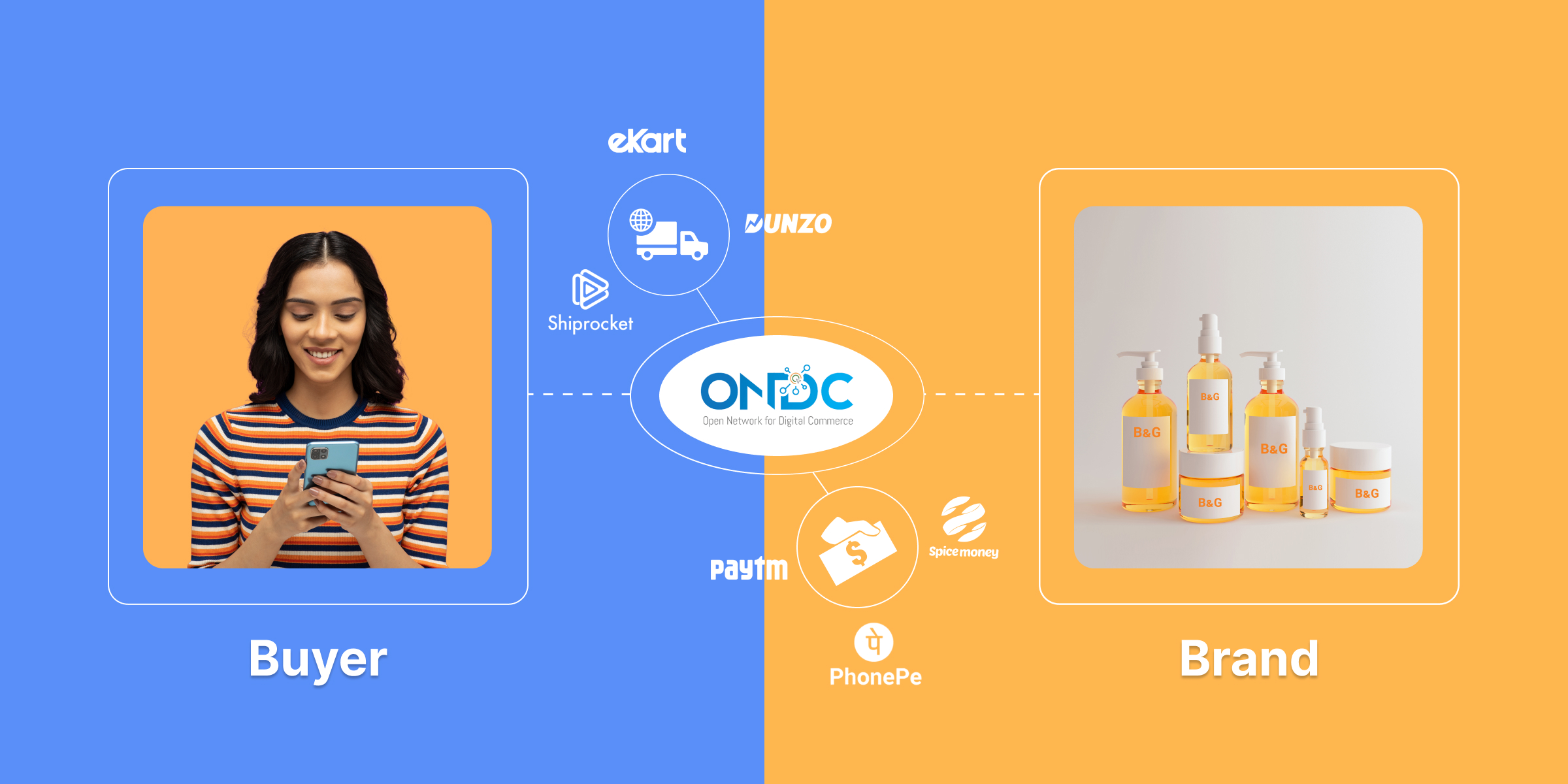
D2C is becoming the future of commerce, especially in Tier I and II cities.
Harshil Mathur (Razorpay)
ONDC gives CPG brands a second D2C channel that sits alongside their own website: one that reaches consumers across India without Amazon or Flipkart taking a cut. The brands that win this opportunity are the ones that connect ONDC order flow back to their existing distributors and retailers, and BeatRoute’s Goal-Driven AI platform is built to ensure execution across exactly that handoff.
D2C or direct to consumer is a trade model where the brand or manufacturer carries out commerce through their website or online store. As a brand, you enjoy more end-to-end control over aspects such as marketing and selling. Traditional retail is highly dependent on distributors, wholesalers and retailers, but the D2C model gives increased power to the brand.
Key takeaways
- ONDC gives CPG brands a D2C channel that bypasses Amazon and Flipkart commissions.
- Fulfillment can run through warehouse, distributor, or retailer, and the brand chooses.
- ONDC lowers customer-acquisition cost for smaller brands and opens tier-3 and tier-4 markets.
- BeatRoute’s Goal-Driven AI platform connects ONDC order flow to existing distributor and retailer networks.
- Early adopters gain first-mover advantage before the rest of the category catches up.
The various advantages that D2C offers are:
- More power over brand image
Outside D2C, business models make the brands highly dependent on distributors and retailers to take their product to the consumer. This puts brands at a disadvantage when it comes to understanding what works and what doesn’t, hampering marketing efforts. D2C connects product owners and consumers for more transparency and can do away with everything in between.
- More room for innovation
Retailers aren’t loyal to a specific brand and may not push products to consumers, especially if it’s a new brand. This can lead to slow sales, even compelling brands to mould their products according to perceived expectations. D2C eliminates this dependency, enabling a brand to release a product on a limited scale to gauge consumer reactions and initial sales, opening the door to innovation.
- A much better margin
In B2C, products reach the end-customer via a distribution network and retailers. Retailers buy from brands at a discount or special offers, and sell the same products at a higher rate. Eliminating retailers from the equation means brands can sell their products at retail price, positively boosting their bottom line.
- Loyalty from better relationships
Unfiltered knowledge about what consumers are going for allows D2C brands to develop targeted marketing strategies for more sales and retention. With greater autonomy, brands are able to better align with consumer expectations, leading to faster marketing decisions and trustworthiness. Trust leads to loyalty and brand growth.
Today, India has over 800 home-grown D2C brands and saw tremendous growth during and after the pandemic, owing to a boost in internet usage and necessity. This has resulted in high revenue for many D2C startups, with some even becoming unicorns in their sectors.
At the same time, existing CPG brands are also exploring D2C model to reach customers directly. With India’s median age somewhere around 28 years and with more and more millennials and Gen Z shoppers preferring D2C, the D2C market is predicted to grow exponentially in the coming years.
What is ONDC?
Infrastructure, financial, and a host of other challenges have impeded many businesses from embracing digital commerce. This is in spite of the ever-growing use of smart devices and the internet, forcing brands to depend on aggregators like Amazon and Flipkart to sell their products.
With ONDC, the Indian government is planning to change this status quo and empower sellers with more control.
The Open Network for Digital Commerce (ONDC) was created to enable any seller to partake in e-commerce. E-commerce behemoths such as Amazon would no longer monopolise the market, resulting in a shift from the present platform-centric scenario to an open network. This means brands would get more visibility and consumer awareness without relying on platforms.
As nobody is excluded from the network, ONDC would lead to more options for consumers when making purchases. From the smallest enterprises to the largest corporations, anyone can be a part of the network. This epoch heralds the shift from operator-controlled platforms to seller-driven decentralisation. For CPG brands already running BeatRoute’s SFA Software and DMS, ONDC orders flow into the same platform as traditional-trade orders, so HQ sees one pipeline regardless of channel.
How ONDC Ties in With D2C
CPG brands selling through or considering the D2C channel will find ONDC as an extremely potent distribution lever. The idea is to allow all businesses, irrespective of size and scale, to access consumers from anywhere. CPG brands now have the ability to reach markets previously unavailable to them and can try and make their products known across the country.
CPG brands that want to utilise ONDC to sell their products need to do the following:
- Create an account on a marketplace connected to ONDC and add GST and payment details.
- Upload product catalogues.
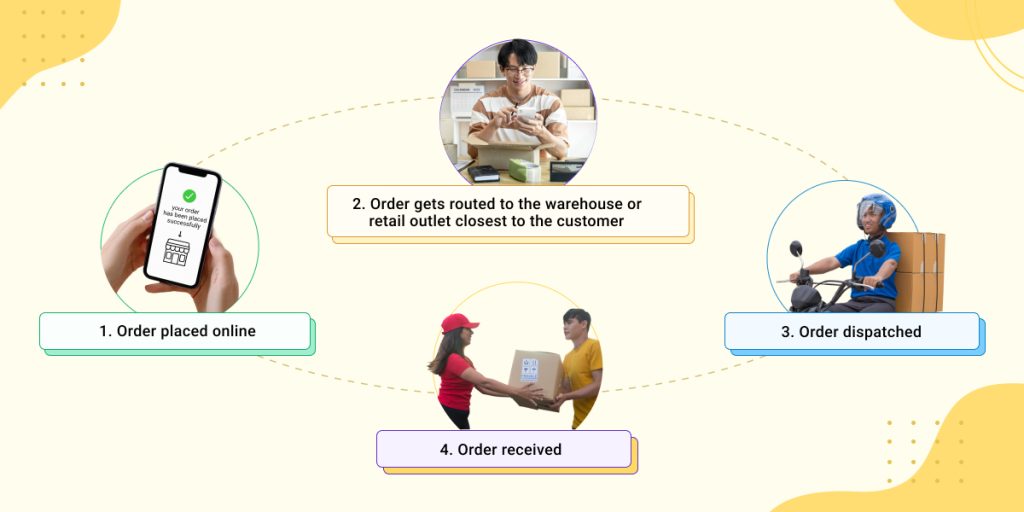
- Brands choose their fulfillment model: company warehouse, distributor, or retailer. Running the decision through BeatRoute’s DMS routes each ONDC order to the nearest serviceable node based on stock and territory rules, and BeatRoute’s Order AI Agent recommends whether to fulfill from a high-volume distributor or push the order to a nearby retailer for faster last-mile.
- During order placement, customers choose from a wide range of shipping partners for delivery.
- Receive payments as per predetermined payment method.
Brands must fill out the Network Participant profile form to document their SPOC details and seller business model for ONDC.
ONDC also holds onboarding calls regularly to clarify technical and business matters. This is done to assist potential joiners to understand ONDC operations and how it aligns with brands and sellers.
According to ondc.org, business onboarding calls happen every Tuesday while technical onboarding calls occur every alternate Friday.
Benefits of ONDC For D2C Brands
Developing and then scaling a business from the ground up is a tedious process. For D2C brands, it requires knowledge of their market and a lot of strategizing to acquire and retain consumers. This is where ONDC puts brands at an advantage with its principles and model.
As a brand, you will be able to enjoy the following benefits with ONDC:
- More consumers are exposed to your brand
Putting your brand on ONDC makes your products accessible to consumers from all over India. There is no pressure to establish your brand with tons of marketing before you can expect visibility or good sales. This means you can enjoy a low customer acquisition cost and building your brand depends on having a worthwhile product.
- No more marketplace monopoly
Buyers have become conditioned with time and practice to depend on e-commerce giants like Amazon and Flipkart to purchase their favourite products. Selling on these aggregator sites does give brands access to a wide customer base at present, but they have to lose a significant percentage of their profits in the process. There is also the need to be present on multiple aggregators to reach the maximum consumers possible.
ONDC allows D2C brands to do away with these issues on monopolistic platforms. Once sellers register on an ONDC-enabled application, they break free from the limitations of monopolistic marketplaces. Once products are uploaded, consumers can easily find brands on buyer apps.
The seller app may have a plethora of useful features for brands such as payment options, logistics, and even GST-adhering invoices. There may be a small fee or commission to be paid by brands for orders via ONDC but it’s negligible compared to what they pay on monopolistic platforms.
- Faster product launches
The more you delay your product from being up for sale, the more you lose out on revenue. ONDC enables fast go-to-market for D2C companies through a simple but efficient onboarding process on ONDC-approved seller apps. Top apps may offer end-to-end solutions like email, messaging, and payment gateways to make product launch and fulfilment seamless.
- Embracing new frontiers
Although India’s digital commerce has spread to all metropolitan cities, there is untapped potential in smaller towns and cities; a consumer pool yet to be fully explored. One of the issues that acts as a major roadblock to establishing brand presence in such areas is the limited availability of technology.
For perspective, not everyone has a laptop, especially in small towns and tier 3 or tier 4 cities. But they do have mobile phones and that’s where the focus for ecommerce should be. The flipside is that to access these remote markets, brands need high-end, up-to-date solutions.
This is an exhaustive and time consuming effort that D2C companies can bypass by registering on an ONDC-approved marketplace. Some seller apps also offer mobile interfaces to monitor and manage products on the move. Brands already running BeatRoute’s Customer App on the distributor side can mirror ONDC retailer orders into the same workflow, so tier-3 and tier-4 retailers do not need a separate app to participate in the brand’s ONDC network.
- Trying different things
For a business just starting out or even for an established brand, a brand new product is a gamble of sorts. There is no absolute guarantee that a product will meet every expectation out there; this makes it necessary to release small batches initially to gauge customer demand and take the next decision accordingly. Deciding on a winning combination of product and market can be a major challenge and is subject to a lot of A/B testing and research. An extremely arduous task for any business.
ONDC, with its goal of empowering SMBs, Brands and little known enterprises, makes the above process significantly easier with ready access to pan-India markets with a simple registration.
To put it simply, D2C brands are able to make unique and diverse product decisions and sell in a range of markets from big cities to small towns. The wealth of data received in return in the form of feedback, suggestions, and sales is immensely helpful to brands in creating a more customer-aligned product that will potentially sell more.
Looking Ahead
The coming years will be an equal opportunity market for all, giving buyers access to products they had no way of getting in the pre-ONDC e-commerce scenario. To put it in perspective, at the time this was written, e-commerce penetration was projected to rise from 8% to 25% via ONDC within two years.
Despite its great potential to change the face of digital commerce in India and even beyond, there are, of course, roadblocks such as the sheer challenge of onboarding millions of local or “Kirana” stores. The adoption campaign would have to be hyper-massive and yet, meticulous. Additionally, the already established consumer base of e-commerce platforms might be hesitant to move away from their habit of purchasing in a platform-centric scenario.
ONDC is envisioned to add more competition to the market by levelling the playing field for both new players and well-known brands. India is the perfect laboratory for this kind of experiment, owing to its geographical variety and the number of retail enterprises and local businesses vying for market share. The eyes of the world will be on India for an initial glimpse of what an open market for retail would look like.
Early-adopter brands stand to gain the most as ONDC scales. The open challenges are straightforward: decide a fulfillment model, differentiate the brand, and plug ONDC order flow into existing sales and distribution systems. BeatRoute Copilot lets sales leaders see ONDC, distributor, and retailer performance through a single natural-language interface, so the three channels run as one operation rather than three disconnected ones.
Frequently Asked Questions
How is selling on ONDC different from selling on Amazon or Flipkart?
Amazon and Flipkart are closed platforms, so a brand’s products are only visible to users of that platform, and the platform takes a commission on every sale. ONDC is an open protocol: products listed with any seller app are discoverable on any buyer app, logistics is chosen per-order, and fees are a fraction of closed-platform commissions. Brands retain more margin and more customer data.
Can ONDC orders be fulfilled by my existing distributors and retailers?
Yes, and for most CPG brands this is the preferred model. ONDC orders route to the brand; the brand then assigns fulfillment to a company warehouse, a distributor, or a local retailer based on proximity and stock. BeatRoute’s DMS automates this routing so ONDC orders land at the right node without manual intervention.
What does BeatRoute add to an ONDC go-to-market?
BeatRoute’s Goal-Driven AI platform ties ONDC demand to offline execution. The SFA Software and DMS keep distributors and retailers stocked for ONDC demand, the Order AI Agent recommends product mix at each account, and BeatRoute Copilot gives sales leaders one view across ONDC and traditional trade, so the three channels run as one operation.
Is ONDC only for small brands or also for established CPG companies?
Both. Small brands use ONDC to reach consumers they could not afford to reach through marketing spend, and established CPG companies use ONDC as a second D2C channel that does not cannibalize traditional trade. The economics of lower commissions, full customer data, and national reach apply to any brand with a product consumers search for online.
Want to learn more on what ONDC could mean for your CPG brand? Read our blog: “What is ONDC and Why It is Important for Consumer Goods Companies.”