
TL;DR This guide is for building materials, auto aftermarket, and consumer brands running influencer management programmes through painters, mechanics, contractors, and similar trade influencers. It covers why most brand influencer programmes stall on rewards and reach, and how to build a loyal influencer community with digital engagement via WhatsApp, transparent loyalty, paired onboarding, and field team collaboration through BeatRoute’s Retailer & Influencer App.
When you repaint a room or fix a car, a painter or mechanic usually tells you which brand to buy. That person is the influencer, and for paint, cement, auto parts, and interiors brands, the influencer management channel decides more sales than end-consumer advertising does. This article lays out why most brand influencer programmes stall on rewards and reach, and how to build a loyal influencer community with digital engagement, transparent loyalty, and field team collaboration.
BeatRoute helps brands execute influencer management through the Retailer & Influencer App, blending order capture with loyalty and team selling.
Problems in managing the influencer channel
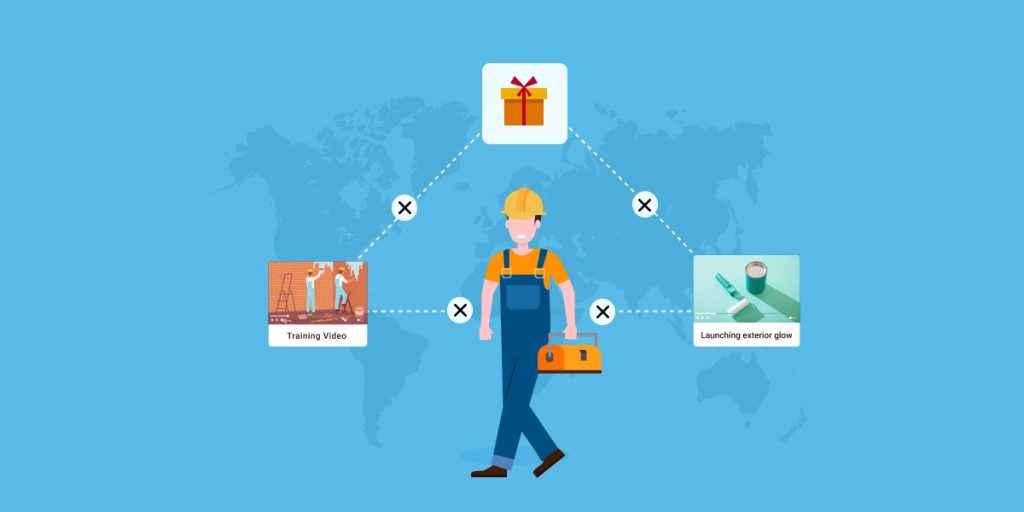
- Missed engagement opportunities: Influencer connections through physical visits alone leave gaps. High engagement facilitates brand connection and continuous information flow about products and the loyalty programme. Brands can fill this by engaging with influencers through digital modes, sharing product videos, success stories, and training material.
- Delayed response to new launches: Most new launches see low reception in the distribution network. If the influencer channel is used to pass on product knowledge, USPs, and use cases to consumers, brands have a higher chance of building initial enthusiasm before the product hits the supply chain.
- Dissatisfaction with gift delivery programmes: Low adoption of reward programmes stems from broken experiences, from onboarding to associating influencers with particular retailers or dealers. There remains ambiguity in tertiary offtake tracking, loyalty redemption requires physical coupons, and physical gift delivery is unreliable.
- Sub-optimal demand generation: Because sales teams cannot engage with influencers in a targeted way, brands see sub-optimal demand generation from this channel. Companies cannot drive brand stickiness among influencers without driving their field sales team toward it.
How does BeatRoute solve influencer engagement?
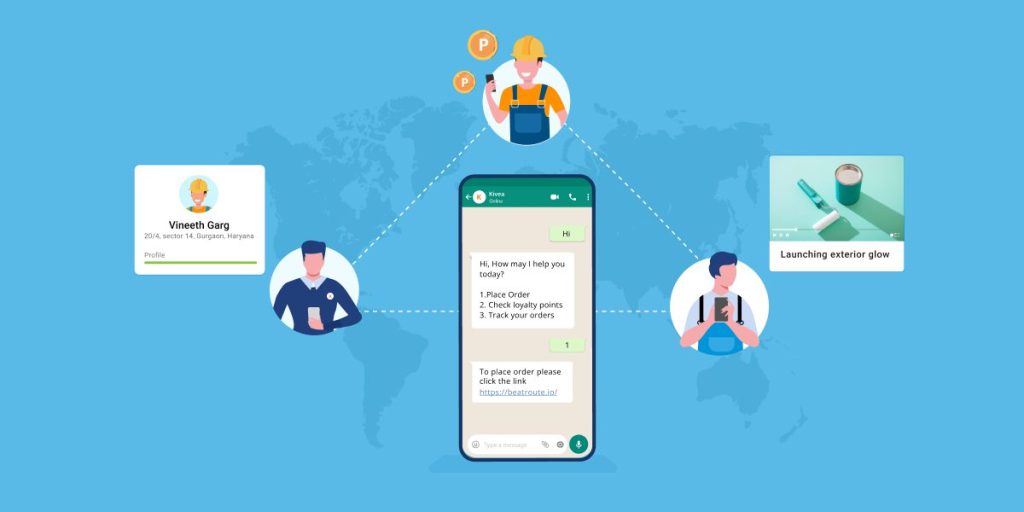
- Influencer paired onboarding: The sales team manages influencer onboarding stages, creates profiles with configurable fields, and tracks profile completion. Influencers can be associated with one or multiple outlets to track the demand they generate. These influencers are added to the beat plan and visit schedule of the sales team.
- Digital engagement with influencers: Brands ensure standardised continuous communication by sharing product videos, training videos, and success story content on the familiar WhatsApp interface. This ensures qualitative engagement rather than focusing only on transactional benefits.
- Linking sales to influencers and ensuring authenticity: For project sales, BeatRoute’s workflow adds the influencer from whom the lead came. For retail sales, coupon scanning is embedded with the Retailer & Influencer App which uses a WhatsApp bot as the user interface, giving the influencer complete visibility of total points collected and their performance. This transparency ensures the authenticity of the loyalty reward being passed on.
- Community meet planning: The sales team plans community meets and gets budgets approved with an approval workflow. The workflow gives brand visibility on event execution, influencer feedback, attendance, and other details captured using configurable forms. This provides an integrated view of physical and digital engagement history at an individual influencer level.
- Reward points calculation in scheme engine: BeatRoute comes with a versatile scheme engine to set up complex rules easily based on value and volume. It accommodates both in-bill and cumulative purchase schemes. Reward rules incentivise sales performance as well as brand engagement.
- Integrated loyalty programme: BeatRoute is integrated with a global catalogue for e-voucher redemption, giving a complete closed-loop experience to influencers. Getting physical gifts delivered through a third party creates issues in quality, delivery timelines, and returns. It is better to leave that experience to e-commerce players such as Amazon and Flipkart who deliver customer experience at scale.
BeatRoute vs standalone influencer apps
Another option companies consider is building their own influencer app. Here is how that compares to BeatRoute’s approach:
- Engagement: Brand-specific apps see frequent uninstalls and low open rates on communication. BeatRoute has a near 100% open rate on nudge messages because it uses the WhatsApp bot as the main interface. There is no problem of constantly wavering adoption levels.
- Delivery: No redemption experience issues with e-commerce delivery and direct money transfer, establishing trust and credibility with the brand.
- Reward point strategies: An integrated scheme engine provides quick-to-change benefit rules and targeting based on customer or influencer segmentation.
- Total cost: In-house development typically costs around 50% more than a ready plug-and-play workflow built around addressing core problems faced by the value chain.
Deployment options
- As a standalone component: Deploy the BeatRoute WhatsApp channel on influencers or retailers as a standalone component by integrating it with your existing data management software. BeatRoute Matrix enables 300+ enterprise system connections as a low-code integration middleware.
- With BeatRoute’s SFA application: If you are looking for a complete solution around your field force or already working with BeatRoute’s other solutions, this can be deployed as an additional solution layer.
- With existing loyalty application: If you are already using an in-house or third-party app for managing loyalty programmes, the BeatRoute WhatsApp channel can be deployed on a select group of customers to run specific campaigns alongside your existing loyalty application.
Book a free demo to see influencer management work in real life across your field teams.
Frequently asked questions
Why do brand-specific influencer apps fail?
Painters, masons, and mechanics uninstall single-purpose apps fast because they rarely open them. Push messages go unread and redemption breaks. Running engagement through WhatsApp instead puts the brand where the influencer already is, which is why nudge open rates approach 100% and retention stops being a fight.
How should brands handle reward redemption for influencers?
Skip physical gift programmes. Quality issues, delivery delays, and returns erode trust fast. Integrate with established e-voucher catalogues like Amazon or Flipkart so influencers redeem points for products they actually want with reliable delivery. You focus on sales; the e-commerce player handles fulfilment.
How is authenticity of influencer-driven sales verified?
Pair each influencer with one or more retail outlets during onboarding. For project sales, tag the influencer who sourced the lead. For retail sales, use coupon scanning embedded in a WhatsApp bot so each tracked purchase earns points tied to a specific influencer. The trail stays auditable end to end.
How does BeatRoute compare to building an in-house influencer programme?
In-house development typically costs around 50% more than a ready workflow built for influencer engagement. You also inherit ongoing maintenance, scheme-engine rebuilds, and the adoption problems that come with a branded app. A plug-and-play platform focused on the problem ships faster and adapts to rule changes quicker.
Can BeatRoute run alongside an existing loyalty app?
Yes. Deploy the BeatRoute WhatsApp channel on a subset of influencers for targeted campaigns while your existing loyalty app keeps running. Or use it as a standalone component integrated with your data management stack. BeatRoute Matrix enables 300+ enterprise system connections as a low-code integration middleware.
