
Nikhil Chaudhary
VP of Marketing, BeatRoute
Nikhil Chaudhary leads marketing at BeatRoute and hosts The BeatRoute Podcast, where he talks route-to-market with distribution leaders at consumer brands across emerging markets.
Read full profileFMCG distribution software is the system a consumer goods brand and its distributors use to run the whole trade. It covers distributor billing and tax-ready invoices, stock with batch and expiry, secondary sales from every duka and kiosk, schemes, claims and credit. In Nigeria and Kenya, where most volume moves through open markets, it shows what sells past the depot.
Trusted by 200+ enterprise brands across 20+ countries








Accounting tools record the invoice to the distributor. The trade in Lagos and Nairobi happens after that, in open markets and dukas. FMCG distribution software is built to see and run that part.
| What you need | Accounting / ERP software | FMCG distribution software |
|---|---|---|
| Secondary sales visibility | Sees only the primary sale into the distributor | Reads true secondary sales from every duka, kiosk and van |
| Billing and invoices | General ledger invoices | Distributor billing with tax-ready invoices per market |
| Inventory | A stock value, with no view of the market | Stock with batch, expiry and norms per distributor |
| Schemes and claims | Spreadsheets and month-end reconciliation | Schemes in the bill, claims validated against invoices |
| Credit control | Outstanding reported once it is already late | Credit checked at order time, overdue caught early |
| Ordering | Back-office data entry | Van sales, rep order booking and WhatsApp ordering, even offline |
From a stockist in Lagos to a duka in Nairobi, three jobs run daily on one platform you share with your distributors.
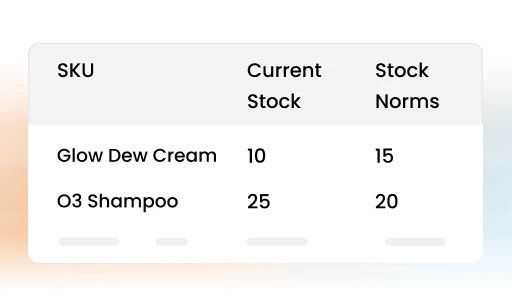
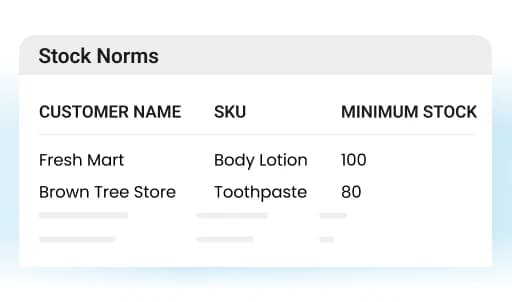
Open-market trade peaks on market day, and a stockist that runs dry the day before loses the week. BeatRoute sets stock norms per SKU, flags lines falling short and suggests the primary order while a truck can still get there.
In this stage
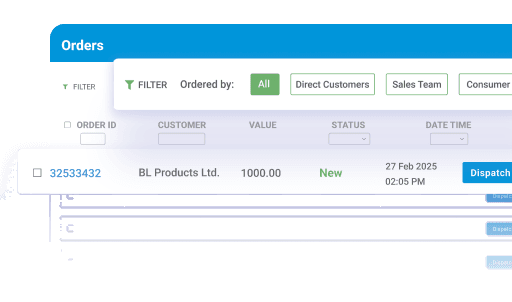
Van sellers invoice at the outlet, reps book orders on their route, and duka owners order over WhatsApp. Every order picks up the stockist's price, the running scheme and the country's tax format, and dispatch is raised without a call to the depot.
In this stage
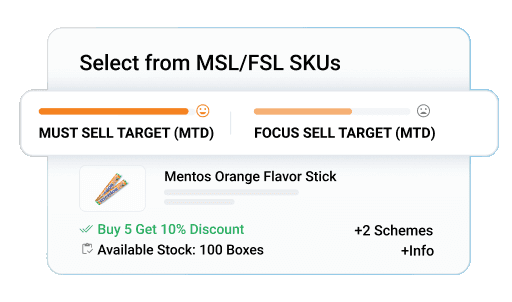
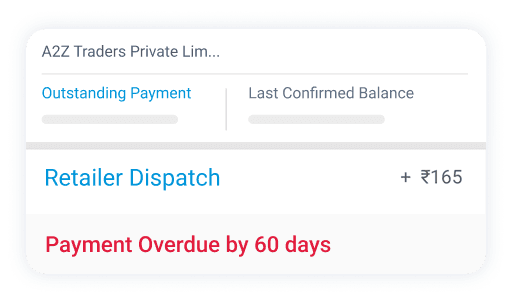
When most outlets pay in cash or mobile money, credit drifts fast. BeatRoute logs each return against its invoice and checks scheme claims against the bills that earned them. It holds an order once a stockist hits its limit, so month-end isn't a dispute with the trade.
In this stage
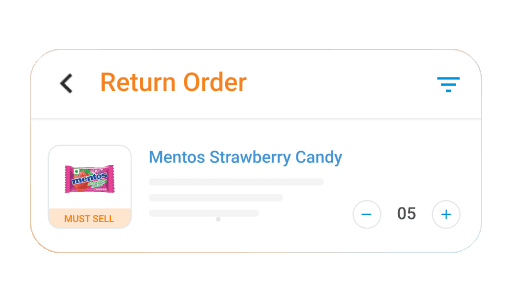
Run billing, stock, claims and secondary sales with your stockists on one platform and you see sell-out in each market. Both figures come from AAVA Brands' published case study in Nigeria; open a card for the detail.







“BeatRoute has helped to bring discipline to the sales team, as well as increase efficiency and productivity.”
“It has empowered our field teams, simplified operations, and brought clarity to every level of sales execution.”
“Since we started using it, we’ve seen a clear improvement in how our sales team performs on the ground.”
“BeatRoute has made it easier for us to track our team, see progress, and improve how we work in the field.”
Stockists and distributors from Lagos to Nairobi bill, hold stock and collect in BeatRoute. SAP, Sage or NetSuite stays the book of record in each country, and secondary sales reach finance per market, not as a month-end export.

Distributor invoices into SAP, Sage or NetSuite
Stockist and distributor invoices, stock and outstanding sync both ways, so each country closes its books on what its distributors billed.
Invoices in each country's format
Distributors in Nigeria, Kenya or Ghana bill in the format their own tax rules require, from one platform and without re-keying.
Mobile money, bank and cash collections
Payments from dukas, kiosks and provision stores post to the invoice they clear, and the stockist's credit updates before the next order.
FMCG distribution software is the system a consumer goods brand uses to run its trade after goods leave the depot. It bills distributors and stockists, tracks stock by batch and expiry, applies schemes, enforces credit and takes orders from reps, van sellers and retailers. In Nigeria and Kenya, it shows what sells in open markets, dukas and kiosks, beyond the stockist.
Because you invoice the stockist, and everything after that happens in cash, in open markets and over WhatsApp. Stock sits with one stockist while another runs dry. Schemes are passed on unevenly, and credit stretches unseen until month-end. Distribution software records each step as it happens, so you can act on a Lagos stockout the same week.
Judge it on the conditions your teams work in:
Our fmcg distributor management system guide covers the rest.
Yes. BeatRoute bills distributors in each African market in that country's required invoice format, all from one platform. A brand selling in Nigeria and Kenya doesn't need a separate billing tool per country. Masters come from your ERP, which keeps tax treatment consistent, and invoices flow back to finance without re-keying.
Yes. BeatRoute is used by brands across African markets and works even where the network drops. Reps and van sellers book orders, count stock and log returns all day with no signal, and the phone syncs when coverage returns. Duka and kiosk owners can also order over WhatsApp, and those orders arrive priced and assigned to the right distributor.
Yes. BeatRoute's van sales module covers load-out at the depot, invoicing and collection at each outlet, and settlement when the van returns. Stock on the van, cash collected and invoices always reconcile. It suits open markets that a pre-sales visit plus a delivery truck reach too slowly. See van sales automation.
AAVA Brands, BUA Foods, Apple & Pears and Scanfrost in Nigeria and Mapple Distilleries in Ethiopia are among the brands that run their sales operations on BeatRoute. AAVA Brands' published case study reports 25–30% growth in store-level sellouts across Nigeria after moving its SFA and DMS onto BeatRoute. Read the AAVA Brands case study.
BeatRoute checks each order against the stockist's credit limit and overdue balance before it ships. Payments by mobile money, bank transfer, cash or cheque post to the exact invoice they clear, and available credit updates straight away. Finance in Lagos or Nairobi sees overdue balances by distributor without waiting for statements.
Most teams go live in about 21 days. Start with one country, such as your Lagos distributors, and confirm that billing, stock and secondary sales data flow cleanly. Then add Kenya or Ghana in waves. BeatRoute is configured to each market's distributor hierarchy, price lists and schemes, so distributors keep trading the way they do.
Updated
VP of Marketing, BeatRoute
Nikhil Chaudhary leads marketing at BeatRoute and hosts The BeatRoute Podcast, where he talks route-to-market with distribution leaders at consumer brands across emerging markets.
Read full profile
Content Strategist, BeatRoute
Kanika Agrawal shapes BeatRoute's content from the deployment stories of 200+ brands and writes about field execution and channel strategy for FMCG sales and distribution teams.
Read full profile