

POSM stands for Point of Sale Materials. Point of sale materials are the branded displays and signs a brand places in and on an outlet, such as painted shop walls, branded umbrellas, danglers, shelf strips, standees and posters, to catch the shopper’s eye where the purchase decision happens and lift sales of the promoted products. You will also see them called POS material or point of purchase (POP) material.
TL;DR Point of sale material (POSM) is any branded asset placed inside an outlet to win the shopper at the shelf. Posters, wobblers, branded umbrellas, painted walls, cooler branding. In African trade, most POSM never reaches the outlet it was printed for, because after dispatch it enters the same black box as your stock. BeatRoute’s VM Audit AI Agent scores POSM from shelf photos, so you see what actually landed, outlet by outlet.
You sign off a budget for 5,000 branded umbrellas, wall posters, and cooler wraps. Three months later you drive past a row of kiosks wearing a competitor’s paint. Somewhere between your depot and that wall, your material vanished. This guide defines POSM correctly, then shows how to make sure the material you ship actually shows up in African trade.
The global POSM playbook assumes a modern shelf with a planogram. Most African retail does not work that way. So the formats that win here, and the reasons they go missing, are different. We define the term, map the formats to real outlet types, and show how to verify deployment where the trade is informal and fragmented.
What is point of sale material (POSM)?
Point of sale material (POSM) is any branded or promotional asset placed inside the retail outlet to catch shopper attention and influence a purchase at the shelf. It turns national brand messaging into a decision made in the last two meters.
Common formats include posters, standees, shelf talkers, wobblers, danglers, counter displays, branded umbrellas, and cooler branding. Each sits where the buying decision happens. The job is simple: be seen at the moment the shopper chooses.
POSM is a subset of visual merchandising, not the whole of it. Visual merchandising also covers shelf layout, share of shelf, and planogram compliance. POSM is the branded material placed within that system.
What does POSM look like in African trade?
In African trade, POSM lives mostly in general trade, not on modern shelves. It takes the form of painted walls, branded umbrellas, coolers, and whole branded kiosks. The corner shop is the medium.
Whether your product sells through open markets in Lagos, dukas in Nairobi, or spaza shops in Soweto, most outlets have little shelf and no planogram. Traditional trade drives roughly 90 percent of Nigerian retail. So the POSM that works is what fits a small, crowded, high-traffic store.
For decades, Coca-Cola branded the trade with painted walls, parasols, and coolers across 19-plus countries. That is POSM at African scale, and every operator here has seen it. The shopfront itself is the billboard.
Why does POSM disappear after it leaves your depot?
After dispatch, POSM enters the same black box as your stock, so much of it never reaches the outlet it was printed for. Africa does not have a demand problem. It has a visibility problem.
Five to seven middlemen sit between your factory and the shelf. You ship POSM to a distributor, then go blind. Material sits in a back room, gets handed out unevenly, or is used to brand a shop that never stocks your line.
Meanwhile a competitor pays for the same wall. You approved the spend, but you cannot say which outlet ever displayed it. That gap between shipped and shown is the real cost of POSM in fragmented trade.
Which POSM types work in which African outlet?
Match the format to the outlet, because a wobbler needs a shelf and most general-trade outlets do not have one. The right POSM depends on store type as much as on category.
Use this as a starting map, then let field photos tell you what actually holds up in each format. Here is how common formats line up against the outlets you sell into.
| POSM format | Best-fit outlet | What it does |
|---|---|---|
| Painted walls, branded umbrellas, coolers | Kiosks, tabletop sellers, open-market stalls | Brands the shopfront where there is no shelf |
| Danglers, buntings, chalkboard price boards | Dukas, provision stores, spaza shops | Signals price and promotion in a crowded store |
| Shelf talkers and wobblers | Larger general trade and modern trade | Grabs attention at the SKU on an actual shelf |
| Shelf strips | Larger provision stores, wholesalers and supermarkets | Blocks out your space on the shelf edge and carries price or pack information |
| Gondola ends (end caps) | Supermarkets and other modern trade | Dedicated branded display for promotions, bundles and secondary placement |
| Counter displays and dispensers | Counter-service shops and pharmacies | Drives impulse buys of small-ticket items |
| Standees and floor stickers | Modern trade and high-footfall entries | High visibility near entry and billing zones |
BeatRoute lets brands define expected POSM per store profile and campaign. So the audit checks whether the right material is in the right outlet, not just whether some poster went up somewhere.
Why does currency pressure make wasted POSM so costly?
Currency swings raise the cost of every printed and imported POSM item, so material that never gets installed is money you cannot afford to lose. Wasted POSM used to be a rounding error. It is not now.
The naira fell about 40.9 percent in 2024, and consumer-goods operating costs jumped 67 percent in a year. Ink, board, vinyl, and imported display units all cost more. A campaign that half reaches the field is a budget spent for half the visibility.
Acknowledge that squeeze before spending. The answer is not to print less and hope. It is to track every unit to an outlet, so the spend earns its return where it matters.
How do you know POSM actually reached the shelf?
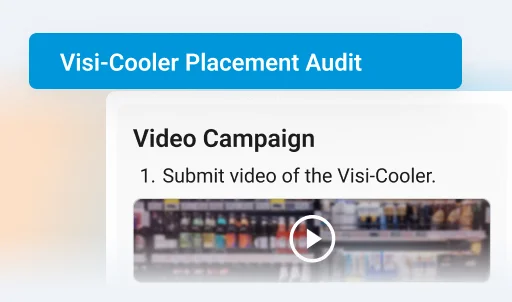
The proof that holds up is a photo from inside the outlet, scored against the campaign brief, and you cannot verify POSM in outlets you have never mapped. You cannot audit what you cannot see. Brands close the gap with a photo-audit loop run on regular field visits:
- Define what each outlet should have: set expected POSM per campaign and store profile, for example a painted wall and umbrella for kiosks, a dangler and shelf strip for dukas, and a gondola end for supermarkets.
- Capture photos on every visit: the rep photographs each POSM element, geo-tagged and time-stamped, so HQ knows the image is from that outlet on that day.
- Score against the brief: AI checks whether the material is present, in the agreed spot and in good condition.
- Route fixes to the next visit: failed outlets drop into the next journey plan with the task attached.
- Review by outlet, region and distributor: trade marketing sees where material reached the outlet and where it stalled, and plans the next print run on that basis.
The KPIs most teams track are deployment rate (target outlets where the POSM was found installed), placement compliance (installed POSM in the agreed spot), time to install, survival rate (POSM still up on the follow-up visit) and fix closure rate. BeatRoute’s retail audit software runs this loop from the rep’s app, so trade marketing sees compliance without waiting for a manual audit report.
The audit must work offline. It captures photos with zero signal and syncs when back online, stays light on battery, and runs on low-end Android. Data costs 2.4 percent of monthly income per gigabyte in Sub-Saharan Africa, so a heavy app dies in the field.
Frame the photo as protection, not surveillance. A time-stamped, geo-verified image proves the rep did the work. So installation incentives are paid fairly and never disputed, and the honest rep is the one the data clears.
How does POSM fit the Perfect Store?
POSM is one input to the Perfect Store Score, sitting alongside share of shelf, availability, and planogram compliance. It is a means to in-store execution, not an end in itself.
A healthy Perfect Store Score runs 80 to 90 percent. Anything under 70 percent signals an execution failure worth a field visit. POSM presence, correct placement, and condition all feed that number outlet by outlet.
Read POSM this way and the goal shifts. You stop counting posters shipped and start measuring whether the shopfront actually converts. That is the difference between activity and execution.
How do POSM claims work with your distributors?
Distributors often front the cost of displaying POSM and then claim it back, and slow claims sour the relationship you depend on. Your distributor is a business owner you court, not command.
Manual claims take 8 to 12 weeks to settle. When a distributor branded shopfronts on your behalf and waited a quarter for reimbursement, trust erodes. Photo evidence tied to each outlet turns a disputed claim into a clean, fast approval.
Frame it in their interest. Faster POSM claims, verified display, and clear reimbursement make the partner more willing to invest in your brand next campaign. That is professionalization, not policing.
How does BeatRoute help you track POSM across African trade?
BeatRoute is the SFA and distributor management (DMS) platform for field sales and distribution, and it tracks which POSM landed in which outlet. DMS simply means managing distributor stock, claims, and territories in one view.
Brands define expected POSM per store profile and campaign. Reps capture shelf photos on any visit, even offline. The visual merchandising workflow scores each photo for POSM presence, planogram compliance, and competitor activity, and routes fixes to the next visit.
BeatRoute is a global platform tailored for African trade, with proof it works here, which is why brands like AAVA Brands and BUA Foods run on it. The AAVA Brands case study reports an 18 to 20 percent lift in field productivity and 25 to 30 percent more store sellouts. Across 200-plus brands in 20-plus countries and 2 million-plus retailers, teams that run every lever on one platform see a 12.6 percent average sales uplift in year one. Request a free demo to see POSM tracked outlet by outlet.
Frequently asked questions
What does POSM stand for?
POSM stands for point of sale material. It is any branded or promotional asset placed inside a retail outlet to catch shopper attention and influence a purchase. Common formats include posters, wobblers, shelf talkers, standees, branded umbrellas, and cooler branding.
What does POSM look like in African general trade?
In general trade, most outlets have little shelf, so POSM is the shopfront itself. Painted walls, branded umbrellas, coolers, danglers, and whole branded kiosks do the work. Shelf talkers and wobblers matter more in larger dukas and modern trade where a real shelf exists.
How is POSM different from visual merchandising?
POSM is a subset of visual merchandising. Visual merchandising covers the full in-store system, including shelf layout, share of shelf, and planogram compliance. POSM refers specifically to the branded or promotional material placed within that system.
Why does POSM fail to reach outlets in African trade?
After dispatch, POSM enters a black box with five to seven middlemen between factory and shelf. Material sits in a distributor back room, is handed out unevenly, or brands a shop that never stocks your line. Without outlet-level proof, you cannot say where it landed.
Which POSM formats work best for FMCG in Africa?
Match the format to the outlet. Painted walls, umbrellas, and coolers suit kiosks and open-market stalls with no shelf. Danglers and price boards suit dukas and spaza shops. Wobblers and shelf talkers work in larger general trade and modern trade where a shelf exists.
How do brands track POSM compliance across informal trade?
Reps photograph each POSM element per campaign, AI scores compliance against the brief, and HQ sees deployment by outlet and region. Flagged outlets drop into the next journey plan for a fix visit. Photo-based audits show which outlets actually display the material and which do not.
How does POSM affect the Perfect Store Score?
POSM is one input to the Perfect Store Score, alongside availability, share of shelf, and planogram compliance. A healthy score runs 80 to 90 percent, and anything under 70 percent signals an execution failure. POSM presence and correct placement feed that number outlet by outlet.
How do POSM claims work with distributors?
Distributors often front the cost of displaying POSM and claim it back later. Manual claims take 8 to 12 weeks, which strains the relationship. Photo evidence tied to each outlet turns a disputed claim into a fast, clean approval, so partners keep investing in your brand.
Which African brands use BeatRoute?
African customers include AAVA Brands and BUA Foods, both in Nigeria. BeatRoute serves 200-plus enterprise brands across 20-plus countries and 2 million-plus retailers, so its African proof is real, not borrowed from other regions.