

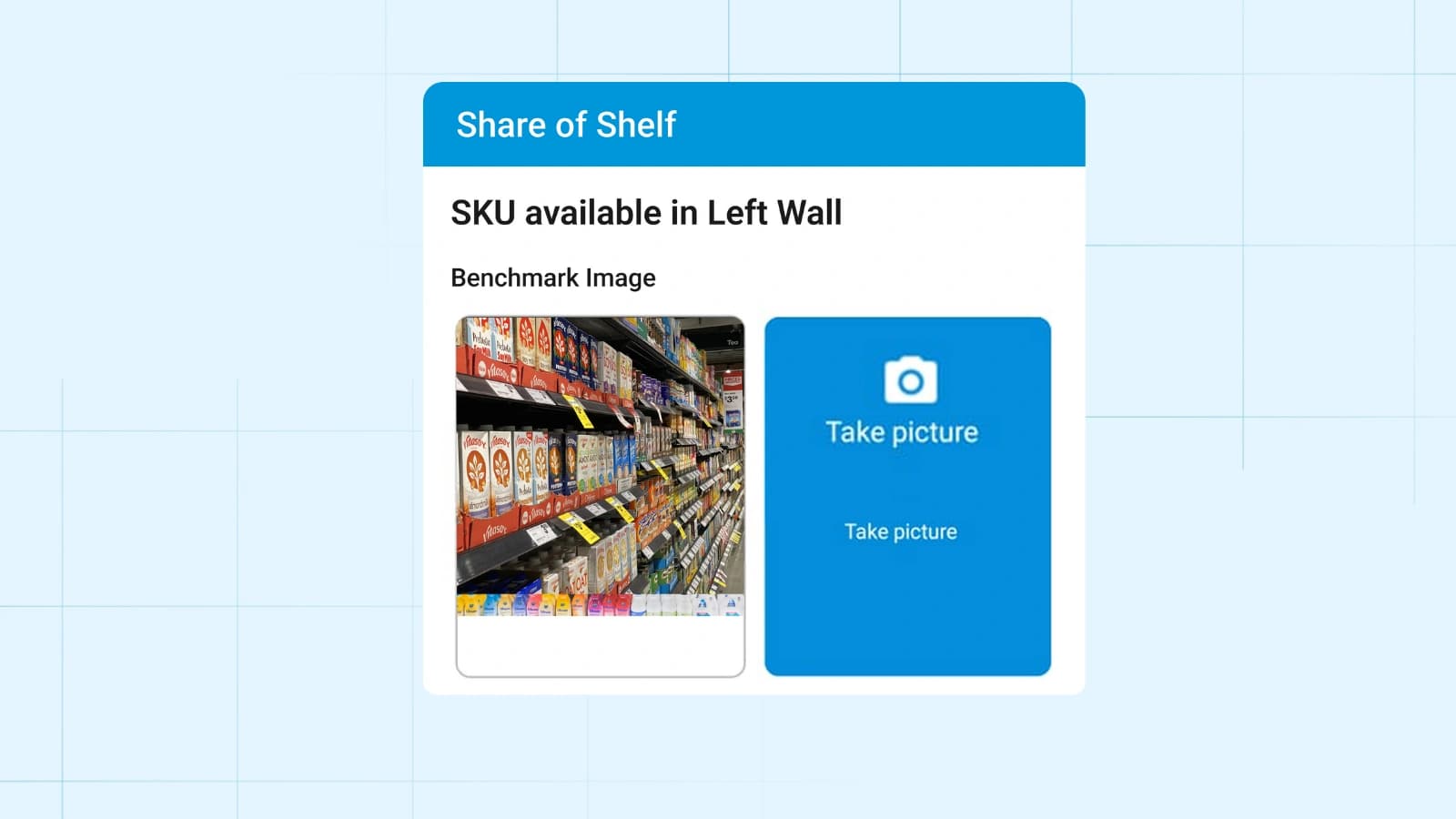
TL;DR Share of shelf is the percentage of category space your brand occupies at the moment a shopper chooses. In African general trade that shelf is not a supermarket aisle. It is the kiosk front, the tabletop, and the branded cooler across kiosks in Kano, dukas in Nairobi, and spaza shops in Soweto. BeatRoute's VM Audit AI Agent scores it from one shelf photo, which is why brands like AAVA Brands and BUA Foods run on it.
A great product a shopper never sees loses to a worse one they do. Share of shelf is how you win that first glance. This guide defines the term and shows how to calculate it. Then it covers the field work of winning it, visit after visit, in the outlets that actually move your volume.
What is share of shelf?
Share of shelf is the percentage of visible category space your brand occupies in a store. It is a visibility metric. It reflects how much physical presence your brand holds at the exact moment a shopper decides what to buy.
Example: if your juice holds 2 of 10 facings in the drinks section, your share of shelf is 20%.
Read it as a leading indicator. Market share is the outcome you get after the sale. Share of shelf is the visibility you command before the shopper has decided.
What does "shelf" actually mean in African general trade?
In most African outlets there is no supermarket aisle, so share of shelf means share of visible display. Traditional trade drives 90% or more of retail in Nigeria and about 74% of sales in Egypt. The contest is fought in kiosks, provision stores, and tabletop stalls, not modern gondolas.
So your shelf is the counter, the kiosk front, the hanging sachet strip, and the branded cooler by the door. Walk into a roadside kiosk in Accra and the Coca-Cola cooler at the entrance is share of shelf, won outlet by outlet.
South Africa is the one modern-trade-led market, near 80%, yet its spaza sector is huge and still growing. Measure the display a shopper truly sees, not a planogram that only exists in a hypermarket.
How do you calculate share of shelf?
The standard formula is linear share of shelf, the space you hold divided by the total category space. Linear share of shelf equals shelf length occupied by your brand, divided by total category shelf length, times 100.
Most teams track three things together: facing count against competitors, depth of stock, and vertical position, since eye-level placement outsells the top and bottom rows.
In general trade, adapt the same idea to the format. Count facings on the tabletop, sachets on the hanging strip, and whether your pack sits at eye level on the counter or buried behind a rival.
Why does sachetization make share of shelf harder to win?
Inflation is pushing everyday goods into sachets, and every new sachet multiplies the facings you must fight for. The naira fell 40.9% in 2024, and consumer-goods operating costs jumped 67% in a single year.
Brands answer with smaller packs and fighter brands. PZ Cussons runs explicit fighter brands, which adds SKUs and shelf complexity to verify at every visit.
So one category now sprawls across sachet strips, small packs, and standard packs at a single bakkal in Cairo. More SKUs mean more ways to lose visibility, and more reason to measure share of shelf every time a rep walks in.
Which outlets should you fight for shelf space in?
You cannot afford to win shelf everywhere, so win it where your volume actually lives. Distribution is never spread evenly, and equal effort across every outlet quietly wastes most of it.
In Lagos, a detergent stocked in 100,000 outlets can do half its sales in just 10,000 of them. Chasing equal facings in all 100,000 burns fuel and time. Concentrated shelf gains in the outlets that matter move the number.
Ask which 10% of your outlets drive half your category sales. Those are where eye-level facings and the branded cooler are worth negotiating hardest.
How do you measure share of shelf without slow manual audits?
The scalable way to measure share of shelf is image recognition, not manual tallying. A rep captures one shelf photo. AI detects the SKUs and returns linear share of shelf, facings, and eye-level presence, with no auditor subjectivity.
It has to work offline. Mobile data runs about 2.4% of monthly income per gigabyte in Sub-Saharan Africa, and signal dies in a kiosk outside Ibadan. A good tool captures the photo with zero signal, then syncs when the rep is back online.
Battery matters as much as signal. The app should run light on a low-end Android and survive a full route, so the audit you planned is never the audit you missed.
How do reps actually improve share of shelf, visit after visit?
Share of shelf improves when the metric drives the next rep action, not a quarterly slide. Tie each score to a planogram and a perfect store score, so a gap becomes a task rather than a statistic.
Healthy in-store execution sits at 80 to 90%; below 70% is an execution failure you can see and fix. Score every store photo against the plan through a retail audit workflow, and route the flagged outlets back into the next journey plan.
Frame it as protection for the rep. Every visual merchandising audit is time-stamped and geo-verified, so the merchandising incentive is never disputed and a strong shelf gets the rep paid.
How does share of shelf tie back to your distributor?
Your distributor's reps and van sellers execute much of your shelf, so their buy-in decides your share. A distributor is a business owner you court, not command, and their staff can quietly ignore a tool they dislike.
Give them the win in their own terms. Cleaner shelf data means fewer disputed merchandising claims and protected display inside their territory.
Proof of performance also earns the distributor more brands to carry and better terms. When the brands they stock can see execution clearly, the distributor grows, and so does your facing count.
How does BeatRoute improve share of shelf for African trade?
BeatRoute is a global platform tailored for African trade, with proof it works here, which is why brands like AAVA Brands and BUA Foods run on it. It strengthens the reps and distributor networks you already have, and never replaces or bypasses them.
Its VM Audit AI Agent turns a single shelf photo into share of shelf scores, planogram compliance, and competitor benchmarks, with no pretraining required. The metric is captured at every visit, not sampled once a quarter.
AAVA Brands in Nigeria saw an 18 to 20% lift in field productivity and a 25 to 30% rise in store sellouts. BeatRoute is an SFA and distributor management platform, not a CRM.
What share of shelf gain can African brands expect?
Brands that run every execution lever on one platform report a 12.6% average sales uplift in the first year. Share of shelf is one of those levers, working alongside coverage, ordering, and claims.
The gain is not magic. It is more of the right facings in the right outlets, verified visit after visit, instead of guessed at from a desk. BeatRoute serves 200+ enterprise brands across 20+ countries and 2M+ retailers.
Get an instant demo to see how goal-driven AI turns each shelf photo into the next rep action, from in-store execution to shelf dominance.
Frequently asked questions
What is share of shelf in simple terms?
Share of shelf is the percentage of visible category space your brand occupies in a given store. It measures how present your brand is at the moment a shopper is choosing what to buy. Higher share of shelf means a higher chance of being seen and picked.
What does share of shelf mean in African general trade?
In most African outlets there is no supermarket aisle, so share of shelf becomes share of visible display. It is measured on the kiosk front, the tabletop, the counter, the hanging sachet strip, and the branded cooler. Traditional trade drives 90% or more of retail in Nigeria, so that is where the metric is won.
How do you calculate share of shelf?
The standard method is linear share of shelf: shelf length occupied by your brand, divided by total category shelf length, times 100. Many teams also track facing count against competitors, depth of stock, and eye-level position. In general trade you adapt the same logic to tabletops and sachet strips.
How is share of shelf different from market share?
Market share is an outcome, the units you sold against the category. Share of shelf is a leading indicator of that outcome. It shows how much visibility you command before the shopper decides, so it tends to move before market share does.
How do you measure share of shelf accurately at scale?
The scalable method is image recognition. A rep captures one shelf photo, and AI detects SKUs and returns linear share of shelf, facings, and eye-level presence. Manual tallies do not scale and drift between auditors, so they rarely hold up across thousands of outlets.
Does share of shelf software work without internet?
A good one does. Offline-first capture lets a rep photograph and score a shelf with zero signal, then syncs when they are back online. This matters in African markets, where mobile data runs about 2.4% of monthly income per gigabyte and coverage is patchy.
What share of shelf benchmark should my brand aim for?
As a rule, your share of shelf should at least match your target market share. Priority SKUs should hold eye-level facings, or the branded cooler, in 80% or more of the outlets where you have distribution. Below that, visibility is capping your sales.
How does sachetization affect share of shelf?
Inflation is pushing goods like seasoning, bleach, and dish soap into sachets, which multiplies the SKUs on display. Each new pack size is another facing to secure and verify. That makes share of shelf harder to hold and more important to measure at every visit.
Which outlets should I prioritise for share of shelf?
Prioritise the outlets that drive your volume, not every outlet equally. In many African markets a small share of outlets produces half of category sales, so concentrated shelf gains there move the number. Fight hardest for eye-level facings and cooler space in that top tier.
How do reps improve share of shelf on the ground?
Tie each share of shelf score to a planogram and a perfect store target, so a gap becomes a task for the next visit. Route flagged outlets back into the journey plan, and keep every audit time-stamped so merchandising incentives are never disputed. Improvement comes from that feedback loop, not from a quarterly report.
How does share of shelf help my distributor?
Clean shelf data means fewer disputed merchandising claims and protected display inside a distributor's territory. Clear proof of performance also helps the distributor win more brands to carry and better terms. Because distributor staff can veto any tool, this daily value is what makes the programme stick.
What do SFA and DMS mean?
SFA stands for sales-force automation, the software that runs a field rep's day and sends the data back to sales leaders. DMS stands for distributor management, the layer that reconciles distributor stock, billing, and claims. Together they connect what sold in the field to what left the depot.
Is BeatRoute a CRM?
No. A CRM is built for a few large accounts and long deal cycles. BeatRoute is an SFA and distributor management platform built for high-frequency visits to thousands of small outlets, with offline capture and field metrics like share of shelf and strike rate.
Does BeatRoute have African customers?
Yes. AAVA Brands and BUA Foods in Nigeria run on BeatRoute, and the platform serves 200+ enterprise brands across 20+ countries and 2M+ retailers. AAVA Brands recorded an 18 to 20% lift in field productivity and a 25 to 30% rise in store sellouts.