

TL;DR This guide is for Philippine category managers and trade execution leads who treat share of shelf as a field KPI, not a slide. It covers what SOS means and how to compute it, then the outlet-level execution that actually moves it in modern and general trade. BeatRoute's VM Audit AI Agent turns a single shelf photo into an SOS score, planogram compliance and competitor benchmarks. It captures on any Android in the field, online or offline, with no pretraining required.
Share of shelf is what turns a strong product into a visible one. In the Philippines the battle runs in two different worlds. One is the planogrammed gondolas of SM Supermarket, Puregold, Robinsons and 7-Eleven. The other is the crowded counter of the neighborhood sari-sari store. This guide covers what share of shelf means and how to calculate it. Then the field work of winning it, visit after visit, outlet after outlet.
What is share of shelf?
Share of shelf (SOS) measures how much of a category's shelf space belongs to your brand in a given store. It is the visibility number: your physical presence at the exact moment the shopper decides. In Philippine field-sales language: how much of the shelf, gondola or hanging display your brand owns while the mamimili stands in front of it.
Example: a juice brand holding 2 of the 10 facings in the beverage section runs an SOS of 20%.
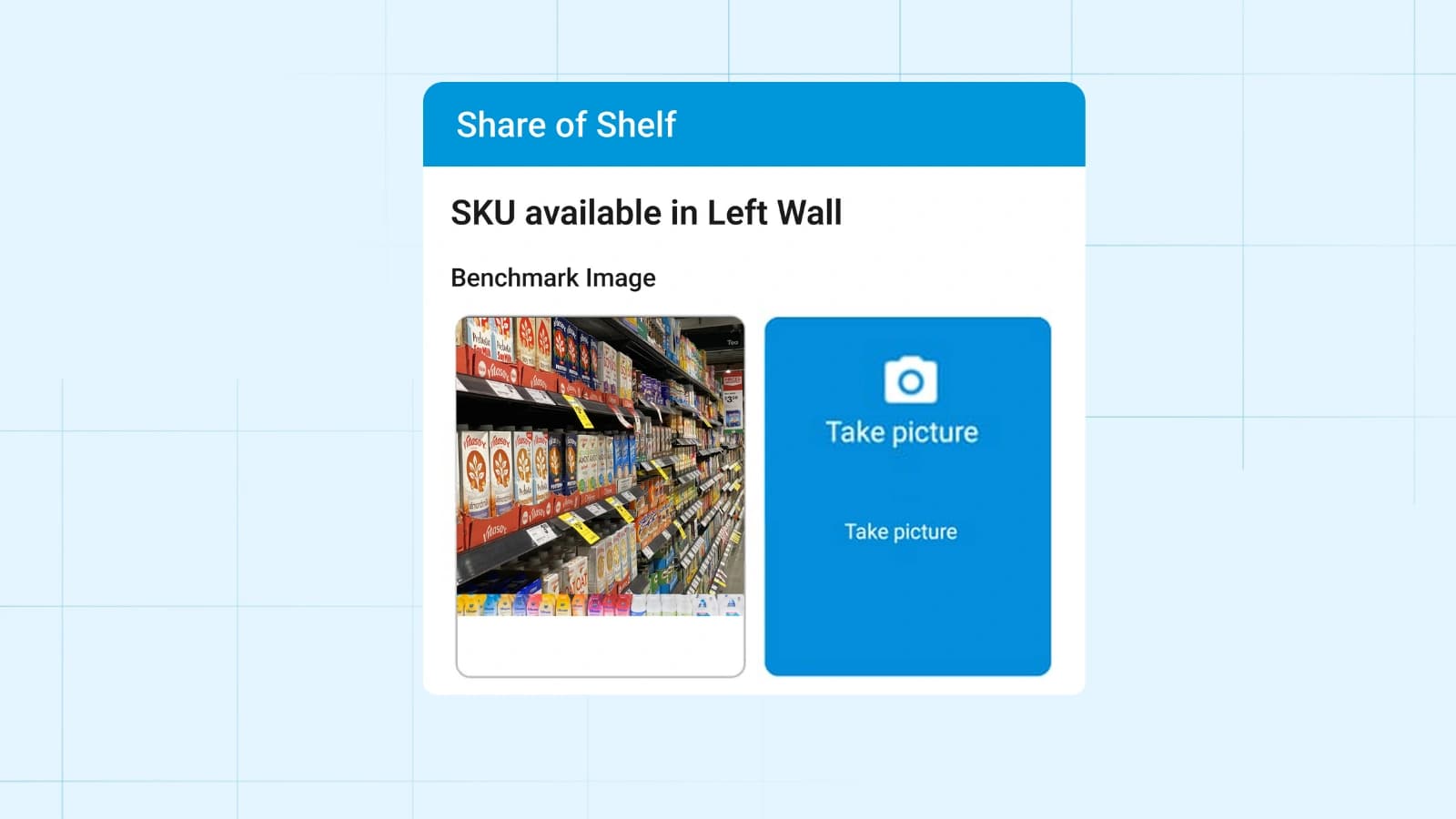
One shelf photo and the VM Audit AI Agent computes SOS by itself, at every visit, with no promodiser or rep counting facings by hand.
Why does share of shelf matter for Philippine retail brands?
In a crowded store, the fight for attention comes before the fight for wallets. Command more space and you get seen more, picked more, bought more. In the Philippines this cuts two ways, because modern trade and traditional trade reward space very differently.
A strong SOS can unlock:
- Higher brand recall and awareness at the point of decision
- Better conversion where the shopper is already reaching for the category
- Increased negotiation power with modern trade buyers and supermarket chains
- Stronger campaign execution when POSM and facings work together
The catch is proof. Winning shelf space in the buyer negotiation means nothing if the planogram is not executed in the store, and your area manager cannot see the gap until the next cycle. BeatRoute ties SOS scores to rep-level KPIs, so the number drives a corrective visit tomorrow instead of sitting in a quarterly deck.
How do you calculate share of shelf?
SOS is typically calculated using a simple ratio of the space your brand holds against the total category space:
Linear SOS (%) = (Shelf length occupied by the brand / Total shelf length in category) x 100
Many Philippine teams also track:
- SKU count versus competitors on the same shelf
- Vertical visibility, especially eye-level placement
- Depth and number of facings
The problem is doing this by hand across hundreds of outlets. A promodiser counting facings on Friday and a relief rep counting them on Monday will disagree. And by the time Excel consolidates the numbers, and followed up on Viber, the shelf has already changed. From one photo, the VM Audit AI Agent computes linear SOS, facings and eye-level presence. Auditor subjectivity goes away, and measurement scales across every outlet in the beat. It works on any Android, even low-end devices, online and offline. A shelf audit in a patchy-signal provincial town syncs the moment the rep finds a connection.
Is share of shelf the same in a sari-sari store and a supermarket?
No, and this is where a global SOS playbook breaks in the Philippines. In modern trade, share of shelf is a formal planogram fight: facings, eye-level rows, end-caps. Your brand-paid promodiser is there to hold the plan. In the sari-sari store and general trade, there is no planogram at all. Shelf presence is the sachet economy: your tingi packs hanging on the sampayan, your bottles on a crowded counter, your POSM taped where the owner allows. The suki relationship and the store owner's preference decide how much of that space you keep.
So the KPI has to flex by channel. In modern trade you audit against a planogram; in general trade you audit against availability and visibility of your priority packs at the counter. BeatRoute captures both from the same photo workflow, so a category manager sees one honest picture of visibility across SM and the sari-sari down the street, instead of two disconnected reports.
How do Philippine brands improve share of shelf on the ground?
Winning space is a field-execution problem, not a headquarters one. Five levers do most of the work:
- Negotiate shelf space with data: Build data-backed cases from clean SOS baselines to secure more facings with modern trade buyers.
- Use planograms strategically: lay shelves out for SKU performance, then prove the layout held through visual merchandising audits each visit.
- Deploy promodisers consistently: Make sure on-ground execution in supermarkets and dealer stores matches the HQ plan, and give the promodiser a checklist that tells them exactly what to fix.
- Put packaging and POSM to work: bold, recognizable packs and shelf talkers earn attention in modern trade and at the sari-sari counter alike.
- Monitor with tech: Score every store photo against the planogram through a retail audit workflow, then route the flagged outlets back into the next beat so the fix actually happens.
This is one part of a bigger picture. Share of shelf lives inside your full in-store execution, beside availability, pricing and promo compliance. Treat SOS as one scored element of the perfect store, not a standalone chase.
BeatRoute is a global platform serving 200+ enterprise brands across 20+ countries, proven here at home. That is why major Philippine names like San Miguel and Monde Nissin count on it. Book a PH-tailored demo to see how Goal-Driven AI turns share of shelf into a daily rep action, from the shelf photo to the corrective visit.
Frequently asked questions
What is share of shelf (SOS) in simple terms?
Share of shelf is the percentage of shelf space your brand occupies within its category in a given store. It measures your visibility at the moment of choice, whether the shopper stands at a Puregold gondola or the hanging sachet display in a sari-sari store.
How is share of shelf different from market share?
Market share reports the outcome: your units against the category's. SOS leads it, measuring the visibility you hold before the shopper chooses. The shelf gets won first; the sell-out follows.
How do you measure share of shelf accurately in the provinces?
Image recognition is the only way that scales. The rep shoots one shelf photo, and the AI finds the SKUs and computes linear SOS, facings and eye-level presence on its own. BeatRoute works on any Android, even low-end devices, online and offline. An audit in a low-signal provincial outlet still records, then syncs when the connection returns. That matters because roughly 88% of Philippine phones run Android (Statcounter) and reps often carry entry-level units.
What SOS benchmark should my brand aim for?
The floor: SOS matching your target market share, with priority SKUs holding eye-level facings in 80%+ of the outlets where you have distribution. In general trade, aim to keep your top packs visible and available at the counter rather than chasing a formal planogram that does not exist there.
Does share of shelf matter in modern trade like 7-Eleven as well as sari-sari stores?
Yes, and the tactics differ. Modern trade, including chains like 7-Eleven with over 4,200 stores in the Philippines, is a planogram fight for facings and eye-level rows held by promodisers. General trade is about availability and visibility of your priority packs at a crowded counter. A single photo-based audit lets you score both channels in one consistent view instead of two separate reports.