


Distributor and consumer management is knowing what happens to your stock and your trade deal money at every hand-off between your distributor's bodega and the shelf a shopper sees. A distributor and consumer management system (DCMS) is the software that records each hand-off, from what a distributor holds and invoices to what hangs in a sari-sari store.
Philippine sales teams know the month-end version. Sell-in hit quota and the Viber group says the trucks went out. Then sell-out comes in soft, and nobody knows if the stock is in the bodega, with a wholesaler or behind another brand. You see the first hand-off because you issued that invoice. The other three live in someone else's records, or nobody's.
From the bodega to the shopper: four hand-offs
- You to your distributor. The distributor buys and stores your stock. It should carry enough of each SKU, in date, without locking up cash it needs for its other principals.
- Distributor to store. The distributor's salesmen and van sales routes invoice sari-sari stores, drugstores and supermarkets, give them terms and deliver; some volume moves through wholesalers and sub-distributors. This is your secondary sales: which outlet bought which SKU, on what date.
- Trade deal to store. Discounts and free goods are supposed to show on the store's invoice. The distributor gives them first and claims the amount from you later, so a claim that is paid late or disputed hurts the relationship quickly.
- Store to shopper. The agreed range has to be in the outlets your coverage plan counts on. Think of the sachet strip at the sari-sari window, the supermarket gondola and the drugstore counter.
The sales stages behind them are in our guide to primary, secondary and tertiary sales. The point here: you see only as far down the chain as the last record you can read.
Check each hand-off against its own record
Do not judge a hand-off by the record from the step before it. Your invoice to the distributor proves sell-in. The distributor's invoice to the store proves what was billed. A visit by your rep or promodiser proves what the store has, and the store's own reorders tell you whether it is still buying. A shelf photo proves what a shopper sees. Stop at sell-in and every later step looks fine until the monthly report.
When two records disagree, the gap shows which hand-off is failing.
| The signal | What is likely happening | Where to confirm it |
|---|---|---|
| Sell-in up, distributor's sell-out flat | Your stock goes into the distributor faster than it goes out to stores. The extra waits in the bodega and gets older. | Distributor inventory per SKU and batch |
| Distributor sales up, count of billed stores not moving | The same outlets are ordering bigger. No new sari-sari stores or drugstores have joined. | Billed stores per route plan, beside all stores mapped in the territory |
| Trade deal claims up, store orders unchanged | A claim shows what the distributor reports it passed on. It does not show the store got it. | The store invoice line carrying the deal, matched to its claim ID |
| Store billed, but shoppers do not find the product | The stock arrived. It may still be in the store's stockroom, or hidden behind a rival brand. | A shelf photo or audit on the next visit |
What the DMS half of a DCMS keeps
The distributor end of a DCMS is a distributor management system (DMS). It covers the first three hand-offs, because that is where each distributor orders from you, invoices stores, files claims and pays. In BeatRoute's distributor management system, each record settles one row of the table:
- Inventory per SKU and batch shows what is ageing in the bodega. When a SKU drops under the agreed stock norm, the purchase order to you is raised on its own.
- Store invoices come through as each outlet is billed, with the trade deal already applied, so you can count billed stores on every route.
- Every claim and return gets a claim ID that carries its proof and status back to the invoice line behind it.
- Credit and collections share the record: each order is checked against the store's credit limit, and each payment is tagged to the invoice it settles.

None of it works unless distributors open the system daily, and one carrying several principals will not encode the same invoice twice. Ask how its bills get in first. Our guide to choosing a DMS lists what else to test.
The store record: from the visit and from Viber
A DMS stops at the distributor's invoice. The fourth hand-off happens inside the store, so its record comes from someone there: your rep, or the owner.
- On the visit. With BeatRoute's field sales app, the rep books the order and routes it to the distributor that serves that outlet, checks the must-sell SKUs and takes a shelf photo. Visual merchandising audits turn those photos into shelf compliance per outlet, so a store that was billed but has an empty shelf stands out.
- Between visits. With the Retailer App, store owners reorder at their own prices from their phone, on Viber or on WhatsApp. They also see the deals they qualify for. The order still goes to the distributor that serves them. Stores that stop ordering get flagged for the rep's next route.
Two Philippine brands that started at the store end
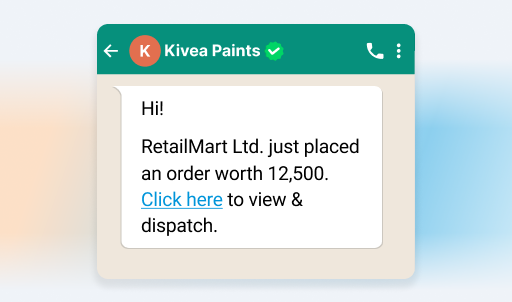
A leading paints brand in the Philippines sells through hardware stores, retail chains and paint centers. Managers could not see store visits or plan coverage from field data. On the BeatRoute platform it set rep goals with scorecards and checked outlets with visual merchandising forms. It reached 30% higher sales productivity, as the leading paints brand case study shows.
Nurturemed Pharma's PMRs covered wide territories with no sample tracking and slow account onboarding. On the BeatRoute platform they took orders, tracked samples and classified accounts in one app. Nurturemed saw a 20% increase in PMR productivity, as the Nurturemed case study sets out.
BeatRoute suits brands that sell through many distributors and want to see their stock, sales and dues in one place; a distributor buying software for its own warehouse will be better served by a lighter billing tool.
Want to see all four records for your own channel? Book a demo and bring last month's store invoices from one of your distributors.
Frequently asked questions
Is this the same as the DCMS login for LPG distributors?
No. An LPG supplier runs a portal with that name for its gas distributors, with its own login. This guide is for brands that sell through distributors to sari-sari stores, drugstores and supermarkets.
How is a DCMS different from a DMS?
A DMS is the distributor half: inventory, store invoices, claims and collections. A full DCMS adds the store, through the field visit and the store's own orders. In BeatRoute that is the distributor management system, the field sales app and the Retailer App on one platform.
Can a brand see what shoppers buy when it sells through distributors?
Not completely. A sari-sari store's counter sales stay with the owner. The closest records are how often each store reorders, which SKUs, and how the shelf looks on each visit. Supermarket and drugstore chains may share their own sell-out data under a trade agreement.
Which hand-off should we fix first?
Your distributors' invoices to stores, if you cannot read them today. Without them you cannot count billed stores per route, match a claim to its invoice line, or tell a rep which billed store to audit.
Does this work outside FMCG, for paints or agri-inputs?
Yes, with other names. In building materials and paints the store is usually a hardware store or dealer, and the buyer is often a contractor. In agri-inputs the buyer is a farmer. A deal may be paid on what a dealer buys over a season, not per invoice, which BeatRoute runs as period purchase schemes.