


Distributor and consumer management is how a brand follows its cartons and its trade scheme money all the way to the shelf. That path runs from the depot, through the distributor, to a duka, kiosk or supermarket. The aim is that shoppers find the product at the right price. A distributor and consumer management system is the software that writes down each of those handovers.
Picture a sales manager in Lagos at month end. The key distributor has taken every carton you invoiced, and the numbers look good. But that stock still has to pass through sub-distributors and open-market wholesalers, get billed to provision stores on credit, and reach a shelf. You wrote the first invoice. Every record after it belongs to someone else, or to no one.
Four steps from your depot to the shopper
- Brand to distributor. Your key distributor or stockist buys from you and holds the stock. The aim is enough of every product, in date, without locking up the distributor's cash in slow lines.
- Distributor to outlet. The distributor, its sub-distributors and its vans bill dukas, kiosks, provision stores and supermarkets, give credit and deliver. This is where you need secondary sales: which outlet bought what, and when. Where a van sells straight off the truck, the van bill is that record.
- Scheme to outlet. Free goods and discounts should land on the shop owner's bill. The distributor gives them first and asks you to repay it. When that repayment drags or gets argued over, goodwill goes fast.
- Outlet to shopper. Each outlet on your plan should stock the agreed range, and a shopper should spot it without asking.
If primary, secondary and tertiary sales are new terms, this guide to the three sales stages sets them out. The point here is shorter: you can see the chain only as far as the last record you can read.
Which record proves each step
Never judge a step by the record of the step before it. The distributor's order from you proves what left your depot. The distributor's bill to a kiosk proves what the kiosk was charged for. A rep standing in the shop proves what is there now, and the shop's next order shows it is still buying. A photo of the shelf proves what a shopper sees. If you read only the first record, every later step looks healthy until the month closes.
When two records disagree, the gap tells you which step is failing.
| The signal | What is happening | Where to check |
|---|---|---|
| The distributor orders more from you each month, but its bills to outlets stay flat | Cartons leave your depot faster than they leave the distributor's store. The extra stock sits there and gets older. | The distributor's stock, product by product and batch by batch |
| Secondary sales climb, but the count of outlets billed does not | The same dukas and kiosks are buying more. No new outlets have started buying. | Outlets billed on each beat, against all the outlets mapped in that area |
| Free-goods and discount claims go up, but shop orders do not | A claim shows what the distributor says it passed on. Whether the shop got it is another matter. | The bill to the shop with the scheme on it, matched to the claim ID |
| A kiosk shows as billed, yet shoppers leave without your product | Delivery happened. The cartons may sit under the counter, or behind another brand's crates. | A photo of the shelf, taken when the rep next calls |
What the distributor management system holds
Distributors do their daily work in a distributor management system (DMS): ordering from you, billing shops, claiming schemes, taking payments. That makes it the home of the first three steps. In BeatRoute's distributor management system, each record answers one row of that table:
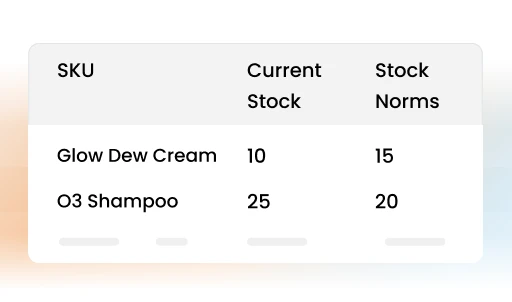
- Stock by product and batch shows what is getting old in the distributor's store. A purchase order is raised on its own when stock drops below the level you agreed.
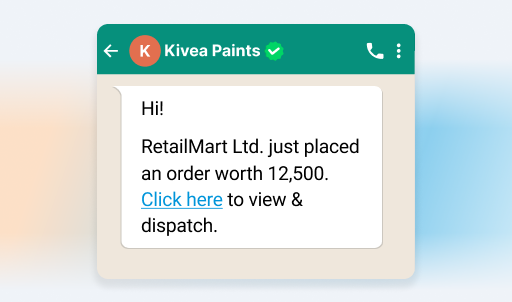
- Secondary invoices reach head office the moment a duka is billed, discount and free goods included. Counting how many outlets bought on a beat becomes simple.
- A claim ID goes with every claim or return, carrying its proof and status back to the bill it came from.
- Credit and collections live in one place. An order above the outlet's credit limit is caught before dispatch, and every payment shows which invoice it settles.
All of this depends on distributors opening the system every day. A distributor in Nairobi or Kano that carries several brands will not type the same bill twice, once for its own books and once for you. So before you choose, ask your distributors how they bill today, and make that part of the test. The guide to choosing a DMS lists what else to check.
Getting the record from inside the shop
A DMS stops at the distributor's bill. What happens on the shelf of a duka or a supermarket has to be recorded by someone in the outlet: your rep, or the shop owner.
- On the rep's visit. With BeatRoute's field sales app, a rep books the order for whichever distributor supplies that shop, runs through the must-sell list and snaps the shelf. Visual merchandising audits score those photos outlet by outlet, so a duka that was billed but shows an empty shelf stands out.
- Between visits. With the Retailer App, a shop owner can reorder by phone or WhatsApp, see their own prices and check which offers apply to them. Their usual distributor still fulfils it. When an outlet goes quiet, it is flagged, telling the rep where to call next.
How AAVA Brands linked depot to shelf in Nigeria
AAVA Brands used to see primary sales in one place and secondary sales in another, with KPIs and beat coverage added up by hand. On the BeatRoute platform its reps and distributors now work in one system, linked to the ERP, with must-sell lists measured against retail execution goals. Store-level sellouts grew 25 to 30% and field force productivity 18 to 20%, as the AAVA Brands case study shows.
BeatRoute suits brands that sell through many distributors and want to see their stock, sales and dues in one place; a distributor buying software for its own warehouse will be better served by a lighter billing tool.
Want to try this on your own channel? Book a demo with one distributor's secondary bills from last month, and we will show all four records next to each other.
Frequently asked questions
Can a brand see what shoppers buy at a duka or kiosk?
Not fully. In a duka, kiosk or open-market stall, the sale to a shopper is rarely written down, and any note stays with the owner. A brand gets close by watching how often each outlet reorders, which products it picks, and the shelf on each visit. Supermarket chains may share sell-out data under a trade agreement.
Where should a brand start fixing the chain?
Start with the distributor's bills to outlets if you cannot read them at all. Every later check, from outlets billed per beat to scheme claims and shelf audits, needs to know which outlet was billed for what. Once those bills reach you, set them beside your own invoices to the distributor for the same month. The gap shows where stock is piling up.
Does this work the same outside FMCG?
Yes, with different names. In building materials or paint, the outlet is usually a hardware dealer and the buyer is often a contractor or fundi. In agri-inputs the outlet is an agro-dealer and the buyer is a farmer. A scheme may be paid on what a dealer buys over a season instead of on each bill, which BeatRoute handles as period purchase schemes.