

In short Retail execution, or trade execution, means the product, price, display and promo your plan promised are really in the outlet. Good teams run it as a loop: visit, check, fix or flag, then follow up until the gap is shut. In the Philippines, the visit and the check usually happen. The fix and the follow-up are where the plan gets lost.
A promodiser posts a photo in the team's Viber group: the gondola end the brand paid the supermarket for is bare. Three people react with a thumbs-up. Nobody says who will deal with it. Two weeks later the promo is over, and the sales report shows a weak month for the brand.
The same story plays out in the sari-sari stores of a province. The hanging strip of promo sachets was meant to be there. The owner buys from a wholesaler and a sub-distributor, and neither had the pack. So the owner hangs whatever was available, and the shopper walks away with a rival sachet for a few pesos. The gap was never closed, and nobody could say whose job it was.
Who carries the plan from head office to the shelf
It is easiest to see retail execution through the people who touch a promo. Head office approves the bundle. The key account manager negotiates the chain space for it. Then the promodisers in the supermarkets and the distributor's salesmen in the provinces have to put it on the shelf. Execution is what those last two groups actually deliver, and how fast anyone fixes what they miss.
Take a back-to-school bundle from a snack or school-supplies brand. The plan says: gondola end in the supermarkets, hanging strip in the sari-sari stores. That is the strategy, and trade marketing paid for it. The execution score is how many outlets had the stand up, the bundle in stock and the right price tag by the end of week one. It also counts how quickly the rest were put right. Visual merchandising is only the part about how the product looks on the shelf.
Six checks in every outlet
A rep or promodiser can run these six checks in a few minutes per stop.
| Check | What good looks like | What the rep asks |
|---|---|---|
| Availability | Every must-stock item is on the shelf, not sitting in the bodega. | Which SKUs are missing? Is there stock in the outlet, at the wholesaler or at the distributor? |
| Placement and planogram | Products sit where the brand agreed, with the agreed facings. | Does the shelf match the layout? How much space does the brand hold against the plan? |
| Pricing | The label shows the right price, and the promo price disappears when the promo ends. | Does the tag match the agreement? Is the promo tag up only while the promo runs? |
| Promotions and POSM | Displays and point-of-sale material (POSM) are up on the start date. | Is the display built, the price card posted and the promo SKU stocked? Is old material gone? |
| Visits and audits | Each outlet is called on as planned, and the findings are recorded. | Was the call made on the planned day? Is there a photo with time and place? Is the audit complete? |
| Briefing the people in the outlet | Supermarket staff and sari-sari owners know the offer and why it pays them. | Does the owner know about the new pack? Does the shelf crew need a refresher? |
Need a checklist for each execution type, from planograms to displays? Use our in-store execution playbook.
Why the plan gets lost between Makati and the barangay
Four causes keep showing up. Three of them sit after the visit, which is why a team can look busy and still miss the plan.
The pack never left the distributor
The promodiser writes "out of stock" and moves on. The real reason is often further back. The distributor did not order the promo pack, or the sub-distributor who serves that town ran dry. A rep who cannot see distributor stock cannot tell the difference, so the next visit finds the same empty hook.
Reps drift to the easy calls
Traffic in Metro Manila can cut a rep's day down to a handful of stops. Island routes follow ferry schedules, so the far outlets might see a rep once a quarter. Promodisers posted inside mall supermarkets are always at the shelf. Roving reps drift to stores along the highway. Visit counts look fine while the provincial outlets quietly fall off the plan.
Nobody owns the fix
Each problem has a different owner. A damaged supermarket display goes to the promodiser agency's coordinator. A wrong chain price tag goes to the key account manager. A sari-sari gap goes to the sub-distributor. But a flag dropped in Viber with no name on it belongs to everybody, and so it moves for nobody.
The picture comes in three pieces
The agency sends its promodiser report. The distributor sends a sell-out file. The reps send photos. The formats differ and the days differ. Head office spends the promo window stitching them together and reads the result when the promo has ended.
Walk-through: a sachet launch stuck at the sub-distributor
A drinks brand launches a new flavour in sachets, with a price-off offer for sari-sari stores in one province. Here is how a closed loop handles one missing product.
- A rep calls at a sari-sari store on the launch list. The price card for the new sachet is up, but there are no sachets on the strip.
- The owner says nobody offered them. This owner restocks from a wholesaler and a sub-distributor, not from the main distributor. On the phone, the rep sees that launch stock reached the main distributor but was never sold down to the sub-distributor for this area.
- The rep takes a small tingi order on the spot. The rep also flags the gap to the area manager, naming the store and the sub-distributor.
- The area manager phones the main distributor that same day. The sub-distributor's next run now covers this barangay and the stores around it.
- On the next visit the rep photographs the strip. The sachets hang there with the right price card, and the flag is closed.
Without the loop, the visit ends at step one with a note that says "out of stock". Weeks later head office sees a low availability number and calls the launch a flop. The real cause was one stalled delivery, and one flag with one owner fixed it.
Supermarket aisle or sari-sari counter: two jobs
Supermarkets and chains work from central agreements and their own staff. A sari-sari store works from the owner's mood that day and the rep's visit. Each needs its own checklist.
| Question | Modern trade (supermarkets, chains) | Sari-sari and general trade |
|---|---|---|
| Who decides what goes on the shelf | The head office buyer, through the agreed planogram | The store owner, visit by visit |
| Who sets up displays and prices | Mostly store staff, sometimes promodisers | Often the brand's rep or the distributor's salesman |
| What the rep mostly does | Audits against the agreement and escalates gaps | Fixes the shelf, takes the order and sells in the promo |
| Main risk | Agreed space or promo not delivered in some stores | Product not stocked, or stock runs out between visits |
| Who fixes a gap | Store manager, buyer or key account manager | The rep and the distributor |
| How often to visit | Set by sales value and the promo calendar | More often for busy stores, less often for small, steady ones |
In a supermarket, the brand paid a display rental or listing fee, so the rep's best tool is a dated photo showing the space it did not get. The key account manager can take that photo to the chain.
In a sari-sari store, the tool is the suki relationship. The owner keeps buying from the rep who restocks the hanging strip and takes the tingi order in the same visit. That habit is earned one call at a time.
The first check changes with the category
The loop is the same everywhere. What a rep looks at first depends on what the brand sells.
FMCG, food and drinks: many SKUs and frequent calls. Reps look at availability, planograms, share of shelf and promos in supermarkets, groceries and the sari-sari network.
Personal care and cosmetics: in department-store counters, beauty advisors who have been briefed and tester units carry the sale. In sari-sari stores, the same brand lives as sachet shampoo on a hanging strip, so availability of the small pack comes first.
Lubricants and auto parts: talyers and motorcycle shops have almost no shelf. The mechanic's advice decides the brand, so counter displays, dealer schemes and a good relationship with the mechanic matter most.
Paints and building materials: hardware stores and dealers, where shade cards, tinting machines and dealer schemes decide what sells.
Pharma and over-the-counter products: drugstores and pharmacy chains keep much of the range behind the counter. Stock, expiry dates and what the pharmacist recommends count for more than facings.
Seven numbers to track
A handful of KPIs, captured on every visit, cover most of the picture. Add one that shows whether problems were solved. That is the action-close rate, and most teams do not have it.
| KPI | What it tells you | How to capture it |
|---|---|---|
| On-shelf availability | The share of must-stock products on the shelf when the rep visits | The rep ticks each product on an outlet-specific list and adds a shelf photo |
| Planogram compliance | How closely the shelf matches the agreed layout | A shelf photo, scored against the planogram by a person or by image recognition |
| Share of shelf | Your space on the shelf compared with the whole category | Facings counted from the shelf photo |
| Price compliance | Whether shoppers see the agreed price | The rep records the shelf price of key products and flags any gap |
| Promotion and POSM compliance | Whether the promo is live in each outlet on the list | A photo of the display and price card, checked against the promo list |
| Visit compliance | Whether planned visits happen on the planned day | A geo-tagged check-in, matched to the route plan |
| Action-close rate | The share of flagged issues fixed before the next visit | Each flag gets an owner and a due date, and the next visit confirms the fix |
No single number tells the story. Picture a Cebu territory where every rep checks in on time, yet the promo strip is missing in the same barangay stores month after month. Visit compliance is perfect and availability is flat. Look at the action-close rate and you will find the flags piling up unanswered at one sub-distributor. That rate drops first, well before availability does.
Habits that make it stick
Keep each outlet's checklist short. A long generic form gets skimmed. List only what matters in that outlet this month: must-stock SKUs, layout and live promos. A visual merchandising app can send the right planogram to the right outlet, so the rep never audits against the wrong one.
Ask for a photo with date and place. A tick only says the display is up. A stamped photo proves it. Score photos by the same rules in Luzon, Visayas and Mindanao so a compliance score means the same thing everywhere.
Put a name and a deadline on every flag. "Out of stock" is a note. "Distributor to deliver by Friday, area manager to confirm" is an action. Send stock gaps to the distributor, broken displays to the materials team and wrong chain prices to the key account manager.
Set visit frequency by outlet value and risk. Busy outlets and outlets with a live promo get more calls. Small steady stores get fewer. Visit planning software can build beat plans from these rules, so the far outlets stop being skipped.
Brief the staff and reward the owner. Store staff who know an offer will mention it to shoppers. Retailer schemes, such as payment for display space or points for keeping the agreed shelf, give the owner a reason to hold the layout between visits.
Review open flags every week. A short look, area by area, keeps fixes moving. It also shows which managers need help before a promo is lost.
Retail execution software: what it does and when you need it
Retail execution software puts an outlet-specific task list on each rep's phone and records the audit and photos. It sends every problem to the person who can fix it, and shows managers the state of each outlet. Most tools also plan visits, and many take orders.
Tools come in a few kinds:
Field sales apps with audits built in: one app for visits, orders and outlet audits. They suit brands whose reps both sell and check the shelf. Those linked to distributor stock and orders also tell the rep why a product is missing.
Standalone audit and image recognition tools: built around shelf photos and scoring. They suit teams that already have a sales app and want better shelf data.
Outsourced promodiser services: an agency provides promodisers and its own app. This is a service, and it suits brands that do not want their own field team in some areas.
A photo folder and an Excel sheet work with a couple of reps, a few dozen outlets and a short SKU list. One manager can open every photo and chase every gap on Viber. That stops working once nobody can read all the photos. It also fails when flags must reach distributors or store managers, or when head office needs a promo's status while it is still running.
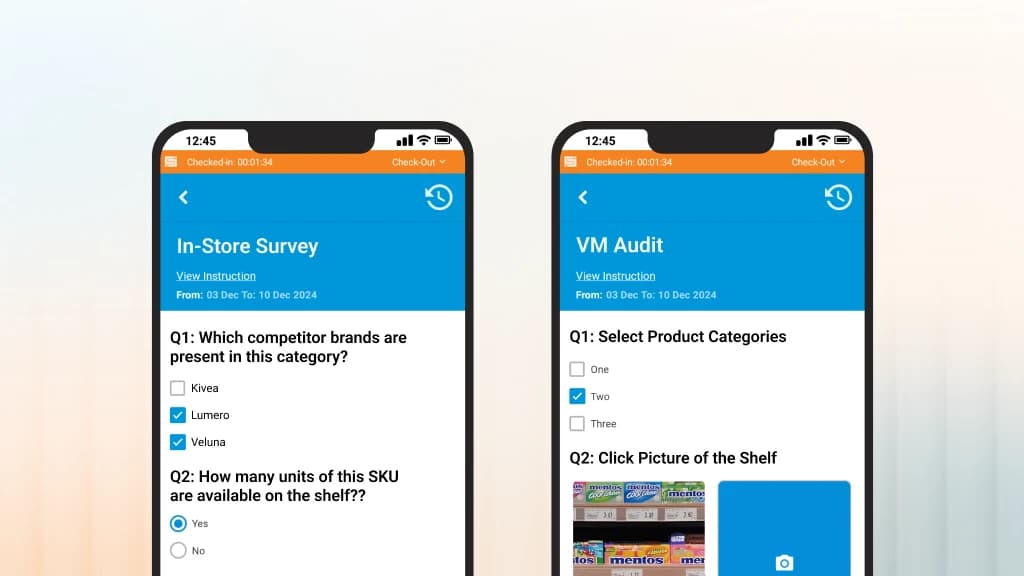
BeatRoute belongs to the first kind. Its retail audit software and sales force automation run the visit, the audit, the order and the follow-up in one app. The app connects to distributor stock through the distributor management system. The VM Audit AI Agent scores shelf photos. The Scheduling AI Agent picks which outlets each rep should call on, and productive visits rose from 45% to 78% with it.
Philippine teams have seen the effect on field output. Nurturemed Pharma saw a 20% increase in PMR productivity on BeatRoute. A leading paints brand in the Philippines reached 30% higher sales productivity; read the leading paints brand case study.
Try it on one area first
Pick one area that mixes modern trade and sari-sari stores, such as a Metro Manila district or a single province. Record on-shelf availability and the action-close rate before you begin. Run the tool for a few weeks, then compare. Judge it by how many flags got an owner and were closed.
Put three questions to every vendor. Can a rep see distributor stock during the visit? Who receives a flag, and how? How is a shelf photo scored?
For a closer look at features, read our guide to retail execution software, or book a demo to see the loop run on your own outlet list.
Frequently asked questions
What does retail execution mean?
It is the work of making sure shoppers find the products, prices, displays and promos the brand planned. You will also hear in-store execution or trade execution. It covers stock, shelf placement, pricing, promos, outlet calls and briefing the people who work in the outlet.
What does a retail execution specialist do?
This is often a promodiser or field rep with a fixed set of outlets. At each stop they compare the shelf with the plan, fix what they can and take a photo. Anything they cannot fix goes to the right owner, such as the distributor or the key account manager. They also brief store staff on new products and offers.
What is retail execution software?
It is a mobile and web tool for teams that call on outlets. Each rep gets a task list per outlet, and audits and photos are kept in one place. Issues go to a named owner, and managers can see where every outlet stands. Many tools also plan visits and take orders.
How is retail execution different from visual merchandising?
Visual merchandising is about how products look on the shelf and in displays. Retail execution is the wider job. It adds stock, pricing, promos, briefing the staff and the follow-up that gets a problem fixed.
What KPIs should we track for retail execution?
Start with on-shelf availability, planogram compliance, share of shelf, price compliance, promo compliance and visit compliance. Then add the action-close rate, the share of flagged issues fixed before the next visit. It tells you whether the loop works.
How does AI change retail execution?
AI takes over the slow parts. Image recognition scores shelf photos so managers need not open each one, and visit planning picks the outlets that need a call next. Supervisors can then spend their time on the gaps the tools flag.
Is retail execution still relevant as more shopping moves online?
Yes. In the Philippines most volume still goes through sari-sari stores, groceries, supermarkets and drugstores, so someone has to keep the shelf in line with the plan. Online listings need the same habits: the right product listed, in stock and at the agreed price.