


A sales territory is the area, and the outlets in it, that one sales rep or sales team is responsible for. In Kenya, Nigeria or Ghana, that means dukas, kiosks, provision stores and supermarkets. It also holds the distributors that supply them and each rep's visit plan.
The hard part starts once stock leaves the depot. One territory on the Lagos mainland can hold hundreds of small outlets. Some get the distributor's van on Monday and a pre-sales rep on Thursday. A list of named accounts cannot hold that, so the territory is drawn on the ground and sized by the visits it needs.
Territory sales meaning: the TSE, the TSM and what they own
Territory sales means selling to every customer in one assigned area. It is also a job title at two levels. A territory sales executive (TSE) works the beats: visits outlets, books orders and checks the shelf. A territory sales manager (TSM), or area sales manager, runs it through distributors and TSEs. The TSM answers for five things.
- Secondary sales: what outlets buy from the distributor. This is the real test of whether the territory is covered.
- Primary sales: what the distributor buys from the brand. Keep it in step with secondary sales, or stock piles up in the distributor's warehouse.
- Distributor health: stock, orders, scheme claims and payments.
- Coverage: whether TSEs finish their beats, which outlets have gone quiet and which new ones to open.
- Territory planning: asking for a redraw when the beats stop fitting.
A TSM's week comes down to two questions. Did the TSEs reach the outlets on their beats? Did the distributors keep those outlets stocked? Answer both weekly and a weak beat gets fixed before it costs a month of sales. AAVA Brands in Nigeria grew store-level sellouts by 25–30% with BeatRoute sales force automation and distributor management. Read the AAVA Brands case study.
Four levels, from region down to the duka
Most FMCG brands here run four levels, top down.
- Region or zone. A large part of the country, such as Lagos and the South West, or Nairobi and Central Kenya. A regional manager splits the year's target across its territories.
- Territory. The patch one TSM owns. Often a city, a group of towns, a few LGAs in Nigeria or a few sub-counties in Kenya. Some companies call it an area.
- Beat. The round of outlets one TSE covers in a day, repeated on the same weekday every week or two. Our guide to beat planning shows how to build one.
- Outlet. One duka, kiosk, provision store, chemist or market stall, with an owner, a location and a visit frequency.
Distributors sit to the side of this chain, not inside it. Each is linked to the territory, or the part of it, that it may serve. Wholesalers and sub-distributors that buy from them can sit on a beat as outlets too.
Types of sales territory, and the three that suit FMCG
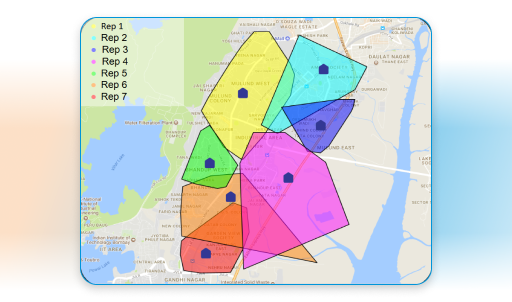
- By distributor area.
The territory is whatever its distributor delivers to. It works when each area has one exclusive distributor, since target, stock and sales line up with one partner. It breaks the day that distributor is replaced or a second one is appointed. Example: "everything our Kano distributor covers". - By geography.
Lines follow boundaries anyone can read: LGAs and wards in Nigeria, sub-counties and wards in Kenya. This works where distributors overlap, because the lines stay put when a partner changes. Example: three wards next to each other in Nairobi's Eastlands. - By channel.
General trade, meaning dukas, kiosks, provision stores and chemists, is covered on beats inside each territory. Modern trade, meaning supermarket chains, often sits with a key account team whose branches cross territory lines. This suits brands that sell much of their volume through chains. Example: in Accra, the chain supermarkets sit with a key account manager, and the TSM owns every independent outlet around them.
The check that matters: count visits, not outlets. For each outlet, take the calls it needs in one cycle, then add them up. Compare that total with the rep-days the territory has. Fewer outlets can still mean more work if they need weekly calls or sit far apart. A territory is balanced when every beat fits a working day and every outlet gets its calls. Its target, or quota, should match what the area can sell.
Map the outlets once, then attach the distributors
Using each distributor's customer list as the territory is quick, and it follows how stock and invoices already move. The trouble comes when the route to market changes. Swap a distributor, or appoint one for a new product line, and the territory, its beats and its targets all need redrawing.
A provision store in Ibadan may buy flour and pasta from one distributor and soft drinks from another. A territory built from distributor lists counts that store twice, once in each list.
The steadier rule: draw the geography once, put each outlet on the map once, and attach every distributor allowed to serve that area. That is how BeatRoute Workzones work. The map stays fixed while distributors come, go or add lines.
Sales territory example: two towns and the trading centres between
The numbers are made up to show the sums. Put in your own.
| Part of the territory | This example |
|---|---|
| Area | A main town, a smaller town and the trading centres on the road between |
| Distributor A | Flour and pasta, across the whole area |
| Distributor B | Soft drinks, in the main town only |
| TSEs | Three, each on a six-day week |
| Outlets | 900: 100 big ones (supermarkets, wholesalers, busy provision stores) called on weekly, and 800 dukas and kiosks every two weeks |
| Outlets buying from both distributors | 300, all in the main town |
| Calls in a two-week cycle | 1,000 (100 × 2 + 800) |
| Rep-days in a two-week cycle | 36 (3 TSEs × 12 days) |
| Beats | 36, so each TSE runs 12, one per working day of the cycle |
| Calls per beat | About 28: roughly 6 big outlets and 22 small ones |
Then check the hours. At about 12 minutes a call, 28 calls is just under six hours inside outlets. A town beat, walked duka to duka, fits in a day. A beat out to the trading centres, with 20 minutes on a motorbike between stops, does not. Move some trading-centre outlets into a beat with more town outlets, or call on the smallest far ones less often.
Once every beat fits a day, route optimization puts the stops in the order that wastes least time on the road.
Go back to the 300 shared outlets in the main town. Mapped first, each has one record and one visit day. The TSE books the flour order and the soft drinks order on the same call. Built from two distributor lists, they would be 600 records and two visit plans for the same 300 doors.
Why balance matters, and signs a territory is badly drawn
A badly drawn territory costs you three ways. Some outlets go without calls and another brand fills the shelf. Others get more calls than they buy for. And unfair targets wear down your best TSEs.
- One TSE is done by early afternoon while another never finishes a beat.
The work was split by outlet count. Recount calls and travel time per TSE, then move a block of outlets from the busy patch to the quiet one. - More of the day goes on the road than in outlets.
Beats run from one end of the territory to the other. Regroup them around clusters of outlets before you touch the route. - Some outlets go a whole cycle without a call.
The territory needs more calls than its TSEs can make. Call less often on the smallest outlets, or add a TSE. Far outlets drop off first, so check their visit history early. - Two TSEs claim the same outlet.
The boundaries overlap, or the outlet was entered twice. Settle it once on the map and the fight over credit ends.
Review each territory every quarter, and sooner when a TSE leaves, a distributor changes or a big outlet opens. Redrawing many at once? Our guide to sales territory mapping software explains what the tools do and how to compare them.
BeatRoute suits brands whose reps sell to many retailers through distributors and want distributor management on the same platform. If that sounds like your team, request a demo and bring the outlet list for one territory.
Frequently asked questions
What is a sales territory plan?
A plan for one territory over a set period, usually a quarter. It sets the target by distributor and channel, the outlets to open, the beats and their call frequency, and the next review date.
Does a van sales territory work differently from a pre-sales one?
Yes, in one way. In pre-sales, the TSE takes the order and the distributor delivers later, so only the calls need to fit the day. In van sales, the rep sells from what the van carries, so each beat must also fit one day's van load.