


TL;DR This comparison helps consumer brand leaders and retail ops managers choose the best retail management software across POS, inventory, and field execution categories. BeatRoute is the only platform that connects back-office data with shelf-level execution through Goal-Driven AI, delivering 12.6% average sales uplift in year one.
The best retail management software today goes well beyond a traditional Point of Sale. For retail brands running field teams, distributors, and MT chains at the same time, the real job is connecting back-office data with what happens at the shelf: coverage, orders, planograms, promotions. BeatRoute is the only SFA-DMS built to execute your sales goals, so targets set at HQ translate into next actions for every rep and retailer. Below, we compare 12 platforms across POS, inventory, and sales execution so you can match the tool to your channel mix.
Top retail management software for consumer brands
The details below unpack each piece. Whether you need POS-first store operations or field execution tied to distributor management, this list covers both ends of the spectrum. BeatRoute sits at the execution end, connecting field teams with channel partners to drive measurable retail outcomes.
1. BeatRoute
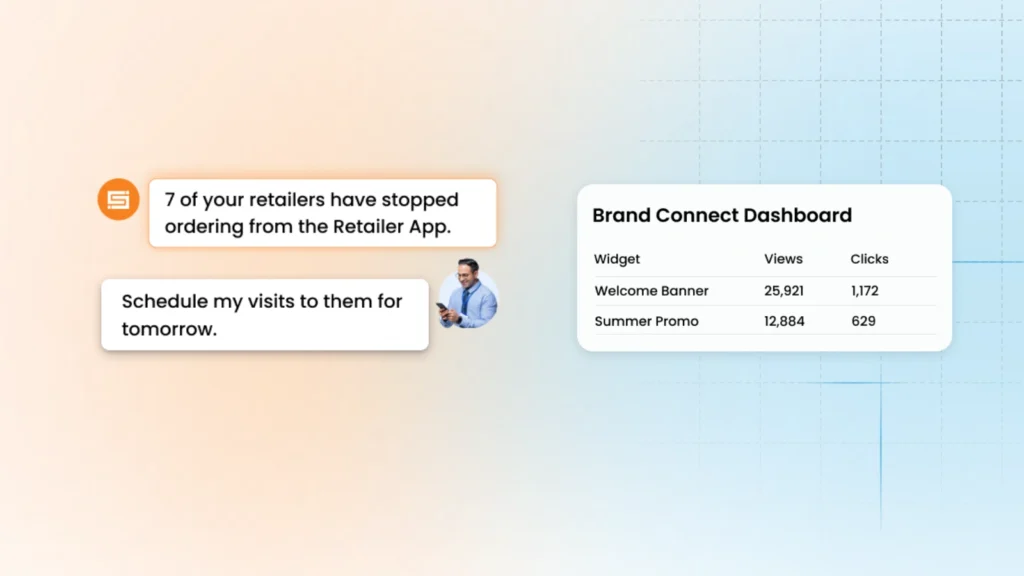
BeatRoute uses Goal-Driven AI to help brands run their retail operations more efficiently. It covers a variety of industries such as FMCG, Consumer Goods, Building Materials, and Manufacturing. Instead of mere automation, BeatRoute goes further: its Goal-Driven AI lets brands define business goals within the system, then guides retail sales teams and channel partners to execute those goals on the ground.
For general trade or GT, BeatRoute provides intuitive and intelligent workflows for store onboarding, beat planning, route optimization, order execution with trade schemes through an Order AI Agent, visual merchandising, and feedback collection.
For modern trade or MT, BeatRoute provides workflows to ensure planogram and share of shelf compliance, prevent stock outages, and improve the productivity of merchandisers and product promoters stationed at retail stores.
As a collaborative platform, BeatRoute enables everyone from brands to channel partners and retailers to use and benefit from its components. The platform delivers 12.6% average sales uplift in the first year, with the Order AI Agent alone contributing 4-6% uplift through intelligent replenishment and SKU recommendations.
BeatRoute’s platform provides:
- Modularity
- Scalability
- Offline support
- All-round customer support (99% resolution rate, 96% CSAT)
Features
- Customer Profiling
- GPS Tracking & Beat Planning
- Order Taking App with Order AI Agent
- Route Optimization Software (HQ-level territory planning)
- Field Sales CRM with Scheduling AI Agent
Founded: 2014
Free trial/demo availability
Free demo
Pros: Goal-Driven AI, targeted digital training programs, highly scalable, highly modular, no-code platform, BeatRoute Copilot, offline functionality, 300+ integrations via BeatRoute Matrix
Cons: Not suitable for inside sales, not for ecommerce brands
Suitable for
Primarily FMCG, CPG, Building Materials, and Construction industries
2. Pepperi
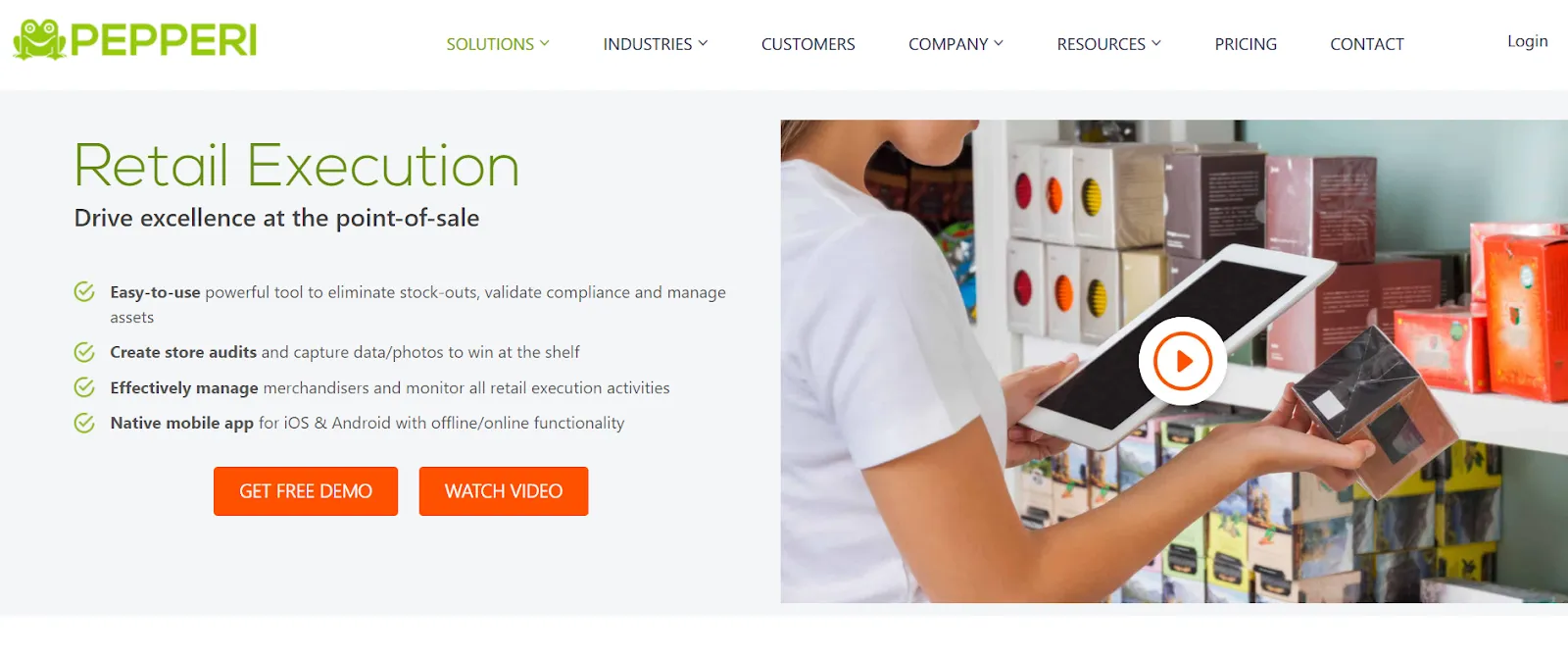
Pepperi unifies retail audits, execution and order placement. It is a powerful retail software that focuses on user-friendliness to minimise stock outages, and to manage assets efficiently. Pepperi creates store audits, manages merchandising, and operates as a native app on iOS or Android with online-offline functionality. It also uses field data to analyse a retailer’s compliance, incentives, and available product range. Pepperi’s mobile CRM stores and displays information such as visit records, reports, order history, etc.
Features
- All-inclusive B2B web & native mobile app
- Customers can self serve on the app 24×7
- Consolidated omni-channel sales on one platform
- Mobile order taking
- Real-time inventory tracking and store auditing feature
Founded: 2012
Free trial/demo availability
Free demo
Pros: Mobile optimised, agile integration, modularity, scalable cloud platform
Cons: Some users claim UI isn’t intuitive enough and different experiences on web and mobile versions
Suitable for: FMCG, Food & Beverage, Health & Beauty, and Fashion & Accessories industries
3. Quant
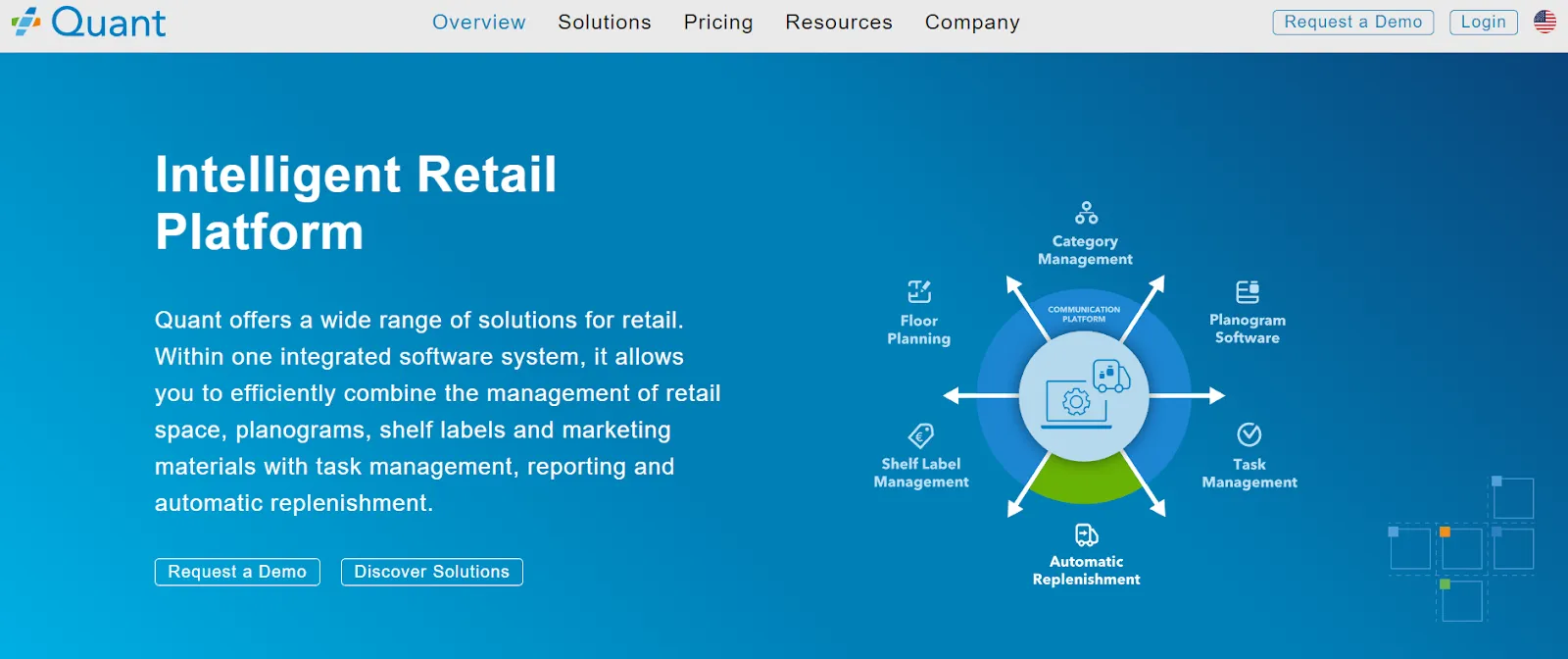
Quant retail management software provides features for retailers like combining space management and planograms with built-in task management, reporting, and automatic replenishment. Quant is a comprehensive solution that facilitates communication across teams for a more seamless process. Features include floor planning, category management, and automatic ordering.
Features
- Semi-automatic ordering
- Anomaly prediction and detection
- Shelf label management linked to planograms
- Quant Task Management
- 3D visualisation
Founded: 2003
Free trial/demo availability
Free demo
Pros: Multi-layer floor plans, poll feedback, web login, auto notifications, photo documentation of stores, auto replenishment
Cons: Some users claim that the UI is a bit challenging and there is a learning curve to the tool
Suitable for: FMCG and Pharmaceutical industries
4. Heartland
Heartland retail management software allows retailers to run ecommerce store operations as efficiently as a brick and mortar store by synching inventory, sales, and customer data to the point of sales (POS). It provides users the capability to generate custom fields and grids for inventory tracking and also create accurate reports for insights into stock availability. Users can integrate with Heartland’s native add-ons or tech partners such as ecommerce providers, email marketing, and customer loyalty programs.
Features
- Handles all payroll and HR tasks
- Retail inventory management
- Order management
- Customer relationship management
- Marketing support
Founded: 1997
Free trial/demo availability
No
Pros: Real-time inventory management, e-commerce integration capabilities
Cons: Communication and customer support may be an issue for some users
Suitable for
Retail and Restaurant industries
5. SimpliField
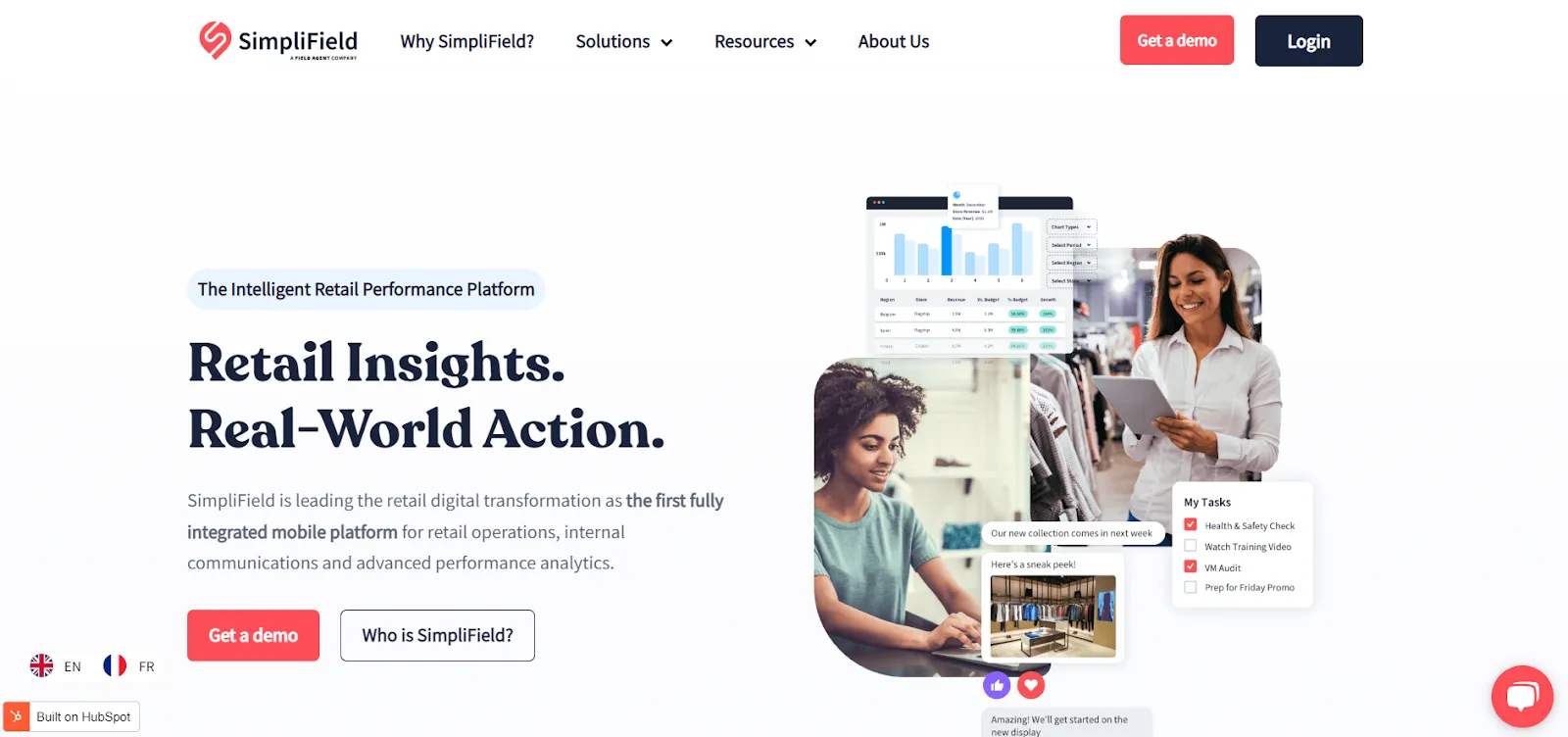
SimpliField is a fully integrated mobile platform for retail management, internal communications and advanced performance analytics. By bringing these features together, SimpliField promotes efficiency and adaptability for a better customer experience. Brands can utilise relevant KPIs so that all users are aligned to their goals. The dashboard can be customised to show only relevant data and meet a variety of systems and regional requirements.
Additionally, there is the option to share interactive posts with videos, pictures and documents that further encourage interaction. For process improvement, customer feedback is readily visible, enabling efficient merchandising decisions.
Features
- Activity Tracking
- Visual Merchandising
- Newsfeed and announcements
- 1:1 and Group Chat
- Best practice workflow templates
- Task Management
- Training
- Visit scheduling
- Generate visit prioritisation for field teams
- Store information management dashboard
Founded: 2013
Free trial/demo availability
Free demo
Pros: Robust reporting feature, real-time dashboards
Cons: N/A
Suitable for
Beauty & Cosmetics, Home Goods, Luxury & Fashion, Pharmaceutical, and Retail industries
6. Aptos
Aptos promotes traditional POS activities, supported by offline resiliency without the need for servers. They provide a simplistic, yet contemporary UI that can be up and running for retailers in a very short time. Retailers can change modes seamlessly between self-checkout and attendant checkout. Features include real-time monitoring of inventory, smart ordering and routing, and effective store fulfilment integration.
Aptos provides end to end order processing over a single cloud based OMS; all tasks from sales to shipments to logistics and more are carried out within the same OMS.
Features
- Order Management
- Store Fulfilment
- Point of Sale
- Analytics
- Customer Relationship Management
- Allocation, Forecasting, and Replenishment
- Sales Audit
- Merchandising
Founded: 1972
Free trial/demo availability
Free demo
Pros: Customisable workflows, consolidation of information in one place
Cons: No Android or iOS support, may not be appropriate for smaller businesses
Suitable for
Apparel, Sporting Goods, and Grocery industries
7. Oracle ERP
Oracle comes with a set of retail solutions that reveal current and future consumer needs, helping retailers shape their strategies. Personalised marketing experiences build consumer trust and in turn, profitability.
Oracle ERP is beneficial to retail operations as it can manage inventory, customers, track sales performance, and create financial reports. With Oracle ERP, you get:
- The capability for managing inventory, stock movement, optimization of inventory as per demand forecasts
- A point of sale system where retailers can manage orders, transactions, and track consumer data in real-time
- A CRM module which can monitor and track consumer interactions, manage their data, and analyse consumer behaviour for forecasting trends and boosting consumer loyalty
- Financial management tools for retailers to manage their accounting, budgeting, and financial reporting
Features
- Supply chain planning
- Inventory management
- Order management
- Logistics
- Product lifecycle management
- Procurement
Founded: 2012
Free trial/demo availability
Free demo
Pros: Assists with risk and financial management
Cons: High maintenance cost
Suitable for
Retail, Restaurant, Life Science, and Healthcare industries
8. Microsoft Dynamics ERP
Microsoft Dynamics is focused on retail store operations and provides omnichannel sales, performance analytics, payment management, fraud prevention, and a low-code platform for ease of use. To prevent overstocking or stock outages, Microsoft Dynamics offers real-time inventory tracking and automated re-stocking.
With a central repository for consumer data, retailers can manage profiles, purchase history, and loyalty programs. Microsoft Dynamics also enables retailers to sell through different channels, such as physical stores and ecommerce, which allows them to reach more consumers and enhance sales. Reporting and analytics tools give retailers access to sales insights and inventory data to greatly optimise retail operations.
Features
- Supply chain management
- Intelligent order management
- Customer insights
- Optimised scheduling
- Smart route planning
Founded: 2016
Free trial/demo availability
No
Pros: Centralised data, easy configuration, highly scalable, easy workflow creation and customisation
Cons: May not be user-friendly, price tag may be high for some
Suitable for
Retail, Healthcare, Financial Services, and Manufacturing industries
9. Gofrugal
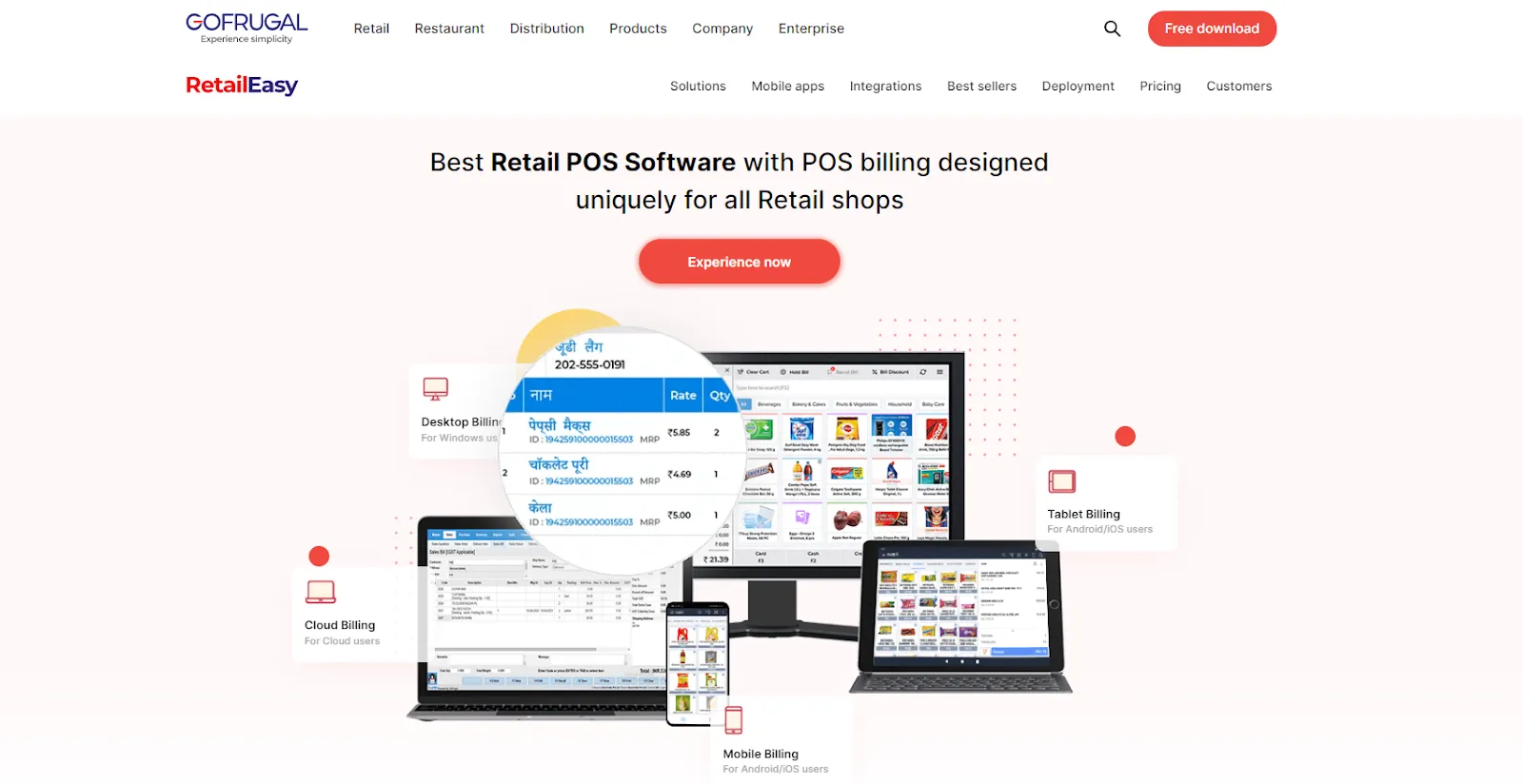
Gofrugal RetailEasy equips retailers with automated operations to allow rapid growth with minimal staff and with a focus on simplicity in use and experience. The software provides users with absolute control of inventory by stocking what sells and notifying about non-moving or expiring items for quick action. Retailers can benefit from smart recommendations to reorder for optimised stock and avoid wastage. Online payments can be initiated directly from the tool and it offers a centralised monitoring system that covers sales, purchases, profits, and more.
Features
- Integrated accounting
- CRM and Loyalty
- Purchase and supply chain management
- Choice of many integrations from hardware to payment, online ordering to loyalty
- Omnichannel management
- MIS reporting, real time analytics in a single platform
Founded: 2004
Free trial/demo availability
Free trial
Pros: Good reporting and security
Cons: Some users claim customer service could be better
Suitable for
Apparel, electronics, pharmaceuticals, retail stores
10. Retail Clouds
Retail Clouds enables wireless and remote monitoring of stores and distribution via IoT. Users get access to end-to-end operational capabilities along with prescriptive and predictive analytics. This retail software helps with the extraction of old business data, along with providing GPS fencing support to ensure consumers can place orders from specific service zones.
Features
- Pay As You Use
- No Support & Maintenance cost
- 100% Availability
- 360 degree Retail Platform
- No limit on number of users
- Complete remote configuration and control
- Support to Android, Windows and iOS
- True Omni Channel Platform
- Scalable
Founded: 2011
Free trial/demo availability
Free trial
Pros: Services a variety of industries, useful updates
Cons: Limited mobile support
Suitable for
FMCG, lifestyle, pharma
11. IQmetrix
IQmetrix is a retail management software that enhances operational efficiency for inventory, omnichannel, and analytics. They manage multiple stores by harnessing elements of inventory management, employee tracking, financial tasks, and more. IQmetrix claims to be an effective solution for enhanced software compatibility, readily integrating a retail system with digital touchpoints for a unified customer experience across all channels.
Features
- Inventory management
- Reporting, data, and analytics
- Employee management
- Customer relationship
- Finance and accounting
Founded: 1999
Free trial/demo availability
Free demo
Pros: User friendly
Cons: No free trial, limited applicability for diverse industries
Suitable for
Telecom
12. Tyler
TylerNet provides cloud-based POS, inventory management, and accounting features towards more informed decisions. Focused on improving brand bottom-line, they claim to have spearheaded the cloud-based, integrated POS technology in practice today.
Features
- Analytics for smart decisions
- Effective order processing
- Complete purchasing toolset
- Efficient customer satisfaction measures
- Accurate financial information
- Detailed view of inventory at all stores
Founded: 1979
Free trial/demo availability
Free demo
Pros: Variety of reports, operational in both online and offline environments
Cons: No trial, some reported scalability issues, may not be user friendly
Suitable for
Appliance, furniture, electronics, jewellery
How to choose the right retail management software
Choosing the right retail management software depends on where your biggest operational gap sits. Traditional POS-first tools cover store operations well but rarely connect to distributors, beat plans, or retailer coverage data. For brands with field teams selling through thousands of outlets, a platform that unifies SFA, DMS, and merchandising beats a standalone POS every time.
Offline support, mobile-first workflows, and ERP integration are non-negotiable for brands selling at scale. BeatRoute addresses all three while adding Goal-Driven AI that turns targets into daily rep actions rather than month-end dashboards. With 200+ enterprise customers across 20+ countries and a 4.7-star Play Store rating, BeatRoute is built for brands that need execution, not just reporting.
Want to see Goal-Driven AI in action on your own data? Book a demo with BeatRoute.
Frequently asked questions
What is retail management software?
Retail management software is technology that enables a brand to improve the retailer’s experience, loyalty, and sales through applications dedicated to inventory management, customer relationship management, rewards, ordering and more. For consumer brands with field teams, platforms like BeatRoute extend this definition to include field execution, distributor coordination, and Goal-Driven AI that connects HQ targets to shelf-level actions.
What are the types of retail management software?
Retail management software functionality includes: (1) Enterprise resource planning (ERP), which allows different departments to work in tandem and store information via configurable interfaces; (2) Inventory management for a clear view of existing and projected stock; (3) Customer resource management or CRM for connecting consumer profiles across online and offline stores; (4) Field execution platforms like BeatRoute that connect sales teams, distributors, and retailers into one Goal-Driven workflow.
What are the key benefits of investing in retail management software?
Retail management software helps retailers and distributors improve operations, increase efficiency, and drive sales growth. Key benefits include 24/7 order management with online B2B ordering, real-time stock and inventory visibility to avoid stockouts, transparent order and delivery tracking, integrated loyalty programs to boost retailer engagement, simplified returns and automated credit management, and a direct marketing channel for targeted promotions and new product launches.
What key features should you look for in retail management software?
The best retail management software should unify sales strategy from the back office to the retail shelf. Key features include real-time distributor and inventory visibility through direct DMS integration, seamless ERP and backend integration with systems like SAP or Oracle, AI-driven sales intelligence that guides reps with next-best actions and order recommendations, a built-in trade marketing and loyalty engine, and an intuitive mobile app for field sales reps with route planning, planogram guidance, order taking, and feedback collection.